Sunday, May 26, 2013
Fast Fingers
Linked at The Classic Liberal's Rule 5 compendium "Alice in Chains: Stone." Wombat-Socho at The Other McCain has the grand Rule 5 compendium up at "Rule 5 Sunday: Desert Plains". I'm still trying to figure out his naming scheme. I could just ask him, but what's the fun in that?


Saturday, May 25, 2013

A Quick Stop in the Garden


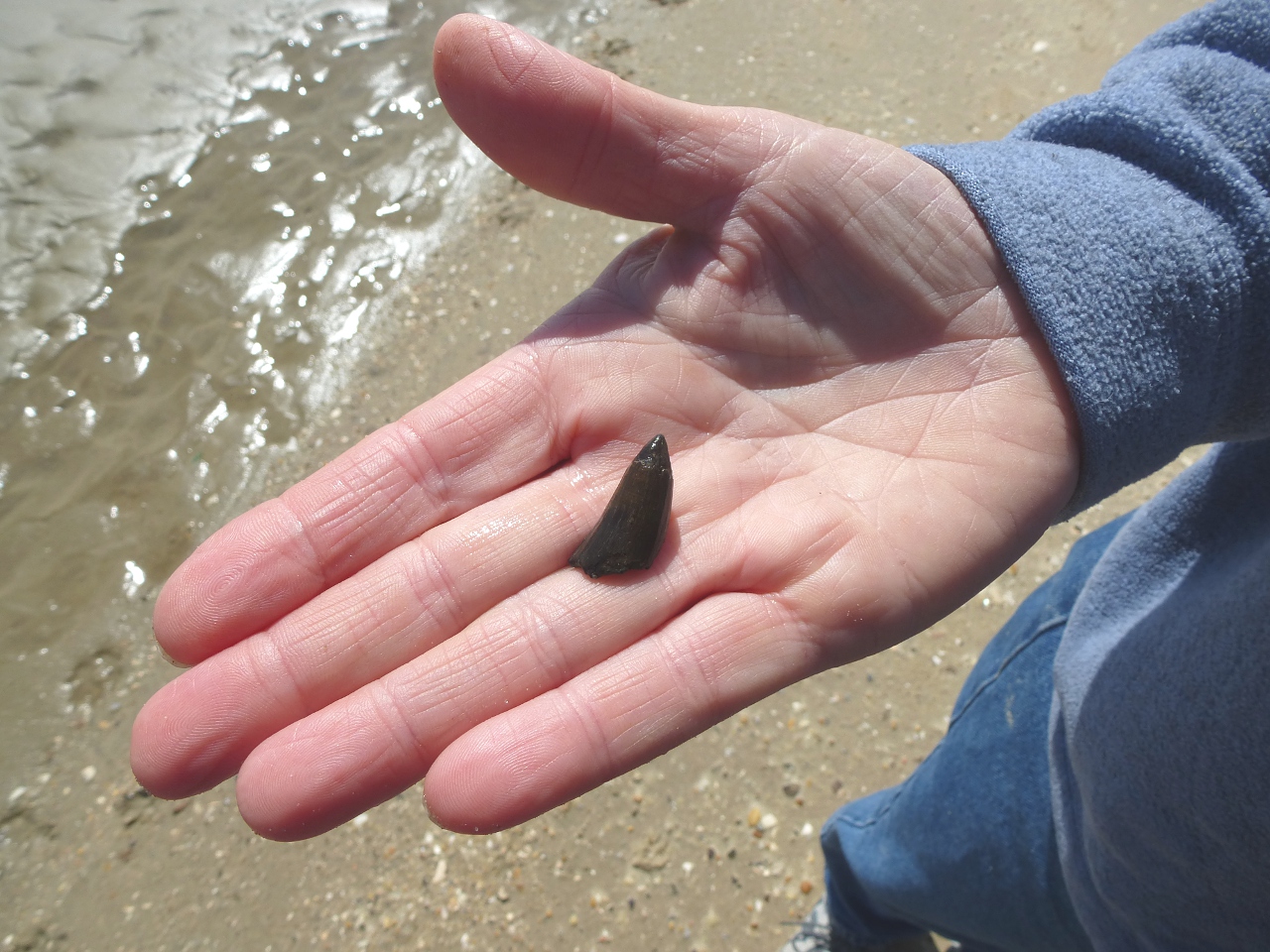
5/25/13 Saturday Beach Report



Rule 5 Saturday - Fully Famous - Kate Hudson


Well, that's enough chatter. More Kate below the fold.
100 Ways to Open a Beer
It may not be true, I didn't count, and anyway, they used the chainsaw and the helicopter twice each.
Friday, May 24, 2013

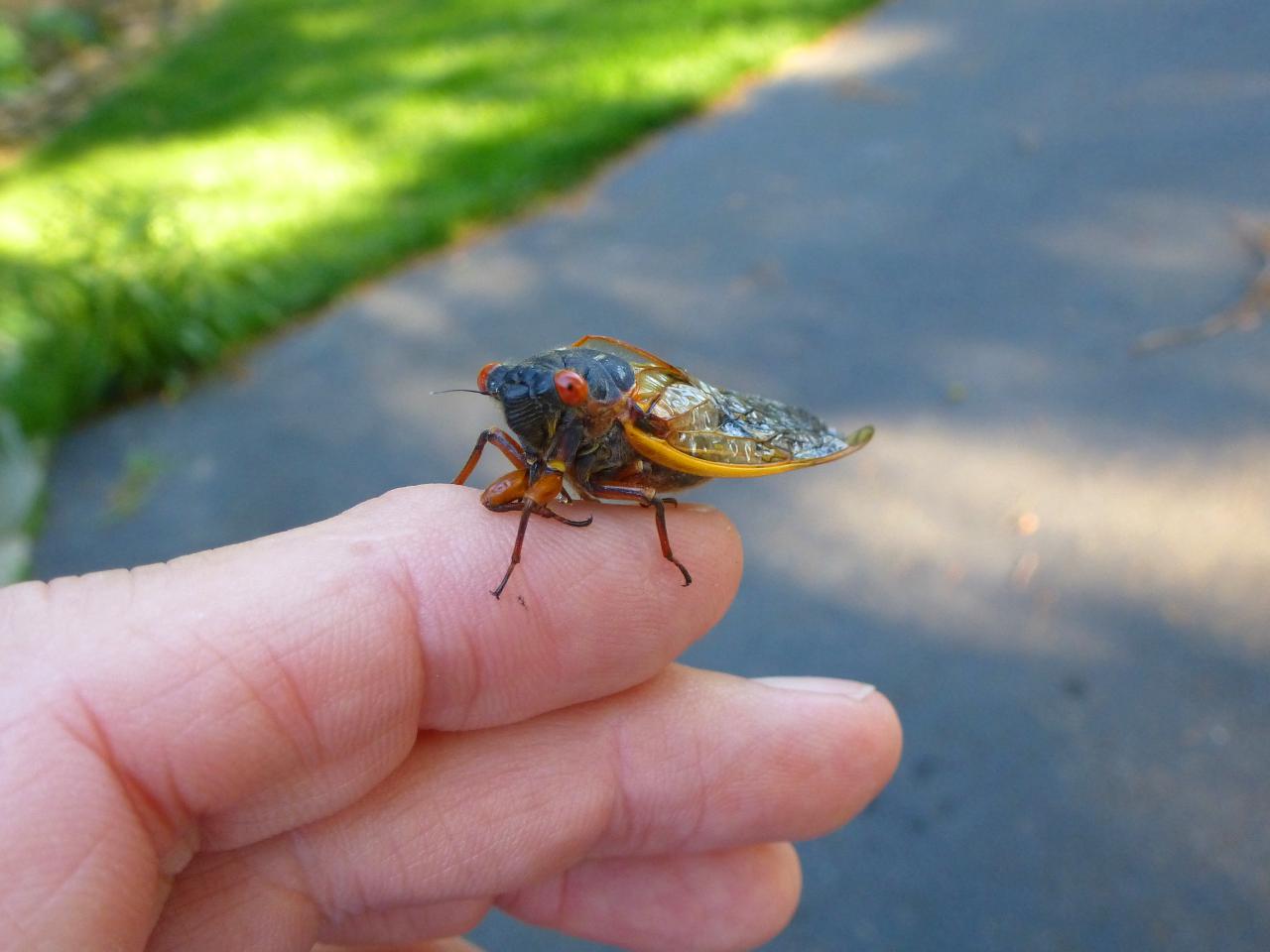
Brood II Break Out Continues

 The Blue Flag and Yellow Flag Iris have bloomed in our pond again this year. The Blue Flag is a native species, that you can find in swampy spots in the area, while the Yellow Flag is a non-native from Europe, and considered to be an invasive species, although I can't say I've seen huge patches of it that would give me any concern.
 The other thing blooming in our back wood is the Mountain Laurel, Kalmia latifolia. In parts of our back lots it's thick enough to form "laurel hells", thickets that are too dense to walk through.
It has a pretty white flower with some pink, and there are cultured varieties with much more pink and red. But I'll be content with the native.
When I first moved to the east, it reminded me very much of the Manzanita, a collection of many species of dry land shrubs in the west. They are both in the Ericacea, the family that contains azaleas, rhododendrons, and heathers.
A Raw Morning at the Beach


Earthquake Cluster Strikes Northern California

 This could be the start of something big, or a big nothing...
Found at Watts Up with That.
Your Friday Monkey Dacker Congress
Our Congress
If you start with a cage containing five monkeys and, inside the cage, hang a banana on a string from the top and then you place a set of stairs under the banana, before long a monkey will go to the stairs and climb toward the banana. As soon as he touches the stairs, you spray all the other monkeys with cold water.
After a while another monkey makes an attempt with same result... all the other monkeys are sprayed with cold water. Pretty soon when another monkey tries to climb the stairs, the other monkeys will try to prevent it.
Now, put the cold water away. Remove one monkey from the cage and replace it with a new one. The new monkey sees the banana and attempts to climb the stairs. To his shock, all of the other monkeys beat the crap out of him. After another attempt and attack, he knows that if he tries to climb the stairs he will be assaulted.
Next, remove another of the original five monkeys, replacing it with a new one. The newcomer goes to the stairs and is attacked. The previous newcomer takes part in the punishment...... with enthusiasm, because he is now part of the "team".
Then, replace a third original monkey with a new one, followed by the fourth, then the fifth. Every time the newest monkey takes to the stairs, he is attacked. Now, the monkeys that are beating him up have no idea why they were not permitted to climb the stairs. Neither do they know why they are participating in the beating of the newest monkey.
Finally, having replaced all of the original monkeys, none of the remaining monkeys will have ever been sprayed with cold water. Nevertheless, not one of the monkeys will try to climb the stairway for the banana.
Why, you ask? Because in their minds... that is the way it has always been!
This, my friends, is how Congress operates... and this is why, from time to time: ALL of the monkeys need to be REPLACED AT THE SAME TIME.
Thanks to Fisk
If you start with a cage containing five monkeys and, inside the cage, hang a banana on a string from the top and then you place a set of stairs under the banana, before long a monkey will go to the stairs and climb toward the banana. As soon as he touches the stairs, you spray all the other monkeys with cold water.
After a while another monkey makes an attempt with same result... all the other monkeys are sprayed with cold water. Pretty soon when another monkey tries to climb the stairs, the other monkeys will try to prevent it.
Now, put the cold water away. Remove one monkey from the cage and replace it with a new one. The new monkey sees the banana and attempts to climb the stairs. To his shock, all of the other monkeys beat the crap out of him. After another attempt and attack, he knows that if he tries to climb the stairs he will be assaulted.
Next, remove another of the original five monkeys, replacing it with a new one. The newcomer goes to the stairs and is attacked. The previous newcomer takes part in the punishment...... with enthusiasm, because he is now part of the "team".
Then, replace a third original monkey with a new one, followed by the fourth, then the fifth. Every time the newest monkey takes to the stairs, he is attacked. Now, the monkeys that are beating him up have no idea why they were not permitted to climb the stairs. Neither do they know why they are participating in the beating of the newest monkey.
Finally, having replaced all of the original monkeys, none of the remaining monkeys will have ever been sprayed with cold water. Nevertheless, not one of the monkeys will try to climb the stairway for the banana.
Why, you ask? Because in their minds... that is the way it has always been!
This, my friends, is how Congress operates... and this is why, from time to time: ALL of the monkeys need to be REPLACED AT THE SAME TIME.
Thanks to Fisk
Thursday, May 23, 2013
Breaking News: Bridge Collapse in Washington State

MOUNT VERNON, Wash. -- The Washington State Patrol says the Interstate 5 bridge over the Skagit River at Mount Vernon has collapsed, dumping vehicles and people into the water.If it's on I5, I've been across it.
Trooper Mark Francis said the four-lane bridge collapsed about 7 p.m.
Francis says he has no idea how many people are in the water or whether there are any injuries or deaths. He did not know what caused the collapse.
NOAA Predicts "Active" Hurricane Season
2013 Atlantic Hurricane Season Outlook: SummaryA nice safe forecast. If they've overestimated the number and severity of storms, nobody will be disappointed when they fail to meet expectations, and they'll have to be fairly severe to be outside the range predicted.
NOAA’s 2013 Atlantic Hurricane Season Outlook indicates that an above-normal season is most likely, with the possibility that the season could be very active. The outlook calls for a 70% chance of an above-normal season, a 25% chance of a near-normal season, and only a 5% chance of a below-normal season. See NOAA definitions of above-, near-, and below-normal seasons, which have been slightly modified from previous years. The Atlantic hurricane region includes the North Atlantic Ocean, Caribbean Sea, and Gulf of Mexico.
The 2013 seasonal hurricane outlook reflects a combination of climate factors that have historically produced above-normal Atlantic hurricane seasons. The three main climate factors for this outlook are:
- The ongoing set of atmospheric conditions that have been producing increased Atlantic hurricane activity since 1995, which includes
- An expected continuation of above-average sea surface temperatures (SSTs) across the tropical Atlantic Ocean and Caribbean Sea, and
- A likely continuation of ENSO-neutral conditions (i.e., no El Niño or La Niña); meaning El Niño is not expected to develop and suppress the hurricane season.
This combination of climate factors historically produces above-normal Atlantic hurricane seasons. The 2013 hurricane season could see activity comparable to some of the very active seasons since 1995.
Based on the current and expected conditions, combined with model forecasts, we estimate a 70% probability for each of the following ranges of activity during 2013:
13-20 Named Storms
7-11 Hurricanes
3-6 Major Hurricanes
Accumulated Cyclone Energy (ACE) range of 120%-205%
The seasonal activity is expected to fall within these ranges in 70% of seasons with similar climate conditions and uncertainties to those expected this year. These ranges do not represent the total possible ranges of activity seen in past similar years.
Note that the expected ranges are centered well above the official NHC 1981-2010 seasonal averages of 12 named storms, 6 hurricanes, and 3 major hurricanes.
This Atlantic hurricane season outlook will be updated in early August, which coincides with the onset of the peak months of the hurricane season.
So, historically speaking, how good are their forecasts? Not very, about as good as a coin toss...
An NBC Miami review of nearly a decade of pre-season predictions of hurricane season shows the two major predicting institutions are right about half the time. In some categories, they fail even more frequently.So don't sweat the forecast. Do your best to be prepared, and wait to find out
Imagine how difficult it must be to predict something so intricate, so constantly transforming as a storm four months in advance. Yet our well-being depends on such factors as wind shear, sea surface temperatures, and pressure systems half a world away.
And this year looks busy. "indeed, we are looking for an 85% chance of above normal activity,” said Jack Beven of the National Hurricane Center. “The forecast is anywhere from 14 to 23 named tropical storms, of which 8 to 14 are forecast to become hurricanes, and 3 to 7 are forecast to be major hurricanes."
The National Hurricane Center, also called NOAA Weather, makes its pre-season predictions using a range. It offers wiggle room in the prediction. This year, 14 to 23 storms, is the widest range in a decade.
On the other hand, Dr. Bill Gray of Colorado State University predicts an exact number. Not a range.
Still, predicting these hurricanes and storms is imperfect to be sure, as our review of the success of those pre-season predictions since 2001.
First, in predicting named storms, NOAA has fallen within its range 5 times in 9 years. Dr. Gray has hit his number just once. But if granted a range like NOAA uses, Dr. Gray has been right 5 times also in 9 years.
Lerner Going to Disneyland
I predicted she's toast, but the toasting process will probably take a while. From NRO, this revelation that she has been placed on "administrative leave." Is that paid or unpaid? I'm not sure, but I would guess that it's paid, and that it will last a good long time, long enough to find a cushy job at a left-wing NGO or as a commentator at CBS, NBC, ABC, NPR, Media Matters or MSNBC. Nothing like a paid vacation after telling Congress to bugger off.
Lois Lerner, the Internal Revenue Service’s director of exempt organizations, has been placed on administrative leave, according to a source in the agency’s Cincinnati office.
Lerner on Thursday afternoon sent an e-mail to employees in the exempt-organizations division she oversees stating, “Due to the events of recent days, I am on administrative leave starting today. An announcement will be made shortly informing you who will be acting while I am on administrative leave. I know all of you will continue to support EO’s mission during these difficult times.” She concluded, “I thank you for all your hard work and dedication,” adding, “The work you do is important.”
Government Judges Self, Decides It's Worthwhile
In a new government report put out by the GAO, various government agencies have convinced a bunch of accountants that the work they do are worth many times what they cost. And of course, somebody whose title is Executive Director, Center for Environmental Health repeats it uncritically at the Huffington Post.
A new U.S. government report shows that the benefits of government regulations substantially outweigh the costs. Looking at all federal regulators, the report found that health and environmental protections created by the Environmental Protection Agency (EPA) are the most cost effective of any federal department.Of course, this is based on a linear extrapolation of results from every high concentrations to very low concentrations; an extrapolation that no one believes, but no knows how to avoid. I'm sure the whole report is full of such simplifying assumptions.
How successful are EPA rules? The report found that for every dollar we spend on environmental and health protections, we get back ten dollars in health, environmental, and economic benefits that add up to make all of our lives richer.
By far the largest factor making up this EPA success is from rules the agency has created to reduce health threats from air pollution. Over ten years, the report shows, we've seen about a half a trillion dollars of benefits by reducing air pollution. The health benefits of reducing air pollution are easy to see, but the economic benefits are less obvious. But consider, for example, pollution from coal-fired power plants. Air pollution from coal is associated with respiratory disease, heart attacks, infections and other serious illnesses. Preventing pollution results in healthier, more productive communities, with people who are making and spending money rather than being sick and dying.
Amphibian Decline Puzzles Scientists
In what they say is the first analysis of its kind, scientists with the U.S. Geological Survey and a couple of universities report that declines in environmentally sensitive amphibians are more widespread and more severe than previously thought. Even the most common critters, such as the spring peepers that make Maryland marshes ring with their mating cries, appear to be losing ground.
What's more, they also seem to be vanishing from ponds, streams, wetlands and other supposedly protected habitat in national parks and wildlife refuges...

"We don't know how long it's been going on or whether it's a trend that will continue," said Michael Adams, the study's lead author and USGS research ecologist in Oregon.It certainly been obvious in my lifetime. Even as recently as ten years ago, our small pond would attract up to 5 frogs at a time. In the last few years, we're lucky to have one or two.
The study did not attempt to identify the cause or causes for the declines. Amphibian losses have been linked previously with development, disease, chemical contaminants, climate change and even introduced species. While a fungal disease blamed for frog die-offs in other countries is found in the United States, Adams said, "we're not seeing patterns that would help us make that link."
The researchers limited their monitoring to sites controlled by the U.S. Department of the Interior, so development likely had little direct impact on the amphibians' habitat.
"The fact we see declines even in protected areas means there is some larger-scale issue going on with amphibian populations," Grant said.
Don't look at me; I don't eat 'em.
An Illustrated History of Clothing
 |
| The original "No" Piece |
"Who invented clothes?" It's one of those brilliant questions that children ask, before they learn that the big things we wonder about rarely have simple answers. It's the kind of thing that archaeologists like me get put on the spot about when chatting to kids, and we love to have a crack at answering.In the beginning, at some point, people, like the Great Apes they descended from, wore no clothes...
...
Hadley knows today's fashion world inside out and might not care much about pre-silk times, but I'll bet that Harriet wanted to find out more than what the Flintstones wear.
It's this kind of response that can, in aggregate, have a negative impact on children: being mentally curious ends up as something deeply uncool and not relevant to modern life. I'm not advocating force-feeding facts Vulcan-style when talking to young people – far from it. They like to be challenged and humour is a great way to do this. But I do think we should take every chance we get to pass on the incredible stuff that we've found out about our world thanks to science – including archaeology – and keep on showing girls that using their brains by asking big questions is, actually, absolutely fabulous.
 |
| The ever popular "mono-kini" |
So for Harriet, if you're reading: there's a whole lot we know about the invention of clothing. Many TV reconstructions and book illustrations of stone age (Palaeolithic) people really don't do them justice. People were already making finely worked bone needles 20,000 years ago, probably for embroidery as much as sewing animal skins, like the thousands of ivory beads and fox teeth that covered the bodies of a girl and a boy buried at Sunghir, Russia, around 28,000 years ago. This was some serious bling, representing years of accumulated work.
And – caveman stereotypes aside – stone age clothes weren't just animal skins. We've known since the 1990s that people were weaving fabric back then, revealed by impressions in baked clay from the sites of Pavlov and Dolni Vestonice in the Czech Republic. We don't actually know for sure that these were used for clothes, but the materials weren't heavy duty, and the variety in weaving styles suggests a long tradition. And at Dzudzuana Cave in Georgia, 30,000 year old spun plant fibres were found which had been dyed: pink, black and turquoise blue!


Subscribe to:
Posts (Atom)