Showing posts with label wildlife. Show all posts

Tuesday, July 28, 2026

Maryland, My Maryland

 Balmer Sun, Boy, 13, airlifted after beaver attack at Maryland state park: officials.  

A 13-year-old boy was flown to a Baltimore hospital after he was bitten by a beaver Sunday morning at Cunningham Falls State Park in Frederick County, according to officials. The incident occurred around 9:10 a.m. in the William Houck Area near the lake’s North Beach, according to the Maryland Department of Natural Resources. The boy suffered injuries to his hands and chest and was flown to Johns Hopkins Hospital for treatment.

The swimming beach was closed immediately as Maryland Park Service staff and Maryland Natural Resources Police searched for the beaver so it could be tested for rabies. Officials said one beaver had been located, but crews continued searching the area to determine whether additional beavers were present and to confirm the captured animal was the one involved in the attack. Rabies testing will be coordinated through the Frederick County Health Department.

The Department of Natural Resources said its Wildlife and Heritage Service provided support and guidance throughout the response and will work with the Maryland Park Service and Natural Resources Police to determine when the swimming area can safely reopen. All other areas of Cunningham Falls State Park remain open to visitors.

Those teeth are no joke. But you wonder what a 13 year old boy might have done to provoke that response.  I know I might have at that age.

The Wombat has Rule 5 Sunday: On The Beach up on time and under budget at The Other McCain.

Thursday, April 30, 2026

DC Cleaning "Dirt" out of the C&O Canal

And by dirt they mean shit. DC Water, Crews Make Progress on Soil Removal in C&O Canal and Continue Preparations for Long-Term Rehabilitation Work on Potomac Interceptor

  • Crews are close to completing the removal of remaining soil from Locks 11 to 13 in the section of the C&O Canal that was used as an emergency bypass after the collapse of the Potomac Interceptor sewer line.
  • Work began on Lock 10, with the majority of the soil removal expected to be completed by the end of next week.
  • Tree removal continues after DC Water received the permits to move forward as part of the site preparations for the long-term accelerated rehabilitation of more than 2,700 linear feet of the Potomac Interceptor
  • Once tree removal is complete, work will begin to construct a bypass chamber, to divert wastewater around sections of the pipe while they are being rehabilitated.

Also, good news that E. coli contamination in the Potomac system is back to "normal" levels :

Daily water quality testing continues to show E. coli levels within the typical range for recreation, with normal historical fluctuations attributed to rain, heat, stormwater runoff, and other known environmental factors. See the District Department of Energy and Environment webpage for more details.

Some substantial fraction of background levels of E. coli are due to wildlife. After all, bears shit in the woods.  

Saturday, April 25, 2026

Rule 5 Saturday - Georgiana Rosas

This week it's Georgiana Rosas:
Giorgiana Rosas is a Venezuelan model, beauty pageant contestant, and marketing professional. She was named Miss Tourism Venezuela in 2016 and has since gained a significant social media following, with over 1.7 million followers on her Instagram account @giorgirosas.12

More recently, Giorgiana participated in the Miss Venezuela 2023 pageant, where she represented AnzoƔtegui and placed as the 1st Runner-Up.3 During this competition, she also won the titles of "Miss Extreme Beauty" and "Miss Figure".

In addition to her modeling career, Giorgiana has pursued higher education and a career in marketing. She is currently studying Computer Science at UC Berkeley and is also on a pre-med track.2 Professionally, she has worked as a Marketing Officer at Dragon Infosec Limited and as VP of Marketing at Swift Shopper Inc.

Giorgiana is also involved in charitable work, as indicated by her association with Fundación Luz y Verdad.2

"As an ambassador for Venezuela, she wished to be a pioneer for animal care and raise awareness for a cleaner environment."

Linked at Pirate's Cove in the weekly Sorta Blogless Sunday Pinup and links. The Wombat has Rule 5 Sunday: It’s (Almost) That Time of Year Again and FMJRA 2.0: Down To The Wire up and garnering clicks at The Other McCain.

Monday, December 30, 2024

Biden Admin Gives Southern Maryland a Going Away Present

 The Southern Maryland Woodlands National Wildlife Refuge

On December 13, 2024, U.S. Secretary of the Interior Deb Haaland and U.S. Fish and Wildlife Service Director Martha Williams joined partners and community members in Nanjemoy, Maryland, to celebrate the establishment of the Southern Maryland Woodlands National Wildlife Refuge (SMW NWR) as the 573rd and newest unit of the National Wildlife Refuge System.‍

Nearly 15 years in the making, this is the first national wildlife refuge established in the Chesapeake Bay watershed in more than 25 years and the first in Maryland in over 60 years.

Chesapeake Conservancy is proud to be a contributing partner in creating the SMW NWR. The Service worked closely with the Southern Maryland Conservation Alliance, comprised of core member organizations including the Chesapeake Conservancy, American Chestnut Land Trust, Maryland Department of Natural Resources, Maryland Environmental Trust, Charles County and The Nature Conservancy to establish priorities for habitat management and land acquisition for the new refuge.

A 31-acre parcel near Nanjemoy in Charles County, Maryland, is the first of several intended donations by The Nature Conservancy that over the next few months will permanently protect and conserve more than 300 acres of interior forest and riparian wetlands habitat, supporting northern long-eared bats, forest-interior songbirds, box turtles and several species of salamanders that are of conservation concern.‍

The Service will continue working with partners and willing sellers to secure voluntary conservation of up to 40,000 acres of important wildlife habitat within four watershed-based focus areas in Anne Arundel, Prince George’s, Calvert, Charles and St. Mary’s counties. As proposed, the new refuge will consist of four watershed-based units: the Lower Patuxent-Calvert Unit, Nanjemoy-Mattawoman Unit, Zekiah–Wicomico Unit and McIntosh Run-St. Mary’s Unit. The acquisition boundary covers about 577,420 acres.
dwarf wedgemussel
The areas identified for conservation through this new national wildlife refuge support a wide range of species including waterfowl, shorebirds, forest-interior and grassland-dependent birds, and threatened and endangered species such as the dwarf wedgemussel, Atlantic and shortnose sturgeon, puritan and northeastern tiger beetles and the northern long-eared bat.

I just don't know what we will do without the Dwarf Wedgemussel or Northern Tiger Beetle.

The good news is that, with 31 acres a year, or even the hoped for 300, it will take a very long time to capture 40,000 acres.


Wednesday, January 17, 2024

WVA to Import Elk

West Virginia DNR, Gov. Jim Justice announces plans to introduce more elk in West Virginia, expand wildlife tourism 

In his State of the State Address on Wednesday, Gov. Justice announced that the West Virginia Division of Natural Resources (WVDNR) will introduce 40 new elk to the state’s growing herd in 2024 and create a visitors center and observation tower in Logan County to help tourists and wildlife enthusiasts see these majestic animals in a natural setting.
“As a lifelong sportsman, I am beyond proud of the work the WVDNR has done since I took office to not only restore elk to West Virginia but to manage our growing herd so that folks can enjoy this magnificent native species for years to come,” said Gov. Justice.

West Virginia’s elk population was 22 when Gov. Justice took office. Since 2018, the WVDNR has introduced 57 elk (15 from Kentucky and 42 from Arizona) to the Tomblin Wildlife Management Area in Logan County. The current elk population is 110.

“Thanks to the leadership of Gov. Justice and the support of our partner agencies, West Virginia’s total elk population is five times greater today than when we started our Elk Restoration Project in 2016,” said WVDNR Director Brett McMillion.

Partner agencies include the West Virginia Department of Agriculture, the U.S. Forest Service and the U.S. Department of Agriculture’s Animal and Plant Health Inspection Service.

The 40 elk will be transported from the Land Between the Lakes National Recreation Area in Kentucky and are scheduled to arrive Jan. 22-26. Upon arrival, the elk will be evaluated and held for a short period of time before being released into the wild.

Since 2018, the WVDNR has offered guided elk tours in Logan County, where participants can learn more about the history of elk in West Virginia and get a chance to see elk in a natural setting. Tours are offered in September and October each year and usually sell out.

We would occasionally see Elk on our land in Oregon back in the 80-90s. Magnificent animals indeed. But we were far more likely to see them at Prairie Creek Redwoods State Park in Northern California, on Highway 101, when traveling between Oregon and Northern California. A large herd frequents the area, and often can be seen from the highway.

Monday, January 15, 2024

I Blame the Chinese

Jazz Shaw at Hat Hair Largest Ape Ever Went Extinct Because of... Climate Change?

Back in the 1930s, paleontologists discovered the fossilized remains of the largest ape known to have ever walked the earth. Standing as much as ten feet tall and weighing more than a quarter of a ton, they named the creature Gigantopithecus and it is only known to have lived in southern China. The ape is believed to have gone extinct between 200,000 and 300,000 years ago. This may seem like a rather odd story to be discussing here, but Gigantopithecus was back in the news this week in the journal Nature for a peculiar reason. A group of scientists has concluded that the monster ape was driven to extinction by climate change. Before all of our friends on the left start leaping to their feet and screaming ‘We told you so,’ we should look at the details of what these scientists are talking about. (Associated Press) 

An ancient species of great ape was likely driven to extinction when climate change put their favorite fruits out of reach during dry seasons, scientists reported Wednesday.

The species Gigantopithecus blacki, which once lived in southern China, represents the largest great ape known to scientists — standing 10 feet tall and weighing up to 650 pounds.

But its size may also have been a weakness.

“It’s just a massive animal – just really, really big,” said Renaud Joannes-Boyau, a researcher at Australia’s Southern Cross University and co-author of the study published in the journal Nature.

So the mechanics of this extinction event come down to the Gigantopithecus being a victim of its own evolutionary success, assuming these scientists are correct. It evolved to become so large that it was unable to climb trees or explore alternate food sources during lean times. But they believe that its food supplies were wiped out by climate change. How did that happen?

What was causing climate change way back then? There were only a comparatively tiny number of human beings on the planet in those days and they were primarily poking around with sticks and living a hunter-gatherer lifestyle, not engaging in any sort of industrial activity. Did the giant apes have a fracking program that we haven’t found any evidence of yet?

That’s almost certainly not the explanation. In the end, this may prove to be yet another example of something that many grounded scientists have pointed out and we’ve discussed it here in the past. Analyses of ice core samples and other geologic records tell us that the planet and been going through cycles of heating and cooling for as long as it has existed. There are records of at least five ice ages where the world froze over almost entirely. In the intervening eras, Earth was often noticeably warmer on average than it is today. And all of this kept happening while there were no polluting, oil-drilling humans around to mess up the place.

Speaking of shifting temperatures, have the scientists looked into those types of changes when figuring out how Gigantopithecus went extinct? If you look at the graphic timeline in this report on glacial and interglacial periods of Earth’s history, you notice something that might have been a factor. As noted above, scientists believe that the giant ape may have gone extinct roughly 200,000 years ago. Perhaps it’s just a coincidence, but that period falls right at the end of one of the interglacial warming periods. Right after that, the temperatures plunged and didn’t rise again for the next 50,000 years. Could Gigantopithecus have been the victim of an ice age? That would certainly qualify as an extreme form of “climate change,” but it wasn’t driven by mankind.

200,000-300,000 years ago is quite a wide range for an extinction date. The earth is currently in an ice-age that oscillates between warm (like we're in now) and cold glacial advances on approximately a 100,000 year cycle (very approximate, it has been any where from 80ky to 120ky in the past few cycles). Not knowing when something went extinct by 100,000 years doesn't help very much to determine what might have caused it. Personally, I suspect the proto-Chinese ate them.

Curiously, people have suggested, probably tongue in cheek, that remnant populations of Gigantophithecus survived down the present in out of the way places, and gave rise to legends of Bigfoot, Yeti and other otherwise apparently mythical giants. I doubt it, but I sure hope so.

The Wombat has Rule 5 Monday: Happy Lee-Jackson Day! up at The Other McCain.

Tuesday, November 28, 2023

Extinction is Forever

Except when it isn't. From Science Alert, Egg-Laying Mammal Recorded Only Once by Scientists Rediscovered After 60 Years

Attenborough's long-beaked echidna has been feared extinct for over 60 years, but researchers just provided video evidence that this bizarre egg-laying mammal is still alive in Indonesia's Cyclops Mountains, known to locals as Dafonsoro or Dobonsolo.

The international team of researchers was euphoric at the sight of the small, spiked, and fuzzy mammal wobbling awkwardly across their hard-earned, grainy, black-and-white footage.

"The discovery is the result of a lot of hard work and over three and a half years of planning," explains Oxford University biologist James Kempton.

His team endured an earthquake, malaria, and even a leech to an eyeball, all to obtain these tiny snippets of footage from just one of over 80 trail cameras. It was only on the last day of their four-week expedition that the rare echidna even appeared.

Only a handful of egg-laying mammals remain on Earth, including one species of platypus and three other species of echidna. Monotremes survived the mass extinction that took out non-avian dinosaurs, but all of Earth's most ancient surviving mammals are declining in numbers now, except for Australia's short-beaked echidna (Tachyglossus aculeatus).

Zaglossus attenboroughi, named for the British broadcaster and biologist David Attenborough, is the most critically endangered of them all.

"Attenborough's long-beaked echidna has the spines of a hedgehog, the snout of an anteater, and the feet of a mole. Because of its hybrid appearance, it shares its name with a creature of Greek mythology that is half human, half serpent," says Kempton, in reference to the name 'echidna'.

"It appears so unlike other mammals because it is a member of the monotremes – an egg-laying group that separated from the rest of the mammal tree-of-life about 200 million years ago."

Rumors from hunters and indirect signs of the rare monotreme kept hope of its existence alive, including snout 'pokings' identified by scientists in 2007. Thanks to Kempton and his team's dedication we now have the first scientific evidence in 62 years that these unique creatures are not gone forever. At least not quite yet.

We still have no idea how few are out there.

I wonder how they taste? 

Saturday, September 30, 2023

Fox-Dog Hybrid Found in Brazil

Better Planet, Shelter Rescues Injured Animal—Turns Out To Be World's First Dog-Fox Hybrid

The jaw-dropping discovery began in 2021 when an animal rescue team was dispatched to reports of an injured animal in Vacaria, Rio Grande do Sul. A hit-and-run incident had left the creature severely injured and the Environmental Patrol transferred it to the veterinary hospital of the Federal University of Rio Grande do Sul (UFRGS). From the hospital, the animal went to the Center for Conservation and Rehabilitation of Wild Animals.

"For us biologists and veterinarians, it is normal to look at all animals differently. We're trained to look for what's common and what's different when we look at an animal. And that's what happened," researcher Cristina Araujo Matzenbacher told Newsweek. "She had eyes resembling a domestic dog, and long ears resembling a pampas fox, although she had a dark coat and barked like a dog."
When the animal didn't accept food usually offered to dogs, she was given small rats which she accepted. "Another behavior of the pampas fox was observed when she climbed the bush that was in the environment where she was kept," said Matzenbacher.

This was when the veterinarian caring for the animal, Flavia Ferrari, contacted the professor of the genetics department at the Federal University of Pelotas (UFPEL) Thales Renato Ochotorena de Freitas. It was then that the dogxim was transferred to the academics.

A paper published in August 2023 revealed the discovery of the dog-fox hybrid. First the team employed cytogenetics and genetics techniques to delve deeper into the case of the unusual animal. This helped them determine the number of chromosomes in the animal's cells, which turned out to be 76, revealing a significant clue in the investigation.

"In Rio Grande do Sul, only the Chrysocyon brachyurus has 76 chromosomes, however, this species is very different in the phenotype when compared with the dogxim," Rafael Kretschmer told Newsweek. Pampas foxes typically have 74 chromosomes, while domestic dogs have 78. During reproduction, offspring inherit half of their chromosomes from each parent. For dogs, this means they contribute 39 chromosomes to their offspring, whereas pampas foxes contribute 37. The combination of gametes from a dog and a pampas fox results in a total of 76 chromosomes—matching the chromosome count found in the dogxim.
To further bolster their findings, the scientists turned their attention to mitochondrial DNA, a type of genetic material inherited exclusively from the mother. This analysis conclusively revealed that the dogxim's mother was a pampas fox. In the nuclear DNA, they discovered a mix of genetic material from both domestic dogs and pampas foxes, providing further confirmation of the presence of hybridization in this extraordinary creature.
. . .
The dogxim in question fully recovered from the hit-and-run incident, but after being transferred to the care of another facility, the dogxim died around six months ago.

"So far, we do not know the cause of death of the dogxim. We would very much like to know what happened," Matzenbacher said.

It looks cute, but I bet it would make a terrible pet, unless you had a rat problem. 

Tuesday, May 16, 2023

Wind Power Industry Admits it Might Just Accidentally Kill Whales

We've been hearing about an abnormal number of dead whales washing up on Atlantic beaches, during a time which just happens to coincide with a big push for offshore wind power, and the beginning of large scale sonar surveys of potential sites. Wind power skeptics have pointed to the coincidence as evidence that the sonar surveys are harming whales, and causing them to be struck by ships, tangle in fishing gear and other causes of death (I'm agnostic). Wind power advocates (and their allies in government) have strongly denied the causation, but apparently they are not  too convince of their own arguments, as the wind power developer have applied to the US Fish and Wildlife Service for permits for "incidental" killing of whales and dolphins. Eric Worrall at WUWT, SAVE THE WHALES – Except When they Get in the Way of Green Energy

Greens don’t seem nearly as concerned about whales when they are supporting offshore wind power.

Something bad is happening, but nobody seems to care much. h/t David Wojick;

… NOAA said it has been studying what it calls “unusual mortality events” involving 174 humpback whales along the East Coast since January 2016. Agency spokesperson Lauren Gaches said that period pre-dates offshore wind preparation activities in the region.” [Gaches is NOAA Fisheries press chief.] …Read more: https://www.fisheries.noaa.gov/national/marine-life-distress/2016-2023-humpback-whale-unusual-mortality-event-along-atlantic-coast
The US government was recently asked to consider simple measures to reduce the risk offshore surveys pose to whales, such as stopping surveys during whale season. But such simple measures to avoid harm were rejected in favour of a vague plan to monitor the situation.
…
Alternative to minimize impacts on NARW [NARW = North Atlantic right whale]

A commenter requested that BOEM include a range of alternatives to prohibit HRG surveys during seasons when protected species are known to be present in the Project area, in addition to any dynamic restrictions due to the presence of NARW or other endangered species. The commenter requested that BOEM include EIS alternatives that require clearance zones for NARW that extend at least 1,000 meters with requirements for HRG survey vessels to use Protected Species Observers and Passive Acoustic Monitoring to establish and monitor these zones with requirements to cease surveys if a NARW enters the clearance zone.BOEM reviewed this request for an alternative and determined that it would be more suitable to address potential impacts of HRG surveys through mitigation and monitoring (rather than as an EIS alternative). Refer to Appendix H, Mitigation and Monitoring, for BOEM’s recommended measures to avoid or minimize impacts on marine mammals during construction and operation of the Projects.
…Read more: https://www.boem.gov/sites/default/files/documents/renewable-energy/state-activities/Empire_Wind_DEIS_Vol1.pdf

The offshore wind industry is concerned enough about potential blowback that a bunch of offshore power companies have applied for incidental take permits, a free pass for accidentally killing whales.

Of course, murdering protected species isn’t the only issue greens have rolled over on. Remember back when greens chained themselves to trees to prevent the construction of hydroelectric dams? Nowadays greens cheer the development of hydro systems, as zero carbon backup for intermittent renewables.

One day, when there are a lot fewer whales and endangered eagles and untouched green spaces, people might look back on and wonder about the great green betrayal. But I doubt we’ll ever get an apology from the current generation of greens.

At Science, once a reputable journal,  Why whales flee from sonar—sometimes to their death. "Study suggests the sound is loud enough to trigger same terror as caused by their most fearsome predators"

Friday, November 4, 2022

Get a Goat

More advice from the "experts" that not very many corporations will take, the Wildlife Habitat Council, Swap Your Lawn Mower for a Goat: The Benefits of Grazing

For corporate landowners, vegetation maintenance is a near-constant need. It can be time-consuming, costly and environmentally harmful to maintain the grass and vegetation at a corporate facility. Depending on the acreage of the site and the frequency of mowing, professional lawn care services can cost anywhere from $150 to upwards of $700 — and even for a company that has an in-house maintenance staff, lawn care can amount to weeks of work that could be better spent elsewhere.

Traditional lawn and vegetation maintenance often require the use of gas-powered tools that emit greenhouse gases as well as particulate matter that can negatively impact human health. According to the EPA, one gas lawn mower emits 89 pounds of CO₂ each year, and refueling gas-powered lawn equipment results in 17 million gallons of spilled gasoline a year. Fortunately, there is a method of vegetation maintenance that is more environmentally friendly: grazing animals.
While goats have been used to manage vegetation for more than a century, many herbivores can graze in vegetated areas, including sheep, cattle, horses, deer and even donkeys. In addition to routine grazing on grassy areas, goats or other grazing animals can also clear out brush in forested areas and even remove invasive species in locations that may be difficult for people and machinery to access.

Providing grazing land for animals has numerous benefits for both the environment and the company, such as:

Improved ecological health

Grazing improves soil health by cycling carbon and other nutrients back into the soil while also reducing water runoff and sediment erosion and sequestering carbon. In addition, grazing cuts down on the amount of fertilizer and herbicides needed to maintain the vegetation in an area.

Another key added benefit of grazing animals is the boost in biodiversity. Using sheep for grazing can increase the biodiversity of an area by up to 40%, since their manure adds nutrients to the soil and attracts other insects and animals. While they’re grazing on one source of food, animals will inevitably trample on other plants, which makes it more difficult for any one plant species to dominate the area.
Wildfire mitigation

With wildfires increasing in frequency and intensity due to climate change, a top benefit of grazing animals is the reduction of flammable vegetation in forested areas. In areas that have a high risk of wildfires, animals like goats can cut down on grasses and brush that could potentially fuel a catastrophic fire. In fact, firefighters were able to quickly contain a recent wildfire in California because a herd of grazing goats and sheep had cleared out much of the fuel. The organic matter introduced to the soil by animal manure also helps it absorb more water, which can prevent wildfires from igniting in the first place.


Pollution reduction

Using grazing animals, even occasionally, decreases a company’s use of lawn equipment powered by fossil fuels. Not only does this help reduce CO₂ emissions, but it also creates less fine particulate matter in the air, which can be harmful to maintenance workers’ health.

In addition to air pollution, mowers, trimmers and leaf blowers generate noise pollution, which can disturb people and animals living nearby. The sound of a gas-powered mower or trimmer can reach up to 85 decibels, which can cause hearing damage. Grazing animals are much quieter, especially in residential or populated areas. You may hear occasional vocalizations from them, but that only adds to the charm!

Economic savings and growth

In terms of saving time and money, using grazing animals reduces a company’s need to pay for outside lawn management services or to fuel and maintain their own equipment. Grazing animals are also often more efficient than human workers – for example, a herd of 60 goats can clear one acre of vegetation in just a few days.

And in a pinch, you can eat a goat. A John Deere? Not so much. 

Saturday, June 25, 2022

Beach Report 6/25/22


A pretty nice day, if verging on warm and humid.

A Whistle Pig, aka Ground Hog keeping an eye on us while munching Kudzu as we stopped to talk to some fossil folk. Either Skye didn't notice, or she pretended not to. 
Nothing exceptional today from the Miocene, 9 shark's teeth, a drum tooth, a Tilly bone and a sting ray chevron, but Georgia found this broken piece of crockery she hopes might be relatively old.


Monday, August 16, 2021

Chessie Goes Dark

Bay Journal, Tale of survival continues for Chesapeake’s famous manatee

A record number of manatees has perished in Florida this year in what experts are calling an unprecedented die-off. Marine scientists say most of the 890 deaths, as tabulated through July 30, are linked to a massive decline in seagrass on the state’s East Coast that has robbed the gentle mammals of their primary food source.

But in this case, rescuers soon realized they had just saved an icon. A decade after his last confirmed sighting anywhere, Chessie the manatee — famous for his northerly treks to the Chesapeake Bay — was still alive.

The distinctive scars on his back betrayed his identity as the manatee that stunned the scientific world in 1994 with his first foray into the Chesapeake, for which he was named. At the time, he was the first documented manatee to be spotted in Maryland.

His renown was heightened by two more confirmed sightings in the Bay in 2001 and 2011.

Back in 2011, he made a stop in the local marina. I missed him at the time. 

Was this to be the end of Chessie’s far-wandering ways? Not quite. In fact, not long after his release into the wild last May, the manatee, who is believed to be at least 35 years old, showed he has quite a bit of life left in him.

“He very quickly made tracks north,” said Monica Ross, a senior research scientist at the Clearwater Marine Aquarium, which had attached a satellite tag to the manatee to track his whereabouts. The public could also follow his movements on a website operated by the aquarium.

 I'm skipping a lot of history. 

Chessie, now tipping the scales at 1,500 pounds, was released May 12 just north of West Palm Beach, FL. By May 23, he had trekked to the mouth of the St. Johns River near Jacksonville, about 300 miles up the coast. Over the next month, the satellite tracker showed him swimming several miles up the river as well as farther north along the coast to within a few hundred yards of the Florida-Georgia state line.

But after the tag sent up a signal near Blount Island in the St. Johns on June 27, there were no more pings. The tag was connected to a float ring that towed behind the large, gray animal. Because the signal was lost in the early evening near a shoreline, Ross said she is “100% convinced” the tag was bitten by an alligator.

“It’s something in the water column and they’re looking for food, so they will bite our tags,” she said.

Where and when Chessie will pop up again is anyone’s guess now. Ross urged anyone who spots a belt-wearing manatee to report the sighting to their state’s wildlife agency.

Alligator? I'm guessing a boat prop is more likely.

Linked at the Other McCain in the Wombat's Rule 5 Sunday: One From The Vaults.

Saturday, August 14, 2021

Rule 5 Saturday - The Ratcatcher - Daniela Melchoir

I became aware of Daniela Melchior from this article in W, Meet Daniela Melchior, Unlikely New Hero of The Suicide Squad
To say that Daniela Melchior’s chances were slim when she sent in an audition tape to play the rodent pied piper Ratchcatcher 2 in The Suicide Squad, which just hit both theaters and HBO Max, would be an understatement. For starters, the 24-year-old up-and-comer only did so out of fear that her manager would fire her. “I was really, really new in the industry, so I thought that would be possible,” she recalls with a laugh over Zoom.
Still wondering if it was a ploy to attract viewers in her native Portugal, Melchior eventually showed up to the screen test in what her managers guessed was Stateside protocol: full glam. The moment she walked in, director James Gunn and producer Peter Safran later told her, the pair “looked at each other and were like, ‘No.’” It turns out Melchior’s first-ever departure from her bare-faced, toned-down appearance at auditions was an unfortunate fit for a superhero whose secret power is literally to harness the power of sewer rats.
As Ratcatcher
Fortunately, Gunn and Safran were adhering to the mindset that there are two types of people in the world: those who would sooner perish than come into constant physical contact with rodents, and those who wouldn’t so much as blink an eye. Melchior immediately made it clear she fell into the latter category. It wasn’t until months later, when Gunn tagged her in a tweet, that Melchior learned that she was just one of three out of the hundreds to make it to the final hurdle to becoming Cleo Cazo, aka Ratcatcher 2. Up next: the “making sure she was okay chilling with rats” test.

Linked at Pirate's cove in the weekly Sorta Blogless Sunday Pinup and links. The Wombat has Rule 5 Sunday: Death Goddess On The Beach and FMJRA 2.0: Sweet Jane on time and under budget at The Other McCain. Linked at Proof Positive in the weekly Best of the Web* and at The Right Way in the weekly Rule 5 Saturday LinkOrama.

Tuesday, June 8, 2021

Beach Report 6/8/21

This bunny was still in the camera from a few days ago. I saw it before Skye, so I got a decent shot of it.
The ancient mariner, also in the camera from earlier.
Our smallest butterfly, the Eastern Tailed-Blue. 
An American Lady, somewhat worse for wear, and hidden in the grass at the boat yard. 
I found this baby turtle sitting on a rock in the harbor. It might be a Map Turtle or a Painted Turtle, I'm not sure which.
A bit of a red tide today. It wasn't here yesterday.
Temperatures were in the upper 80s at home today, but only lower 80's at the beach. And a bit of a breeze from the south helped.
The best of 34 generally unremarkable shark's teeth, a small White Shark (hastalis), I think. Oh, and 1 Drum tooth.
The beginning of the area we call the tangle. 


Saturday, June 5, 2021

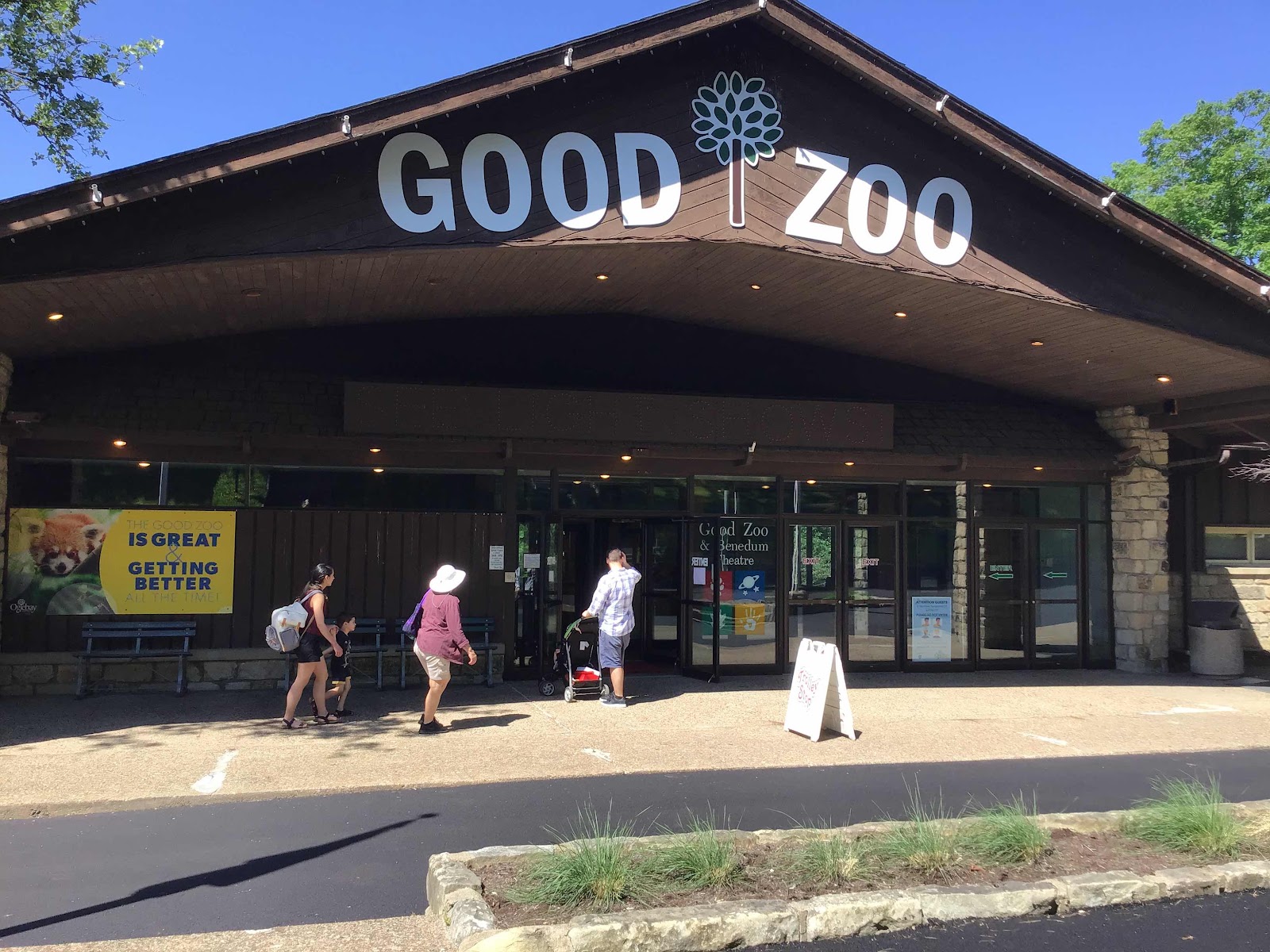
Good Zoo

Today’s adventure, to give the grandkids something new, was to visit Good Zoo in Oglebay, West by God, Virginia, about an hour drive from Alex’s house.


A smaller zoo, but more than adequate for younger kids. If you want elephants, and lots of big cats, go to Pittsburgh.


But if you want to get close to  Red Panda, this is a good choice. Outside, there were mostly well shaded walks


A playground for the kids. Miles does the slide.