Showing posts with label extinction. Show all posts

Tuesday, February 11, 2025

Extinction is Forever!

Appalachia hebardi, the Appalachian grasshopper
Except sometimes. WHRO Virginia, Appalachian grasshopper, thought to be extinct, rediscovered in Augusta County

A species of grasshopper native to Appalachia, believed to be extinct, was spotted last year in Augusta County. It’s among several rare and never before seen plants and animals that were discovered in Virginia recently.

Andrew Rapp spent hours one summer day, his back crouched as he walked near a blueberry thicket. Net in hand, he was hoping to get a glimpse of a grasshopper, called Appalachia hebardi, more commonly called Appalachian grasshopper.

“I was looking for it,” Rapp said, describing a gravel pile where he finally saw the insect he had been searching for. “I locked eyes with it. And I was like, ‘Oh! I think that’s probably it!’”

This was the first such sighing of this species in Virginia in nearly 80 years. The Appalachian grasshopper normally lives in forests that are in the early stage of succession, where there are shrubs and tall grasses. It’s a non-flying grasshopper, about an inch to an inch-and-a-half long, and it’s only known to have lived in three states. Citizen scientists have spotted it in Pennsylvania and West Virginia in recent years, so Rapp had a hunch it was still around, well camouflaged by its olive and brown coloring. Loss of habitat may have driven down the insect’s numbers, and it could also be threatened by insecticides used to control invasive spongy moss caterpillars.

Thank goodness! I'll bet they're good bait for trout.

Sunday, November 24, 2024

Palm Sunday

with Darja Sobakinskaja:

The last wild Round Island hurricane palm, a rare tree native to Mauritius, snapped during a windstorm in mid-September, marking its extinction. Once thriving on a tiny island in the Indian Ocean, the tree had stood alone for decades as the only survivor of its kind.

Standing 9 meters (30 feet) tall, the Dictyosperma album var. conjugatum hurricane palm was known for its pale blue-tinted fronds and dense crown, and described as “breathtaking” by rare-palm enthusiasts.

“The tree was like the Eiffel Tower of Round Island. Anybody working on plants, reptiles, seabirds, or invertebrates would say, ‘We’ve got to go see it,’” Vikash Tatayah, conservation director of the Mauritian Wildlife Foundation, told Mongabay by phone.

It was native to the 1.7-square-kilometer (0.7-square-mile) Round Island, a strategic conservation area for Mauritius due to its high number of rare, endemic species, including reptiles and birds.

The foundation has been working to save the teetering tree, and other species, for decades in partnership with the Mauritian government and the U.K.-based Durrell Wildlife Conservation Trust. But years of decline ultimately took their toll.

The trees’ decline began in the 19th century when British colonizers brought in animals like rabbits and goats. The invasive species overran the island’s ecosystem, eroding the topsoil that helps hold palm trees in place. By 1994, only two trees were left; one fell during a cyclone later that year.
But you can buy seeds on line.

Linked at The Pirate's Cove in the weekly Sorta Blogless Sunday Pinup and links. I forgot to send my Rule 5s to the Wombat this week, but he still posted Rule 5 Sunday: Cheerful Bikini anyway. 

Saturday, March 2, 2024

Bring Back the Mammoth!

Nathan Stone at Da Fed says Scientists Resurrecting The Woolly Mammoth Are Crazy, Not ‘Cool’. I disagree!

To paraphrase Jeff Goldblum in “Jurassic Park,” just because you can do something doesn’t mean you should — even if that something is “cool.”

Ben Lamm and Eriona Hysolli recently took to Newsweek to announce that they and their team at Colossal Biosciences are bringing the woolly mammoth back to life. This is not a pie-in-the-sky pseudo-sci fi dream that might happen at some undefined future date. “Our first mammoth calves will be born in 2028,” they declare.

The plan is to recreate the genome (the complete set of genes or genetic material of a cell or organism) of the woolly mammoth from preserved mammoth remains. This will be achieved through DNA editing, synthesis technologies, and AI, which will “help us with all the computational analysis of ancient genomes, assembly, comparative genomics, and recommendation systems on what types of tools to use.” These recreated genetic packages will then be implanted into the harvested egg of an Asian elephant (the closest living relation of the mammoth) and — voila! — a baby mammoth (or “a cold-resistant elephant” as Colossal Biosciences’ website says.)

Ask why, exactly, we need to bring mammoths back to life, and the answers become numerous and hideously predictable. Colossal Biosciences’ website lists 10 “core goals” for resurrecting the species that can be boiled down to climate change and saving modern elephants from extinction. Both reasons are bogus.

To take the easiest one — preserving elephants — first, the obvious question is: How will elephants be saved with the reintroduction of mammoths? The Asian elephant’s habitat is India and Southeast Asia. The African forest elephant and the African savannah elephant both live exactly where their names suggest. Making a “cold-resistant elephant” won’t do anything for them.

Lamm and Hysolli give something of an answer when they say that their work could be used to combat elephant endotheliotropic herpesviruses (EEHV), which kill up to 20 percent of elephant calves every year. So why not just direct all of their technology to combat that very concrete threat?

Lamm and Hysolli claim that “there’s no big market from a financing perspective, so not enough technology and resources have gone into that.” At a time when people are literally vowing to not have children to “save the planet,” there’s no market to eradicate an elephant-killing virus, even though elephants are a keystone species? And the elephant in the corner is that Colossal Biosciences already has the technology and equipment. Even if it lost half of its finances (Colossal has an annual revenue of $35.1 million and a total funding of $225 million), there should still be some resources to fight the problem.


The arguments about climate change are just as unconvincing. There are the usual, low-hanging objections: If man is the primary causer of climate change, how will bringing mammoths back to life solve the problem? If bringing mammoths back to life is the solution, why does Bill Gates want to dim the sun? Since scientists just now discovered that trees were messing with their climate models, how can we be sure that bringing back an extinct species will actually “fight climate change”?

Then there are more serious problems. It’s a fact that the climate has changed since the last woolly mammoths died 4,000 years ago. This means that if a woolly mammoth were stitched together, brought to life, and plopped into the wilderness, the cold ecosystems would not be the same.

Furthermore, there is the problem of the phenotypes. A phenotype is a set of observable characteristics of an organism that come from the interaction of the organism’s genetic makeup and its environment. Lamm and Hysolli are clear that their genetic engineering must get the phenotypes of their mammoths correct. “We must also be sure the genetic engineering is producing the phenotypes we need to recreate the mammoth and its famous traits,” they say.

But since modern man has never seen a woolly mammoth, how can anyone be sure that the genetic engineering is producing authentic mammoth phenotypes? And if that can’t be guaranteed, how do we know that these assembly-lined lumps of carbon will actually diversify and strengthen the ecosystems they are put into?

The one excuse Lamm and Hysolli give that rings true is that “outside of the benefits to the planet, it’s also just a cool, fun, and inspiring thing to be doing.” Those words become more chilling when you realize that the woolly mammoth is not the only species slated for resurrection. True, most of them are benign. Passenger pigeons and dodos and Carolina parakeets are not exactly going to be threats. But saber-toothed tigers? Cave bears? These animals have been extinct for so many thousands of years and were such ferocious predators that it is doubtful they would have any intrinsic fear of man, similar to polar bears today.

What’s more, what other extinct animals will just be “cool” and “fun” to resurrect? The list will expand as more remains with preserved DNA are found and AI and genetic engineering procedures become more fine-tuned. But we don’t even have to be that melodramatic about it. What sort of diseases will these things bring back with them? What diseases will mutate to infect these new species, and how will these mutations affect humans? How will these newly resurrected species interact with today’s species? How many species will be driven to extinction as resurrected animals fight them for space and resources?

Nope. Don't care. Humans and Mammoths coexisted for hundreds of thousands of years until about 20,000 BC. Then something happened, and it's still not clear what. Did humans become such efficient hunters that they succeeded in eliminating the Mammoth? Possible, but then why did the Mammoth's relatives, the Indian and African Elephants survive? Climate change? Maybe , but they survived multiple excursions and recessions of glacial ice, only to succumb as the climate warmed at the end of the last one? Seems awfully inconvenient.

Bring them back, and create a reservation for them in Alaska, and bribe Canada and Russia to do likewise. Although, I do like the idea of housing a healthy population of them in Central Park, which would have been within their native range.

The Wombat has Rule 5 Sunday: Country Girls ready for your digital pleasure at The Other McCain.

Monday, January 15, 2024

I Blame the Chinese

Jazz Shaw at Hat Hair Largest Ape Ever Went Extinct Because of... Climate Change?

Back in the 1930s, paleontologists discovered the fossilized remains of the largest ape known to have ever walked the earth. Standing as much as ten feet tall and weighing more than a quarter of a ton, they named the creature Gigantopithecus and it is only known to have lived in southern China. The ape is believed to have gone extinct between 200,000 and 300,000 years ago. This may seem like a rather odd story to be discussing here, but Gigantopithecus was back in the news this week in the journal Nature for a peculiar reason. A group of scientists has concluded that the monster ape was driven to extinction by climate change. Before all of our friends on the left start leaping to their feet and screaming ‘We told you so,’ we should look at the details of what these scientists are talking about. (Associated Press) 

An ancient species of great ape was likely driven to extinction when climate change put their favorite fruits out of reach during dry seasons, scientists reported Wednesday.

The species Gigantopithecus blacki, which once lived in southern China, represents the largest great ape known to scientists — standing 10 feet tall and weighing up to 650 pounds.

But its size may also have been a weakness.

“It’s just a massive animal – just really, really big,” said Renaud Joannes-Boyau, a researcher at Australia’s Southern Cross University and co-author of the study published in the journal Nature.

So the mechanics of this extinction event come down to the Gigantopithecus being a victim of its own evolutionary success, assuming these scientists are correct. It evolved to become so large that it was unable to climb trees or explore alternate food sources during lean times. But they believe that its food supplies were wiped out by climate change. How did that happen?

What was causing climate change way back then? There were only a comparatively tiny number of human beings on the planet in those days and they were primarily poking around with sticks and living a hunter-gatherer lifestyle, not engaging in any sort of industrial activity. Did the giant apes have a fracking program that we haven’t found any evidence of yet?

That’s almost certainly not the explanation. In the end, this may prove to be yet another example of something that many grounded scientists have pointed out and we’ve discussed it here in the past. Analyses of ice core samples and other geologic records tell us that the planet and been going through cycles of heating and cooling for as long as it has existed. There are records of at least five ice ages where the world froze over almost entirely. In the intervening eras, Earth was often noticeably warmer on average than it is today. And all of this kept happening while there were no polluting, oil-drilling humans around to mess up the place.

Speaking of shifting temperatures, have the scientists looked into those types of changes when figuring out how Gigantopithecus went extinct? If you look at the graphic timeline in this report on glacial and interglacial periods of Earth’s history, you notice something that might have been a factor. As noted above, scientists believe that the giant ape may have gone extinct roughly 200,000 years ago. Perhaps it’s just a coincidence, but that period falls right at the end of one of the interglacial warming periods. Right after that, the temperatures plunged and didn’t rise again for the next 50,000 years. Could Gigantopithecus have been the victim of an ice age? That would certainly qualify as an extreme form of “climate change,” but it wasn’t driven by mankind.

200,000-300,000 years ago is quite a wide range for an extinction date. The earth is currently in an ice-age that oscillates between warm (like we're in now) and cold glacial advances on approximately a 100,000 year cycle (very approximate, it has been any where from 80ky to 120ky in the past few cycles). Not knowing when something went extinct by 100,000 years doesn't help very much to determine what might have caused it. Personally, I suspect the proto-Chinese ate them.

Curiously, people have suggested, probably tongue in cheek, that remnant populations of Gigantophithecus survived down the present in out of the way places, and gave rise to legends of Bigfoot, Yeti and other otherwise apparently mythical giants. I doubt it, but I sure hope so.

The Wombat has Rule 5 Monday: Happy Lee-Jackson Day! up at The Other McCain.

Tuesday, November 28, 2023

Extinction is Forever

Except when it isn't. From Science Alert, Egg-Laying Mammal Recorded Only Once by Scientists Rediscovered After 60 Years

Attenborough's long-beaked echidna has been feared extinct for over 60 years, but researchers just provided video evidence that this bizarre egg-laying mammal is still alive in Indonesia's Cyclops Mountains, known to locals as Dafonsoro or Dobonsolo.

The international team of researchers was euphoric at the sight of the small, spiked, and fuzzy mammal wobbling awkwardly across their hard-earned, grainy, black-and-white footage.

"The discovery is the result of a lot of hard work and over three and a half years of planning," explains Oxford University biologist James Kempton.

His team endured an earthquake, malaria, and even a leech to an eyeball, all to obtain these tiny snippets of footage from just one of over 80 trail cameras. It was only on the last day of their four-week expedition that the rare echidna even appeared.

Only a handful of egg-laying mammals remain on Earth, including one species of platypus and three other species of echidna. Monotremes survived the mass extinction that took out non-avian dinosaurs, but all of Earth's most ancient surviving mammals are declining in numbers now, except for Australia's short-beaked echidna (Tachyglossus aculeatus).

Zaglossus attenboroughi, named for the British broadcaster and biologist David Attenborough, is the most critically endangered of them all.

"Attenborough's long-beaked echidna has the spines of a hedgehog, the snout of an anteater, and the feet of a mole. Because of its hybrid appearance, it shares its name with a creature of Greek mythology that is half human, half serpent," says Kempton, in reference to the name 'echidna'.

"It appears so unlike other mammals because it is a member of the monotremes – an egg-laying group that separated from the rest of the mammal tree-of-life about 200 million years ago."

Rumors from hunters and indirect signs of the rare monotreme kept hope of its existence alive, including snout 'pokings' identified by scientists in 2007. Thanks to Kempton and his team's dedication we now have the first scientific evidence in 62 years that these unique creatures are not gone forever. At least not quite yet.

We still have no idea how few are out there.

I wonder how they taste? 

Sunday, June 11, 2023

Palm Sunday

 with Tiffany Toth, this weekend's Rule 5 girl.


Linked at Pirate's Cove in the weekly Sorta Blogless Sunday Pinup and links. The Wombat has Rule 5 Sunday: Natalya Neidhart and FMJRA 2.0: Back To Earth up and awaiting your clicks at The Other McCain.

Tuesday, February 14, 2023

Promises, Promises

 I've heard this before, Pop Mech, Scientists Are Reincarnating the Woolly Mammoth to Return in 4 Years

The long-dead woolly mammoth will make its return from extinction by 2027, says Colossal, the biotech company actively working to reincarnate the ancient beast.

Last year, the Dallas-based firm scored an additional $60 million in funding to continue the, well, mammoth gene-editing work it started in 2021. If successful, not only will Colossal bring back an extinct species—one the company dubs a cold-resistant elephant—but it will also reintroduce the woolly mammoth to the same ecosystem in which it once lived in an effort to fight climate change, according to a recent Medium post.

Colossal calls the woolly mammoth’s vast migration patterns an active part of preserving the health of the Arctic, and so bringing the animal back to life can have a beneficial impact on the health of the world’s ecosystem. While Colossal originally hoped to reintroduce the woolly mammoth into Siberia, the company may explore other options based on the current political framework of the world.


The woolly mammoth’s DNA is a 99.6 percent match of the Asian elephant, which leads Colossal to believe it’s well on its way toward achieving its goal. “In the minds of many, this creature is gone forever,” the company says. “But not in the minds of our scientists, nor the labs of our company. We’re already in the process of the de-extinction of the Woolly Mammoth. Our teams have collected viable DNA samples and are editing the genes that will allow this wonderful megafauna to once again thunder through the Arctic.”

Through gene editing, Colossal scientists will eventually create an embryo of a woolly mammoth. They will place the embryo in an African elephant to take advantage of its size and allow it to give birth to the new woolly mammoth. The eventual goal is to then repopulate parts of the Arctic with the new woolly mammoth and strengthen local plant life with the migration patterns and dietary habits of the beast.

That should be an interesting battle. Trying to introduce a genetically engineered megafauna to the wild? The paperwork should be a real trip. I suggest a limited trial run in Central Park, New York. What could go wrong? 

Monday, November 8, 2021

Goodbye Maryland Darter, We Hardly Knew You

Because there were never very many of you to begin with: The long goodbye to the Maryland darter - Fish to be declared extinct after final search comes up empty (Bay Journal)

The Maryland darter, one of the rarest fish in the world, has been missing in action for 33 years. Now, it is headed to the extinction list. The impending move comes after one last intensive “fish hunt” by Maryland wildlife officials and private groups this summer and fall. The hunt focused on several tributaries of the Susquehanna River, where Maryland darters have been known to live, as well as a few streams and creeks that seemed to have suitable habitat.

The fish was the only animal of any kind known to be found solely in Maryland.

In the largest search ever mounted for a Maryland fish, crews repeatedly used snorkeling, seining, water shocking and even bottom-dragging electric trawling nets — all with no success.

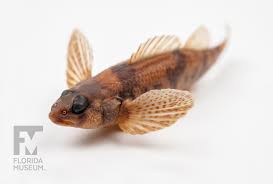
Maryland Darter
 

In 1912, two biologists from Cornell University doing a federal survey of ray-finned fish in the Chesapeake Bay were seining in Swan Creek, a fast-flowing stream in the upper reach of the Bay near Havre de Grace.

“On a long, stony riffle where the bottom was comparatively free from boulders and the current so swift that one would not have expected to find fishes of any kind,” a pair of small fish with “a very striking appearance” danced in their seine nets.

Nobody had ever seen one. Lewis Radcliffe and William Welsh gave it the scientific name Etheostoma sellare and the common name Maryland darter. But the fish immediately showed itself to be extraordinarily elusive. No sooner had the scientists announced their discovery in a scientific journal then it disappeared — for 50 years.

In 1962, the darter was “rediscovered” when yet another Cornell contingent, researcher Leslie Knapp and his students, found an adult female concealed among a school of tessellated darters in Gasheys Run, a Swan Creek tributary. The finding sparked a flurry of new efforts to find the fish that lived in the fast lane of strong riffles.

Deer Creek, Maryland
 

Another was found in the stream three years later. That same year, darters were found for the first time farther north in Deer Creek, a fast-moving stream that flows into the Susquehanna River below the Conowingo Dam. From then until the last one was observed in 1988, only Deer Creek yielded darters.

In a heyday of sorts, between 1965 and 1977, Knapp, Raesly and their students observed 77 Maryland darters.

Recognizing the scarcity of the fish species, the Maryland darter was declared federally endangered in 1967. Despite new protections afforded by the listing, the bottom dropped out again; only 25 were recorded between 1978 and the last sighting in 1988.
MD biologist looks for darter


Official records show 106 Maryland darters collected between 1912, when it was discovered, and 1988, when Raesly swam with the last one. It also is known that there are about 80 of the fish preserved in museum and university collections.

That gives rise to a question: Was the darter already on the brink of extinction and then pushed over the edge by scientists and collectors?

Raesly never kept any of the darters he found. Sacrificing 80 of them for scientific purposes over 76 years should not be blamed for the species’ end, he said. In retrospect, Raesly said that Maryland darters were likely well on their way to extinction for other reasons.

“It may have been a factor in their ultimate demise, but a number of water-quality factors prior to that started them on the downward trajectory,” he said.

There are lots of successful darters, and more than a few examples of extremely rare and endangered darters. See "Snail Darter" if you don't remember the controversy. While I'm sure some factor in their ecological niche determines whether a species like this is widespread and resilient to land use changes, or highly localized, and vulnerable to changes in its habitat. 

Here's hoping the Maryland Darter manages to elude scientists for many more years, and then emerges again, and blows them a raspberry.


Friday, May 28, 2021

Extinction is Forever . . .

Except when it isn't, UPI, Scientists confirm discovery of giant tortoise believed extinct since 1906

A giant tortoise believed to have gone extinct more than 100 years ago has been found in the Galapagos Islands, and researchers are now preparing an expedition to see if more can be found.

Scientists from the California Academy of Sciences said the lone female turtle, identified with the chelonoidis phantasticus species, was found in 2019 on Fernandina Island during a joint expedition of the Galapagos National Park and the Galapagos Conservancy.

Yale University researcher Gisella Caccone and a team of geneticists performed an analysis on the tortoise and compared it with the last known specimen taken in 1906 for confirmation, according to the Galapagos National Park Facebook page.

"Rediscovery of this lost species may have happened just in time to save it," tortoise expert James Gibbs, vice president of science and conservation with the Galapagos Conservancy, said in a statement. "Now we urgently need to complete the search to find other turtles."

It would be nice if the could find a male on the island (as far as I know, the Galapagos Tortoise species are mostly endemic to a particular island (I think Darwin wrote a book about that). But if not, a hybrid, preserving half the genes could be an alternative. And I know just the turtles to do it:  COWABUNGA! THIS CENTURY-OLD TURTLE’S NO MUTANT, BUT MIGHT AS WELL BE AFTER SIRING 800 BABIES

Diego the horny tortoise

A 100-year-old giant tortoise named Diego and from the Galapagos' Española Island is retiring from controlled baby-making after he helped saved his entire species from extinction by fathering 800 children, reports The New York Times. Nearly eight decades after he was taken from his native habitat, Diego will finally return home to Española Island in March.

While Diego was one of several turtles participating in a breeding program at the Fausto Llerena Tortoise Center on the island of Santa Cruz, he "displayed an exceptional sex drive," according to the article. He joined the program in 1976 after living at the San Diego Zoo for 30 years. With his coital help, the Tortoise Center amazingly increased its shelled population from 15 to 2,000. Forty percent of those offspring were sired by — you guessed it — Diego himself. If you can believe it, though, he wasn't even the most feisty member of the bunch.

“Another more reserved, less charismatic male" produced 60% of the kids, according to James P. Gibbs, a professor of environmental and forest biology at the State University of New York in Syracuse, per the Times. A third male had virtually no progeny.

“It clearly is the other quieter male that has had much more success,” said Gibbs, according to the article. “Maybe he prefers to mate more at night."

The sly dog tortoise.

Sunday, March 21, 2021

Extinction is Forever . . .

The Audubon interpretation
 Except when it isn't. NPR, Ivory-Billed Woodpecker Rediscovered in Arkansas

A group of wildlife scientists believe the ivory-billed woodpecker is not extinct. They say they have made seven firm sightings of the bird in central Arkansas. The landmark find caps a search that began more than 60 years ago, after biologists said North America's largest woodpecker had become extinct in the United States.

The large, showy bird is an American legend — it disappeared when the big bottomland forests of North America were logged, and relentless searches have produced only false alarms. Now, in an intensive year-long search in the Cache River and White River national wildlife refuges involving more than 50 experts and field biologists working together as part of the Big Woods Partnership, an ivory-billed male has been captured on video.

"We have solid evidence, there are solid sightings, this bird is here," says Tim Barksdale, a wildlife photographer and biologist.
Stuffed specimens 
For an NPR/National Geographic Radio Expeditions story, NPR science correspondent Christopher Joyce joined the search last January along Arkansas' White River, where a kayaker spotted what he believed to be an ivory-billed woodpecker more than a year ago. Many other similar sightings over the last 60 years have raised false hopes.

But this time, Joyce reports that experts associated with the Cornell Laboratory of Ornithology in New York and The Nature Conservancy were able to confirm the sighting. They kept the find a secret for more than a year, partly to give conservation groups and government agencies time to protect the bird's habitat.

The Nature Conservancy has been buying and protecting land along the White and Cache Rivers for years, along with the state and the federal Fish and Wildlife Service. Since the discovery, they've bought more land to protect the bird.

That's good. 

Saturday, September 12, 2020

They're Always in the Last Place You Look

Like a Chinese pet shop. WUWT, Turtles: Back to the Future!

This is a Burmese Roofed Turtle – thought to be extinct until it was re-discovered in 2002. According to the Wiki: “The female turtle grows significantly larger than the male and reaches sizes similar to that of a steering wheel; the males’ color transforms during breeding season in which their usually green heads turn a bright chartreuse-yellow with bold black markings”. It lives in Myanmar (once known as Burma). Almost all turtles are under some negative population pressures, but according to an article in the NY Times, especially “Asian species, which are pummeled by both habitat loss and high levels of hunting for food, medicine and the pet trade.”

The beleaguered Burmese Roofed Turtle has a distinct disadvantage – it is found only in Myanmar, a very poor country – 25% of the population is officially poor, making less than US$ 1.20 per day. Despite the numbers, this is an improvement. [ source – World Bank – 2017 report .pdf ] In addition, because the female turtle grows to “sizes similar to that of a steering wheel” – she becomes a very tempting target for bush food hunters who nearly drove the species to extinction.

The Times reports:
“Conservationists are not known for delivering a lot of good news. But in the Burmese roofed turtle — a giant Asian river turtle whose bug-eyed face is naturally set in a goofy grin — they have cause for celebration. Just 20 years ago, the species was presumed extinct. But after rediscovering a handful of surviving animals, scientists have grown the population to nearly 1,000 animals in captivity, some of which have been successfully released into the wild in Myanmar over the past five years.” 


This smiling cutie was saved by serendipity:

“When the species showed up in a pet shop in Hong Kong, it raised a lot of eyebrows,” said Rick Hudson, president of the Turtle Survival Alliance. “There were a number of local dealers smuggling star tortoises out of Burma at that time, so we just assumed it had been smuggled out by the same traders.”

Encouraged by these developments, Gerald Kuchling, a biologist now at the University of Western Australia, secured permission to initiate a joint expedition with the Myanmar Forest Department to survey the upper Chindwin River, where an American expedition in the 1930s had collected Burmese roofed turtles. . . .

Eating turtles may sound a little off to current Western tastes, but turtle soup made from Maryland's famous Diamondback Terrapin  (hence the Terps) was quite a thing back in the day. In fact, the fishery extended into recent times, with most of the catch being sent to China. And the population of them has rebounded nicely after the trapping was banned.

Wednesday, September 9, 2020

They're Always in the Last Place You Look

Frosted Elfin
Globally Rare Butterfly Found at a New Site in Pennsylvania
From distant planets to penicillin, some of the greatest scientific discoveries have happened by chance. Betsy Leppo, an invertebrate zoologist with the Pennsylvania Natural Heritage Program, knows this all too well after learning about a new population of the globally rare frosted elfin butterfly in Huntingdon County, Pennsylvania.

“We were actually looking for a different rare butterfly at that time,” she said, “but in the process of all that, we just serendipitously encountered these naturalists in the field.” Naturalists John and Becky Peplinski told them about the elfin site. It was the first new site documented in Pennsylvania in recent decades.

When U.S. Fish and Wildlife Service biologist Nicole Ranalli got word of the discovery, she was surprised by the depth of their survey records, complete with photos and observation dates. “They had some really detailed information,” she said. “You don’t generally get that.”

Pennsylvania now had two sites with confirmed populations of frosted elfin. For Leppo and Ranalli, it was a sign the species could make a comeback.

Frosted elfin records stretch as far back as the early 1800s. Scientists have extensive information about sites where the butterfly used to be, and less data about where they persist. The Service and state agencies recently invested in surveys across the Northeast to update records.

While the new site is not in past records, Leppo doesn’t think they were far away because unlike monarch butterflies, frosted elfin aren’t able to travel long distances. “Their populations do move around a little bit,” Leppo explained. “But they’re not strong fliers. Odds are there was a population around there, just not in that exact spot.”

The frosted elfin’s historic range is far and wide. It stretches down the entire east coast from southern Canada to Florida and goes as west as Texas. But this rare butterfly has been extirpated from Vermont, Georgia and Illinois due to the gradual disappearance of suitable habitat.

This invertebrate is not associated with a conventional butterfly habitat. Instead of living in lush meadows, frosted elfin, along with the plants upon which they lay eggs and their caterpillars feed, thrive in young habitats with dry, sandy soil. The elfin populations of Pennsylvania have only been observed using yellow wild indigo (Baptisia tinctoria) for their life cycle, but other populations in the butterfly’s extensive range also use lupine as their host plant.
Henry's Elfin in my back yard
The Frosted Elfin is very similar to Henry's Elfin, which is at least reasonably common around here, if you look in the right places at the right time (about a 1 month window in early spring).  I can usually find them at that time picking fights with the Spring Azures that hang around the back yard. They're pretty cryptic, and it's easier to see them when they chase the azures out of their territory. I'd be hard pressed to actually identify a Frosted as opposed to Henry's if one showed up.

Reportedly, their list of favorite foods is a bit more diverse than the Frosted:
Caterpillar Hosts: Diverse plants texana) in Texas; dahoon (Ilex cassine), American holly (I. opaca), and yaupon (I. vomitoria) in Florida and North Carolina. Redbud (Ceris canadensis), huckleberries and blueberries (Vaccinium species), Mexican buckeye (Ungnadia speciosa), and Viburnum species are selected in other locations.
Which just goes to show it doesn't pay to be a picky eater.

Thursday, September 3, 2020

Extinction is Forever . . .

Except when it isn't.  Thought to be extinct for 50 years, New Guinea singing dog was thriving all along
The New Guinea singing dog was thought to have disappeared from the wild some 50 years ago, but new research suggests the unusual species has been thriving all along in the New Guinea Highlands.

Genomic analysis, detailed this week in the journal Proceedings of the National Academy of Science, confirmed a group of wild dogs discovered in the New Guinea Highlands as the population from which New Guinea singing dogs were derived.

New Guinea singing dogs are noted for their distinct, melodious howls.

"Canids make all kinds of sounds, but the sound that New Guinea singing dogs make is different, it's unlike any dog sound you've heard," Elaine Ostrander told UPI on Tuesday.

"It has a harmonic, tonal quality that goes up and goes down in pitch," said Ostrander, lead investigator at the National Human Genome Research Institute of the National Institutes of Health.

Knowledge of the New Guinea singing dog can be traced back in the scientific literature to the 19th century, but by the 1970s, scientists reported the dog missing from the wild.

In an effort to conserve the species, a handful of dogs were brought from conservation centers in New Guinea to the United States. On the surface, the effort was a success, breeders turned eight or nine dogs into a population of nearly 300.

"The problem is that when you start with just eight or nine dogs and you breed them and breed them, you lose genetic diversity very quickly," Ostrander said.

In the mid-2000s, word spread of a group of dogs in the mountains of Indonesia that resembled New Guinea singing dogs. James McIntyre, president of the New Guinea Highland Wild Dog Foundation, led a pair of expeditions to find and document the wild dogs. On the second expedition, in 2018, McIntyre was able to obtain blood samples.

Back in the lab, scientists were able to isolate the nuclear genomes of three individual dogs from DNA in the blood samples.

"When we looked at the highland dogs' genome and compared it to all known dog breeds from everywhere in the world, as well as to dingoes and village dogs from New Guinea, it was clear that they were most closely related to New Guinea singing dogs," Ostrander said.

The findings also allowed researchers to measure the loss of genetic diversity the New Guinea singing dog experienced while in captivity, data that could help conservation biologists improve future captive breeding programs and protect species vulnerable to genetic bottlenecking.
It's always in the last place you look.

Monday, July 29, 2019

A Shot of Salvation for Chesapeake Logperch

Chesapeake Logperch
Scientists see early success in breeding effort to help save Chesapeake logperch
In a mad dash to keep the Chesapeake logperch from being placed on the federal endangered species list, the tiny fish is certainly doing its part.

In an underwater roundup of sorts, 28 logperch were netted in late March from three tributaries to the Susquehanna River in Lancaster County, PA, just north of the Maryland line. In an experiment with plenty of doubts, those 28 have multiplied to about 1,500 in propagation fish tanks in Tennessee and at Penn State University.

The plan is to reintroduce logperch into one southern Pennsylvania stream this fall, with later stockings possible into up to seven lower Susquehanna tributaries in Pennsylvania from the Holtwood Dam to Harrisburg. That’s an area where the fish were once native but have disappeared.

It’s a rare experiment. The relatively recent discovery of the fish as a distinct species caused fisheries agencies in both Pennsylvania and Maryland to reassess its status. Both declared it threatened in their states.
Maryland DNR's Jackie Sivalia, Matt Ashton, and Megan Davis,
 a Chesapeake Conservation Corps intern, survey for Chesapeake
 logperch in Harford County, MD using seine nets.
Are we worried about a genetic bottleneck here, starting a population from such a small sample?
“There has been quite a lot of work done in the last 10 years or so trying to restore fishes to their habitats, but there are not many restoration projects of this magnitude with a species that has not been federally listed,” said Jay Stauffer, a distinguished professor of ichthyology at Penn State. “To try to prevent a species from being federally listed is pretty unique,”

But first, a seed stock was needed. To make the captured fish feel right at home, researchers scooped gravel and sand from the streams where they were found. They even collected rocks that the members of the darter family flip over with their piglike snouts to look for aquatic insects. They are known for flipping rocks. The elements from their home stream were combined in the propagation tanks, where pumps replicated the current.


Apparently, the fish indeed felt right at home. They reproduced so fast that their fecundity had to be cut off after three weeks for fear they would overwhelm their tanks. The fish were divided between Penn State and rearing facilities in Tennessee run by the nonprofit aquaculture group Conservation Fisheries, Inc. so that an unforeseen accident or disease wouldn’t wipe out the entire population.

Ripe with that success, the next phase of the four-year plan has been expedited. This summer, teams will snorkel and scuba dive in candidate streams, checking stream-bottom habitat, flow and water temperatures in search of ideal homes for the juveniles. The effort will be aided by an underwater drone attached to a 300-foot tether that will send back a deepwater video of the terrain.
I'm happy that they've done this, but it should not be considered a big deal. One grad student who cared could have done this in their spare time. And sold the spare fish for aquaria.

Previous post on the Logperch


The Wombat has Rule 5 Sunday: Claudia Cardinale raring to go at The Other McCain.

Friday, May 10, 2019

Extinction is Forever, Except When It Isn't

Extinct species of bird came back from the dead
A previously extinct species of bird returned from the dead, reclaiming the island it previously lived on and re-evolving itself back into existence, scientists have said.

The white-throated rail colonized the Aldabra Atoll in the Indian Ocean and evolved to become flightless, before being completely wiped out when the island disappeared below the sea around 136,000 years ago.

But researchers found similar fossils from before and after that event, showing that the chicken-sized bird re-appeared when sea levels fell again a few thousand years later, re-colonized the island and again lost the ability to fly.

The flightless rail can be found on Aldabra to this day.

The extremely rare process is known as iterative evolution -- the repeated evolution of a species from the same ancestor at different times in history.

The team's study, published in the Zoological Journal of the Linnean Society, marks the first time the process has been seen in rails, and is one of the "most significant" instances ever found in birds, according to the authors.
What, the island disappeared below below the sea back when mankind was far too insignificant to affect it? I thought that was impossible. Note, that would have been about the time of the last interglacial, the Eemian, analagous to the current interglacial.

Is it really the "same" species? Probably not, but if it evolved from  wider ranging related flying species, in the same place with the same conditions, it's probably close enough for government work. If it walks like a white-throated rail and squawks like a white-throated rail you might as well call it a white-throated rail (unless it's throat was a different color, and we might never know).

Monday, February 25, 2019

What Was Lost is Found

Giant Tortoise Feared Extinct Reappears After 113 Years
The Fernandina giant tortoise, which has not been seen alive since 1906, has been spotted on its namesake island in the Galápagos, says the government of Ecuador.

The tortoise herself may be over 100 years old, according to a statement released Wednesday by Ecuador’s ministry of the environment.

The Fernandina tortoise, native to the Galápagos Islands, is considered critically endangered by the International Union for Conservation of Nature, and some feared it might be extinct.

The tortoise was found by park ranger Jeffeys Malaga and tortoise preservation expert Washington Tapia, members of the Giant Tortoise Restoration Initiative (GTRI). The collaborative project between Galápagos National Park and the Galápagos Conservancy, an American nonprofit, aims to breed tortoises in captivity and reintroduce them to islands where the animals have become endangered or entirely absent.
It's amazing to me that an animal that big and slow can stay missing on a small island for 113 years.

I'm certainly happy about the finding, and would much rather lose the Bramble Cay mouse melomys than one of the Galápagos tortoises.

In another return from extinction story,
. . . another “giant” species long feared extinct also showed up this year—Wallace’s giant bee ( Megachile pluto).

Last seen in 1981 by entomologist Adam Messer, this Indonesian insect is the world’s largest known bee species. The wingspan of the female can reach 2.5 inches, though the male is only half as big.

Which is OK, as long as they stay in Madagascar.

Wednesday, February 20, 2019

Rats Desert Sinking Island

The Morrison government has formally recognised the extinction of a tiny island rodent, the Bramble Cay melomys - the first known demise of a mammal because of human-induced climate change.

The changed status of the Melomys rubicola from the government's "endangered" to "extinct" category was included without fanfare in a statement released by federal Environment Minister Melissa Price late on Monday.

Geoff Richardson, an environment department official, told Senate estimates on Monday night that research efforts since 2014 - "including a pretty rushed trip in 2015" - had failed to identify any melomys individuals in their only known location on Bramble Cay, a tiny Torres Strait island near Papua New Guinea .


Declaring its extinction "was not a decision to take lightly," Mr Richardson said. "There's always a delay while the evidence is gathered to be absolutely certain."


The federal extinction listing comes almost three years after the Queensland government reached a similar conclusion, with a finding that the demise of the melomys "probably represents the first recorded mammalian extinction due to anthropogenic climate change".
Bramble Cay
Maybe they just rode away on drifting log.
The limited range of the animal, living on a five-hectare island less than three metres high, left it vulnerable to climate change. However, its 2008 "recovery plan", drawn up when numbers were likely down to just dozens of individuals, downplayed the risks.

"[T]he likely consequences of climate change, including sea-level rise and increase in the frequency and intensity of tropical storms, are unlikely to have any major impact on the survival of the Bramble Cay melomys in the life of this plan," the five-year scheme stated.
. . .
The federal policy director for the Wilderness Society, Tim Beshara, said preparation for the plan was limited, and it was never reviewed at its completion in 2013.

“The Bramble Cay melomys was a little brown rat," Mr Beshara said. "But it was our little brown rat and it was our responsibility to make sure it persisted. And we failed."
The little brown mouse (it's more a mouse than a rat) chose a very poor place to live for the long term. For a burrow dwelling creature to live on a small, low lying island in tropical storm beset regions just seems like a bad choice.  However, despite constant whining, there is no evidence for an increase in frequency or strength of tropical storms, and islands like Bramble Cay can grow upwards to meet sea level rise.


Incidentally, according to Wikipedia, the Bramble Cay rat is closely related to the Cape York melomys "except that it had some protein differences and a coarser tail caused by elevated scales." They are, or were,  quite likely sibling species, with the Bramble Cay rat evolving after a few Cape York rats happened to get stranded on Bramble Cay.

I would be remiss if I didn't point out that, at least occasionally, extinction isn't always forever, with the extinct critter resurfacing upon a second, third, or even tenth look. Maybe the Bramble Cay rat will make another appearance after hiding out for a few years.

Friday, May 4, 2018

Paging Dr. Frankenstein!

Scientists hope to create a genetically engineered elephant-mammoth hybrid and send it to the Arctic to prevent a so-called “methane time-bomb,” which could cause widespread environmental devastation.

The team at Harvard University believes the hardy animals could one day be released in the vast tundra and boreal stretches of North America and Eurasia. They plan to publish their first paper on the subject in the coming months, The Telegraph reported.
May I suggest introducing them to Central Park in New York first, as a trial run?
Scientists fear that the absence of large mammals pressing down and scraping back thick layers of winter snow in the region prevents the cold from penetrating the soil. Combined with warmer summers, the Arctic permafrost is melting. As a result, the frozen soil, packed with leaves and other organic materials that haven't decayed, will become exposed, releasing carbon into the atmosphere in the form of the greenhouse gasses carbon dioxide and methane.
The so called Arctic Time Bomb hypothesis is  highly implausible; Dr Judith Curry:
"The plausibility of Wadhams’ scenario rests on two assumptions:
  • the ‘spiral of death’ loss of arctic sea ice
  • connection of the sea ice loss to a massive release of methane hydrates into the atmosphere on the time scale of a decade
Each of these assumptions is highly implausible, based upon my understanding; the combination of these two assumptions into a single scenario seems impossible to me."
This threat is widely known as the “methane timebomb," which would create levels of carbon equivalent to burning all of the world’s forests two-and-a-half times over.

As part of a research project world-renowned Harvard geneticist George Church has led for over a decade, the team has taken 44 mammoth genes that became uncovered when ice melted in Siberia.
Genes were uncovered? Heck, they have entire frozen and or mummified mammoths. They ought to be able to get a lot more than 44 genes. By comparison, humans have 19,000 - 20,000 genes, so 44 is a drop in the bucket.
These will be spliced into the Asian elephant genome. Scientists hope the result, which is still many years away if possible at all, will be an elephant with mammoth traits, including blood adapted to the cold, long hair and thick layers of fat that will allow it to live further north.
So, it's not really going to be mammoth, it will be an Indian Elephant with a few modifications that make it look and behave kind of like a mammoth
In other parts of the world, the hybrid animal could save ecosystems threatened by the potential extinction of its close relative the Asian elephant. To prevent poachers from targeting the creature it will be edited to not grow tusks, and will also be able to stomach a wider variety of plants, Professor Church told The Telegraph.
I doubt a mammoth without tusks would be viable ecologically. All the elephants have them, it's pretty clear that evolution has found that they are important to the niche these animals fill.

Paging Dr. Frankenstein!


Wombat-socho has "Rule 5 Sunday: Crash Test Girl" up and running at The Other McCain.