Nathan Stone at Da Fed says
Scientists Resurrecting The Woolly Mammoth Are Crazy, Not ‘Cool’. I disagree!
To paraphrase Jeff Goldblum in “Jurassic Park,” just because you can do something doesn’t mean you should — even if that something is “cool.”
Ben Lamm and Eriona Hysolli recently took to Newsweek to announce that they and their team at Colossal Biosciences are bringing the woolly mammoth back to life. This is not a pie-in-the-sky pseudo-sci fi dream that might happen at some undefined future date. “Our first mammoth calves will be born in 2028,” they declare.
The plan is to recreate the genome (the complete set of genes or genetic material of a cell or organism) of the woolly mammoth from preserved mammoth remains. This will be achieved through DNA editing, synthesis technologies, and AI, which will “help us with all the computational analysis of ancient genomes, assembly, comparative genomics, and recommendation systems on what types of tools to use.” These recreated genetic packages will then be implanted into the harvested egg of an Asian elephant (the closest living relation of the mammoth) and — voila! — a baby mammoth (or “a cold-resistant elephant” as Colossal Biosciences’ website says.)

Ask why, exactly, we need to bring mammoths back to life, and the answers become numerous and hideously predictable. Colossal Biosciences’ website lists 10 “core goals” for resurrecting the species that can be boiled down to climate change and saving modern elephants from extinction. Both reasons are bogus.
To take the easiest one — preserving elephants — first, the obvious question is: How will elephants be saved with the reintroduction of mammoths? The Asian elephant’s habitat is India and Southeast Asia. The African forest elephant and the African savannah elephant both live exactly where their names suggest. Making a “cold-resistant elephant” won’t do anything for them.

Lamm and Hysolli give something of an answer when they say that their work could be used to combat elephant endotheliotropic herpesviruses (EEHV), which kill up to 20 percent of elephant calves every year. So why not just direct all of their technology to combat that very concrete threat?
Lamm and Hysolli claim that “there’s no big market from a financing perspective, so not enough technology and resources have gone into that.” At a time when people are literally vowing to not have children to “save the planet,” there’s no market to eradicate an elephant-killing virus, even though elephants are a keystone species? And the elephant in the corner is that Colossal Biosciences already has the technology and equipment. Even if it lost half of its finances (Colossal has an annual revenue of $35.1 million and a total funding of $225 million), there should still be some resources to fight the problem.

The arguments about climate change are just as unconvincing. There are the usual, low-hanging objections: If man is the primary causer of climate change, how will bringing mammoths back to life solve the problem? If bringing mammoths back to life is the solution, why does Bill Gates want to dim the sun? Since scientists just now discovered that trees were messing with their climate models, how can we be sure that bringing back an extinct species will actually “fight climate change”?
Then there are more serious problems. It’s a fact that the climate has changed since the last woolly mammoths died 4,000 years ago. This means that if a woolly mammoth were stitched together, brought to life, and plopped into the wilderness, the cold ecosystems would not be the same.
Furthermore, there is the problem of the phenotypes. A phenotype is a set of observable characteristics of an organism that come from the interaction of the organism’s genetic makeup and its environment. Lamm and Hysolli are clear that their genetic engineering must get the phenotypes of their mammoths correct. “We must also be sure the genetic engineering is producing the phenotypes we need to recreate the mammoth and its famous traits,” they say.

But since modern man has never seen a woolly mammoth, how can anyone be sure that the genetic engineering is producing authentic mammoth phenotypes? And if that can’t be guaranteed, how do we know that these assembly-lined lumps of carbon will actually diversify and strengthen the ecosystems they are put into?
The one excuse Lamm and Hysolli give that rings true is that “outside of the benefits to the planet, it’s also just a cool, fun, and inspiring thing to be doing.” Those words become more chilling when you realize that the woolly mammoth is not the only species slated for resurrection. True, most of them are benign. Passenger pigeons and dodos and Carolina parakeets are not exactly going to be threats. But saber-toothed tigers? Cave bears? These animals have been extinct for so many thousands of years and were such ferocious predators that it is doubtful they would have any intrinsic fear of man, similar to polar bears today.
What’s more, what other extinct animals will just be “cool” and “fun” to resurrect? The list will expand as more remains with preserved DNA are found and AI and genetic engineering procedures become more fine-tuned. But we don’t even have to be that melodramatic about it. What sort of diseases will these things bring back with them? What diseases will mutate to infect these new species, and how will these mutations affect humans? How will these newly resurrected species interact with today’s species? How many species will be driven to extinction as resurrected animals fight them for space and resources?
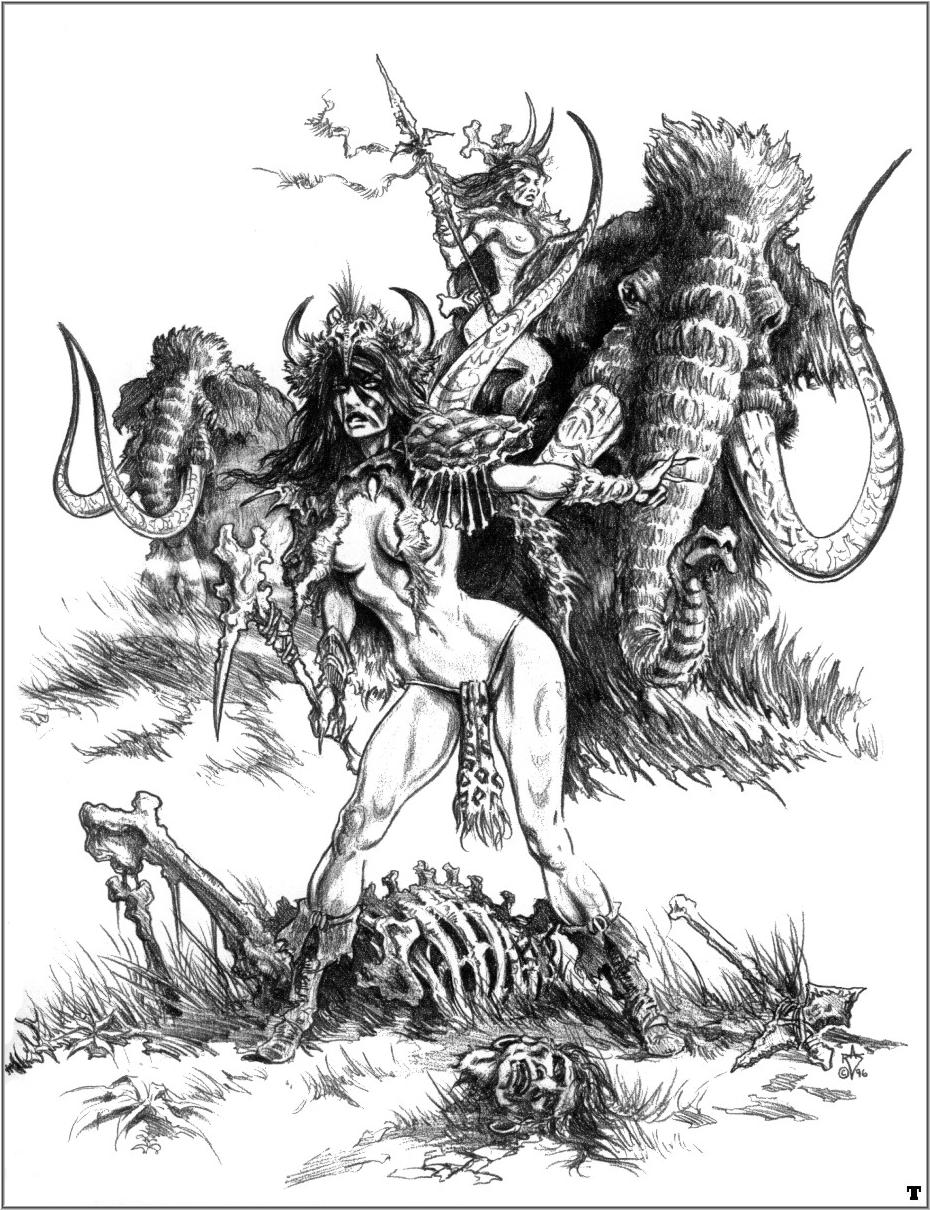
Nope. Don't care. Humans and Mammoths coexisted for hundreds of thousands of years until about 20,000 BC. Then something happened, and it's still not clear what. Did humans become such efficient hunters that they succeeded in eliminating the Mammoth? Possible, but then why did the Mammoth's relatives, the Indian and African Elephants survive? Climate change? Maybe , but they survived multiple excursions and recessions of glacial ice, only to succumb as the climate warmed at the end of the last one? Seems awfully inconvenient.
Bring them back, and create a reservation for them in Alaska, and bribe Canada and Russia to do likewise. Although, I do like the idea of housing a healthy population of them in Central Park, which would have been within their native range.
The Wombat has Rule 5 Sunday: Country Girls ready for your digital pleasure at The Other McCain.