Showing posts with label toxics. Show all posts

Wednesday, September 17, 2025

The Wednesday Wetness

Recent findings reveal a troubling level of PFAS contamination at sites associated with wastewater treatment and biosolids application. Specifically, 95% of locations downstream from wastewater treatment plants and 80% of sites where biosolids are applied to land showed elevated PFAS levels. Even more concerning, 98% of all sampling locations both upstream and downstream across the 19 states showed signs of PFAS presence, indicating how widespread the pollution has become.

PFAS, or per-and polyfluoroalkyl substances, are a large group of human made chemicals that resist breaking down in the environment. The study identified several detected PFAS compounds at WWTPs, such as PFOA, PFHxA, PFBS, PFPeA, PFHxS, and PFOS. Meanwhile the biosolid samples most frequently contained PFBA, PFBS, PFPeA, PFHxA, and PFHpA. These findings suggest that both wastewater treatment plants and land application of treated sludge and key pathways for PFAS dispersal.

Just the fact that you can measure it, doesn't mean it is harmful. As Paracelsus first noted in 1538,  "Alle Dinge sind Gift, und nichts ist ohne Gift; allein die Dosis macht, dass ein Ding kein Gift ist." Or in English: All things are poison, and nothing is without poison; the dosage alone makes it so a thing is not a poison. Often shortened to "The Dose Makes the Poison."

Monday, February 24, 2025

D.C. Issues Fish Consumption Advisories over PFAS

At the Bay Journal, District of Columbia issues fish consumption advisory over ‘forever chemicals’

The District of Columbia’s environmental health agency has issued its first fish consumption advisory based on the presence of PFAS, or “forever chemicals,” in fish caught in the rivers running through the nation’s capital. The advisory warns people who eat fish caught from portions of the Potomac and Anacostia rivers within the district to consider eating less or none of certain fish.

Issued in December, the advisory is based on fish tissue studies conducted by the district’s Department of Energy and Environment. For the first time, these studies tested for the presence of per- and polyfluoroalkyl substances, or PFAS, in addition to looking for PCBs (polychlorinated biphenyls), PAHs (polycyclic aromatic hydrocarbons), metals and certain pesticides. PCBs are also considered a “chemical of concern” in fish tissues taken from these same water bodies.

I elided a big section explaining PFAS. I assume if you're looking at this you have at least a passing familiarity with the compounds and the issues.

The U.S. Environmental Protection Agency has published draft criteria for limiting certain PFAS in waters that support aquatic life but doesn’t yet have final standards in place. Studies are under way to better understand how much is too much when it comes to the ubiquitous chemicals. While federal drinking water standards for PFAS have been issued, the process of setting standards for fish consumption advisories can be even more complex. The Department of Energy and Environment said its fish advisory notice for PFAS is “preliminary” because the EPA has not yet issued its final guidance “on how to interpret” concentrations of PFAS in fish tissue.


The district’s fish consumption warnings do not pertain to fish purchased from restaurants, supermarkets or fish vendors in the city.

Because being caught by commercial fishermen magically negates the contaminants. 

For now, the agency advises the general public not to eat eel, carp, striped bass or largemouth bass from any DC waterway; to limit consumption of blue catfish to three servings per month; and to have no more than one serving per month of brown bullhead catfish, channel catfish, gizzard shad, smallmouth bass, snakehead, sunfish, white perch and yellow perch.

DOEE did not sample tissue from flathead catfish.

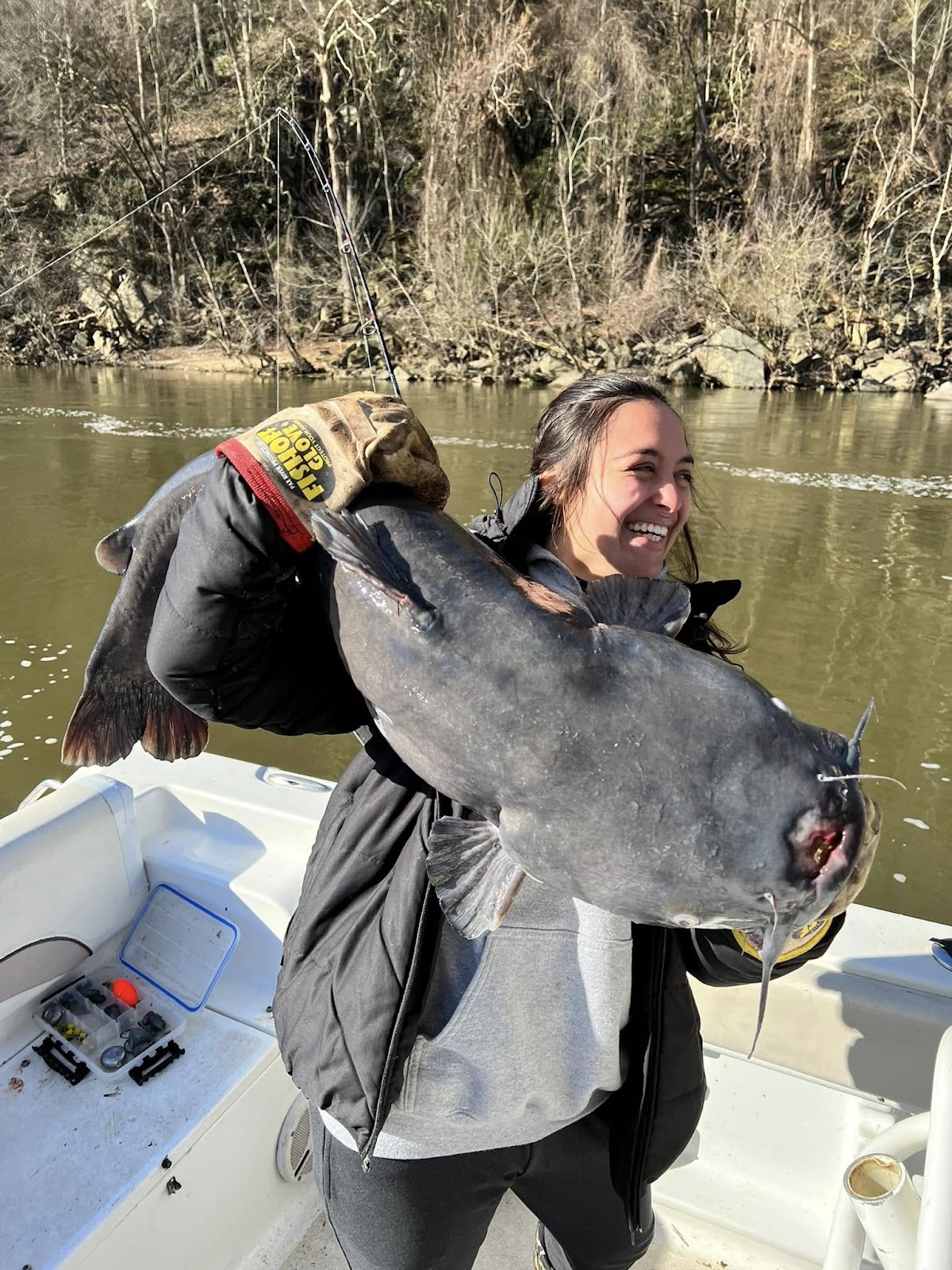
Yet another good reason to avoid fish caught in the Anacostia. You do realize that these are basically the same Blue Catfish running up and down the Potomac River that Maryland is trying to get more people to eat? 

The Wombat has Rule 5 Sunday: Denim on the Beach up and garnering clicks at the Other McCain.

Wednesday, February 19, 2025

The Wednesday Wetness

Nearly a third of Americans have been exposed to unregulated contaminants in their drinking water that might affect their health.

What's more, Hispanic and Black people are more likely to have unsafe levels of contaminants in their drinking water, and to live near pollution sources like industrial facilities, researchers said in a new study published Wednesday in the journal Environmental Health Perspectives.

"Our findings show that the percentage of Hispanic and Black residents in a community is a consistent predictor of poorer water quality," lead researcher Aaron Maruzzo, a scientist at Silent Spring Institute in Boston, said in a news release from the group.

Public water facilities are currently required to test for nearly 100 contaminants in drinking water, researchers said.

"Yet, we know there are thousands of other harmful chemicals that are not regulated that make their way into groundwater and surface waters, and some of these chemicals can ultimately end up in drinking water supplies," senior researcher Laurel Schaider, a senior scientist at Silent Spring Institute, said in a news release.
So, there are thousands of things in the water that could be harmful, (almost everything can be harmfull in high enough doses, even water and oxygen), but in such small quantities that the EPA, which would like to regulate everything, can't find the energy (or data required) to do something about. Be afraid! Be very afraid!

The Wombat has Rule 5 Sunday: Demure, Relaxed, & In Her Laneready and waiting at The Other McCain.

Saturday, February 15, 2025

Maryland, My Maryland

From the Baltimore FishBowl, Lawmakers propose bill to phase out PFAS ‘forever pesticides’ in Maryland

Maryland lawmakers are proposing legislation to phase out the sale and use of pesticides containing PFAS, also known as “forever chemicals.” PFAS, which stands for perfluoroalkyl or polyfluoroalkyl substances, are a group of synthetic chemicals found in many household items. They are used to make products more resistant to stains, grease, and water, but those same properties make these chemicals difficult to remove once they have contaminated the environment.

Already, PFAS have been found in drinking water. The Maryland Department of the Environment has advised residents to limit or avoid consuming 15 species of fish due to PFAS contamination in the Chesapeake Bay watershed. In addition to being part of some cookware, clothing, food packaging, and other common products, PFAS are also used in many pesticides. That’s why members of the Maryland General Assembly are seeking to pass a bill that would phase out “forever pesticides” containing PFAS.

“PFAS-pesticides can persist in our bodies and in the environment for a decade or longer and are linked to serious life-threatening health impacts. In fact, they are known to actually cause certain cancers and chronic conditions,” said lead House sponsor Del. Sheila Ruth (D-Baltimore County) in a statement. “With this bill, we have the opportunity to phase out an avoidable source of PFAS contamination that is poisoning our food supply and the health of our families.”

Sen. Benjamin Brooks (D-Baltimore County), who is sponsoring the companion bill in the Maryland Senate, noted that the legislation would not ban all pesticides — only ones that contain PFAS, which comprise a small minority of pesticide products.

“SB345/HB386 would phase out less than 8% of the 14,000 pesticides registered each year in Maryland, leaving plenty of alternative products that are not a PFAS ‘forever pesticide,'” Brooks said in a statement.

The legislation would require the Maryland Department of Agriculture to develop and maintain a list of PFAS-containing pesticides by Jan. 1, 2026. People would also be prohibited from using these pesticides for certain purposes, starting June 1, 2026. The state’s agriculture department would not be allowed to register a PFAS pesticide for sale, starting June 1, 2027. And by June 1, 2028, people would be prohibited from using PFAS pesticides in Maryland.

I wasn't aware that some pesticides were fluorine compound, but it make sense, since many of the main synthetic pesticides, like DDT, are organo-chlorine compounds. If one halogen can make a pesticide, another, nastier halogen might well too. I was surprise by the statistic that "Of the 471 unique, conventional active ingredients that were currently registered in the United States, 107 (23%) contained at least one carbon–fluorine bond and 66 (14%) met the OECD definition of PFAS"

Sunday, December 8, 2024

Random Celebrity News

For some values of "random", "celebrity" and "news". Atop Da Hill, Cheryl Hines sells products with naked RFK Jr. showering behind her

In a video posted to social media, the 59-year-old “Curb Your Enthusiasm” star showed off her product sales for Black Friday from her company Hines+Young, which she co-founded with her daughter Catherine Young.

Hines held up a bottle of spray and a tin of body cream as she covered most of Kennedy, who President-elect Trump nominated to head the Department of Health and Human Services (HHS).

“No, you can’t take a shower,” she said laughing as Kennedy stood behind her. “I’m doing a video.”The actress also shared an image of a candle from her company labeled “MAHA,” which stands for “Make America Healthy Again.”

At Da Mail, Ivanka Trump puts on a very busty display while surfing on a fun-filled family vacation 

The mom-of-three took to her Instagram Story to boast her jaw-dropping figure after DailyMail.com detailed her strict workout regime. While on an adventure with her family, Ivanka showcased her playful side as she jumped in the water and began surfing.

The 42-year-old, who will soon be First Daughter once again thanks to dad Donald Trump's presidential election win, shared a clip of her riding the waves on a FlowRider - a 40-foot-long surf stimulator.

And while her skills were impressive, all eyes were on her natural beauty as she wowed in a black one-piece. Ivanka's ensemble featured splashes of white fabric that accentuated her full bust and long legs

From TMZ, Britney Spears Claims She's Moved to Mexico ... After Just Turning 5. Coo-coo for cocoa puffs. 

In the footage posted to her IG account, the troubled pop star starts off by talking about how the paparazzi put her on a plane with a mask over her face while carrying a torch given to her by a friend.

As if that wasn't bizarre enough ... Britney discussed her B-day, falsely stating that she turned 42 when she's actually 43, but that wasn't the worst part.

Brit went on to say she's only 5 and going to kindergarten and has even moved South of the Border because the paparazzi are cruel in the way they portray her.

BIS, F3 Driver Sophia Flörsch Takes a Shot at $500M Superstar Lewis Hamilton: “Put Your Money Where Your Mouth Is”

Seven-time Formula 1 world champion Lewis Hamilton knows how to raise eyebrows both on and off the track. He recently raised the issue of diversity in motorsport and said he would like to set up an F1 team that would have a diversity policy.

Sophia Flörsch, an F3 driver, didn’t shy away from publicly calling out Hamilton and challenged him to follow through on his words with actions. And that created a lot of backlash.

In a recent interview, Hamilton expressed his dream of having a team promoting diversity from the start. He highlighted junior talents such as Doriane Pin and Kenzo Craigie, both rising talents in the motorsport world, saying: “If I was to make a team, maybe one day I will, it’ll be diverse from the beginning.”
. . .
Alpine Academy driver Sophia Flörsch caused a stir by shrugging off Hamilton’s broadside with a blunt retort. Answering to a Motorsport.com post on X, she said: “Put your money where your mouth is.”

At Outkick,  Rachel Bush Brings Bikini Sunshine Vibes To The Make America Healthy Again Movement

With president-elect Donald Trump joining forces with Robert F. Kennedy, Jr. during the election and the former selecting the latter to lead the U.S. Department of Health and Human Services, it makes sense that Bush would be all in on Make America Healthy Again.

She's done all she can to assist the Dolphins this season. Where they end up at the end of the regular season is squarely on them. There's not much else she can do for the team.

Where Rachel Bush can help out is by leading by example for the MAHA movement. Let's get the garbage out of the food. It's past time to clean all that up.

I wouldn’t mind seeing Trump and RFK Jr bringing her in for a few meetings. Brainstorm some Make America Healthy Again ideas, then have her do her thing on social media. Let's get this done the right way.

Also from Outkick, Lindsey Vonn Hits The Gym In A Custom Bodysuit Ahead Of First Competition Since Announcing Her Comeback 

It's go time for Lindsey Vonn. The talk is over. Her nearly six-year retirement from skiing is coming to an end this weekend in Colorado. The 40-year-old is going to compete in her first event since announcing her comeback. US Ski Team Head Coach Paul Kirstofic confirmed that this week. Vonn will be competing at the FIS Fall Festival at Copper Mountain this weekend. The event takes place from Dec. 6-8.
. . .
No comeback is complete without creating some buzz and moving some products. Vonn checked the buzz portion of the equation off the list not long after her comeback was announced. Vonn accomplished that with a Sports Illustrated Swimsuit body paint throwback. On Thursday it was time to move some products.

At Fox, Actress dies after consuming amphibian's venom at spiritual cleansing retreat

A Mexican actress is dead after voluntarily participating in a spiritual cleansing ritual during which she reportedly consumed poisonous Amazonian frog venom.

Marcela Alcázar Rodríguez, 33, took some of the poison as part of a spiritual cleansing return that some South American natives have used for toxic cleansing, according to local reports.

Rodríguez started throwing up and had severe diarrhea. She first refused help while feeling ill but eventually gave in when her friend visited and her condition worsened, witnesses said.

Amanda Harding at Da Wire reports  ‘Oppenheimer’ Star Emma Dumont Comes Out As ‘Trans Masculine Non-Binary’ "The star also debuted “they/them” pronouns on Instagram and will use a new name, Nick."
“Would have been easier to just say ‘Emma Dumont comes out as mentally ill,'” one X commenter said.

“Emma Dumont comes out as attention seeker. Fixed it for you,” another one wrote.

“‘Oppenheimer’ star Emma Dumont comes out as a boring narcissistic attention seeker who thinks – mistakenly – getting a haircut and donning a t-shirt makes her interesting,” a third commenter shared.

The star has been active in Hollywood since 2009 with credits in minor films and TV shows. Christopher Nolan’s “Oppenheimer” took home 7 Academy Awards earlier this year including Best Picture, Directing, Actor in a Leading Role, Actor in a Supporting Role, Cinematography, Film Editing, and Original Score.

At BIS,  Miami Lost Twice This Past Weekend When Their Mascot Unsuccessfully Tried Hitting On A Syracuse Reporter

After starting the season with nine straight wins, the Miami Hurricanes have now lost two out of their last three contests. The latest was a 42-38 defeat to the Syracuse Orangemen in the JMA Wireless Dome.

Miami blew a 21-0 lead in the second quarter to fall to their Atlantic Coast Conference rival.

Also falling was their mascot. Down to one knee. In an attempt to get a local reporter’s phone number. He took his eye off the ball.

Ashley Wenskoski, a sports anchor and reporter for CNY Central, said Sebastian, who is defined as “an anthropomorphic white ibis,” was hitting on her during a crucial stretch of the game.

“Sebastian the Ibis just kneeled down and asked for my number mid-drive Feels like he has bigger things to worry about with his team on the ropes in the 4th quarter at the Dome…but who am I to say,” Wenskokski wrote on X.

The Wombat has Ruke 5 Sunday: Little Mischief Baker (sic) up and garnering clicks at The Other McCain.

Sunday, May 19, 2024

Are We Ready For a New Bay Diet Plan?

WTIF, Could there be a reset of Chesapeake Bay restoration goals in 2025? "Some previous goals won't be met"

Pennsylvania, Maryland, Virginia and the District of Columbia, along with the federal government entered into an agreement in 1983 to clean up the Chesapeake Bay. The states of Delaware, New York and West Virginia joined the partnership years later. 

During the past 41 years, strategies and plans have been implemented to reduce pollution and restore the health of the Bay. Some have been successful while others have fallen short of their goals. Next year – 2025 – was set as a deadline to meet several of those goals in the restoration plans.

It has the states and the federal government thinking about what comes next.

The pollution in the form of nutrients came from wastewater, agricultural practices and storm water runoffs from sources like parking lots, streets and chemicals on lawns. 

Harry Campbell, Director of Science Policy and Advocacy with the Chesapeake Bay Foundation, Pennsylvania, was on The Spark Wednesday and talked about the goals for Pennsylvania,”We agreed to a reduction of pollution in the form of nitrogen and phosphorus and sediment of 40%, based on baseline numbers in the from the early 1980s, based on monitoring and things of that nature. So that was one of the primary goals. And then the secondary goals were more protection and management activities around those living resources, like the striped bass, like the oysters, like the crabs, so as to help provide a a more stable and healthy population for reproduction and growth of the economy and in the living resource.”

Some have suggested there has been too much attention to nutrients running into local streams, creeks and rivers and eventually into the Bay.

Campbell indicated that maybe the numbers have gotten too much of the focus during the Bay clean-up,” One of the things that has occurred over the course of time during the these efforts is that we’ve kind of started to fixate on bean counting. And what I mean by that is how much of this, how much of that, how much did we do? An acre of that. How many linear feet of that and lost sight of the outcomes. So one of the five pillars we have are to focus on the outcomes, meaning the not just did we reduce a pound of nitrogen based on what a computer model tells us or based on how much linear feet of this or that we’ve installed, but focusing on the outcome in terms of like, what is the living resource response? Did it improve trout habitat? Did it create a situation where we have more young of the year, striped bass or other types of living resource responses? Then of course we have to promote innovation and focus in on people, and do a number of other things, like even building those partnerships, but by looking at the outcome instead of the widget or the bean counting, we can then really start to measure and I think improve and focus in on the things and the places and practices that improve water quality, but also the ecosystem at large.”

I believe too much attention has been paid to nutrients as a path to curing the hypoxia/anoxia issues in the deep channels of the main bay. Nutrients have been reduced, and a little improvement may have been seen in deep hypoxia, but by and large those are not the problems that most people encounter or are affected by. The bay's physical system, with fresh water coming in at the upper end and overriding saltier water coming in from the bottom, is a natural set up for bottom hypoxia. Most of the easy nutrient reduction has been achieved, and the progress has been marginal at best. To pursue more will be to face higher costs with diminishing returns.

It’s been suggested that more attention to making sure local streams, creeks and rivers are clean and healthy would be more a more tangible result for those who live in the Chesapeake Bay Watershed.

I agree, but wonder what the specifics would be. Clearly, they would vary from place to place. In some places, storm water and sediment control would yield the best results for the least cost, in others, in might be sewage and nutrients, in others, toxic substances.

Another discussion has centered on making climate change a priority over the Bay restoration. Campbell said the two are closely linked, ”The effort to try to mitigate climate change, as well as save the Bay and our local rivers and streams and watersheds. You can’t separate the two. The climate change and the responses to it, regardless of what you believe are the causes there, it’s causing and contributing and increasing the amount of runoff and the pollution that enters our local rivers and streams in the Chesapeake Bay. By focusing in on the types of practices that build that resiliency, tree plantings, cover crops on our agricultural areas, forested riparian buffers and tree canopy in our suburban and urban areas. Not only does that actually help mitigate the impacts of climate change, but simultaneously is improving our local rivers and streams, as well as the Chesapeake Bay as well. It’s all tied together.”

I strongly disagree. Climate change is the basket into which activists jam their preferred solutions, regardless of whether the problems the purport to solve. Tree guys want more trees, fish guys want more fish, and extremists want to ban cars and fossil fuels, even though their impact on the Bay is likely to be quite minor. Fix the bad spots first, and the OK spots will improve on their own.

Saturday, January 20, 2024

Heavy Metal Source in Kiddy Food Poisonings Identified

Lead Chromate
Ars Technica Chromium found in lead-tainted fruit pouches may explain contamination

The Food and Drug Administration has discovered a second metal contaminant—chromium—in the recalled cinnamon applesauce pouches found to contain cinnamon contaminated with extremely high levels of lead. The products have now poisoned nearly 300 young children in 37 states.

The health implications of the additional contaminant are not clear. There is no antidote for chromium exposure, and the Centers for Disease Control and Prevention recommends supportive care. But the finding does hint at the possible motivation behind the tragic poisonings.

In the FDA's announcement, the agency noted that "The lead-to-chromium ratio in the cinnamon apple puree sample is consistent with that of lead chromate (PbCrO4)." This is a notorious adulterant of spices used to artificially bolster their color and weight.

Lead chromate is a vibrant yellow substance that has frequently turned up in turmeric sourced from India and Bangladesh. In a 2017 study by public health researchers at Boston University, 16 of 32 turmeric products bought in markets in the Boston area had lead levels over the FDA's allowable lead level for candy (the FDA does not have guidelines for lead levels in spices, specifically). Two samples, the only two samples sourced from Bangladesh, exceeded the allowable lead level by two orders of magnitude. The researchers had conducted the study after a string of lead poisoning cases in US children were linked to contaminated spices, including turmeric. Other studies have also identified spices as a source of lead exposure in US children.

Turmeric
 

The 2017 study highlighted the reason that lead chromate is used as an adulterant. A media outlet in Bangladesh quoted one turmeric trader's explanation: “Traders use the artificial color [lead chromate] to hide the marks of pest attacks and other spots on raw turmeric. It is used during boiling and polishing to make the spice look brighter to attract big buyers, including spice processing firms."

FURTHER READING Lead-tainted fruit pouches poison 22 toddlers; blood lead levels 8x threshold

The FDA's testing does not definitively conclude that lead chromate was in the contaminated cinnamon, which was sourced from an Austrofoods manufacturing facility in Ecuador and used in the recalled applesauce pouches. But it does bolster the FDA's suspicion that the poisonings were the result of "economically motivated adulteration," a specific category of food fraud defined by the FDA.

It seems that lead chromate is widely used internationally to give that nice turmeric color. Another reason to avoid foodstuffs processed abroad. Anyone knowingly involved in putting the lead chromate into children's food should be indicted, and brought to the US for trial, if possible.

Wednesday, January 6, 2021

Chesapeake Bay Gets Its Annual D+

 EPA Chesapeake Bay Program: Chesapeake Bay sees health score decline by one point, but retain D+ grade

Despite a one-point decline in the health of the Chesapeake Bay since 2018, Chesapeake Bay Foundation (CBF) President Will Baker believes, “this is a historic opportunity to demonstrate to the world that by following the science, we can save a national treasure”.

In its biennial State of the Bay Report, CBF graded the overall health of the Bay a D+, or a score of 32. CBF assigns the Bay’s grade based upon the best available information in three categories: pollution, habitat and fisheries. The foundation of this information primarily comes from monitoring data, supported by in-the-field observations. The three above categories contain 13 total indicators that are individually assigned a score, which are then averaged together and compared against the gold standard of Bay health: the pristine conditions that Captain John Smith encountered in the 17th century.


Which is a convenient standard, since we don't really have good records of what the state of the Bay was at the time, although Smith reported  "oysters "lay as thick as stones," and the Bay and its rivers contained more sturgeon "than could be devoured by dog or man  ... Of fish we were best acquainted with sturgeon, grampus, porpoise, seals, stingrays ... brits, mullets, white salmon [rockfish], trouts, soles, perch of three sorts." One suspects a bit of hyperbole was involved. The same kind that led the Viking merchants to name Greenland. 

Thanks to the pollution reducing practices put into place by each of the six states in the watershed (Delaware, Maryland, New York, Pennsylvania, Virginia and West Virginia) and the District of Columbia, as well as upgrades to wastewater treatment plants and favorable weather, all but one indicator—toxics—improved in the Pollution category. Historical contaminants such as polychlorinated biphenyls (PCBs) may have been banned in the 1970s but are still prevalent throughout the Bay’s fisheries today. And emerging toxic contaminants, including those from microplastics, personal care products and pharmaceuticals, can now be found in every part of the ecosystem. Still, nitrogen and phosphorous pollution are down from 2018, with dissolved oxygen and water quality scores also improving.

PCBs are "prevalent" virtually everywhere on earth at this point, and only a long period of no release and continued degradation is going to fix that. 

The Habitat category told a less-promising story, with two indicators—forest buffers and underwater grasses—declining and wetlands and resource lands (conserved areas) having no change. These decreases are believed to be the result of climate change, development and the easing of federal regulations.

But most concerning is the decline of the striped bass fishery. Chris Moore, CBF’s senior regional ecosystem scientist laments that “adult female striped bass, widely used to gauge the overall health of the population, have dropped approximately 40% from 2013 to 2017.” The fishery has seen below-average spawning activity over the past two years, prompting the Atlantic Marine Fisheries Commission to take stronger management actions, such as reducing the annual catch by 18%. As for the other indicators that make up the Fisheries category, shad declined, while the progress of oysters and blue crabs increased.

I don't feel strongly about the annual grading of the Bay; I think there's a lot of self-serving going on. What would happen to CBF's donations if they were to suddenly announce one year that the Bay was just fine, thank you? On the other hand, I think the sense of this grade is about right. Any improvement in the Bay's health is incremental, and the continued decline of the Striped Bass certainly counts against it, although no obvious way to combat this is obvious. The stripers will not be recovering until we have one or more years with very good recruitment, and three years for the fish to grow. And water quality improvements, while important, are not what is causing poor recruitment. 

The Wombat has Rule 5 Sunday: Rep. Lauren Boebert up and running. 

Tuesday, August 13, 2019

Dog Killing Algae Blooms in Maryland

Algae Fatal To Dogs Found In Maryland Waters: Health Officials
Algae blooms can happen in Maryland lakes and rivers, as well as the Chesapeake Bay. New warnings are out after pet deaths in other states from toxins produced by the bacteria. And officials in Anne Arundel and Montgomery counties issued fresh warnings Aug. 13 about the dangers of swimming in lakes with high algae content.

Montgomery Parks cautioned residents about elevated levels of microcystin in Lake Needwood and Lake Frank located within Rock Creek Regional Park. Testing showed elevated levels of microcystin, a toxic substance produced by some species of blue-green algae (cyanobacteria), in Lake Needwood.

Microcystin, a hepatotoxin, can cause harm to the liver of humans and pets if ingested. Of particular concern are dogs that are off-leash and may swim and/or drink from the lake, despite park regulations. Montgomery Parks urged visitors to avoid direct contact with water while boating or fishing, and keep dogs on leash so they don't drink or come in contact with the water.


Anne Arundel County Department of Health reminded residents that a health advisory against direct water contact for Lake Waterford in Pasadena because of an algae bloom has been in place since July 3 and continues. Signs have been posted at the lake to warn visitors.
The blooms of blue-green algae reported at Lake Waterford naturally occur in fresh waters and in Maryland's Chesapeake Bay.

And in mid-July the Maryland Department of Natural Resources found potentially harmful algae during a water sample taken from the North East River near Charlestown in Cecil County, WJZ reports.


Reports nationwide of dogs dying after swimming in ponds containing blue-green algae have surfaced in the past week.

In North Carolina, Melissa Martin and Denise Mintz took their three dogs — two West Highland terriers and a goldendoodle mix — on a doggie playdate to swim in a pond and play in the mud. Within minutes of leaving the pond, one of the dogs began having a seizure, owner Melissa Martin said on Facebook. By the end of the night, all three dogs were dead, the victims of blue-green algae poisoning, according to the dog owners.

"At 12:08 AM, our dogs crossed the rainbow bridge together," Martin wrote. "They contracted blue green algae poisoning and there was nothing they could do. We are gutted. I wish I could do today over. "
Microcystis is a freshwater algae, so it's not particularly a threat to this part of Chesapeake Bay, but it has been known to bloom in some of the freshwater tributaries, but I might have to keep Skye from drinking in the pond on Calvert Beach until it cools off.

Tuesday, May 14, 2019

MD Cracking Down on Pesticide Tied to Eagle Poisonings

Md. to Crack Down on Pesticide in Wake of Bald Eagle Deaths
The illegal pesticide carbofuran is still being used on Maryland’s Eastern Shore— and after seven bald eagles were poisoned, the state is cracking down on its use.

The Maryland Department of Agriculture (MDA) issued an enforcement advisory in response to the most recent poisonings in Kent and Talbot County “reminding all farmers, applicators, and retailers that the use and sale of carbofuran (commonly known as Furadan) is ILLEGAL under state and federal law.”

The advisory continues, “Violations of Maryland’s Pesticide Applicator Law are subject to a fine of up to $25,000 and/or prison. Violators may also be subject to further penalties from the U.S. Environmental Protection Agency (EPA).”


Last week Bay Bulletin reported on the poisonings that have killed at least seven bald eagles and a horned owl, which appear to be caused by carbofuran. The pesticide was banned by the EPA in 2009. It has been used to poison pests on farms, but it's so lethal to birds that an eagle could die just from feeding on a poisoned fox.

In a case similar to the recent deaths, 13 bald eagle were poisoned back in February 2016 under similar circumstances in Caroline County.

“We are all very troubled by the continued use of this highly toxic banned pesticide,” said Agriculture Secretary Joe Bartenfelder. “Carbofuran has been banned for a reason, and this trend of wildlife poisonings on the Eastern Shore is unacceptable. I urge anyone still in possession of carbofuran to contact our pesticide regulation section immediately and arrange for proper disposal.”

It’s technically legal to possess a banned pesticide, but it may not be used, sold, or traded. That’s why MDA and the Department of Natural Resources are calling for anyone with carbofuran to responsibly get rid of it.
Eagle numbers do seem to be down in our region. Is this the reason? 

Wednesday, May 8, 2019

Someone is Still Poisoning Eagles


$10,000 reward offered for information about eagle poisonings on Maryland’s Eastern Shore
Federal and Maryland authorities are seeking the public’s help to track down whoever poisoned at least nine bald eagles in two locations on the Eastern Shore earlier this year. They’re the latest in a series of unsolved poisonings on the Delmarva Peninsula that have killed at least 29 of the federally protected birds in the last three years.

Once considered at risk of extinction, bald eagles have made a recovery and are no longer protected under the Endangered Species Act. They are still protected under the federal Bald and Golden Eagle Protection Act, with penalties for harming the birds ranging up to $250,000 and two years in prison.

Six eagles and a great horned owl died from pesticide poisoning on March 1 near Route 445 and Swan Creek Road in Kent County, according to a May 1 news release by the Maryland Department of Natural Resources. An unspecified number of additional eagles were found injured but alive at that location and taken to a wildlife rehabilitation clinic in Delaware for treatment, said Capt. Brian Albert, spokesman for the Natural Resources Police.

On April 3, authorities found three other bald eagles showing signs of poisoning at a Talbot County farm near Lewistown Road and Colby Road. The birds had been feeding on a red fox carcass, according to the DNR. Two of the eagles were treated for poisoning and are in stable condition, but one died at the scene.

Authorities believe the two incidents are “consistent with the suspected ongoing and intentional poisoning of foxes, raccoons and other nuisance animals in the area,” the DNR release said. Specifically, authorities suspect someone placed baits laced with carbofuran, a highly toxic farm pesticide that’s now illegal to use, in fields, along edges of woods and even directly into fox dens.

Sold under the trade name Furadan, carbofuran was once widely used to control insects in a variety of crops, including corn and soybeans. The U.S. Environmental Protection Agency curtailed use of the granular form in the 1990s after evidence mounted that it was responsible for millions of bird deaths per year. Birds often fed on the pesticide grains in fields, mistaking them for seeds — and a single grain can be lethal to a bird.

The liquid version of carbofuran remained in use until 2009, when the EPA effectively banned it by revoking tolerances for residues of the pesticide in food crops. It is now illegal to sell or use in the United States, but is still available abroad.


Albert said that whoever was placing pesticide-laced bait in Shore farm fields may have been attempting to eliminate other animals considered nuisances, such as foxes or raccoons. But eagles often scavenge on dead wildlife, and the DNR release suggested they may have been poisoned by feeding on other poisoned animals. It’s unclear how the owl became poisoned, though, because owls feed only on live prey.

The poisoning incidents come three years after 13 bald eagles were found dead in a field near Federalsburg in Caroline County. Authorities determined they had been poisoned, and lab tests detected at least six had ingested carbofuran, but could not learn who had done it.

A month later, four more eagles died in Delaware near Dagsboro in Sussex County, according to the state Department of Natural Resources and Environmental Conservation.

In January 2017, another five bald eagles and a fox were found dead in a farm field near Easton, MD. Examination of the carcasses found that all five birds had ingested carbofuran, according to a U.S. Fish & Wildlife Service lab report obtained by the Annapolis radio station WNAV and shared with the Bay Journal. The report, released through a Freedom of Information Act request, says the birds were most likely poisoned by feeding on the dead fox, which also had been poisoned.

The Fish and Wildlife Service and Maryland Natural Resources Police are investigating the latest incidents, and the DNR release said authorities are “disappointed and frustrated” that they could get no information on the poisonings, despite interviewing land owners, hunters and others associated with the areas where the birds were found.
That's a whole lot of eagles. There has been a distinctive decrease in the number of eagles in our area. Are some of them being killed?

Friday, April 26, 2019

The Original Snake Eaters

So many layers of yuck in this one: Analysis of caveman’s poo reveals he ate an entire RATTLESNAKE
The snake, almost certainly a type of rattlesnake, was swallowed without any kind of cooking or preparation – sugggesting that it was seated as part of a religious ritual or possibly for a bet.

Which is why we specified cave-MAN. Swallowing venomous animals for a laugh is very much a bloke’s thing.
Now that's sexist, amiright? Women are every bit as tough and stupid as men!
A team led by archaeologist Elanor Sonderman from Texas A&M University re-examined a collection of coprolites – partly-fossilized turds – that had been collected from Conejo Shelter site in the Lower Pecos Canyonlands of southwest Texas.

One of the samples stood out because it contained not only an entire rodent that had been swallowed without cooking or even skinning, but also a complete rattlesnake including its fangs.
Fang recovered from the coprolite.

But was it alive or dead when it went down?
The sample dates from approximately 1,500 years ago.

The archaeologists’ research paper says: “Zooarchaeological analysis found the remains of a small rodent, evidently eaten whole, with no indication of preparation or cooking.
Another reason to think it was a girl: She swallowed the snake to catch the rodent, that wiggled and giggled and tickled inside her.

“Notably, the bones, scales and a fang of a snake in the Viperidae family were also recovered from the coprolite, which is the first direct archaeological evidence of venomous snake consumption known to the researchers. “

The paper is headed “Potential ritualistic viperous snake consumption”
That beats the heck out of churches where they merely handle rattlesnakes.

The samples would have been left by a group of hunter-gatherers known as Ancestral Puebloans. They were an ancient Native American culture that lived in parts of what is now Utah, Arizona, New Mexico, and Colorado.

They thrived in Southwestern America for about 4 or 5 thousand years before being gradually supplanted by Navajo tribes.
. . .
Bottom line: “The fang was inside the coprolite. Not hanging around on it.”
FWIW, I've eaten rattlesnake. It's a lot like chicken, but shaped more like fish. Raw, it might appeal to the same kind of people who eat sushi. As far as the venom, it's not poisonous through oral administration, as the toxic proteins are easily denatured by stomach acids, and dismantled by the digestive proteases. But make sure you don't have any bleeding gums, cuts in your mouth, or ulcers.

Linked at Pirate's Cove in the weekly Sorta Blogless Sunday Pinup with links. The Wombat has Rule 5 Monday: #GetWokeGoBroke Edition at the ready.

Tuesday, April 9, 2019

Bay Barometer Rising

Bay Program’s 2017-18 Bay Barometer shows Chesapeake’s resilience
Pick up any article about the health of the Chesapeake these days and you are sure to see the term “resilient.” It’s become the trendy way of saying that despite pollution continuing to run off into the Bay and extreme weather events, the Bay is thriving.

From record acreage of underwater grasses to an unprecedented effort to restore oysters, experts are cautiously optimistic that the Chesapeake is bouncing back. The Bay Program’s 2017-18 Bay Barometer provides the science and data to back up this sentiment.

The Barometer is the Bay Program’s annual report on environmental health and restoration in the 64,000-square-mile watershed.

Containing the most up-to-date data and information from the program’s many partners, it is a science-based snapshot that presents the whole picture about the region’s health — from the blue crabs in tidal waters to the brook trout in freshwater streams to the progress being made in training the next generation in environmental literacy.

The Chesapeake Bay Program — the regional partnership that sets the policy and management decisions for restoring the Bay and is primarily funded by the U.S. Environmental Protection Agency — tracks 31 indicators to keep an eye on the progress of the Bay cleanup. This information is accessible at chesapeakeprogress.com.

Other organizations use the Barometer data and information in their own assessments of the Bay’s health, including the Chesapeake Bay Foundation’s State of the Bay report and the University of Maryland Center for Environmental Studies’ Chesapeake Bay Report Card.
Be careful you don't find it too good too fast, or they'll cut your funding.

Yeah, but the fishing sucks. Ask me how I know.

You can find the actual text of the "Bay Barometer" here. It took moderate digging to actually find it.

Tuesday, March 12, 2019

Navy to Pay $64 Million for Bay Clean Up

Elizabeth River, VA
Navy, DoD to Pay $64 Million for Elizabeth River Contamination
The U.S. Departments of Defense and the Navy are ordered to pay nearly $64 million in cleanup costs, for decades of contamination at a wood treating facility in Portsmouth.

The Atlantic Wood Industries (AWI) Superfund Site is on the Southern Branch of the Elizabeth River, just north of the Norfolk Naval Shipyard’s Southgate Annex. The site, which includes more than 50 acres of land and more than 30 acres of river sediments, was contaminated for decades.

A proposed settlement would give the Environmental Protection Agency (EPA) $55.3 million and the state of Virginia $8.5 million. The EPA has been working for more than eight years to clean up hazardous substances, the agency lists as “polycyclic aromatic hydrocarbons from creosote, pentachlorophenol, and associated dioxin, as well as heavy metals present in soils, ground water, and sediments at the site.”


At one time, the EPA says the Navy leased part of the property from AWI and disposed of waste contaminated with copper, lead, zinc, and arsenic. The Navy along dumped sludge in a wetland on the borer of the Shipyard and AWI site.

For the Elizabeth River, Virginia has issued a “DO NOT EAT” advisory for blue crab's yellow mustard. EPA warns pregnant women and children to limit their crab consumption. A particularly alarming warning on the EPA’s website reads, “Walking in the river near the banks of the Site could result in a skin burn due to the presence of visible creosote in the sediments.”

Virginia also has issued fishing advisories and a ban on eating oysters from the area due to contamination.

Along with cleanup costs, DoD and the Navy will fund a $1.5 million oyster restoration project to be implemented by Virginia in the Southern Branch of the Elizabeth River. The owners and operators of the Atlantic Wood Industries site, will reimburse EPA and Virginia $250,000 plus interest for site cleanup costs.

The proposed consent decree falls under the federal Superfund law, which requires landowners and operators responsible for contaminating a site to clean it up or reimburse the government. The agreement will be subject to a 30-day comment period and court approval.
The Elizabeth River was one of the three specially designated "hot spots" for toxic pollution in the Chesapeake Bay, thanks to many years of pollution associated with the ship building and other associated industries located there now for over 100 years.  At one time, the Mummichogs that lived in parts of the river had evolved to tolerate PAHs to the point that they actually grew better in their presence.

This is fair.

Wednesday, March 28, 2018

Umm, No Thanks!

Tiffany Haddish Extols Virtues Of Drinking Poisonous Turpentine
Tiffany Haddish may be hilarious, but she’s apparently not joking about a bizarre new health regimen: drinking turpentine.

In an interview with GQ magazine, the “Girls Trip” star extols the very dubious health benefits of drinking of turpentine, a pungent oil made from pine resin commonly used for mixing paint and varnish.
 You mean gin?
“A teaspoon of turpentine will not kill you,” Haddish tells her skeptical interviewer. “The government doesn’t want you to know that if you have a cold, just take some turpentine with some sugar or castor oil or honey and it’ll go away the next day.”
Paracelsus noted, "The dose makes the poison" as he popularized mercury compounds for the treatment of syphilis.
Haddish discovered the toxic solvent was a supposed health aide a few months ago while watching YouTube. She started taking it a few months ago.
Ha! The internet! You know it's correct if it's on the internet!
She decided to try it because “there are worms inside your body,” and claimed “everything just felt so much better, clarity-wise” after her first dose.
I hear crack has the same effect.
When the journalist suggested Haddish was actually light-headed from drinking poison, the comedienne refused to budge.

“But I was killing the game onstage!” she said. “My thought patterns was coming quick, quick, quick. Girl, you just look it up. Just do the research.”
Or you just felt like it, because you were stoned.
Basic internet research reveals that turpentine is actually toxic if ingested or consumed. Symptoms of poisoning include blood in urine, kidney failure, loss of vision, severe burning in the throat and vomiting blood.
And this is why you don't take medical advice from celebrities.

Wombat-socho has "Rule 5 Sunday: Lieutenant Dish" up and running on time.

Wednesday, August 9, 2017

California Repudiates Erin Brokovich

Erin Brockovich
California Repudiates Erin Brockovich On Hexavalent Chromium
When Erin Brockovich, an environmental activist, shook down Pacific Gas & Electric for $333 million for allegedly poisoning a community with hexavalent chromium and causing cancer and all sorts of other health problems, Julia Roberts portrayed the protagonist in a sensationalized blockbuster movie. It is unlikely, however, that Hollywood will be filming a sequel.

Why? Because not only was Ms. Brockovich wrong, but the State of California has now partially repudiated what she fought for.
Not Erin Brokovich, but she plays her in the movie

I doubt that Erin is a deliberate fraud, but it is certainly true that she pursued and won a crusade which based on extremely weak science, and an abundance of emotions.
We've known for a long time that Ms. Brockovich used junk science to score a jackpot settlement. She used a common rhetorical trick, known as the Texas sharpshooter fallacy, to claim that a cluster of cancer and other diseases in the small town of Hinkley, California was the result of groundwater contamination by hexavalent chromium.
I worked on the toxicity of hexavalent chromium once upon a time, at least for algae and marine animals. If you dig deep, you may even find a reviewed scientific paper or three with my name on it. It's toxic, but its not super scary, unless you breathe it, or play with chromic acid.
There were multiple problems with this argument. First, as hinted above, a cluster of cases is not necessarily indicative of anything. By sheer chance alone, patients with particular diseases -- even rare ones -- can occasionally be found in close proximity to one another. Second, an epidemiological survey found no extra cases of cancer in Hinkley than what normally would be expected. Third, while inhaled hexavalent chromium is linked to lung cancer, there is no evidence that ingesting tiny amounts of hexavalent chromium is harmful. Fourth, Ms. Brockovich's case did not make biomedical sense, because she not only blamed hexavalent chromium for causing cancer but a myriad of unrelated conditions. As Joe Schwarcz wrote for Quackwatch back in 2004:
Whether it's a miscarriage, a rash, bone deterioration, Crohn's disease, lupus, or any sort of cancer, Brockovich points the finger at chromium-6. In all probability she is wrong. Single toxins do not cause such a wide array of conditions.
But I see the resemblance
Generally, when a single toxin is blamed for many different diseases, it is responsible for one, or none, of them.
Now, the Sacramento Bee reports that California water regulators have decided against implementing a rule that would have capped hexavalent chromium in drinking water at 10 parts per billion (ppb). A judge said the rule was invalid because economic feasibility was not considered.

That's not a complete victory; indeed, California could very well implement the 10 ppb rule anyway. And the rule was deemed invalid based on economics, not science. But let's hope that reason ultimately will prevail in this momentary triumph of sanity.
Given that it's California, hoping for reason to triumph is a trifle optimistic.
According to the EPA, hexavalent chromium can be found in drinking water from both natural and manmade sources. The federal limit for total chromium (i.e., chromium-3 and chromium-6) is 100 ppb, and this has been the agency's policy for many years. California's desire to decrease the limit to 10 ppb lacks scientific justification, and as to be expected, its biggest champion is the thoroughly unscientific Environmental Working Group.
Hexavalent Cr is the stable state of chromium in neutral to basic oxygentated water. It is, however, rarely found in high concentrations, as it tends to oxidize any organic material present. It reduces to trivalent Cr, which is not very soluble and strongly attracted to particles, and is usually removed to very low concentrations.

Wombat-socho has "Rule 5 Monday: Taylor On Top" up and running.