Showing posts with label Anacostia River. Show all posts

Wednesday, February 4, 2026

Cities Have the Rock Salt Blues

You can tell when they've finished getting the streets clear in major cities. They start nagging about all the salt that was used on the roads. NBC 4 Wash,  Anacostia River contamination concerns come as snow piles grow

As D.C. scoops up snow and ice to clear streets and dumps much of it on mounds in four parking lots around the city, concerns are raised about the environmental impact on local waterways.

Construction vehicles dump the snow into large trucks that take it to parking lots at Carter Barron Amphitheater near Rock Creek Park, the old United Medical Center and two lots at the old RFK Stadium site. About 1,000 loads of the so-nicknamed “snowcrete” have piled up so far.

But near RFK flows one of those environmental concerns: the Anacostia River. “Looks filthy, and all of that black stuff, it isn't dirt, right,” Anacostia Riverkeeper Trey Sherard said. “A lot of that black stuff is little, microscopic bits of tires. It's all the things that we added into the tires.” 

“You've got trash, you've got salt, you've got unmitigated dog waste, and they're gonna be in all of these ice piles,” he said. “And it's going straight into the Anacostia River from here.”  One of his biggest concerns is all the salt that could drain into the Anacostia as the ice melts.

Bear in minds, all the rest of that stuff runs off the streets and into the river the next time it rains anyway. And while they always cite salt a potential toxic, they never list  what organisms they are concerned about.

WRICH Richmond, As snow melts, Virginia lawmakers seek alternatives and awareness to road salt. Hey, the sun will do it. You just have to wait a little longer. 

WTOP, Slightly salty water could come out of your faucet soon in these Maryland suburbs “Eventually, it’s going to wash down the storm drains. It’s going to make its way into the creeks, the streams, the rivers, our source water,” Riggins said, adding that WSSC Water regularly tests the water and it’s safe to drink. Riggins said most people likely won’t notice the saltier taste."


The Wombat has Rule 5 Monday: Boots & Bikinis up and garnering clicks at The Other McCain.

Thursday, February 27, 2025

Oh, Deer!

WAMU, Human, bird, or dog waste? Scientists parsing poop to aid D.C.’s forgotten river, the Anacostia.
About 40 million people in the U.S. live in a community with a combined sewer system, where wastewater and stormwater flow through the same pipes. After heavy rains, when pipe capacities are reached, the overflow sends raw wastewater into the rivers instead of to a treatment plant. Federal regulations, including sections of the Clean Water Act, require municipalities such as Washington to reduce at least 85% of this pollution or face steep fines.

To get into compliance, Washington launched a $2.6 billion infrastructure project in 2011. DC Water’s Clean Rivers Project will eventually build multiple miles-long underground storage basins to capture stormwater and wastewater and pump it to treatment plants once heavy rains have subsided.

The Anacostia tunnel is the first of these storage basins to be completed. It can collect 190 million gallons of bacteria-laden wastewater for later treatment, said Moussa Wone, vice president of the Clean Rivers Project.

Climate change is causing more intense rainstorms in Washington, so even after construction is complete in 2030, Wone said, untreated stormwater will still be discharged into the river, though much less frequently. “On the Anacostia, we’re going to be reducing the frequency of overflows from 82 to two in an average year,” Wone said.

But while the Anacostia sewershed covers 176 square miles, he noted, only 17% is in Washington. “The other 83% is outside the District,” Wone said. “We can do our part, but everybody else has to do their part also.” Upstream in Maryland’s Montgomery and Prince George’s counties, miles of sewer lines are in the process of being upgraded to divert raw sewage to a treatment plant instead of the river.

The data shows that poop is a problem for river health — but knowing what kind of poop it is matters. Scientists monitor E. coli to indicate the presence of feces in river water, but since the bacteria live in the guts of most warm-blooded animals, the source is difficult to determine.

“Is it human feces? Or is it deer? Is it gulls? Is it dogs?” said Amy Sapkota, a professor of environmental and occupational health at the University of Maryland.

Bacterial levels can fluctuate across the river even without rainstorms. An Anacostia Riverkeeper report found that in 2023 just three of nine sites sampled along the Washington portion of the watershed had consistently low E. coli levels throughout the summer season.

Sapkota is heading a new bacterial monitoring program measuring the amount of E. coli that different animal species deposit along the river. The team uses microbial source tracking to analyze samples of river water taken from different locations each month by volunteers. The molecular approach enables scientists to target specific gene sequences associated with fecal bacteria and determine whether the bacteria come from humans or wildlife. Microbial source tracking also measures fecal pollution levels by source.

“We can quantify the levels of different bacterial targets that may be coming from a human fecal source or an animal fecal source,” Sapkota said. Her team expects to have preliminary results this year.

The health risk to humans from river water will never be zero, but Sapkota said, based on her team’s research, smart city planning and retooled infrastructure could lessen the level of harmful bacteria in the water.

“Let’s say that we’re finding that actually there’s a lot of deer fecal signatures in our results,” Sapkota said. “Maybe this points to the fact that we need more green buffers along the river that can help prevent fecal contaminants from wildlife from entering the river during stormwater events.”

So, deer aren't going to walk (or jump fences) into the green buffers, eat it and poop there? I don't think you understand deer. 

Monday, February 24, 2025

D.C. Issues Fish Consumption Advisories over PFAS

At the Bay Journal, District of Columbia issues fish consumption advisory over ‘forever chemicals’

The District of Columbia’s environmental health agency has issued its first fish consumption advisory based on the presence of PFAS, or “forever chemicals,” in fish caught in the rivers running through the nation’s capital. The advisory warns people who eat fish caught from portions of the Potomac and Anacostia rivers within the district to consider eating less or none of certain fish.

Issued in December, the advisory is based on fish tissue studies conducted by the district’s Department of Energy and Environment. For the first time, these studies tested for the presence of per- and polyfluoroalkyl substances, or PFAS, in addition to looking for PCBs (polychlorinated biphenyls), PAHs (polycyclic aromatic hydrocarbons), metals and certain pesticides. PCBs are also considered a “chemical of concern” in fish tissues taken from these same water bodies.

I elided a big section explaining PFAS. I assume if you're looking at this you have at least a passing familiarity with the compounds and the issues.

The U.S. Environmental Protection Agency has published draft criteria for limiting certain PFAS in waters that support aquatic life but doesn’t yet have final standards in place. Studies are under way to better understand how much is too much when it comes to the ubiquitous chemicals. While federal drinking water standards for PFAS have been issued, the process of setting standards for fish consumption advisories can be even more complex. The Department of Energy and Environment said its fish advisory notice for PFAS is “preliminary” because the EPA has not yet issued its final guidance “on how to interpret” concentrations of PFAS in fish tissue.


The district’s fish consumption warnings do not pertain to fish purchased from restaurants, supermarkets or fish vendors in the city.

Because being caught by commercial fishermen magically negates the contaminants. 

For now, the agency advises the general public not to eat eel, carp, striped bass or largemouth bass from any DC waterway; to limit consumption of blue catfish to three servings per month; and to have no more than one serving per month of brown bullhead catfish, channel catfish, gizzard shad, smallmouth bass, snakehead, sunfish, white perch and yellow perch.

DOEE did not sample tissue from flathead catfish.

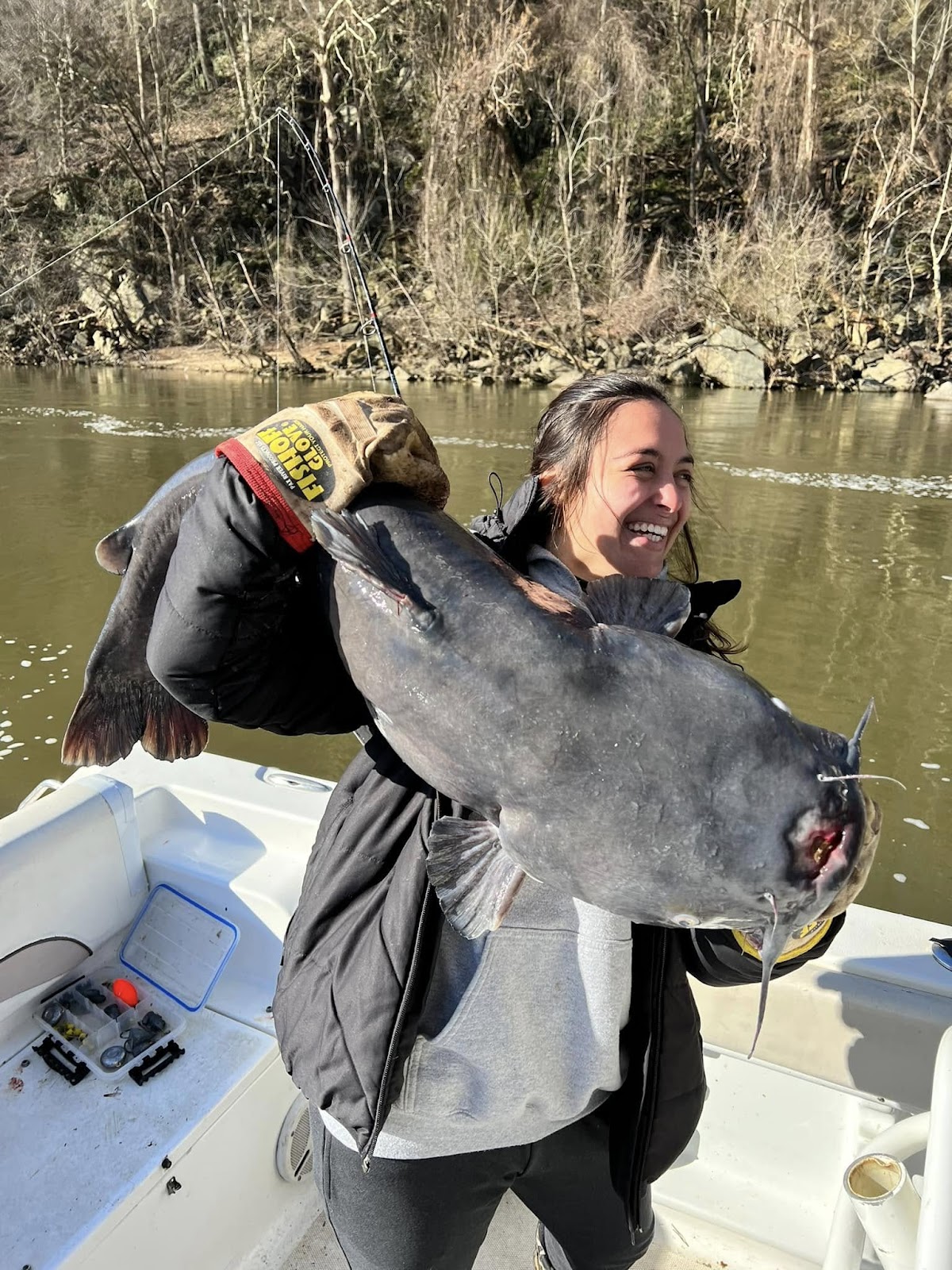
Yet another good reason to avoid fish caught in the Anacostia. You do realize that these are basically the same Blue Catfish running up and down the Potomac River that Maryland is trying to get more people to eat? 

The Wombat has Rule 5 Sunday: Denim on the Beach up and garnering clicks at the Other McCain.

Friday, February 21, 2025

DC Sues Fed Over Anacostia Pollution

 At the Bay Journal, DC sues feds for ‘polluting the Anacostia River’

The District of Columbia’s Attorney General sued the federal government in January for what it called “150 years of polluting the Anacostia River.”

A costly cleanup of the Anacostia River, which runs through the southeast side of the nation’s capital, has been underway for years. And this isn’t the first time the District of Columbia has filed a lawsuit in an attempt to get a party responsible for polluting the river to help fund its cleanup.

In 2023, the Potomac Electric Power Co. (Pepco) settled a $57 million suit with the district to compensate for the company’s historic contributions to the Anacostia’s pollution woes.

Exelon, which owns the electric utility company Pepco Holdings in the district, is supporting a pilot program to test new solutions for removing toxic substances from the Anacostia River as part of its cleanup work near Pepco’s Benning Road Transfer Station. Along with Washington Gas and the U.S. Navy, Pepco is among the parties that have signed consent decrees pledging to clean up pollution in the river generated by their facilities in the past.

But the district Attorney General Brian L. Schwalb alleged in a suit filed Jan. 10 that the federal government has been the biggest driver of pollution in the Anacostia River over the years. For generations, federal facilities treated the river “as a cost-free dumping ground for the toxic waste and chemicals it generated,” Schwalb said.

Contributors to that waste include the Washington Navy Yard along the river’s banks, which already was a known source of polychlorinated biphenyl (PCB) contamination to the river. The federal government also operated a waste dump at Kenilworth Landfill that the suit alleges leached chemicals and metals into the river for 25 years. Federal printing facilities also released solvents, metal plating solutions and inks into the river through a drainage system that emptied into the Anacostia and Potomac rivers, the suit alleges.

They do have point, sort of, but without Washington D.C. there, the population of the Anacostia Basin would be much lower. I'm also fairly certain that most of the money that has already been spent to clean the Anacostia was federal.

Friday, December 20, 2024

Anacostia Improves Grade to D+

WTOP, The results are in: Anacostia River gets a D-plus, but that’s an improvement

The annual report card is in for the Anacostia River, and while the overall grade is a D-plus, there are some positives in terms of the future of the river’s heath.

In its 2024 State of the River Report, The Anacostia Watershed Society said the water quality of the Anacostia is the best it’s been in 10 years. Several points of measurement are showing improvement, including the amount of submerged aquatic vegetation. This year, the river received an A — a perfect score of 100 in that category. That means, according to the report, the Anacostia has at least 20 acres of submerged vegetation. Over the past decade, that acreage has fluctuated between 5% and 100% and likely experienced a rejuvenation because of improved land management and green infrastructure in the city.

Another positive is the amount of measured chlorophyll in the river. The report gives the river a score of 81, a B-minus, which means the Anacostia is doing better when it comes to having the appropriate amount of nutrients that should be in the water.

However, the river failed in 3 areas — the amount of dissolved oxygen in the water, the amount of stormwater runoff and water clarity. In addition, the report said fecal bacteria in the river is still a big problem. Although the score for fecal bacteria improved over the last year from 53% to 60%, levels remain high in parts of the river despite the dramatic reduction in sewer overflows as a result of the completion of D.C. Water’s Anacostia River Tunnel, the report said.

But, Mom  a D is passing! 

WUSA9, DC pays more than $1 billion to construction company allegedly polluting Anacostia River, other District waterways. There's plenty good money to be made in pollution.

Wednesday, November 13, 2024

The Wednesday Wetness

“How did that get in there? I want to know this," said Cedric Ellis, a Southeast DC resident walking along the Anacostia River Sunday.

"I ran out here a few days ago and I saw these lined up over here," said Zoe Ellis. "There was a bunch of them.”

The scooters and trash were pulled from the water by magnet fishermen Ian White and Kevin Sutliff.

“It's our hobby on the weekends," said White. "We try to go around different waterways all over the state, moving on to different states now, and try to clean up and get stuff out of the water.”

But what is magnet fishing?

“It's a Neodymium magnet," said Sutliff. "We attach it to the rope and throw it in the water and see what we find. It's almost just like regular fishing. You get what you get.”

In late October, they recovered a record haul along the Anacostia River near Nationals Park.

“I didn't expect to see 31 scooters and bikes in two days, let alone an electric shopping cart," said White.
Not to mention guns.

The Wombat has Rule 5 Sunday: Casual Denim up on time and under budget.

Wednesday, October 9, 2024

The Wednesday Wetness

An event planned for this past summer would have been the first legal swim in the Anacostia River in over 50 years. For the fourth time in a row, the event was canceled due to pollution concerns.

The Anacostia River Splash! organized by Anacostia Riverkeeper was initially postponed on June 29 due to elevated levels of E. coli after rain that week. The event was eventually canceled for the season.

“We prioritize the health and safety of our community, so postponing and ultimately canceling was the only responsible choice,” said Quinn Molner, the director of operations of the organization, in an email.
The Wombat has Rule 5 Sunday: Well Rounded up and garnering clicks at The Other McCain.

Wednesday, July 3, 2024

The Wednesday Wetness

The highly-anticipated Anacostia River Splash, postponed once again due to E. Coli levels, is expected to be made up on July 13.

However, the event has been delayed three separate times, making some parkgoers nervous that the makeup will not happen due to water safety.

Some parkgoers who spoke with DC News Now said they would not want to risk an illness by jumping in the water. “I’m all for recreation on the water, but I don’t think they’re ready,” Eddie Kessie said.

Back when I worked in the Anacostia River we were supposed to get Hepatitis A shots to be able to touch to water. 

The Wombat has Rule Five Sunday: All American Girl up and running at The Other McCain.


Monday, April 29, 2024

There's No Such Thing as a Free Ride

WTOP News, Anacostia Riverkeeper says proposed budget shift could leave free boat tours high and dry

From Friday Night Fishing to free boat tours, the Anacostia Riverkeeper program is designed to acquaint D.C. residents with the river and continue cleanup efforts.

But Anacostia Riverkeeper Trey Sherard told WTOP he’s concerned about a potential move of $1.8 million from river cleanup funding, which is part of the “Budget Support Act” that could allow for legal authority to make specific revenue changes. Under the plan, balances in dozens of dedicated tax and special purpose funds from the Riverkeeper could be shifted to the District’s General Fund.

D.C. is facing a $700 million shortfall this year — part of the $4 billion projected budget gap over the next five years. Sherard told WTOP that $1.8 million will come from the Anacostia River Clean Up Fund. “That fund is responsible for covering all of the free boat tours that we and other groups offer,” Sherard explained. “That fund is also responsible for funding all of our trash trap maintenance.” Sherard said thousands of pounds of trash are taken out of those trash traps every year — and that doesn’t include other cleanups throughout the year.

While the mayor’s budget plan includes funding for a variety of environmental goals, like remediation of hazardous materials in the Anacostia River, Sherard pointed out the Anacostia River Clean Up Fund is paid for through the District of Columbia’s bag fee. That’s the nickel added to your bill if you opt to get a paper or plastic bag at the checkout counter.

Sherard said the law that created that fee stipulated that the money from the bag fee would be restricted to paying for cleaning and protecting the Anacostia River, adding that it should not be shifted to the general fund. Other groups, including City Wildlife and the Rock Creek Conservancy, are also lobbying to keep the money from being shifted to D.C.’s general fund.

D.C. Council’s Committee on Transportation and the Environment is holding its budget oversight hearing Monday at 9:30 a.m. to discuss the plan.

What as shame that people might miss such fine sights as the trash boom at Anacostia Park.

Saturday, October 28, 2023

Nurdle Spill Bedevils Anacostia

A sample of nurdles spilled from derailed
 train cars in Hyattsville, MD,
Chesapeake Bay Mag, Train Derailment Sends Tiny Plastic Pellets Into Anacostia River, Fueling New Pollution Concern

A train that derailed in the Anacostia River watershed on Sept. 23 introduced local officials to a source of pollution no one was quite prepared to handle: nurdles.

These tiny plastic pellets, each about the size of a lentil, are transported around the world as the raw materials of plastic production. At 1 a.m. on Sept. 23, during a tropical storm, a CSX train derailed, spilling an unknown quantity of the pellets from some of its 16 railcars.

The spill occurred in the stretch of tracks that crosses alternate U.S. Route 1 (Baltimore Avenue) on the south side of Hyattsville, Maryland, just outside the District of Columbia and less than a half-mile from the Northeast Branch of the Anacostia River. The nurdles were made of recycled plastic and were on their way to be turned into new products. A CSX spokesperson did not answer a question about where the shipment was headed or how frequently nurdles are transported through the area.

“This is the first time in the recent memory of our staff for dealing with a train derailment,” said Cindy Zork, communications manager for Hyattsville.

There were no reported injuries and, other than a small amount of diesel fuel, “no hazardous materials” released in the spill. The city closed the busy thoroughfare to traffic for two weeks, frustrating local drivers.

But, Zork said, residents were equally concerned about the tiny white nurdles that covered the ground nearby.

Most state and local governments do not yet have rules in place for monitoring, preventing or cleaning up nurdle spills, according to The Great Nurdle Hunt, a project of the Finland-based nonprofit Fidra that aims to end nurdle pollution worldwide.

“A spill is often an occasion of great confusion as local and state environmental agencies try to figure out who might be responsible for managing it,” the Nurdle Hunt website says.

California is the only state in the U.S. with a strong law regulating nurdles and marine plastics as a specific source of pollution, the website states. Other states have varied approaches to handling this emerging source of pollution. Many are developed on the fly after a spill occurs.

The Clean Water Act does provide some means for the federal government, under the U.S. Environmental Protection Agency, to address nurdle pollution in waterways. But a legal overview published after the Hyattsville spill pointed out that nurdles aren’t federally classified as pollutants or hazardous materials, so no federal agency is expressly responsible for preventing or cleaning up the spills. Legislation that would require the EPA to prohibit the discharge of plastic pellets into waterways or during transport was introduced as recently as July but has not yet passed.

Most nurdle pollution is found on beaches, where the pellets wash in on the tide from faraway plastic production plants or ships that have spilled them.

I don't see a problem that can't be solved with some shovels and containers, and maybe a large vacuum cleaner couldn't fix. In the grand scale of Anacostia problems, this one is pretty minor. 

Wednesday, April 12, 2023

A Bridge Too Far?

At the Bay Journal, Anacostia River 'bridge park' aims to bring people back to river

In Washington, DC, the Anacostia River has long been a de facto border, splitting communities along economic and racial divides. But an ambitious new park project breaking ground later this year aims to overcome those boundaries by building a bridge that’s both physical and metaphorical.

In the process, the 11th Street Bridge Park intends to reimagine the river crosses as a focal point for recreation — just as water quality improvements are beginning to bear fruit.

“For the last hundred years, we’ve really turned our backs to the river. We’ve done a pretty good job of building as many barriers as we can between humans and water,” said Scott Kratz, director of the park project and senior vice president of the nonprofit behind it, Building Bridges Across the River.

“We’ve told people for decades, ‘Don’t go down to the river,’ and they listened,” he said. “[But] the river is ready for a comeback.”

The $92 million project, scheduled for completion by late 2025 or early 2026, will be the first elevated park in the nation’s capital. Stretching the length of about three football fields across the Anacostia River, the “bridge park” will connect the city’s Navy Yard with the Anacostia neighborhood in Southeast DC.

On the southeast side of the river, the park will connect to the U.S. National Park Service’s Anacostia Park, which already offers bicycle and walking paths. Here, the bridge park will add a 250-seat amphitheater, an environmental education center run by the Anacostia Watershed Society and plots for urban agriculture. A dock for kayak and canoe launches will stretch into the river near the existing walkways.

Viewed from the downstream side, the bridge will strike an X-shape across the river, with wide walkways that rise from each side to crisscross at the center. The Navy Yard side will add green space to a heavily developed landscape. Elevated “river gardens” will grow along the path.

Plaza areas with views of the river, a café and community room will occupy the center of the bridge. The Anacostia end will feature an 11,000-square-foot play space called “mussel beach.” Large concrete climbers there will be shaped like mussel shells and driftwood.

“The entire park will be a place of environmental education,” Kratz said.

About half of the funding for the park came from the city. The nonprofit has raised the rest, with about $10 million to go to reach the $92 million needed to complete construction, Kratz said. That’s in addition to $86 million the nonprofit has already invested in the local community to help ensure it thrives alongside the future park.

Looks like an invitation to an open air drug market to me, not that the Anacostia neighborhood needs another one. But that's not the neighborhood's concerned. No, they're worried it might make the neighborhood too prosperous, and raise the rents.

That study and others call the phenomenon of property values rising in the wake of new space and parklike amenities “eco-gentrification.” As often as not, housing prices rise dramatically in and around “improved” neighborhoods, and the original residents can no longer afford to live there.

DC residents have seen this happen across the city, most recently along its H Street and U Street corridors. And it’s the very thing Kratz wanted to avoid with the 11th Street Bridge Park, which will bring green space, parkland and amenities within walking distance of neighborhoods on both sides of the river. 

Monday, March 21, 2022

Swim the Potomac River?

One mans opinion at WaPoo, The Potomac River is swimmable again. D.C. should legalize it by D. Randall Benn

The adage is that “nature finds a way.” However, when it comes to the healing of many of this country’s great rivers, such as the Potomac River, nature needs our help to repair the damage we have done.

When Europeans first arrived in these waters some 500 years ago, they found that Native Americans had already settled these shores for centuries because of the scenery’s astounding beauty and bounty. Capt. John Smith described in journals that the fish were so plentiful you could practically cross the river by walking across their backs. And Thomas Jefferson later described the confluence of the Potomac and Shenandoah rivers at Harpers Ferry as “worth a voyage across the Atlantic.

However, as with many of the great waterways around the world, our young country used the Potomac, which was intended to be “the front door” to the capital of a new nation, as little more than an open sewer. Over time, it was so choked with pollution and refuse that, by the 1960s, it is said (at least apocryphally) that when President Lyndon B. Johnson asked where he could cast a line, he was told he was more likely to catch hepatitis than a fish. This led to him labeling the river a “national disgrace,” which put us on the path to passage of one of our most important and successful laws: the Federal Water Pollution Control Act of 1972, better known as the Clean Water Act (CWA). Those of us dedicated to improving water quality celebrate the 50th anniversary of the legislation’s passage this year.

The CWA created enforcement tools that have made it possible for organizations such as the Potomac Riverkeeper Network (PRKN), of which I am the board chair, to hold polluters accountable for their insults to the Potomac. For example, raw sewage overflows, a chronic threat to our rivers and public health that is exacerbated by climate-change-induced heavy rain events, are being addressed in D.C. through the Clean Rivers Project. PRKN-led trash cleanups are reducing trash in our waterways and raising awareness about the growing problem of plastics pollution. That action and enforcement, plus nature’s healing powers, have meant a reblooming of life in our watershed, including the return of dolphins in the Lower Potomac, shad at Thompson’s and Fletcher’s Boat Houses and sturgeon in Georgetown.

Now, D.C.’s gaze has turned toward our waterfronts, including the Wharf, National Harbor and Washington Harbour in Georgetown, which are job creators and magnets for locals and tourists alike. This literal rising tide benefits everyone in the region, especially the 6 million people who draw their drinking water from the Potomac.

Looking forward, we at PRKN dream of a (near) future when we can overturn the D.C. swim ban and reinstate swimming for the first time since the 1920s. We know that with committed effort by our capable staff and trained volunteers who sample and test water every week from May through October and the support of the public, this vision is achievable. In fact, the results of our Community Science Water Quality Monitoring Program have indicated that the Potomac has recovered so well that many locations are already safe for human contact with the river.

Our broad goal, in addition to lifting the ban on swimming, is to encourage the creation of more public beaches so that all members of the public can have access to this beautiful treasure — a far cry from the 1920s when beaches were “Whites only” and some were closed to avoid integration.

I spent quite a bit of time on and around the Potomac River in my working days, and while I never actually swam to my memory, I waded and collect waters and sediment in the River itself, and in some of its less savory tributaries. For the most part, I would have no issue with swimming in the Potomac in the area of Washington D.C., except after a major freshet.

On the other hand, when we proposed to work in the Anacostia, they made us get Hepatitis A vaccinations before we could go.

Thursday, October 8, 2020

Anacostia Cleanup Contemplated

 Bay Journal, Anacostia River to undergo partial toxics cleanup - 11 spots with highest PCB levels to get early action in $35.5 million project

The District’s Department of Energy and Environment posted an “interim record of decision” on its website spelling out its intent to dredge or cap and treat contaminated river sediments in 11 “hot spots” along a 9-mile stretch of the lower Anacostia before it joins the Potomac River.

Those areas have the highest levels in the river of PCBs (polychlorinated biphenyls), long-banned chemicals once widely used as coolants or insulators in electrical equipment that are now associated with cancer and other health effects. The presence of PCBs and other toxic metals and chemicals in the sediments make it a health risk to eat many fish caught locally or to go swimming or wading.

The 507-page blueprint calls for dredging PCB-tainted sediment in some areas while capping others with clean sediment and activated carbon granules to keep the toxic chemicals from getting back into the water.

Tommy Wells, the DOEE’s director, said the plan’s release means that “District residents can look forward to a future where they can safely swim and fish in what was once a degraded urban waterway.” Officials say the remedial actions outlined in the plan are expected to yield a 90% reduction in people’s risk of exposure to PCBs from eating contaminated fish.


That may still be years away. With more time needed to issue contracts and get permits, Wells said at a meeting previewing the plan that work likely won’t begin until 2023.

Jim Foster, president and CEO of the Anacostia Watershed Society, says there are another 14 sites on the river where toxics need to be addressed.Dave Harp

District officials stress that this interim plan is likely to be revised as work proceeds. Kingman Lake, an artificial impoundment created in the 1920s, would be the first area targeted, followed by the Washington Channel, a constructed waterway paralleling the Potomac that has been the focus of waterfront redevelopment. The mainstem Anacostia is the third area in line for cleanup.

The interim decision is largely unchanged from an “early action” plan originally unveiled in December 2019. After reviewing about 850 comments received since then, officials say they have tweaked it to do more dredging in the Kingman Lake area to allow for safer water recreation around Kingman Island a municipal park undergoing restoration.

The District is fronting the funds to launch the cleanup but is hoping to recover at least some of the remediation costs from companies and federal agencies determined to be responsible for the contamination. Three entities — Pepco, the U.S. Navy and Washington Gas — have already signed consent decrees pledging to clean up pollution left behind by facilities they once operated on the river.

I may have played some small part in this decision.

Tuesday, August 18, 2020

A Good Start

DC’s river tunnel is keeping billions of gallons of sewage out of the Anacostia
This article was first published on July 16, 2018. After an improvement in the Anacostia Watershed Society’s 2018 report, the Anacostia River received a flunking grade again in the 2019 report — largely due to a high amount of stormwater runoff in the preceding year. However, in 2020 it received its highest grade on the Anacostia River report to date. The Anacostia Tunnel System remains important to improving water quality in the region, so we’re running the article again. 

Once known as “DC’s Forgotten River,” the Anacostia is on track for a comeback. After failing its annual health check for more a decade due to years of underinvestment, the river finally received a passing grade of 63 or a “D” in June of this year, up from a score of 49 in 2017. It may even be fishable and swimmable by 2025.


The Anacostia River Tunnel is one phase in DC Water’s Clean Rivers Project, which aims to drastically cut down on the pollution in the area’s waterways. The $2.6 billion project has been going on since the 1990s, and the completion of the Anacostia River Tunnel is a major milestone in returning the region’s rivers back to health.

The District’s aging water infrastructure includes large segments of combined sewers. In events of heavy rain, stormwater will collect in these sewers until they start to overflow, dumping large amounts of untreated sewage into local rivers.

The longterm benefits of the Clean Water project include preventing 96% of District-wide overflows and reducing one million pounds of nitrogen from flowing into the Chesapeake Bay.


The scope of the construction to make this all happen is spectacular. The diameter of the new tunnel is 23 feet, and it runs 80 to 120 feet below the surface. Boring the tunnel required a 26-foot diameter machine named ‘Nannie’ after Nannie Helen Burroughs as well as a joint American-Italian team of workers who mined for more than a year.

The Anacostia River Tunnel itself is 2.3 miles long, running from RFK Stadium to Poplar Point. It collects combined sewer overflows that would otherwise dump into the river. It then transports the sewage to the Blue Plains Advanced Wastewater Treatment plant.

Tuesday, January 21, 2020

Good Luck!

District unveils first steps to clean up Anacostia’s toxic sediment
The District of Columbia has released the first steps of a plan to clean up a legacy of toxic contaminants on the bottom of the Anacostia River.

The “early action” plan calls for capping, dredging and monitoring contaminated sediment at nearly a dozen “hot spots” along a highly urban and historically industrial nine-mile stretch of the river, which flows from suburban Maryland through the nation’s capital.

The District Department of Energy and Environment will hold the first of several public meetings to explain the proposed plan on Thursday, Jan. 23, from 6:30 to 8:30 p.m. The public comment period for the plan was extended to March 2, with additional meetings to be held on Jan. 27 and Feb. 3.


After the comment period, DOEE says it will issue an interim record of decision by September. The agency plans to hire contractors to begin the work sometime this year. The cleanup is expected to take several years.

The department’s proposed plan maps out 11 “early action areas” located in the river’s main stem, plus Kingman Lake and Washington Channel, where sediments containing toxic contaminants will be removed, capped or treated with activated carbon. These areas contain the highest concentration levels of polychlorinated biphenyls (PCBs), now-banned chemicals once widely used as coolants or insulators in electrical equipment that are now associated with cancer and other health effects.

The main ways people would be exposed to these contaminants is by wading or swimming in the river or by fishing and eating contaminated fish tissue. It is currently illegal to swim in District waters, and anglers are advised to limit their consumption of locally caught fish, especially bottom-feeders from some portions of the river. But a 2013 report found that many residents consume significant amounts of fish caught in the Anacostia anyway. Fish, aquatic insects and other wildlife also are impacted by the chemicals in the river’s sediment, which can become resuspended in the water when the bottom is stirred up.

The proposed plan predicts the work will yield a 90% reduction in people’s risk of exposure to PCBs from eating contaminated fish. “The idea here is that if we clean up the most contaminated areas, the presumption is you’re reducing the risk,” said Dev Murali, remedial project manager with the District. Follow-up monitoring is planned to gauge the cleanup’s effectiveness.

The project is estimated to cost about $30 million. The District government is funding the first steps of the sediment cleanup, though the city will likely seek to recover remediation costs from companies and federal agencies that contributed to the pollution.
I was involved in measuring the heavy metals and toxic organics in the sediments of the Anacostia back in 2003. It was apparent then that the fine sediments of the river were heavily contaminated at different points of time in the past, depending on the pollutant, and that, while inputs had been reduced, and new sediments being deposited, while cleaner, were still contaminated. Certainly removing the contaminated sediments, or capping highly contaminated areas (which may depend on how much depth you have) will be an improvement, but it will be an expensive fix.

I wish them good luck

Friday, October 25, 2019

Can Mussels Save the Anacostia River?

Probably not, but at least they won't hurt anything: Can a few hundred mussels become millions in the Anacostia?
Last fall, Jorge Bogantes Montero of the Anacostia Watershed Society helped to transfer tiny, hatchery-raised mussels into protective baskets in the Anacostia River. At the time, Montero said, he “didn’t have any expectations” that they would survive. But, under the careful watch of the watershed group and local school children who helped monitor their growth, nearly 92% of them did.

Now, the pilot project that started with 9,000 quarter-size mussels placed in a river no one was sure could sustain them has graduated to a much bigger one. In late September, the surviving mussels — some of which grew as much as 2 inches over the last year — were disseminated to several other locations in the river, from the marshes around Kingman Island to the faster-flowing waters near Yards Park.

Projects to circulate mussels through more of the Chesapeake Bay’s freshwater systems have been picking up steam as more people recognize the bivalves’ powerful water-filtering capacity.

Although most of the species used for restoration projects won’t show up on a local menu, they function like the Bay’s beloved oysters by providing food and filtration to local ecosystems.

“Mussels filter the water. They take nutrients and bacteria and sediment out,” said Jim Foster, president and CEO of the Anacostia Watershed Society. “We see this as an opportunity to help naturally clean up the river.”

Researchers know of eight mussel species that are native to the Anacostia. So far, they’ve had success promulgating three of them: Alewife floaters — which grew the fastest this past year — Eastern pondmussels and Eastern lampmussels.


Montero, a natural resources specialist with the watershed society, estimates the mussels already filtered more than 32 million gallons of water in their first year and said that more reaches of the river stand to benefit from their presence.

In August, the District of Columbia’s Department of Energy & Environment gave the organization a $400,000 grant to distribute another 35,000 mussels in the river and involve 400 District students in the process. DC Water also is contributing to the project.

“Let me say that cleaning up an urban river like the Anacostia River takes a lot of hands, a lot of partnerships,”

Tommy Wells, director of DOEE, said on a boat near Kenilworth Marsh, where a few hundred mussels were released that day despite a steady rain. “You can just look out on the river today and see that this is a river worth turning back into an asset for the people who live here — and for the generations to come.”

Mussels were far from the minds of advocates determined to improve the health of the Anacostia River until Montero started finding them in and around grass beds that his organization was helping to restore in 2015. The next year, a biologist from Maryland’s Department of Natural Resources helped them conduct a survey for mussels.
They found a couple of dozen, enough to form a baseline of the river’s health and sow the seeds of a new project.

A collection at the Smithsonian Institution suggests how much of the river’s mussel population has been lost. On display are the shells of mussels that were once abundant in a stretch of the river near Benning Road around the turn of the 20th century and into the 1950s. Last year’s pilot project was a first stab at reintroducing some of those species, and it seemed to work.
Jim Foster, president and CEO of the Anacostia Watershed Society,
 prepares to toss a pair of mussels into the Anacostia River
 near Kingman Marsh. (Whitney Pipkin)

“In the back of our minds, we were expecting more mortality — because it’s the Anacostia River — but that wasn’t the case,” said Montero, who reported just 8% of the mussels dying in the first year. “The food available in the water column is great, apparently. They’re not dying but growing.”

Montero has worked closely on the project with fish biologist Rachel Mair from the Harrison Lake National Fish Hatchery, located along the James River south of Richmond. The facility and others like it are spawning the next generation of mussel researchers and hundreds of thousands of mussels for rivers like the James and Anacostia.

The hatchery produces thousands of baby mussels each year and grows them until they’re more likely to survive in the wild. All three species in the Anacostia project rely on a host fish to complete their life cycle, so the propagation process is delicate.

With the DOEE funding, the watershed group plans to add two more species to the mix: the Eastern floater and Eastern elliptio. The latter seems to rely on the American eel to reproduce, and the hatchery is experimenting with in vitro fertilization techniques to promulgate it.

The Virginia hatchery grows the mussels by collecting females that already have larvae in their gills. The staff then extracts the larvae with a needle (to mimic a fish rubbing against it) or allows the mussel to release them.

Placed into tanks with their host fish, the larvae will attach to the fish before dropping off two to four weeks later to continue feeding and growing in a series of tanks.

Now that the Anacostia mussels have grown successfully in their protective baskets at eight sites along the river, the organization will test their ability to survive in wetlands and on the river bottom. Volunteers on Sept. 30 tossed hundreds of the adolescent mussels into semi-protected portions of Kenilworth Marsh, where Montero said wild mussels have been found before, “so we know it’s good habitat.”

By the end of October, Montero said, about 8,700 mussels would be spread to new locations in the river.
My problem with "solutions" like this one is that if the mussels were capable of thriving and reproducing in the Anacostia, they'd already be there. They live in adjacent waters (I found a bunch in the C&O Canal once). There is something lacking in the Anacostia which will not let them succeed in good numbers, probably a lack of suitable host fish, since adult mussels . Until that problem is solved, planted mussels are not likely to play a huge role in cleaning the River. But I might be surprised.

Monday, August 12, 2019

Brown Trout of the Anacostia River

No, not those Brown Trout, real Brown Trout: Brown trout’s survival in Anacostia tributary an upstream struggle
As the story goes, the first person to spot a trout rising in Paint Branch in the 1970s — a Maryland stream that already passed under a half-dozen highway ramps on its way to the Anacostia River — could hardly believe it. And despite increased development in the surrounding landscape since then, the trout have continued to persevere and reproduce in a Paint Branch tributary called Good Hope.

But they may soon be little more than urban legend.

For 40 years and counting, Maryland’s Department of Natural Resources has documented the little-known presence of wild brown trout in the relatively cool waters of the Good Hope. For half of those decades, every November, biologists could walk to a particular spot along the stream and see spawning beds, where trout had fertilized and covered eggs for protection through the winter. And every spring and summer, for just as long, biologists could find the fish returning to feed and shelter beneath tree roots hugging the shore.


“You could set your watch by it,” said Mark Staley, a DNR biologist who’s been participating in the annual counts since the late ’80s. “It’s remarkable that this stream was here and that it maintained the quality that it had for so very long.”

When the counts began in 1979, electrofishing surfaced nearly 40 brown trout in the Good Hope, a tributary to Paint Branch that serves as the trout’s central spawning grounds. There were trout of various sizes and newly hatched juveniles. Those numbers peaked at just more than 50 in the mid-1990s, but have been declining steadily since 1999.


“I’m sure they’re still attempting to spawn, but either the substrate’s not conducive or the winter floods mess up the nests, or other factors don’t allow the reproduction that’s taking place to be successful,” Staley said. “There’s no smoking gun. There are multiple tipping points.”Last year, officials counted just five adult trout in the Good Hope, all around the same age, which indicates that recent spawns have not been successful. When they look again later this summer, Staley hopes they’ll find at least one.

Brown trout are not native to the United States but were introduced from Europe as a popular sporting fish. Officials think they came to Paint Branch waters in the 1930s.

“Brownies,” as well as the more sensitive native brook trout, are good indicators of stream health because they need cool, clean water to reproduce. They disappear when those conditions aren’t met.
A couple of friends of mine used to fly fish for the Brownies in Paint Branch. I wonder if they're still at it? It's curious what you'll find if poke around in out the way places.

The Wombat has Rule 5 Sunday: Control Issues up and running at The Other McCain.

Wednesday, November 21, 2018

What's in a Name?

The Forgotten River’s forgotten people
In 1608, John Smith commissioned a map of an eastern tributary of the Potomac River. At the time, the area was populated by sturgeon, ducks, deer and the thriving Nacotchtank tribe. It was an ideal region for Europeans to settle in, and they soon took control of the land and game.

The Nacotchtank tribe, whom the Europeans referred to as “Nacostine,” then adding the prefix A to get “Anacostine,” retreated to what is now Roosevelt Island and quietly faded over time. All that remains is the region and river that bears their name, so far anglicized as to be unrecognizably linked to these riverside peoples: Anacostia. The tribe is now officially extinct.

Today the Anacostia River and its surrounding neighborhoods are on the “wrong side” of the D.C. area. The area covers wards 7 and 8, areas overwhelmingly underserved, more ethnically diverse and less affluent compared to most of D.C. In 2016, the radio program “Anacostia Unmapped” brought light to this issue with the story of a map drawn to show rental prices in the D.C. area. The Virginia suburbs of Arlington and Alexandria were included in the map, while the neighborhoods directly in the D.C. area on the other side of the Anacostia were erased.

Jason Anderson is a descendent of the Nacotchtank tribe and current resident of Anacostia who voiced his story on the “The Settler and the Map” episode of Anacostia Unmapped. “When native indigenous people are removed from their land, mass murdered, gentrified, eliminated,” explained Anderson, “Elders and shamans of the tribe would use ritual to assign missions to certain spirits to represent what was lost, to hold up their legacy and remember. I am the manifestation of some of those prayers and rituals that were conducted during our extermination.”
I've seen old maps that actually referred to the Anacostia as the Eastern  Branch. 


It probably was't a good neighborhood back then either, due to malaria:

Estimated Malaria Risks of Counties in the 1850s

Friday, November 9, 2018

Recent Rains Overwhelmed New Anacostia Sewage Tunnel

The Anacostia River was supposed to get a lot cleaner this past summer, after DC Water completed a major new sewer tunnel. But water testing shows bacteria counts were, in some cases, higher in the summer of 2018 compared to 2017.

What happened? The short answer: rain. Lots and lots of rain.
D.C.’s combined sewer system mixes stormwater and sewage in the same pipes. When storms fill up those pipes, the system is designed to overflow into the Anacostia and Potomac Rivers and Rock Creek. The water utility is under a consent decree with the Environmental Protection Agency to stop dumping into the waterways. The first major part of that project went online in March. So far, the new tunnel system has captured and treated 3.3 billion gallons of combined sewage and stormwater — the equivalent of 5,000 Olympic-sized swimming pools. The tunnel is performing better than expected, preventing 89 percent of overflows, compared to the 81 percent DC Water expected.

“We’re pretty happy with the performance of the tunnel so far,” says John Cassidy, program manager with DC Water’s Clean Rivers Project.

Still, the tunnel was no match for what Mother Nature had in store. Year-to-date, 2018 is Washington’s second-rainiest year on record (trailing 1889 by a fraction of an inch). And the rain has tended to come in big bursts — which are more likely to overwhelm the drainage system and cause overflows. There was so much rain that 300 to 400 million gallons spilled into the Anacostia despite the new tunnel (this is still less than one Olympic-sized poolful).

 When I worked in the Anacostia River, we had to get Hepatitis A shots. I still would.

Tuesday, June 19, 2018

Anacostia River Receives First Passing Grade

Mom, a D- is passing, right? Anacostia River gets its first passing grade
Decades of work to improve the health of the Anacostia River are beginning to pay off, according to a report released Wednesday by the Anacostia Watershed Society.

The river earned a “D-minus” on its annual report card, its first passing grade in the decade since the nonprofit began issuing report cards for the waterway that runs through Maryland and the District of Columbia into the Potomac River. A significant uptick in underwater grasses — from zero acres a few years ago to nearly 25 acres in 2017—pushed it over the threshold from “F” to “D-minus.”

Advocates say the Anacostia’s water quality is likely even better than indicated by the report card, which was compiled mostly with the latest data from 2016. Since then, in March of this year, the first of DC Water’s underground tunnels came online to capture 80 percent of the sewage overflows and polluted stormwater runoff in the Anacostia watershed. Instead of entering the river, the flow is now diverted to the District’s wastewater treatment plant.
I covered the opening of the tunnel in a previous post. I'm glad to see it's starting to have some good effect. A D- is not a good grade, but it's a start.