Showing posts with label salt. Show all posts

Wednesday, February 4, 2026

Cities Have the Rock Salt Blues

You can tell when they've finished getting the streets clear in major cities. They start nagging about all the salt that was used on the roads. NBC 4 Wash,  Anacostia River contamination concerns come as snow piles grow

As D.C. scoops up snow and ice to clear streets and dumps much of it on mounds in four parking lots around the city, concerns are raised about the environmental impact on local waterways.

Construction vehicles dump the snow into large trucks that take it to parking lots at Carter Barron Amphitheater near Rock Creek Park, the old United Medical Center and two lots at the old RFK Stadium site. About 1,000 loads of the so-nicknamed “snowcrete” have piled up so far.

But near RFK flows one of those environmental concerns: the Anacostia River. “Looks filthy, and all of that black stuff, it isn't dirt, right,” Anacostia Riverkeeper Trey Sherard said. “A lot of that black stuff is little, microscopic bits of tires. It's all the things that we added into the tires.” 

“You've got trash, you've got salt, you've got unmitigated dog waste, and they're gonna be in all of these ice piles,” he said. “And it's going straight into the Anacostia River from here.”  One of his biggest concerns is all the salt that could drain into the Anacostia as the ice melts.

Bear in minds, all the rest of that stuff runs off the streets and into the river the next time it rains anyway. And while they always cite salt a potential toxic, they never list  what organisms they are concerned about.

WRICH Richmond, As snow melts, Virginia lawmakers seek alternatives and awareness to road salt. Hey, the sun will do it. You just have to wait a little longer. 

WTOP, Slightly salty water could come out of your faucet soon in these Maryland suburbs “Eventually, it’s going to wash down the storm drains. It’s going to make its way into the creeks, the streams, the rivers, our source water,” Riggins said, adding that WSSC Water regularly tests the water and it’s safe to drink. Riggins said most people likely won’t notice the saltier taste."


The Wombat has Rule 5 Monday: Boots & Bikinis up and garnering clicks at The Other McCain.

Monday, October 20, 2025

The Monday Morning Stimulus

From The Manual, Salted coffee trend gains momentum in U.S. cafés "Salted coffee is on the rise -- here's why." I've never thought about it, but salt brings out flavors in lots of food, why not coffee? Via Insty, at Pop Sci, Coffee’s delicious journey from tiny bean to tasty brew. I've had this lecture before, most recently in Hawaii, but also Costa Rica, but who knows, maybe you'll learn something.

The Wombat has Rule 5 Sunday: Fall Colors up and garnering clicks at The Other McCain.

Monday, July 7, 2025

Sheepshead, You Say?

Chris Dollar at the Captital Gazette, Sheepshead becoming a popular sport fish on the bay

If there’s one thing I’ve picked up over the past 30-odd years in the sport fishing game, it is to expect the unexpected. But man, things have changed in just the past decade when it comes to what finfish are hot and which are not in the Chesapeake Bay, so much so I’d have not predicted most of the changes.

Having just passed the halfway mark of 2025, I’ve been hearing more about sheepshead. And every year, I learn more. Earlier this week, I came across a post on social media describing a double-digit catch of these full-bodied fish landed by a fisherman in Connecticut.

When fish roam past their traditional territories, biologists have recently taken to calling this northerly movement an “extension” of a game fishes’ traditional migratory pattern versus an actual redistribution. I’m not sure if sheepshead fit this profile, but there does seem to be more of them in New England states. And have no doubt our changing climate and ocean and bay temperatures are influencing coastal fish’s patterns.
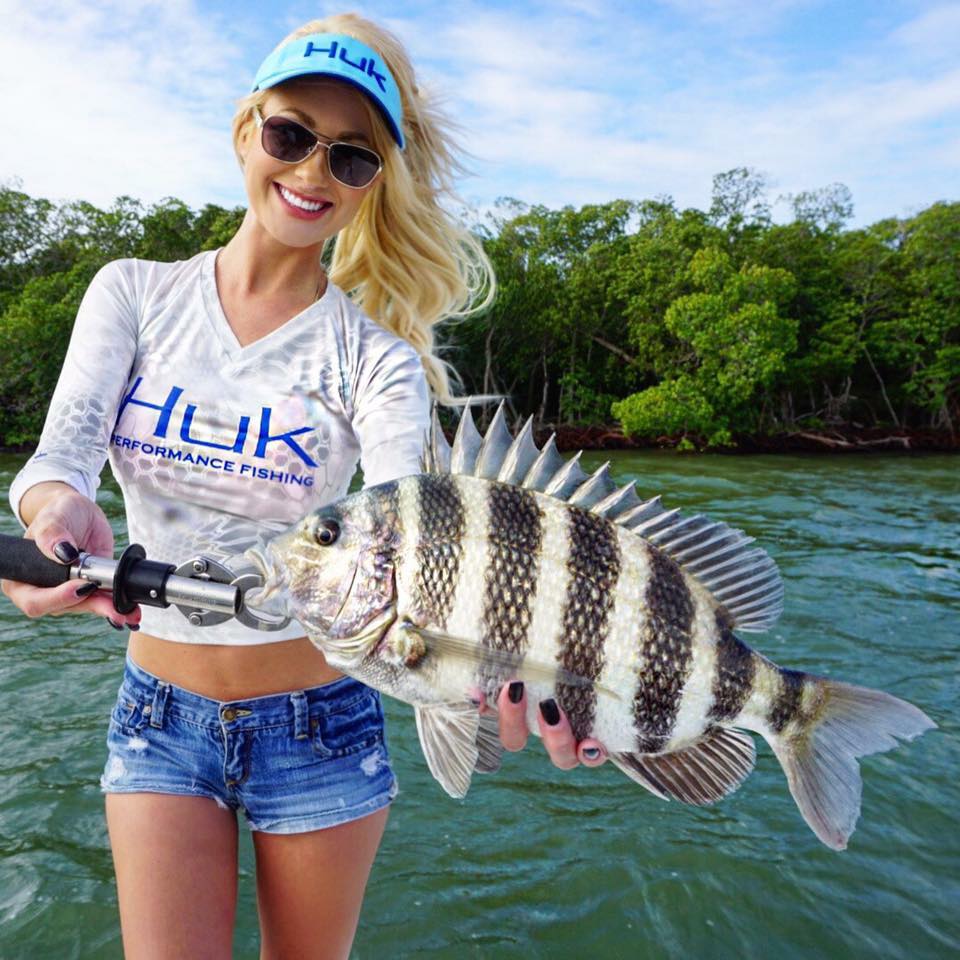
OTH, I've heard, but can't find a reference to it, that middens from colonial era sites like Saint Mary's Cite had many remains from Sheepshead, suggesting that it was once a common fish up to the mid-Bay region. I also heard that they went away because of poor water quality. Is this a sign that the Bay Diet is starting to work, or this this just an odd year one-off?

When reeled in, it’s common for the average angler to mistake a sheepshead for a juvenile black drum. But the teeth – oh those wonderfully gnarled, alien-like prongs – are a dead giveaway. How do they fit so many teeth into such a small cavity?

As the cobia bite softened this past week, a notable number of anglers have walked into my shop looking for small hooks and premade sheepshead rigs, which we call “Sheeper Sweepers.” The rigs we carry are made by a Chesapeake Bay charter skipper and have a swinging 1/0 hook attached to a swivel imbedded into a halfmoon-shaped jig head, which ranges in weight from ¾ ounce to 2 ounce. Some anglers choose to go weightless, using just a baited hook.

The Chesapeake has an ample supply of good sheepshead territory. From the mega-structure CBBT, rocky substrates or submerged obstructions (think wrecks and reefs) as well as smaller bridge pilings and worn out groins and wharfs, there is no shortage of good to great sheepshead habitat.

According to Wikipedia, they like brackish water, and will even enter freshwater at times, so salinity should be not bar to their arriving here.

Clearly, scouting by boat is much easier than fishing from shore, but shore and pier anglers can get in on the fun, too. As for bait, live fiddler crabs are probably the top choice in the bay, followed by fresh or frozen shrimp, sand fleas (mole crabs) and clams.

Sheepshead have earned their nickname “convict” fish not just for the vertical stripes but also for their expertise as bait stealers. Which is why it pays to go small, hook-wise. A 1/0 hook snelled to 30-40 pound leader and then attached to a running line of 20-pound braid is sufficient.

As for reels, a 3000 sized reel with a quality drag matched with a medium-heavy rod works just fine. I prefer my 7-foot Triumph inshore rod from St. Croix.

Since that rig should be able to handle a 30 lb Striped Bass, it could probably deal with a Sheepshead.

Sheepshead devotees tell me that subtle differences in approach and presentation make or break a sheepshead trip. Meaning: A slow, deliberate approach to a sheepshead’s haunts and a good first cast are key.

Use a 6’6” or a live fiddler crab or shrimp on a 1/0 short shank hook, unweighted. The bait should land less than a dozen feet or so ahead of the fish. If you get too close, you’ll risk spooking them off.

As marquee inshore species like stripers and bluefish are on the decline, more anglers are targeting this wild looking, hard fighting summer visitor. Give it a try it, you just might become another covert.

I look forward to catching my first Chesapeake Bay Sheepshead. 

The Wombat has Rule 5 Sunday: Add More Ginger As Required up and garnering clicks at The Other McCain.

Wednesday, May 28, 2025

The Wednesday Wetness

Volunteers testing creeks in the Little Falls watershed found that salt readings in area creeks spiked to toxic levels after snow storms, but they did not always return to safe levels after the events. April readings showed that chronic toxicity (over 230 parts per million) remains in 3 locations on the Little Falls Branch - by the Somerset Pool, by the Willard Avenue Neighborhood Park, and by Westbrook Elementary School. Chronic toxicity means that the habitat of the aquatic life that depends on fresh water is compromised to the point where they cannot survive.

Since December 2024, trained LFWA volunteers have tested 8 sites along the Minnehaha, Little Falls and Willett Branch creeks before and after snow storms as well as once a month in the warmer months. The data shows that we have a serious salt pollution problem in the watershed. Most of our sites experienced spikes to levels of over 860 PPM after snow events. Chloride is naturally present in the environment. Chloride concentrations between 1 and 100 ppm (mg/L) are “normal” in most freshwater waterways. But levels over 230 PPM are considered chronic toxicity as aquatic organisms cannot tolerance this much salt for more than a few days. Levels over 860 are considered acute toxicity as the organisms can only survive for several hours at this level.
The Wombat has Rule 5 Sunday: Lewis Grizzard Memorial Post ready on time and under budget at The Other McCain.

Saturday, May 24, 2025

Will Oysters Clean Baltimore Harbor?

WJZ News, Oysters planted near Key Bridge collapse site in effort to clean Maryland waterways

The Chesapeake Bay Foundation resumed oyster restoration efforts near the site of the Francis Scott Key Bridge collapse for the first time in nearly a year. More than 31,000 oysters were planted on Wednesday at Fort Carroll, a sanctuary reef a short swimming distance from where the bridge collapsed in March 2024. WJZ joined the Chesapeake Bay Foundation on the Patapsco River to help plant the oysters.

Kellie Fiala, the Maryland Oyster Restoration Coordinator with the Chesapeake Bay Foundation, says oysters are a natural filter feeder that filters up to 50 gallons of water each day, which clears the way for better water quality and more wildlife. "It's critical," Fiala said. "Oysters used to be a critical part of the economy here, the environment here, and so what we're really trying to do is reconnect people to the water in a healthy and
positive way, but also improve the water quality here." 

Baltimore Harbor is notoriously silty, to the point that it needs almost constant dredging to keep the ship channels open. I do question the ability of oysters to substantially clear the water in the harbor. 50 gallons per oyster per day sounds like a lot, but it's a pretty big body of water.

WJZ joined the Chesapeake Bay Foundation for an oyster restoration effort in March 2024, the day before the Key Bridge collapsed. Fiala said the collapse sparked fear that the debris would stir up sediment and smother the oysters. But, fortunately, underwater surveying shows the oysters are alive and thriving.  The Chesapeake Bay Foundation expects to plant about 500,000 oysters in the waters this summer.

The oysters being planted at Fort Carroll this summer have been growing throughout marinas in the Harbor, tended to by volunteers. This process of "oyster gardening" helps oysters survive their first year of life, when they're most vulnerable. "We want them to improve water quality, provide habitat, and ecosystem services in Baltimore for the people here," Fiala said.

I'm surprised oysters are thriving north of the Bay Bridge. Oyster require at least some salt in the water to grow, below about 3 ppt salinity they stop feeding.  

The Wombat has Rule 5 Sunday: Lewis Grizzard Memorial Postready on time and under budget at The Other McCain.

Wednesday, January 8, 2025

Data Centers Could Double Potomac Water Use

 FTX Now, Fairfax environmental council worried about data centers’ impact on local water supply

Northern Virginia’s wary embrace of data centers could have major long-term impacts on both water consumption and wastewater treatment across the region, the Fairfax County Environmental Quality Advisory Council (EQAC) says in its annual report for 2024.

The 134-page document offers a status update and recommendations on environmental issues, including land use, air and water quality, transportation, waste management, climate change and ecological conservation.

A section on water supply and wastewater treatment, and how data centers could impact both, might raise eyebrows the highest among regional policymakers.

Data centers require large amounts of electricity to operate, and one option for addressing all the heat that’s produced as a byproduct is evaporative cooling, a ventilation system that utilizes water to cool the air.

In one scenario suggested in EQAC’s report, a major uptake of evaportive cooling by large new data centers in the region could require 70 million gallons of water per day — “almost doubling” the existing consumptive water use in the Potomac River basin.

Agencies that handle the D.C. region’s water flow would face the burden of making more water available at the outset and treating the residual amount that flows into wastewater treatment facilities.

Residue that is discharged from evaporative cooling systems has heavy concentrations of saline, known as “blowdown.” Levels of sodium are “already of some concern” in the 590-square-mile Occoquan River watershed, although less so in the Potomac River basin, the report notes.

The report makes three recommendations to the Board of Supervisors on addressing the potentially heavy water demands for data centers:
  1. Consider ways of possibly cutting off water for data center use during periods of drought
  2. Find ways to use recycled wastewater rather than fresh water for cooling
  3. Set rules prohibiting the return of saline-laden water in areas served by the Occoquan Reservoir

Eventually, the Potomac River, like the mighty Colorado River, might be used up by the time it reaches Great Falls at Washington D.C., or merely a trickle of hyper saline water. That won't be bad for the environment at all, am I right?

Friday, October 18, 2024

Scallops Return to the Bay

A VIMs Scallop Survey Crew
Chesapeake Bay Mag, Bay Scallops Bounce Back, Approach Level Needed for Recreational Harvest
Bay scallops, who live in those quintessential “seashells” you see decorating beach houses everywhere, aren’t the first shellfish we associate with the Chesapeake Bay. Just like oysters, however, scallops are Bay natives. They used to flourish behind the barrier islands of Virginia’s Eastern Shore, in underwater grass meadows. They were so plentiful there was a commercial fishery in the early 1900s.

Sadly, the Eastern Shore of Virginia (ESVA) population of bay scallops was entirely wiped out in the 1930s when a nasty slime mold killed their eelgrass beds. That was immediately followed by the legendary Chesapeake-Potomac hurricane in 1933, the same one that created the inlet at Ocean City, Maryland. Eelgrass was believed to be completely gone in that area.

But in 1997, a small patch of eelgrass was discovered in South Bay near Wreck Island. That was promising enough for the underwater grass director at Virginia Institute of Marine Science (VIMS), Robert Orth, to launch a a seagrass restoration project in 2001. His successor, current SAV Program Director Christopher Patrick, continued the restoration work. Today, VIMS calls the return of eelgrass “the most successful seagrass recovery in the world.”

“Unlike other ecosystems that may take decades to restore, underwater grasses can recover relatively quickly in a healthy environment,” says Patrick.

From that one small patch in 1997, the eelgrass beds grew to about 6,000 acres of underwater meadows by 2010. (Today it’s at a thriving 10,000 acres!) With the return of that healthy habitat, VIMS tackled a new challenge: bringing back the bay scallop population.

They started by bringing wild scallops from North Carolina to the VIMS Eastern Shore Laboratory’s shellfish hatchery. In 2012, they began releasing bay scallop larvae, juveniles and adults into the restored grass beds. Since 2013, VIMS and the College of William and Mary’s School of Coastal & Marine Sciences have conducted an annual survey to track the scallop population. 

Scallop abundance has been ticking higher each year as restoration efforts kept their momentum going. VIMS was awarded a $2.25 million NOAA grant, announced in May 2023, to plant at least 60 acres of eelgrass and release more than 6 million bay scallops, in partnership with The Nature Conservancy’s Volgenau Virginia Coast Reserve.

This year, the survey on Virginia’s Eastern Shore has reached a milestone. The annual population survey shows the density of bay scallops in southern coastal bays has reached nearly 0.07 scallops per square meter. VIMS says that’s almost enough to support a recreational fishery for harvesting scallops. In comparison, Florida’s minimum for its recreational fishery is set at 0.10 scallops per square meter.

It’s welcome news to the researchers and surveyors who have been essentially counting scallops by hand for the last 11 years. To conduct the survey, scientists, staff and volunteers from William & Mary, VIMS and the Nature Conservancy split about 240 stations throughout the Eastern Shore’s southern coastal bays. At each station, surveyors go right into the shallow water (maximum four feet deep) and use their hands to feel for scallops hiding in the eelgrass. They repeat this process 50 times at each station for a total of 12,000 square meters of seagrass meadows.

It's nice to see good news about the Bay's natural resources. However, scallops are not likely to spread into Maryland's portion of the bay. We have some eelgrass, but it's mostly restricted to the southern most part because eelgrass likes high salinity, and cooler temperatures. Bay Scallops like salinity of 25 and above, and a bare minimum of 14, which would exclude most of Maryland portion of the bay most of the time.

The Wombat has Rule 5 Sunday: Where My Wolfsbane At? on time and under budget at the Other McCain.

Wednesday, November 15, 2023

Take This With a Grain of Salt

Salt patches on a farm in Somerset County, MD, are visible
 as bare white streaks along the edges of cropland.
Bay Journal, Salt patches, a product of rising seas, are spreading rapidly on the Chesapeake’s Eastern Shore

Climate change is claiming farmland at “an alarmingly high rate” in one of the Mid-Atlantic’s most productive agricultural regions, inflicting tens of millions of dollars in economic damage, a team of scientists says in a new study.

Their research spotlights a pernicious side effect of sea level rise: the salt left behind from water washed onto land after storms or unusually high tides. The resulting “salt patches,” supercharged by evaporation, can poison large swaths of cropland, reducing yields and farm profits.

From 2011 to 2017, the amount of Delmarva Peninsula farmland that converted into salt patches nearly doubled to more than 2,200 acres, the study estimates. That translates into as much as $107 million in annual crop losses in the region, the researchers say.

“Saltwater intrusion is far more extensive than I think we originally anticipated,” said Kate Tully, an agroecologist at the University of Maryland and one of the study’s authors. “There is an important need for us to come up with a suite of solutions for farmers and landowners on the Eastern Shore.”

The study, published by the journal Nature Sustainability in July, shows that farms located in low-lying areas along tidal bays and creeks are most at risk. Rather than overtaking entire fields, the salt appears to be slowly eating away at the edges, another team member said.

“It’s not like you lost half a field,” said Jarrod Miller, a soil expert at the University of Delaware. “It could have been just a foot along the edge of these fields. But when you add it up, it’s a lot of acreage across the region.”

In affected areas, the patches show up as swaths of bare white sand and salt. In cases where salt has just begun to invade, there still may be intermittent sprigs of vegetation.

A memo must have gone out because we have a second article on "salt patches": UMES researchers look at ways to protect coastal areas of the Chesapeake Bay from saltwater intrusion

I don't want to minimize it too much, but given that the Delmarva Peninsula is approximately 5,000 sq miles, 2000 acres (less than 1 sq mile) doesn't mean the end of agriculture as we know it.

There's no doubt that rising sea level, and sinking land is certainly a factor. Even 3 mm/year (roughly the aggregate rise in sea level measured by tide gauges in the area), adds up over years. At this point "climate change" in the version of CO2 driven increase of sea level due to melting ice is not a factor, the current rate of sea level rise in Maryland was established before most of the CO2 was added to the atmosphere:


I do wonder if agricultural practices in the Delmarva could be contributing to the problem. Certainly, in California's Central Valley, wide spread irrigation has led to salinization of land (and the cure, drains has led to other problems.

Thursday, July 9, 2020

Chesapeake Lawn in Need of Maintenance

Bay Journal (The EPA's pet newspaper), Chesapeake’s grasses hard hit by heat, high flows in 2019, SAV in higher salinity water fared the worst
Overwhelmed by record high flows and warm temperatures, the Chesapeake Bay’s vast underwater meadows last year suffered their largest drop since surveys began, with acreage plummeting at least 33% from 2018.

But the declines were not uniform throughout the Bay. Underwater grass beds in many fresh and low-salinity areas of the Chesapeake and its tidal tributaries held their own, while beds in mid– and high-salinity areas suffered the brunt of the impact.

“We see a lot of little losses in a lot of places, and little gains in a lot of places,” said Christopher Patrick, assistant professor of biology at the Virginia Institute of Marine Science, which conducts the annual aerial survey of the Bay’s grass beds. “And then we’ve had a couple places that just had a really bad year.”

The Bay lost a bit more than 34,986 acres of submerged aquatic vegetation, or SAV, erasing nearly a third of the plants from the shallow waters around the Bay.

The loss was probably larger, scientists say, but it wasn’t fully documented: Bad weather kept them from completing the survey in 2018.

The 66,387 acres of Bay grasses mapped last year represented just 35.9% of the Bay Program restoration goal of 185,000 acres.
It's good to have goals. I try not to get too excited about losses and gains of seagrass from year to year, as it is always tied to some weather event. Some enterprising scientist should try to invent a metric for seagrass that was not weather dependent. It shouldn't be that hard. Statistical methods are pretty good these days.

Maryland DNR was more sanguine: Maryland’s Underwater Grasses Resilient Against Severe Rainfall
The Maryland Department of Natural Resources reports a second consecutive year of underwater grass loss in certain portions of the Chesapeake Bay in 2019 due to record high rainfall and stream flows into the bay. Some areas of Maryland’s portion of the bay, however, have shown improvements. During the annual survey, 39,151 acres of underwater grasses were mapped in Maryland, representing 49% of the state’s 2025 restoration target and 34% of its ultimate restoration goal of 114,065 acres.

While this is a decline from the record-high 62,357 acres of underwater grasses mapped in 2017, it was not unexpected. The high rainfall and stream flows into the Chesapeake Bay in 2018 and 2019 led to higher levels of nutrient and sediment pollution, poorer water clarity, and record low salinities in many of Maryland’s waterways. Because of these reduced habitat conditions, underwater grass abundance declined in 2018 and again in 2019.

Last year’s flows were even higher than those from Hurricane Agnes, which completely wiped out grasses in the upper Chesapeake Bay in 1972. The diversity of grasses present in the upper bay and tributaries makes those areas more resilient to stressors like the high flows observed in 2018 and 2019.

Wednesday, September 26, 2018

More Good News from the Bay

Chesapeake Sees Unprecedented Jellyfish Scarcity
In one of the wettest summers on record, as boaters dodge floating debris sent down from the Conowingo Dam, jellyfish have been few and far between. In fact, scientists tell Bay Bulletin that bay nettles, the jellyfish we know best, may be more scarce this year than ever before.

Denise Breitburg, a senior scientist at the Smithsonian Environmental Research Center (SERC), says multiple factors resulting from this summer’s rain are probably contributing to the scarcity of nettles. Salinity in many areas has been below levels that nettles can tolerate, let alone reproduce. The high water flow rates we’ve seen this season have physically washed nettles and ctenophores (comb jellies) out of tributaries and down the Bay. And, says Breitburg, over several decades, rising water temperatures have reached levels that are harmful or even lethal to jellyfish.

The lack of stinging nettles may be welcome news for those who like to play in the water—paddleboarders, jetskiiers, wakeboarders, swimmers, and the like—but environmentalists worry that their absence could throw the ecosystem out of balance.

Breitburg hasn’t seen bay nettles or comb jellies anywhere near the SERC facility on the Rhode River. And what’s more, she says, as of August, none of her colleagues at the Chesapeake Biological Lab in Solomons, the Horn Point lab in Cambridge, and PEARL, the Morgan State lab on the lower Patuxent, had seen jellyfish anywhere near their labs, or the Maryland locations they were sampling. And that’s a first . . .
We've had summers where they didn't appear until August, and disappeared shortly after. But so far, we haven't seen a single one. And I don't mind. 

Tuesday, April 7, 2015

Taking Governments Advice with a Grain of Salt

. . . There is one area of consensus: Both sides agree that eating too much salt, especially for people with high blood pressure, can be dangerous.

The critical disagreement concerns how to define “too much.”

Under the current dietary guidelines, too much is more than 2,300 milligrams of sodium per day - the amount of sodium in a teaspoon of salt. (For people over 50, and for African-Americans, the current recommended intake is even lower - 1,500 milligrams per day.)

If the U.S. salt warnings are correct, Americans are indeed endangering themselves on a massive scale. Americans typically go way over the limit, ingesting about 3,500 milligrams per day.

If the skeptics are correct, on the other hand, most Americans are fine. In their view, a typical healthy person can consume as much as 6,000 milligrams per day without significantly raising health risks. But consuming too little - somewhere below 3,000 milligrams - also raises health risks, they say.
To understand how divided scientists are on salt, consider that even authorities with the American Heart Association, one of the organizations promoting the current salt limits, don’t agree.

“The totality of the evidence strongly suggests that Americans should be lowering their sodium intake,” said Elliott Antman, the president of the American Heart Association. “Everyone agrees that current sodium intake is too high.”

This is the long-established view. It is based on the observation that, in some people, reducing salt consumption can lower blood pressure. Because high blood pressure is common and raises the risk of cardiovascular troubles, strict salt limits will benefit society, according to this view.
And bleeding some people, like those with haemochromatosis, can make them healthier. But it's hardly a good reason to call for the bleeding of the entire population.
None of this is persuasive to people like Suzanne Oparil, a former president of the American Heart Association.

For one thing, the blood-pressure reductions that come from abstaining from salt are relatively small on average, because individuals vary widely in their reactions. (An average person who reduces his or her salt intake from median levels to the U.S. recommended levels may see a drop in blood pressure from 120/80 to 118/79, according to American Heart Association figures.)

“The current [salt] guidelines are based on almost nothing,” said Oparil, a distinguished professor of medicine at the University of Alabama at Birmingham. “Some people really want to hang onto this belief system on salt. But they are ignoring the evidence.”
The evidence has always been weak, and suggest that a relatively small fraction of the of the population needs to reduce salt, and yet the guidelines have always been promulgated across the whole population. Why?

There are just some people who need to nag, and it's more fun to nag the whole world than just the folks that really need it.

Thursday, March 5, 2015

Salt That Popcorn

Study says salt may not be all bad for you
Salt, the villain of numerous public health campaigns, including one in San Diego County, isn't such a negative after all.

The sodium consumed with salt is widely supposed to raise blood pressure and increase the rate of cardiovascular disease. But that position, endorsed by the American Heart Association and the Centers for Disease Control, has been disputed in recent studies in peer-reviewed journals that fail to find health risks for most Americans in their salt consumption.

Now a study published today points to an unexpected benefit of salt: It fights infections.

So, basically, the American Heart Association, the AMA, Michael Bloomberg and the federal government have been recommending starvation levels of salt for years. I wonder how many people died as a result.

Wombat-socho is celebrating the break in the weather with "Late Night With Rule 5 Sunday: Spring Thaw?"

Wednesday, February 26, 2014

When Bad Food Becomes Good Again

An article from Salon about 7 foods that we all loved, and used to think were bad for us, for which science in now finding new support.  Of course, being Salon, they have to throw some well meaning nonsense in as well, but then, what do you expect from liberal digital rag?

7 Foods that were supposed to be incredibly unhealthy — but are actually anything but
1) Coconut Oil

. . .It turns out that unrefined coconut oil offers terrific health benefits. Yes, it is a saturated fat. But the scientific consensus on whether saturated fats are bad for us is changing. Now researchers are stressing that saturated fats like coconut oil actually lower bad cholesterol in our bodies. Studies of people in countries that consume high amounts of coconut oil have found fewer instances of heart disease than in nations, such as the United States, where coconut oil has not been a staple. Coconut oil is rich in lauric acid, which is known for its antiviral, antibacterial, anti-inflammatory, anti-microbial properties. Coconut oil, the new wisdom says, is good for our bodies inside and out. . .
Georgia is a recent convert to the cult of coconut oil.  In addition to all the above, it makes the kitchen smell really good.  You can order it on Amazon here, and support the blog by using my Amazon Associates link.

Tuesday, May 14, 2013

Please Pass the Salt

In a report that undercuts years of public health warnings, a prestigious group convened by the government says there is no good reason based on health outcomes for many Americans to drive their sodium consumption down to the very low levels recommended in national dietary guidelines.

Those levels, 1,500 milligrams of sodium a day, or a little more than half a teaspoon of salt, were supposed to prevent heart attacks and strokes in people at risk, including anyone older than 50, blacks and people with high blood pressure, diabetes or chronic kidney disease — groups that make up more than half of the American population.

Some influential organizations, including the American Heart Association, have said that everyone, not just those at risk, should aim for that very low sodium level. The heart association reaffirmed that position in an interview with its spokesman on Monday, even in light of the new report.

But the new expert committee, commissioned by the Institute of Medicine at the behest of the Centers for Disease Control and Prevention, said there was no rationale for anyone to aim for sodium levels below 2,300 milligrams a day. The group examined new evidence that had emerged since the last such report was issued, in 2005.
It's funny, in sort of a weird way, that this result keeps coming up over and over in studies, and the same people keep ignoring it, and insisting that the only way for everyone to stay healthy is to cut back on salt.  Science, schmience!  It's almost like they simply want us all to eat bland, tasteless food.

There are people for whom excess salt causes high blood pressure, but they are a distinct minority.  Most of us can eat about as much salt as we like and not suffer anything worse than thirst.


Linked at The Classic Liberal's Rule 5 compendium "Alice in Chains: Stone."