Showing posts with label shells. Show all posts

Thursday, January 1, 2026

The opening of the Year Jar

Time to put last year's fossil (and other stuff) collection away to make room for more.

4,041 sharks teeth with a single small (Hubble) Megalodon. Also a handful of small porpoise teeth, a few crocodile teeth, a horse tooth (that may or may not be a fossil), some whale ear bones, a couple of dolphin vertebra, and some shark vertebra, two large cookies (whale vertebra epiphysis) and a Moon Snail, a poison bottle and five Geoduck pearls. The teeth weighed a total of 2 lb 11 oz, or 1.233 kg, resulting in an annual average of 11.0 teeth per day, and an average weight of 0.31 g. Not the best year ever, but not the worst either. Having the flu for the last week of the year didn't help.

Sunday, November 2, 2025

Beach Report 11/2/25

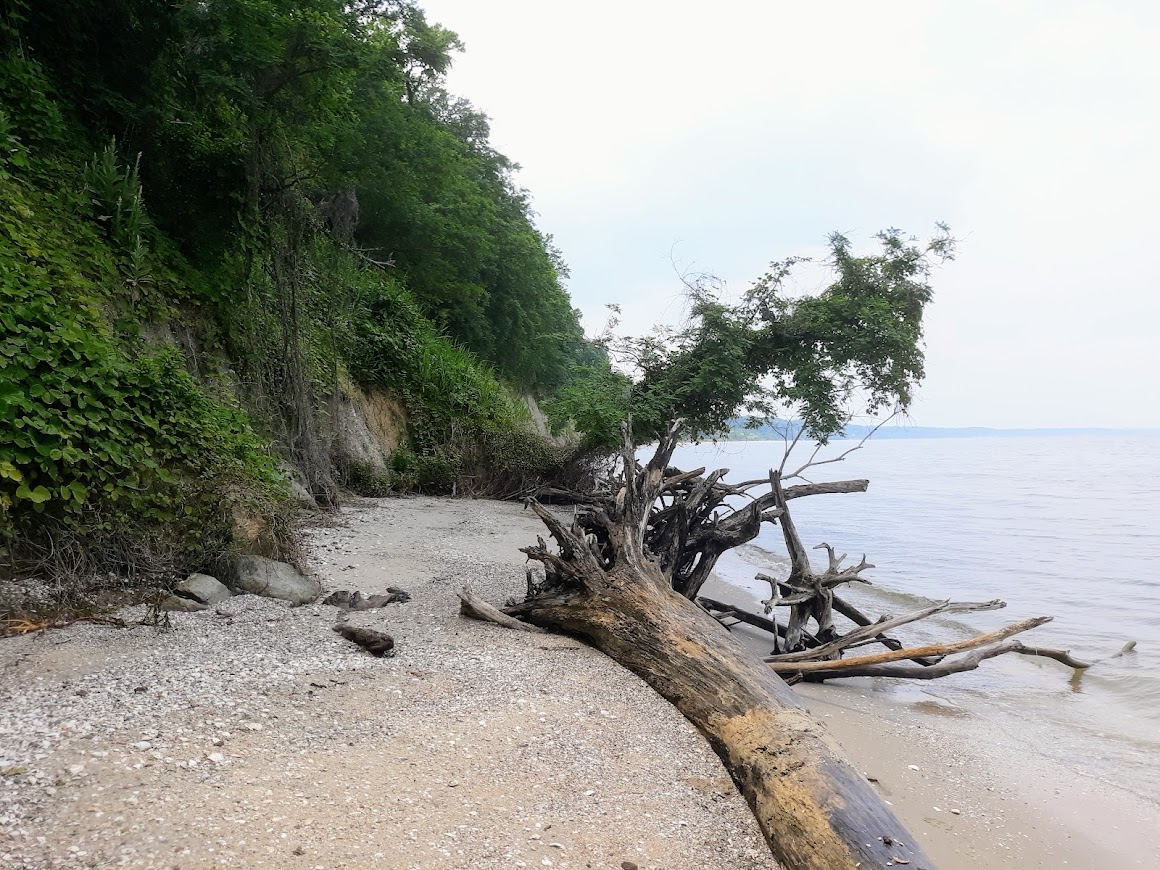
Another pretty nice fall day, 60ish, and all but wind free. By afternoon, most of the beach is in the shade of the cliffs.
The tide was high setting out, but by comparison with recent storm tides, it seemed like a blow out.
One of several slides that happened in the last storm.
Hopefully it will reveal some new fossils as it melts away under the assault of the waves. 


Do you see it? (Click to expand)
A close up.
And safely in my fingers,  very sharp Snaggletooth anterior upper
A couple of Bald Eagles objected to my passing, but didn't bother to leave as I passed
I don't normally have much interest in the fossil scallop shells here. If we collected them, we'd need a whole new room, but the colors on this one struck me as unusual. I left it there for someone else to collect.
Monday, March 17, 2025

Beach Report 3/17/25

St. Patrick's Day at the beach. It was about 50 F, mostly overcast, and blowing 15-20 knots from the NW. A pretty typical March day.
The tide was low, and the beach a bit sandy but not too sandy. 
There was a big slide from the cliffs up on Matoaka since we walked by yesterday. That one would hurt if it landed on you
In the pulverized sediment at the base of the slide I found these two fossil Geoduck (Panopea) clam shells still together. Here I've washed the sand out from between them.
This is the biggest pair of these shell still together that I have seen, and interestingly, in the shells you can see a couple of small blister pearls.
Georgia found this lovely cookie (an epiphyseal plate from a juvenile whale vertebra). 

She also found this great Snaggletooth upper up in the dry section of the beach. By far the best of 10 teeth.
She also found this piece of whale ear bone in the debris of the fall.


Friday, October 18, 2024

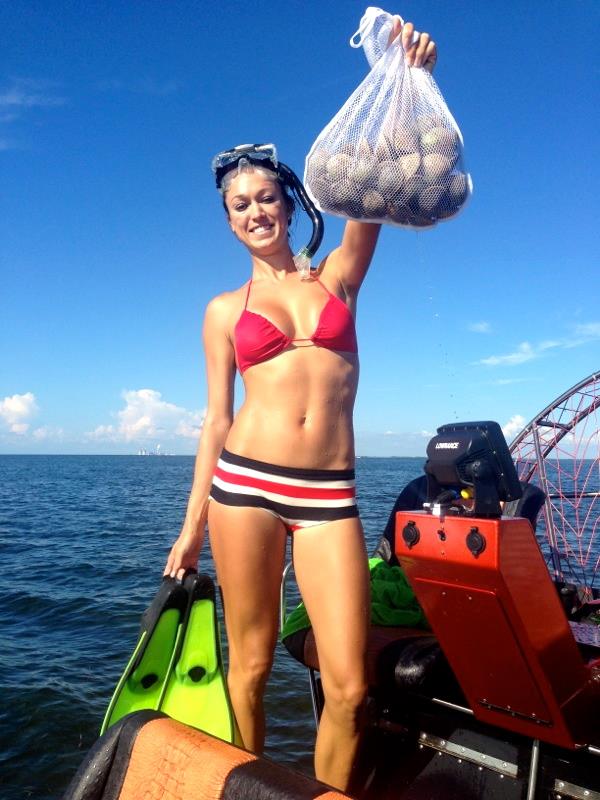
Scallops Return to the Bay

A VIMs Scallop Survey Crew
Chesapeake Bay Mag, Bay Scallops Bounce Back, Approach Level Needed for Recreational Harvest
Bay scallops, who live in those quintessential “seashells” you see decorating beach houses everywhere, aren’t the first shellfish we associate with the Chesapeake Bay. Just like oysters, however, scallops are Bay natives. They used to flourish behind the barrier islands of Virginia’s Eastern Shore, in underwater grass meadows. They were so plentiful there was a commercial fishery in the early 1900s.

Sadly, the Eastern Shore of Virginia (ESVA) population of bay scallops was entirely wiped out in the 1930s when a nasty slime mold killed their eelgrass beds. That was immediately followed by the legendary Chesapeake-Potomac hurricane in 1933, the same one that created the inlet at Ocean City, Maryland. Eelgrass was believed to be completely gone in that area.

But in 1997, a small patch of eelgrass was discovered in South Bay near Wreck Island. That was promising enough for the underwater grass director at Virginia Institute of Marine Science (VIMS), Robert Orth, to launch a a seagrass restoration project in 2001. His successor, current SAV Program Director Christopher Patrick, continued the restoration work. Today, VIMS calls the return of eelgrass “the most successful seagrass recovery in the world.”

“Unlike other ecosystems that may take decades to restore, underwater grasses can recover relatively quickly in a healthy environment,” says Patrick.

From that one small patch in 1997, the eelgrass beds grew to about 6,000 acres of underwater meadows by 2010. (Today it’s at a thriving 10,000 acres!) With the return of that healthy habitat, VIMS tackled a new challenge: bringing back the bay scallop population.

They started by bringing wild scallops from North Carolina to the VIMS Eastern Shore Laboratory’s shellfish hatchery. In 2012, they began releasing bay scallop larvae, juveniles and adults into the restored grass beds. Since 2013, VIMS and the College of William and Mary’s School of Coastal & Marine Sciences have conducted an annual survey to track the scallop population. 

Scallop abundance has been ticking higher each year as restoration efforts kept their momentum going. VIMS was awarded a $2.25 million NOAA grant, announced in May 2023, to plant at least 60 acres of eelgrass and release more than 6 million bay scallops, in partnership with The Nature Conservancy’s Volgenau Virginia Coast Reserve.

This year, the survey on Virginia’s Eastern Shore has reached a milestone. The annual population survey shows the density of bay scallops in southern coastal bays has reached nearly 0.07 scallops per square meter. VIMS says that’s almost enough to support a recreational fishery for harvesting scallops. In comparison, Florida’s minimum for its recreational fishery is set at 0.10 scallops per square meter.

It’s welcome news to the researchers and surveyors who have been essentially counting scallops by hand for the last 11 years. To conduct the survey, scientists, staff and volunteers from William & Mary, VIMS and the Nature Conservancy split about 240 stations throughout the Eastern Shore’s southern coastal bays. At each station, surveyors go right into the shallow water (maximum four feet deep) and use their hands to feel for scallops hiding in the eelgrass. They repeat this process 50 times at each station for a total of 12,000 square meters of seagrass meadows.

It's nice to see good news about the Bay's natural resources. However, scallops are not likely to spread into Maryland's portion of the bay. We have some eelgrass, but it's mostly restricted to the southern most part because eelgrass likes high salinity, and cooler temperatures. Bay Scallops like salinity of 25 and above, and a bare minimum of 14, which would exclude most of Maryland portion of the bay most of the time.

The Wombat has Rule 5 Sunday: Where My Wolfsbane At? on time and under budget at the Other McCain.

Monday, February 19, 2024

Beach Report 2/19/24

Another pretty nice winter day, about 40 F, a light breeze, mostly clear, and with a much lower tide.
Looking back at the "Big Tree". A couple of months ago, it was a big barrier to going north, but storms have either moved it out some, or, more likely eaten back the cliff behind it.
Which is where I found this very nice upper Snaggletooth. By far the best of 13 teeth.
I found this Ecphora, Maryland's State Fossil on the way back. It's about as complete as you ever find then, a little bit of the tip and the stem are missing, but they usually are. It was also very clean from being in the surf, although the inside is still packed with sandy clay and shell bits. Georgia thinks it might be our biggest ever. 


Sunday, December 3, 2023

Beach Report 12/3/23

No need to spend a lot of time trying to straighten the horizon on today's pictures; there was no horizon thanks to thick fog on the Bay today. 
It wasn't really all that cold, in the mid 50s, with no wind, and almost flat calm except for boat wakes.
It was all Georgia in the fossil department today, first with this gorgeous White Shark tooth, 1 3/4 inch long and in great shape. It's only an 1/8th inch short of this year's best so far. She found it up just above the tide line on the way back, after I passed, so it had been passed by at least three times, not to mention any other people on the beach. Go figure.
Then, just to rub it in, she spotted this nice, but slightly broken Snaggletooth in the water as she and Skye were rounding the rocks that separate Calvert Beach and Matoaka.
She also found this shell that we've never seen before, likely a species of Turritella. A much smaller, rounder Turritella is very common in the clay here, and sometime wash up in droves on the beach.


Thursday, November 30, 2023

Beach Report 11/30/23

It was much warmer today than yesterday, under a mostly cloudy sky, and with a bit of a SE breeze. Sky and I got a late start again, but worked our way well up past Matoaka.


There was a lot of gravel and shell hash showing, and I did pretty good, 11 shark's teeth and one pretty decent Ecphora.


But the winner by far was this big honking Snaggletooth lower I found tucked up against a big log. It doesn't quite make the kitchen window shelf, but it was a contender.


Tuesday, October 17, 2023

Friday, June 9, 2023

Beach Report 6/9/23

Today was moderately warm, in the mid 60s, with overcast most of the time, and even a short rain shower. We hit the low tide just about right, and walked all the way up to where the boulders fell.
Georgia showing off her find of the day/year, a tooth so big it wouldn't go all the way into her tooth jar.
A sadly unfocused shot showing the 1 7/8 inch White Shark tooth she found up on the dry side. Easily the biggest of the year so far, and in great shape, too. She also found a pretty nice Geoduck pearl. Otherwise, a horrible day for fossils, only 4 more teeth. 

A least the focus shows Skye is getting along up the beach.
A little Azure (Spring or Summer?) which stopped on log nearby. 

Monday, May 15, 2023

Beach Report 5/15/23

Another gorgeous spring day in Slower Maryland. Mid 60s, clear skies, and light winds.  Skye is still confined to the yard to continue healing, so it was just Georgia and I.
The tide was near high, and the beach sandy, so tooth hunting was tough, only 8 teeth, a couple of crab claws and a drum tooth.
Up at the boulders, I found this one broken with a huge Chesapecten scallop shell along the split. We don't collect these often, and we left it for someone who wanted it.


A few feet away, I found this remarkably complete Ecphora, the official Maryland state fossil. I cleaned a little mud off it at home before taking this pic.

Sex on the beach.

Friday, October 28, 2022

Gone Fishin'

 But not like this:


At least, I am if the wind slacks a little.

The Wombat has Rule 5 Sunday: Gisele Bundchenup and clicking at The Other McCain.

Saturday, June 26, 2021

Beach Report 6/26/21

Radar showed a line of storms moving away south of us when we decided to go to the beach before lunch, to catch a low tide. You could certainly see the from the dunes near the parking lot.
To the north, the sky was much clearer.

I've never seen a limpet or slipper shell in all the shell hash here, before, but here's something like it. Also, an unusually intact Ecphora, the long tail is usually broken off.

UPDATE: The expert confirms it's a fossil Slipper Shell.
Not a bad haul, 14 shark's teeth, 2 drum teeth, a crab claw, and a weird little ring thing that seems to be made out of bone. But it's so fragile, I don't want to test it too hard. Georgia had a similar lot.