Showing posts with label chocolate. Show all posts

Thursday, August 24, 2023

Can Chocolate be Part of the Bay Diet?

Pennsylvania News, Pennsylvania dairy farms, Chesapeake Bay get funding

The Hershey Company is teaming up with multiple entities to commit millions of dollars to support Pennsylvania dairy farms and the Chesapeake Bay.

Hershey and the U.S. Environmental Protection Agency are together giving $2,000,000 to the Alliance for the Chesapeake Bay and Land O’Lakes will use that money to help farmers deal with run-off that finds its way into the bay.

The four entities are focused on making a difference with their partnership.

“The work that this partnership is going to do is to help leverage public and private dollars together to bring resources to our farming community on the ground to impact the supply chain all the way from the beginning all the way to the end to when our consumers are purchasing it off the shelves,” Alliance for Chesapeake Bay CEO Kate Fritz said.

$2 million sounds like a lot of money, but when the estimated cost of the Bay clean up coming in north of $25 billion (with a "b"), it's really rounding error. Note that it is also actually being given to an NGO, which will likely take a generous cut before being passed on to the farmers, if indeed, it does get passed to farmers, and doesn't get used to create programs to "educate" farmers on how to keep the Bay cleaner. 

The Wombat has a double-stuffed Rule 5 Sunday: Vengeance Bikinis ready for consumption.

Thursday, July 7, 2022

Happy World Chocolate Day!

Or so Microsoft informs me, also, Newsweek, World Chocolate Day 2022: Who Invented Chocolate? The History and Origins

More than 4,000 years ago in ancient Mesoamerica—a region that covers much of Mexico and Central America today—the first cacao plants were found.

The plant gave us chocolate, which is celebrated across the globe on World Chocolate Day on Thursday. The observation of the day dates back to 2009.

However, chocolate itself has a much longer history. One of Latin America's earliest civilizations, the Olmec, was the first to turn the seeds of the cacao plant into chocolate, which they drank during rituals and used for medicinal purposes.


Back then, chocolate was consumed as a liquid and had no sugar in it. A far cry from the chocolate bars we know and love today.

The earliest traces of cacao residue date from 1400 B.C. and was found on pottery excavated in Honduras, according to Smithsonian magazine.

The Maya made chocolate centuries later with roasted and ground cacao seeds mixed with chilies, cornmeal and water.

The thick foamy drink was called "xocolatl," meaning "bitter water," and the Maya saw it as a gift from the gods. Indeed, the Latin name for the cacao tree, Theobroma cacao, means "food of the gods."


In the 15th century, the Aztecs conquered the Maya. The Aztecs also loved chocolate, and used cocoa beans as currency, believing that chocolate was a gift from the god Quetzalcoatl.

Both the Aztecs and Maya believed that cacao had divine or magical properties and they drank chocolate during sacred rituals of birth, marriage and death. The Aztecs even gave it to victorious warriors after battle to celebrate.

The brown stuff made its way to Europe in the 16th century after Spanish conquistador Hernán Cortés established colonies across Central America.

It was an instant hit, at first being used as medicine. Before too long, people were adding sugar, vanilla and honey to it and chocolate became the drink of the European aristocracy and super wealthy.

So it's cultural appropriation? Great! 

The Wombat has Late Night With Rule 5 Sunday: Hailey Outland up and gathering clicks at The Other McCain.

Sunday, August 20, 2017

Sweet!

Nutella alert after 20 tonnes of chocolate spread stolen by gang
German police have issued an alert after up to €70,000 worth of Nutella was stolen from a lorry.

Thieves made off with the trailer – filled with 20 tonnes of Nutella, Kinder Surprise eggs and other chocolate products – from the German town of Neustadt.

The haul, believed to be worth between €50,000 and €70,000, was taken between Saturday evening and midday on Sunday.
 Man, it would take at least a week to eat that much Nutella!
According to The Times, Neustadt police released a statement urging people to immediately report “anyone offering large quantities of chocolate via unconventional channels”.

A police spokesman added: “It is not even clear if they were after the sweets or after the trailer — at this point we do not know what their motive was.” 
I wonder if they sell Nutella on the side of the road in Germany, the way we do crabs in Maryland?

Linked at Pirate's Cove in the weekly "Sorta Blogless Sunday Pinup" and linkfest. Wombat-socho has "Rule 5 Sunday: OUTRAGE!! (Parte Dos)" ready for your reading pleasure.

Sunday, May 1, 2016

Eat More Chocolate!

. . . Compared with participants who did not eat chocolate every day, those who did were found to have reduced insulin resistance and improved liver enzyme levels. The effect was stronger the higher the chocolate consumption, the team reports.

The findings remained after accounting for participants' age, sex, education, lifestyle, and dietary factors that could affect the results.

Dietary factors included intake of tea and coffee rich in the antioxidants polyphenols, which the researchers say have the potential to spur chocolate's benefits for cardiometabolic risk.
And coffee too? Does this officially mean that doctors and nutritionists were wrong about everything?
Cardiometabolic risk refers to a person's likelihood of developing diabetes, heart disease, or stroke.

Participants who ate chocolate were more physically active, younger, and more highly educated than those who did not eat chocolate, according to the authors.
 Huh? I thought they controlled for "age, sex, education, lifestyle" etc?
Prof. Stranges and colleagues say their findings suggest that chocolate consumption may reduce the risk of developing cardiometabolic disorders by improving liver enzyme levels and protecting against insulin resistance.

 Does skin absorption work, too?
"Given the growing body of evidence, including our own study, cocoa-based products may represent an additional dietary recommendation to improve cardiometabolic health; however, observational results need to be supported by robust trial evidence.

Potential applications of this knowledge include recommendations by healthcare professionals to encourage individuals to consume a wide range of phytochemical-rich foods, which can include dark chocolate in moderate amounts."

However, Prof. Stranges notes that it is important to distinguish the difference between chocolate that contains natural cocoa and processed chocolate; the latter is much higher in calories.
Please remember that science seems to be right about half the time, and even less when it's something you really, really want to be true. But until they disprove it, I'm going to eat more chocolate!

Linked at Pirate's Cove in the weekly "Sorta Blogless Sunday Pinup" and links. The mother of all babe lists, Wombat-socho's "Rule 5 Sunday: May Flowers"  is up at The Other McCain.

Tuesday, June 30, 2015

So Where Did I Hide the Chocolate Bars?

Dark Chocolate Could Improve Memory By 25%, But You’d Have to Eat Seven Bars a Day
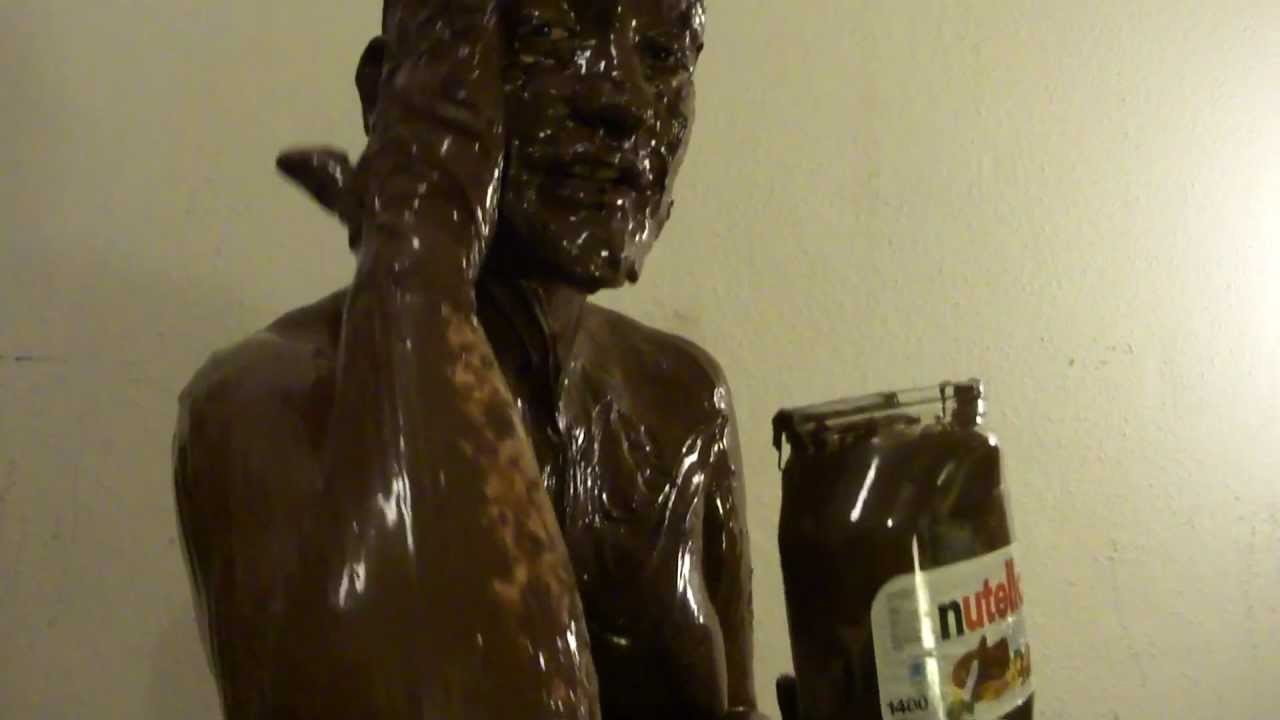
Does bathing in it help too?

Dr. Scott A. Small, a neurologist at Columbia University Medical Center, led the study, which was funded by the chocolate company Mars, the National Institutes of Health, and two other research foundations. The results were published yesterday in Nature Neuroscience.

When healthy people ages 50 to 69 drank a mixture high in cocoa flavanols for three months, they performed about 25% better on a memory test.
That would raise my chances of remembering our anniversary to what, 12.5%?

Here’s Pam Belluck, writing for The New York Times:
The findings support recent research linking flavanols, especially epicatechin, to improved blood circulation, heart health and memory in mice, snails and humans. But experts said the new study, although involving only 37 participants and partly funded by Mars Inc., the chocolate company, goes further and was a well-controlled, randomized trial led by experienced researchers.
Besides improvements on the memory test — a pattern recognition test involving the kind of skill used in remembering where you parked the car or recalling the face of someone you just met — researchers found increased function in an area of the brain’s hippocampus called the dentate gyrus, which has been linked to this type of memory.
So women don't eat chocolate to forget?
While the study supports the idea that cocoa flavanols help reverse age-related memory decline, it probably won’t ward off Alzheimer’s. The participants didn’t show any marked difference in the functioning of the entorhinal cortex, which is impaired in patients with Alzheimer’s disease. The distinction shows that age-related and Alzheimer’s-related memory loss are not the same thing, and that flavanols won’t have an effect on cognitive disease.

Even if you don’t have Alzheimer’s, though, binging on any old chocolate this Halloween will help you remember where you left your keys. Milk chocolate won’t help since processing usually removes the key flanvanol epicatechin. Eating dark chocolate may not help much, either. To ingest the same amount of epicatechin as the study group, you’d have to consume the equivalent of about seven average-sized bars a day, which would probably invite other health problems.
So why can't we just buy epicatechin?

Wombat-socho snuck in with "Rule 5 Sunday: Independence Day Weekend Edition" late Sunday evening.

Friday, November 21, 2014

The 6 AM Eye Opener - "Gimme Chocolate!"


But some good news; despite recent reports, it appears a chocolate shortage is not imminent.
Despite reports that the world's supply of cocoa is running thin, you may not need to worry about stockpiling your chocolate reserves quite yet.

Candy manufacturers Mars Inc. and Barry Callebaut recently warned that consumer demand for chocolate will exceed cocoa supply by 2020, creating a gap in supply and demand of 1 million metric tons, according to a Bloomberg report.

The predicted shortage is attributed to myriad factors such as "disease, drought, rapacious new markets and the displacement of cacao by more-productive crops such as corn and rubber," Bloomberg reported.

However, the International Cocoa Organization, a global group made up of cocoa producing and consuming countries, told USA TODAY Network that the prediction is not correct.

While acknowledging there are problems that could affect production, small deficits and surpluses in cocoa supply are normal, according to Michael Segal, spokesman for the organization, which forecasts cocoa supply and production. The organization is not predicting anything out of the ordinary for the next five years.
Wombat-socho has the grand "Rule 5 Sunday: Wax Ecstatic" up and running at The Other McCain.

Wednesday, February 26, 2014

When Bad Food Becomes Good Again

An article from Salon about 7 foods that we all loved, and used to think were bad for us, for which science in now finding new support.  Of course, being Salon, they have to throw some well meaning nonsense in as well, but then, what do you expect from liberal digital rag?

7 Foods that were supposed to be incredibly unhealthy — but are actually anything but
1) Coconut Oil

. . .It turns out that unrefined coconut oil offers terrific health benefits. Yes, it is a saturated fat. But the scientific consensus on whether saturated fats are bad for us is changing. Now researchers are stressing that saturated fats like coconut oil actually lower bad cholesterol in our bodies. Studies of people in countries that consume high amounts of coconut oil have found fewer instances of heart disease than in nations, such as the United States, where coconut oil has not been a staple. Coconut oil is rich in lauric acid, which is known for its antiviral, antibacterial, anti-inflammatory, anti-microbial properties. Coconut oil, the new wisdom says, is good for our bodies inside and out. . .
Georgia is a recent convert to the cult of coconut oil.  In addition to all the above, it makes the kitchen smell really good.  You can order it on Amazon here, and support the blog by using my Amazon Associates link.