Showing posts with label Conowingo Dam. Show all posts

Wednesday, January 7, 2026

Counties Drop Conowingo Sediment Settlement Suit

 Maryland Matters, Conowingo Dam appeal dropped, allowing $340M settlement to go forward

Maryland’s $340 million settlement with the owner of the Conowingo Dam can now move forward, after a group of Eastern Shore counties dropped their challenge of the deal.

The withdrawal came less than a month after the administrative appeal was originally filed. Officials at the Maryland Department of the Environment, which brokered the key settlement deal, had lobbied hard for the handful of counties to back down.

That’s because the appeal had the potential to derail or delay the funds from dam owner Constellation, which are designated for various environmental projects. The state negotiated to receive the funds in exchange for issuing the hydroelectric dam a crucial water quality certification, which it needs in order to obtain a 50-year license from the Federal Energy Regulatory Commission.

“We are very excited to move out of the courtroom and into action. After nearly a decade of legal challenges we can now put this $340M to work to accelerate progress on the Bay,” wrote Maryland Department of the Environment spokesperson Dave Abrams in a statement. “Thank you to the local governments who worked closely with us to reach this resolution. We are all on the same team and will work closely with them and other stakeholders as we move forward.”

After Maryland officials promised counties they could have input on the rollout of the environmental projects in the settlement, several counties pulled out in late December. Cecil County — which hosts the dam and has complained about the impacts of sediment build-up — was the final hold-out, but dropped out on Friday.

It's always been my opinion the Marylanders should have been more grateful for the role of Conowingo in keeping sediment out of the Bay, and less demanding of those companies willing to help keep the dam serving that purpose. I'm glad the work will be going forward now.

Wednesday, December 31, 2025

Another Dam Controversy

At the Balmer Banner, Eastern Shore opposition to Maryland’s $340M Conowingo Dam deal splinters

Barely a month after several Eastern Shore counties challenged Maryland and Constellation Energy’s $340 million deal to relicense the Conowingo Dam, three out of four objecting jurisdictions have backed out of the appeal. Dorchester County voted last week to withdraw its challenge to a state environmental certification for the dam, while the attorney leading the coalition spearheading the challenge said two other counties, Queen Anne’s and Kent, also backed out. That leaves only Cecil County, the northern Maryland county at the mouth of the Susquehanna River and Conowingo Dam, holding the line.

Asked about the withdrawals, Charles D. “Chip” MacLeod, the attorney for the Clean Chesapeake Coalition that filed the appeal, pointed to a campaign by Maryland environmental officials to dissuade counties from their challenge. “Lots of pressure being applied to local officials who dared to slow the process and bring attention to a bad deal for the Bay and Marylanders,” MacLeod said in an email Friday. Cecil County officials remain committed to the challenge “at this stage,” MacLeod said.

Maryland Department of the Environment officials have toured the Eastern Shore in recent weeks in an effort to convince the Republican-led four counties to reconsider. State officials met with county leaders at a recent Maryland Association of Counties summit and have presented at county council meetings in both Cecil and Dorchester counties to make their case for the downstream benefits of the settlement deal. The effort appears to have paid off. Officials on the Dorchester County Council announced last week that they voted to withdraw from the appeal following conversations with state regulators.

A not so brief recap of the situation. When completed in 1928 on the Susquehanna River just above the head of Chesapeake Bay, Conowingo Dam was the second largest hydroelectric powerplant in the US. Immediately, sediments, natural erosion as well as agriculture enhanced silt, started to fill the "pool" behind the damn, protecting the Bay from them. When I arrived in the Chesapeake Bay region in 1985, the head of the EPA Bay Program said the filling of the pool with sediment was the single greatest threat to the Bay.  Years later, that threat has become reality. The pool behind the damn has no room for more sediment, and in freshets, mud simple pours over the dam. Rather than plan ahead, the authorities decided to wait, and then blame whoever owned the dam at the time for the situation reverting back how it would be in the dams absence, tying restoring the pool (at least somewhat) to relicensing the dam. If it were me, I might just offer to hand them the keys for a buck or two, and find out how they deal with it.

Tuesday, July 23, 2024

Maryland Attempts to Prevent the Invasion of Pennsylvania

Northern Snakehead, aka 'Chesapeake Channa'
MDDNR, Thousands of Invasive Fish Removed from Maryland Waters at Conowingo Dam

Thousands of invasive fish have been removed from the Chesapeake Bay watershed at the Conowingo Dam earlier this year and donated to local food banks through a continuing partnership between Maryland Department of Natural Resources (DNR), Conowingo Dam owner Constellation Energy, environmental consulting firm Normandeau Associates Inc., and local seafood wholesaler J.J. McDonnell and Co. Inc.

The fish lift at Conowingo Dam is essentially a water-filled elevator that collects migrating anadromous fish species, such as American shad, during their spawning run and transports them above the dam into the upper Susquehanna River and their traditional spawning areas. When invasive fish enter the lift, technicians remove them by hand and send them out for beneficial use.

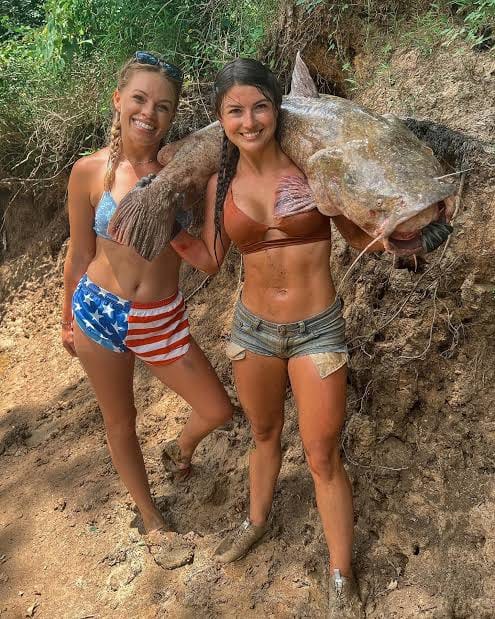
Flathead Catfish
I think I saw a Snakehead swimming in the surf today. It didn't look very happy. It's pretty salty out there, and full of Sea Nettles.

During the 2024 season, which ran from March to June, more than 18,000 pounds of invasive fish were removed from Maryland waters. Species prevented from passing upstream of the dam include 2,106 Chesapeake Channa, also known as northern snakehead; 746 flathead catfish; and 36 blue catfish. The number of Chesapeake Channa removed at the dam was more than double the amount removed in any year since the program began in 2021 (see chart below).

To put the harvested fish to good use, J.J. McDonnell processed most for consumption, including a portion they distributed to local food banks in Cecil County. DNR kept some fish for outreach events and scientific research to inform management toward minimizing the impact of these invasive species.

Blue Catfish
 

“Invasive fish pose a significant threat to ecologically and economically important native species in Maryland,” said Branson Williams, Maryland DNR’s Invasive Fishes Program Manager. “The removal effort at Conowingo Dam is a prime example of how partnership can amplify our ability to manage invasive fishes and limit their spread.”

Chesapeake Channa and blue and flathead catfish are the most notable and pervasive invasive fish in Maryland. They are all predatory species that consume large amounts of native aquatic species and have few natural predators. The department urges anglers to harvest these species when they catch them and report catches in new areas using the Invasive Species Tracker form on the DNR.

I wish them luck, but only a few need to get past to establish new populations upstream of the fish ladder.  

I've often wondered what Maryland and Virginia have to offer Pennsylvania for all the expense of the "Bay Diet.' This could be part of it. "Do your part, or we'll let the invasive species up the river." Meanwhile, we're stuck with them. Oh well, at least they fight hard and taste good. 

The Wombat makes up time with Rule 5 Sunday: Hangar Queen Double-Scoop Sunday! 

Monday, July 31, 2023

Can Acid Mines Save the Bay?

Bear with me a little, the logic train is a little tortured. At the Bay Journal, Dammed-up soil could help heal abandoned mine land

Fertile sediment bottled up behind old mill dams in Pennsylvania is a relentless source of nutrient and sediment pollution in local waterways that flow toward the Chesapeake Bay. But it could become a prime ingredient in restoring another scourge in the state: abandoned mine land.

Documented as a sediment and nutrient pollution problem for the Bay about 15 years ago, legacy sediment is topsoil that ran off the land long ago from farm fields and logging areas throughout the Bay region and piled up behind mill dams, many of which date back to colonial times.

As the dams have been torn down or abandoned, the now-elevated streams seek their original course, cutting through the soft earth that buried them and sending the soil and attached nutrients into the water. Also, the gantlet of mill ponds buried and altered healthy stream channels that once were a braid of connected streams with floodplains buffering nearby land from rising water.

In Pennsylvania, the 126-square-mile Chiques Creek watershed is one of the largest sediment and nutrient polluters in Lancaster County, itself one of the Bay’s top sources of such pollutants with one of the highest concentrations of easily erodible legacy sediment. More than 400 old mill dams have been mapped in Lancaster County alone.

Primarily surrounded by farmland and urban development with scant forest cover, the Chiques watershed has 48 dam sites that have been identified through satellite imagery.

All but nine of the dams are gone, resulting in slow but persistent pollution from the easily erodible soil in the former mill ponds. About 70 million pounds of sediment from banks up to 8 feet high erode each year, washing toward the Susquehanna River and on to the Bay, according to the Susquehanna River Basin Commission.

Sediment makes the water murky, smothering fish habitat and blocking sunlight for underwater grasses. It also carries nutrients, which contribute to harmful algae blooms and the Bay’s oxygen-starved “dead zone.”

Partners in the Chiques Creek Legacy Sediment Removal Project would like to turn that problem into a solution. If the project secures enough funding, as much as 283,000 cubic yards of legacy sediment stranded on streamside terraces would be dug up at 10 sites. The nutrient-rich soil would be trucked or taken by train to spread on abandoned mine land, where vegetation struggles to grow in the acidic soil.

With an estimated price tag of about $10 million, the project is being assembled by the U.S. Department of Agriculture’s Natural Resources Conservation Service, the nonprofit Water Science Institute, and the Lancaster County commissioners and soil conservation district. NRCS has already provided $800,000 from its small watershed improvement program to study the idea’s potential.

So, by moving dirt out of the the old damn basins, you not only benefit the Bay by removing potential nutrient source, you also help heal the environmental scars from old mining. Sounds win win to me. Possible caveats include actually causing more sediments to move down the stream in the the course of trying to excavate it, and that sediments placed on the old acid mine sites will also continue to bleed nutrients.

Of course, another possible source for sediments to place on the acid mines is the legacy sediment that has built up behind Conowingo Dam (which come from the old dams, and farm fields). By taking sediments from behind the dam, they could restore the function of the dam as a nutrient trap, a function that has been lost as the pool behind the dam filled up with sediments. It certainly makes the whole process more simple. The problem is that dirt is cheap, dirt cheap, and moving it is expensive.

Wednesday, December 21, 2022

Court Cans Conowingo Contract

Bay Journal, Appeals court vacates Conowingo Dam license

The long-running debate over how to deal with Conowingo Dam’s impact on the Chesapeake Bay is on again. A federal appeals court on Tuesday vacated the license granted in 2021 to operate the hydropower facility on the Susquehanna River.

Siding with environmental groups, a three-judge panel of the U.S. Court of Appeals for the District of Columbia found that the Federal Energy Regulatory Commission exceeded its authority by accepting a privately negotiated deal between Maryland and the utility that owns the dam as part of the license agreement. Under that deal, the state had greatly scaled back what it had originally required of the dam’s operator to reduce pollution coming downriver to the Bay.

Spokespeople for groups that had challenged the license hailed the court’s ruling, saying it clears the way for making the dam’s operator, Constellation Energy, to play a bigger part in dealing with the water-fouling nutrients and sediment building up behind Conowingo and flowing downriver.

“This decision will not only protect the Susquehanna River and the Chesapeake Bay for the next 50 years of this license term but will also ensure that all water quality certifications for large projects can’t just be thrown out when it is politically expedient or when the state is pressured to do so,” said Betsy Nicholas, executive director of Waterkeepers Chesapeake. “This is a big win for the Chesapeake Bay, watermen, downstream residents and the entire Chesapeake Bay cleanup plan.”

The Waterkeepers group, along with two of its member organizations — the Lower Susquehanna Riverkeeper and Sassafras Riverkeeper — and the Chesapeake Bay Foundation filed suit in June 2021. They asked the court to overturn FERC’s acceptance of what some called a “sweetheart deal” between Maryland and Constellation’s corporate predecessor, Exelon Corp., over what the company would do to address the dam’s impacts on water quality and aquatic habitat.

The 94-foot-high dam straddles the Susquehanna in Maryland, about 10 miles upstream from the Bay. Its turbines generate enough emission-free electricity to power 165,000 homes, according to Constellation. After the dam’s completion in 1928, it captured a portion of the nutrients and sediments washing down the river. But now its 14-mile reservoir is mostly filled, and more nutrients and sediment from farm runoff, municipal wastewater and stormwater flow through the dam and into the Chesapeake, where they contribute to algae blooms and other water quality woes.

Incidental to its original function to produce electricity, Conowingo collected sediment and pollution from its completion in 1928 until recently, when the reservoir behind it essentially filled with mud washed down from Pennsylvania. Without the dam, that sediment would have continually entered the Bay. Now that the reservoir is full, environmentalists and court are saying that the company that now owns the dam (which is not the company that built it), owes them for no longer being able to do that. If I were Constellation, and had fuck you money, I'd just abandon the dam.

Tuesday, May 10, 2022

Bird Flu in Maryland

WJZ13 Baltimore, Hiking Trails Near Fisherman’s Park Closed To Prevent Spread Of Avian Flu After Over 100 Birds Found Dead

The energy company that operates the Conowingo Dam in Harford County has temporarily closed two hiking trails near Fisherman’s Park to help prevent the spread of deadly avian flu in the area.

Constellation Energy said it, along with the Maryland Department of Natural Resources and the US Department of Agriculture, have collected more than 100 black vulture carcasses near the entrance of Fishermen’s Park since mid-April.

Several of the vultures found were tested by the Department of Natural Resources and were confirmed to have had avian flu.

The company said it works closely with state and federal agencies to protect the wild and domestic birds in the area, which include the area’s bald eagles.

Most of the dead birds were found near the entrance to the Fisherman’s Park parking lot on Shure’s Landing Road and near the trailhead to the Mason Dixon Trail. No dead birds have been found near the fishing wharf or Conowingo Dam, the company said.
. . .
The company said the public should avoid contact with birds, especially dead birds or birds that are acting erratically.

Avian flu is commonly spread by wild birds through their saliva, mucous and feces, according to the Centers for Disease Control and Prevention.

While some bird species might not get sick as a result of these naturally occurring viruses, the CDC states, they can cause serious illness and death when it comes to other species.

Even though infections among people are rare, the agency says, it can happen when we come into contact with airborne droplets or particles of the virus or if we touch a contaminated surface and then touch our faces.

I doesn't seem to me that humans are either much risk of spreading the flu or of acquiring it at Conowingo Dam, but there it it. According to the Maryland Birding Facebook page, Conowingo Dam is a very popular place to birdwatch, particularly Bald Eagles and Ospreys.

I don't think this will do much to reverse the course of this epizootic, much like we were largely unable to do much to stop the WuFlu. I guess we'll just have to wait and see how bad this gets.

Friday, October 8, 2021

Good News for Chesapeake Eels

CBS Balmer, American Eel Population Reaches Record High In The Susquehanna River

The American eel population in the Susquehanna River reached a record high this season.

The state’s Eel Migration Program recorded over half a million of these juvenile slippery creatures that pass through the Conowingo Dam — and experts say there’s no real reason behind a spike in population just luck.

A ramp is a key player in helping the eels migrate over the Conowingo Dam and these juvenile eels serve as a host fish for mussels. So more eels, means more mussels, resulting in cleaner water in the upcoming years for other native species like blue crabs and oysters.


An article from another TV station explains the ramp better: WBALTV,  Unique process to help eels migrate past the Conowingo Dam

They catch them with the eel-way. It is an 18-inch ramp that runs from the base of the river to a holding tank. A pipe pumping six gallons of water a minute is next to it which lures the eels onto the ramp.

"The eels think that it's a creek and there's a way around the dam. They climb up it," fisheries biologist Michael Martinek said.

The eels eventually fall into a holding tank.

So far this year, more than 621,000 eels have been collected at one location. The eels are trucked and let go in numerous freshwater locations miles above the dam. Back in their natural habitat, the eels act as a carrier for mussels.

Many species of freshwater mussels and clams rely on fish to move their larvae around. The larvae attach to the gills of fish, stay a while as parasites, then drop off to become free living bivalves on the bottom. It is thought that the precipitous decline of American Eels  has led to similar drops in mussel species that utilize it as a host. 

The Wombat has Rule 5 Sunday: Carol Cleveland ready for business at The Other McCain.

Wednesday, September 1, 2021

Are Eels Making a Susquehanna Comeback?

Chesapeake Bay Mag,  Record Eel Passage at Conowingo Dam Brings Clean-Water Benefits Upstream

A record-breaking half million American eels navigated the eel ramp at the Conowingo Dam to be moved upriver in the Susquehanna River this year. That’s important because eels serve as “host fish” for the reproduction of mussels. These bivalves filter the water and improve Bay health, explains the Maryland Department of the Environment (MDE).

MDE and the Maryland Department of Natural Resources (DNR) announced that as of Aug, 31, 537,182 American eels have been captured at the Conowingo Dam for transport upstream in 2021. This marks the third year in a row the eel ramp numbers have been rising. But this year’s number dwarfs past levels. It’s nearly twice the previous record number of eels captured, 293,141 transported back in 2013. 

While MDE and DNR aren’t sure exactly why this year’s number is so high, they do believe it will result in greater abundance of freshwater mussels in the Susquehanna River and thus, better water quality. Each mussel filters more than 10 gallons of water per day.

Since 2007, migrating, young American eels have been captured in the ramp and moved upstream from Conowingo Dam under an operation supported by DNR, the U.S. Fish and Wildlife Service, and Exelon, the owner of the dam.

As a result of its 2020 settlement agreement with the state of Maryland over the dam’s environmental impact, Exelon will add a second eel ramp on the east side of the dam. The settlement also requires Exelon to spend more than $25 million on a large-scale mussel restoration effort in the Susquehanna over the next half-century. A freshwater mussel hatchery will be added in Brandywine, providing baby mussels to be placed in the river and helping to clean it up further.

I hope this is a real trend, but it's really too early to tell. When I arrived in the Chesapeake area in the 80s, eels were a commercially viable species, despite the fact that Conowingo Dam had been in place for decades. Clearly, the problems with eels go far beyond the dam.

At the same time, this is one of the acts of blackmail I approve of. Conowingo clearly does have an effect on the migration of eels, and getting them to pay for improvements of the fish ladders is worthy. 

Tuesday, August 3, 2021

Chesapeake Bay to Get Stimulated

 Bay Journal, Infrastructure bill would boost Bay restoration funding

The struggling Chesapeake Bay restoration effort stands to get a hefty infusion of funding from the ambitious $1.2 trillion infrastructure deal reached over the weekend in the U.S. Senate.

The Infrastructure Investment and Jobs Act calls for providing $238 million over the next five years to the U.S. Environmental Protection Agency’s Chesapeake Bay Program, which coordinates the state-federal restoration effort.

The Bay restoration effort is among $21 billion in environmental remediation projects that would be funded under the bill. The 2,702-page measure also includes money for physical infrastructure, such as highways, bridges, transit and rail, airports and ports, power and water systems, waterways, broadband access and electric vehicle charging stations.
. . .
The bipartisan infrastructure bill, which is expected to pass the Senate with the backing of Republican leaders, also slashed funding for clean energy tax credits intended to help fight climate change.

But the bill increases spending overall on environmental remediation above what Biden had proposed. It would provide funds for cleaning up abandoned mine land and Superfund sites, as well as for improving the resiliency of degraded ecosystems, such as the Great Lakes, Puget Sound and Gulf of Mexico.

The Chesapeake restoration effort also could get additional help from the bill’s proposal to boost funding nationally for water and wastewater infrastructure. Two EPA programs that provide loans to states for upgrading sewage and stormwater treatment facilities and for enhancing drinking water systems each would get an additional $14.7 billion over the next five years. That would more than double the current annual level of funding for such projects.

 This is on top of an already generous helping from the ordinary budget process.

The Chesapeake Bay Program received $87.5 million for fiscal year 2021, and President Biden has proposed increasing that by $3 million for fiscal year 2022, which starts Oct. 1. The House has already approved that level of funding. The infrastructure measure, if passed, would boost that by roughly 50%, providing an additional $47.6 million a year.

I would be more sanguine about this if I didn't expect most of this to be frittered away in administration. There certainly are "infrastructure" type projects that could use the boost. Dealing with the "Conowingo Dam" problem is foremost among them. For almost a 100 years, the Conowingo Dam has been protecting the Bay by catching sediments coming down the Susquehanna River from Pennsylvania and New York. The pool behind the dam is now full, and no longer catching these sediments. However, costs for doing that dredging could be $48-267 million dollars annually, indefinitely. That pretty much eats up all the wiggle room from frittering. 

Tuesday, May 18, 2021

The Great Conowingo Snakehead Giveaway

Northern Snakehead
Also, Blue and Flathead Catfish. From Chesapeake Bay Mag, Invasive Fish Pulled from Conowingo Lift Go to Md. Food Banks

More than 1,000 pounds of invasive catfish and snakeheads—intercepted at the Conowingo—have been processed and given to food banks providing healthy meals to Maryland families. And some are going to scientific research.

The Conowingo Dam uses fish lifts to help migrating fish species reach their spawning grounds up the Susquehanna River. But unwanted fish wind up in the lifts, too. Exelon has been operating a “trap and transport” program on one of the fish lifts to reduce the number of destructive species moving through the watershed.

Blue Catfish (I think)

The lift on the west side of the dam consists of a series of gates and channels of water, designed specifically to attract and trap fish in a tank-like ‘hopper’ that is lifted into the air and over a sorting tank. The water and fish are then released into the tank and biologists, contracted by Exelon, manually sort the fish, picking out shad and river herring. Those fish are put in holding tanks, then trucked in portable tanks upstream. As they’re sorting, workers pull out snakeheads along with blue and flathead catfish, holding them in a refrigerated trailer until they are transported offsite.

It’s a public-private partnership between the Maryland Department of Resources (DNR), dam owner Exelon Corp., the Maryland Department of Agriculture (MDA), and local seafood wholesaler, JJ McDonnell and Co.,

Flathead Catfish

With large numbers of northern snakeheads drawn from the dam’s west fish lift, DNR coordinated with MDA and local seafood wholesaler JJ McDonnell to process the unwelcomed fish.

“MDA’s seafood marketing program, Maryland’s Best Seafood, continues to market, advertise, and grow our state’s iconic seafood industry,” MDA Secretary Joe Bartenfelder said. “We are happy to be a part of this innovative public-private partnership that helps tackle so many issues at once: controlling populations of invasive species in the watershed, protecting our environment, supporting a local seafood company, and, most importantly, feeding hungry Marylanders.”

Much of the processed fish is going to the Maryland Food Bank and Maryland United Way. Some of the northern snakehead and flathead catfish are also being used for several research projects that will provide information to help manage these invasives going forward.

The Wombat has Rule Five Sunday: She Comes From A Land Down Underpublished on time an under budget at The Other McCain.

Thursday, May 6, 2021

Exelon Starts Paying the Conowingo Piper

MDDNR: Chesapeake Bay and Environmental Progress at the Conowingo Dam

Maryland has received the first payments, totaling more than $5.7 million, under an agreement that requires the owner of the Conowingo Dam to invest in environmental projects and operational enhancements to improve water quality in the Lower Susquehanna River and the Chesapeake Bay.

Conowingo Dam owner Exelon Generation Company LLC made payments to the Maryland Department of the Environment (MDE) and the Maryland Department of Natural Resources (DNR) to allow for the start of a series of projects that will play a key role in Maryland’s holistic strategy to improve water quality and accelerate the restoration of the Chesapeake Bay. The agreement requires a total of more than $200 million in investments by Exelon, including nearly $107 million in payments to Maryland, over the 50-year term of its recently renewed federal license.


Last week, Exelon paid:
  • $2 million for an unprecedented initiative to restore a healthy population of pollution -filtering freshwater mussels in the Susquehanna River, including contribution of land to support this effort. This is part of a $25 million total investment.
  • $1.5 million for projects to improve water quality in the Chesapeake Bay, including agricultural projects such as cover crops and forest buffers. This is part of a $19 million total investment.
  • $1 million for research and projects related to eels and eel passage.
  • $500,000 for climate resiliency projects, including submerged aquatic vegetation, clams, oysters, and the creation of living shorelines. This is part of a $47 million total investment.
  • $500,000 for a feasibility study of dredge material disposal options.
  • $16,400 for continued funding annually of a flow gage downstream of the dam until the redesign and installation of best available real-time flow measurement and monitoring is completed. The agreement also requires Exelon to invest an estimated $52 million to implement new requirements for flow control that will create more natural conditions, which will enhance the downstream and upstream ecosystems.
Future investments will also include $41 million to significantly increase efforts to remove trash and debris flowing down the Susquehanna River, among other ecological and environmental improvements.

The investments are being made under an October 2019 agreement that settled Exelon’s legal challenges to the water quality certification issued in 2018 by Maryland under Section 401 of the Clean Water Act. The agreement removed the prospect of years of costly litigation and delay and, instead, set the stage for immediate and lasting water quality benefits for the Susquehanna River and Chesapeake Bay.

It's interesting to me how much of this is unrelated to any possible harm the dam is actually doing. 2 Million for mussels in the river above the dam, cover crops and buffers. I can see the eels and eel passage research; Conowingo damn directly impacts eel migration. I can see the flow gauge. 41 million to intercept trash and debris that washes down the river? What would happen to it if the dam were not there? A straight shot down the Bay.

Conowingo Damn has been a net positive to the Bay, intercepting and sequestering huge volumes of sediment and the associated toxics and nutrients. Just because it has effectively stopped doing that because the reservoir pool is nearly full of mud doesn't mean it didn't serve that function for decades. 

It annoys me that a company is being penalized for buying an asset that has served such a useful purpose. 

Friday, March 26, 2021

Conowingo Dam Debate Settled for Another 50 Years

or should that be damn debate? Delmarva Now, Conowingo Dam relicensed for 50 years, settlement agreement with Md. finalized

A federal commission has granted the Conowingo Dam's operator a new 50-year license to continue producing hydropwer in a case activists say will have a profound impact on states' ability to regulate water pollution nationwide.

The approval by the Federal Energy Regulatory Commission on Thursday represents a ratification of a controversial settlement agreement between the state of Maryland and the Exelon Corp., which provides power to about 10 million customers in Maryland, Delaware, D.C., Pennsylvania, New Jersey and Illinois.

The 90-year-old Conowingo Dam is located about 10 miles from where the mouth of the Susquehanna River opens to the Chesapeake Bay.

The Susquehanna funnels pollution that originates on farms, in urban areas, in mines and at wastewater treatment plants southward to the bay.

The settlement is "controversial" because Maryland didn't wring as much money or as many concessions out of Exelon as CBF and the EPA thought they deserved.

I, for one, think that the environmental community has shown far too little gratitude to the builder of the damn, and it's owners, for sequestering pollution coming down the Susquehanna into the Bay for the past 90 or so years.

Monday, January 25, 2021

Bay States Scheme to Cover Conowingo Cleanup

 Bay Journal, Plan outlines strategy to pay for Conowingo cleanup

The Conowingo financing strategy calls for creating an independent financing authority that would receive funds and invest them in ways that would both accelerate the cleanup and reduce the cost.

The lynchpin of the strategy, completed in December, would be a pledge from Bay watershed states to fund the cleanup effort, which is expected to cost in excess of $53 million a year. But that’s something states in the Bay watershed have not committed to doing.

“One key issue is that a public commitment to investment is paramount, [their emphasis]” the financing strategy said. “The entire Conowingo … financing process is predicated on the responsibility of the public sector in general and the Bay states in particular to fund restoration activities.”

The strategy, prepared by the University of Maryland Center for Global Sustainability, says the proposed financing authority could leverage private funding, issue bonds to accelerate the cleanup and invest in innovative pollution control techniques.

But no one will buy bonds or make other cleanup-related investments unless the states will pay them back, said Daniel Nees, a senior fellow at the center and the lead author of the financing strategy.

“The obvious issue here is the states guaranteeing that they’re going to engage,” Nees said. “Everything else is kind of background after that.”

It’s unclear whether states are willing to pay to resolve the problem created by the 94-foot-high dam.

I really ain't seeing it. Everybody wants someone else to pay the bill. Or at least take out huge loans (as bonds) in hope of forcing someone else to pay it off after they're out of office.

The financing strategy suggests the proposed authority would be a catalyst to incentivize new technologies and market-based pollution control mechanisms that could accomplish the cleanup at less cost. For instance, it could promote pay-for-performance projects that would encourage the private sector to implement pollution control efforts, such as stream restoration, and then repay them for actual nutrient reductions — something that could produce more results at less cost than traditional grants or farm cost-share projects. The authority could also borrow money to speed implementation.

But the strategy emphasizes that investors need a financial commitment from the states to ensure they will be paid back.

The plan anticipates all states in the watershed would pay into the authority, though it would primarily fund projects in Pennsylvania, where they are the most cost-effective. States committed to jointly fund development of the plans but made no commitment to fund them.

When work on the plans began, the states expected that a settlement between Maryland and Exelon — the utility that owns the dam — would generate tens of millions of dollars a year for the work. The utility needs approval from the state before it can get a new federal license to continue operating the hydroelectric dam.

But last year, the state and Exelon struck a deal that committed just $19 million over the 50-year lifespan of the license for that purpose.

I've never understood the value of having the owners of the dam, which has protected the Bay for almost a century, be charged for the privilege.  

Thursday, November 19, 2020

Conowingo Dredging Started? Nope, Not Yet

Maryland to begin sediment dredging and reuse project behind Conowingo Dam
The state of Maryland is kicking off an exploration of the sediment impacted behind Conowingo Dam on the Susquehanna River and how that clay, silt and sand — mixed with various forms of debris and pollution — might be reused.

A $1.5 million study of the characteristics of the sediment behind the dam is the first phase of the project that will begin in December, according to a Maryland Environmental Service news release.

The MES contractor Northgate Dutra Joint Venture will be collecting sediment samples in the Maryland portion of the Susquehanna River and analyzing them for data that can help determine safe options for the sediment's reuse. The pilot project offers an opportunity to examine the sediment and feasibility of dredging on an initially small scale.

The effort relates to the search for solutions to the ongoing problem of sediment releases from behind the dam, which is the lowermost structure on the largest tributary to the Chesapeake Bay.

This study should have been years, no, decades ago.

I favor taking the sediments and using them to rebuild the disappearing islands of Chesapeake Bay. It's hard to imagine the sediments behind the dam is worse than the sediments in Baltimore Harbor, which is what is currently being used to rebuild Poplar Island, and is being contemplated for Barren and James Islands. If the sediments somehow is too "dirty" for direct contact with the Bay, make dikes with clean sediments to contain the dirty sediment. 

Wednesday, November 4, 2020

Conowingo Cleanup Costs Estimated at $53 Million

Is that all? Bay Journal, Added cleanup for pollution behind Conowingo Dam will cost $53 million a year. Who will pay for it

The cost to reduce the added nutrient pollution spilling over the Conowingo Dam now has a price tag: at least $53 million a year.

That’s the rough estimate contained in a draft strategy aimed at finding ways to offset the additional nutrients passing though the dam to the Chesapeake Bay, now that the dam’s 14-mile long reservoir is filled with sediment.

The dam is located on the Susquehanna River in Maryland 10 miles upstream of the Bay. Most of the cleanup work proposed in the draft plan, released for comment Oct. 14, would take place upstream in Pennsylvania, primarily on farms.

The plan envisions attracting private investors to front the money needed to jump-start the work but said that will only happen if the states and U.S. Environmental Protection Agency commit to paying them back — something that has not happened so far.

Beth McGee, director of science and agricultural policy at the Chesapeake Bay Foundation, said she liked much of the proposed strategy, but said its success depends on whether the state-federal Bay Program comes up with a way to pay for it. “It’s only a plan,” she said. “If it doesn’t get implemented, we’re no better off.”

For reference, the cost of a single F35 Joint Strike Fighter is about 80 million. One flew over today at low altitude. 

The dam, completed in 1929, actually helped to reduce Bay pollution for decades by trapping sediments and associated nutrients. It’s long been known that the reservoir would eventually fill, allowing sediment and nutrients to flow more freely into the Chesapeake. When the latest Bay cleanup plan was drafted in 2010, though, that wasn’t expected to occur until after the 2025 deadline that states are striving to meet.

But that has already happened, and computer models estimate an additional 6 million pounds of nitrogen and 260,000 pounds of phosphorus now reach the Bay in a typical year.

That’s enough to keep the Chesapeake’s 2025 clean water goals out of reach.

With states already struggling to meet their individual pollution reduction goals, the Bay Program in 2018 decided to have an outside group develop a separate plan to offset nutrient increases from the dam and come up with a way to finance it.

Last year, the EPA awarded nearly $600,000 to the Center for Watershed Protection, Chesapeake Conservancy and Chesapeake Bay Trust to tackle the job.

“It’s a massive lift,” said Bryan Seipp, a watershed planner with the Center for Watershed Protection, who led the team. “It took decades and decades for this material to build up behind the dam. Trying to solve a problem that took decades to create in a fraction of that time is a challenge.”

The team examined nearly a dozen options, some of which included actions outside the Susquehanna watershed that would achieve the same benefits to the Bay, before settling on the recommended strategy. Most of the other options cost more — one came in at $368 million a year.

The lowest cost strategy came in at $49.5 million dollars annually but relied solely on reductions from agricultural lands in the Susquehanna basin. Seipp said that raised concerns that an overreliance on agriculture would result in taking too much farmland out of production.

Hey, we don't need to eat or anything. 

The selected plan focuses entirely on the Susquehanna watershed — primarily in Pennsylvania. It also identifies places where nutrient control actions would be most effective and suggests more than a dozen on-the-ground pollution control practices that would be the most cost-effective to implement.

The plan still relies mostly on agriculture, but also seeks a sliver of nutrient reductions from developed lands.

The strategy cautioned, though, that its estimated costs are “likely low.” They do not include, for example, the cost of providing technical support staff to work with landowners on runoff control practices.

The draft also opened the door to other alternatives, such as dredging built-up sediment from behind the dam. Maryland is planning a pilot study to determine whether that is feasible.

I would try to find a way to use the dredge spoils to rebuild Bay Island that are eroding, like Baltimore Harbor dredge spoils are used to recreate Hart-Miller Island and Poplar Island. We have plenty of islands that could use the help. They could even stop whining about Smith and Tangier Islands disappearing, and actually do something about it. 

Monday, October 19, 2020

Put In Your Two Cents on Conowingo Dam

 Chesapeake Bay Magazine, Feedback Wanted on Conowingo Dam Action Plan

For the first time, a coalition of environmental groups have drafted a plan to clean up pollution from the Conowingo Dam that flows into the Chesapeake Bay. And they’re opening it up for public input.

The Conowingo Watershed Implementation Plan is meant to be a road map toward achieving a “pollution diet” similar to the one in place for the entire Chesapeake watershed. The goal is to reduce the nitrogen, phosphorous and sediment loads that wash downstream and harm marine life.

For decades, the Conowingo Dam functioned to trap nutrients, sediment, and pollution so that less of it traveled from the Susquehanna River and reached the Bay. But over time, sediment built up behind the dam, rendering it unable to trap any more pollutants. While the watershed states struggle to meet their cleanup goals for the Bay, it’s even more important to address the pollution at Conowingo Dam. This dam-specific Watershed Implementation Plan (WIP) zeros in on the specific problems it presents.
Conowingo Dam
“It has one focus: nitrogen,” explains The Center for Watershed Protection’s Bryan Seipp. The goal of the plan is to find the lowest cost solutions to eliminate six million pounds of nitrogen pollution entering waterways. The Conowingo WIP is a much-needed solution to a challenging problem that will build on, but not duplicate, the WIPs that states are already using to meet their existing goals.”

The WIP is a partnership between the Chesapeake Bay Program, Chesapeake Bay Trust, the Center for Watershed Protection, Chesapeake Conservancy, and a steering committee that includes all of the Bay states. Joel Dunn, President and CEO of Chesapeake Conservancy, promises the coalition will “track implementation and reward performance” to advance conservation and restoration goals. “We can do hard things,” he puts it simply.

The plan, more than a year in the making and funded by a $600,000 EPA grant, is open for public comment from individual residents, businesses, watershed groups and local governments, from now until December 21, 2020. You can submit comments and questions related to the draft WIP to CWIP@chesapeakebay.net. To read more on the plan, visit the Chesapeake Bay Program website.
My view is that the sediments behind the dam should be used to rebuild Chesapeake Bay islands lost to erosion in part due to the lack of sediment coming down the Susquehanna as a result of the dam (admittedly, only a small part). I don't worry too much about the nutrients and toxics in the sediments. In properly reconstructed islands, only a small amount of the sediment will interact with the water, and a rational plan would use clean sediments for that portion.

The other problem would be the technical one, the problem of moving the dredge spoils over (or around) the dam.  I'm sure it can be done, but it might be expensive. How about a slurry pipeline to carry the sediments to the needed areas. Slurry pipelines work for coal.

Thursday, May 28, 2020

Snakeheads Stop Conowingo Shad Lift

Snakeheads shut down late-starting shad lift at Conowingo Dam
American shad just couldn’t get a break this spring in their efforts to repopulate the Susquehanna River.

The migratory fish got a late start on their spawning run up the Chesapeake Bay’s largest tributary because the fish lift at Conowingo Dam remained shut down for nearly six weeks out of concern for spreading COVID-19 among workers at the dam.

Then, when the dam’s owner, Exelon Corp., finally figured out a way to run the fish elevator with reduced risk to the workforce, the facility shut down for the rest of the season after less than four days. The staff spotted some unwanted interlopers — northern snakeheads — hitching a ride over the dam with the shad.

It marked the first time the invasive fish from Asia had been seen in the Susquehanna above Conowingo, which is just 10 miles upriver from the Chesapeake Bay.

“We were directed by the resource agencies to discontinue operations due to the amount of northern snakeheads that were spotted,” Exelon spokesperson Deena O’Brien said.

Only 485 American shad made it over Conowingo via the elevator before it got shut down. That’s barely 10% of the 4,787 lifted over the dam last year, which was itself an all-time low since the lift was installed in 1991.

Lift operators spied a total of 35 snakeheads mixed in among other fish in the lift, according to the Pennsylvania Fish & Boat Commission. They managed to net and remove 14 of them, but 21 eluded capture and swam upriver once hoisted atop the dam.
Sounds to me like it's closing the barn door after the horses escaped.

What will they do when they discover that Bald Eagles and Ospreys occasionally grab Snakeheads below the damn and drop them on the other side by accident?

The Wombat has Rule 5 Sunday: Carol Alt out on time and within budget.

Tuesday, May 12, 2020

WuFlu Killing Fish

Of course, it's not killing them directly, it's just preventing them from getting up to their spawing grounds and thereby endangering the next generation of the endangered fish. Bay Journal, Shad hatcheries, fish lifts fall victim to coronavirus
By this time in a typical year, the main fish lift at Conowingo Dam would be busy hoisting thousands of fish daily over the 94-foot high barrier, including a dwindling number of American shad and river herring, so they can swim up the Susquehanna River to spawn.

But the lift has been idle so far this spring, another victim of the coronavirus pandemic. Exelon Corp., which owns the hydroelectric facility, suspended fish passage operations just before they were to start.


Not running the fish elevator represents another setback for long-running efforts to bring American shad and river herring populations back from historic low levels in most Chesapeake Bay tributaries.

But it’s not the only, or even the biggest blow to the migratory fish — health concerns also prompted Pennsylvania, Maryland and Delaware to cancel their annual stocking efforts that collectively release millions of hatchery-reared shad into the Susquehanna and other rivers.

“It’s hard to do the work and practice social distancing,” said Josh Tryninewski, a biologist with the Pennsylvania Fish and Boat Commission.
Really? From what I've seen of hatcheries, they have many fish, and very few people, spread well apart.
Exelon spokeswoman Deena O’Brien said the power company decided in late March not to run the two fish lifts at Conowingo to comply with Maryland Gov. Larry Hogan’s executive order that closed all but essential businesses. The dam is located in Maryland, about 10 miles upstream from where the Susquehanna meets the Bay.

The large lift on the east side of the dam normally runs from April 1 through the first week of June and carries migrating fish over the structure so they can reach spawning areas upriver. A much smaller lift on the west side, which is used in part to collect American shad eggs for hatchery stocking upriver, has also been idled.

In response to Hogan’s order, O’Brien said that Exelon had limited access to the dam in late March to only those staff needed to generate electricity. The contractors who normally operate the lift and monitor fish passage were deemed non-essential, she said.

That hasn’t set well with environmentalists. Ted Evgeniadis, the Lower Susquehanna Riverkeeper, said Exelon has been “shirking its responsibility” to help maintain fish populations in the river. He and Betsy Nicholas, executive director of Waterkeepers Chesapeake, contend that the company’s federal license to generate power at Conowingo mandates it to run the lift.

“COVID-19 is not an acceptable excuse to lay off workers who are indeed ‘essential,’” he said, “as these migratory fish must rely on the fish lift at Conowingo Dam … for their survival.”

Mike Parker, spokesman for the Pennsylvania Fish and Boat Commission, said officials in his agency were informed of the lift suspension in late March and chose not to fight it.

“I guess in the big picture human safety was given priority over fish passage this season,” he said. “It’s just an unfortunate result of what’s happening in the world right now. It’s a shame, something no one wanted to see happen.”
Wombat has a grand catch up post, Rule 5 Sunday: Sarah Rose McDaniel at The Other McCain.

Tuesday, January 7, 2020

Pennsylvania Riverkeeper Wants to Punish Exelon Over Conowingo Dam

Ted Evgeniadis,  Lower Susquehanna Riverkeeper: Maryland must demand more of Exelon to address Conowingo sediment problems
On January 31, 2014, Exelon submitted to MDE an application for a water quality certification. That application included copies of the resource studies that had been completed as part of the FERC relicensing process. However, the studies were insufficient for MDE to make conclusions and impose conditions for the protection of water quality. MDE requested for more studies specifically on Sediment Transport in the Lower River and Upper Chesapeake Bay. At this point, Exelon withdrew and resubmitted its application multiple times due to their inability to produce the required studies the state of Maryland needed to issue the certification.

Furthermore, recent case law states that one year means one year for a state to issue a 401 water quality certification, in that a withdrawal and resubmission does not constitute a new application request. Unfortunately, Exelon used this court decision and petitioned FERC pleading that MDE waived their right to the 401 certification issued in May 2018. By petitioning FERC, Exelon instilled fear through the ranks at MDE and coerced them behind closed doors, without public input, to enter into a grossly insufficient relicensing settlement agreement which falls short of protecting Maryland’s waterways.

It is not acceptable to have a state waive its enforcement authority based on a payment of money that provides no assurance of water quality improvement. Additionally, the public and interested parties like our organization and Waterkeepers Chesapeake must have input into what will happen to the Susquehanna River and the Chesapeake Bay over the next 50 years. As it is now, virtually all of the substantive portions of the settlement will not be incorporated into the 50 year federal license agreement – which means there is no public input, scrutiny and, more importantly, no ability to enforce these provisions.

The settlement agreement provides insufficient funds to deal with the risks that Conowingo operations pose to the Susquehanna River and Chesapeake Bay, specifically sediment and nutrients. It includes statements of intent without assurances that the initiatives and actions under the agreement will actually be fulfilled by Exelon. There is no enforcement power for the public to make sure the terms of the settlement are fulfilled in a sufficient manner. It requires payments made by Exelon to go to the State’s Clean Water Fund, which can be reallocated or raided by the Governor at any time over the next 50 years. Also, it does not mention any appropriation of funding for upstream water quality improvements to combat sediment and nutrient load to the dam’s reservoir

The Susquehanna River is a public resource and should not be sold off to a private company for exclusive use without ensuring that the impacts to the public have been properly mitigated. Therefore, MDE and Governor Hogan should increase their funding ask from Exelon before fully signing off on the agreement, or nix the agreement entirely and continue pursuing the more protective Water Quality Certification. The settlement should specifically include more funding for the Sediment Disposal Study and Resiliency Initiatives mentioned. The State should also build realistic assurances into the agreement that the terms will be fulfilled, not just statements of intent.

A large storm like Hurricane Agnes has a 40% chance of happening over the license term with that probability increasing with climate change. A storm of that magnitude will scour out millions of tons of harmful sediment that the dam has collected, and then deliver it downstream where it will smother submerged aquatic vegetation, fish habitat, oyster beds and inevitably create large "deadzones" in the Bay. This is the single largest threat to the Chesapeake Bay and Exelon is choosing to ignore the facts and claim their dam does not implicate water quality. It may be another state’s silt coming downstream but that dam has blocked it and its reservoir is now full.

It's understood we all need power and the dam will continue to stand upright, so let's make sure this proposed settlement gets revised to reflect true and accurate measures Exelon must take in order to protect aquatic species, fish migration, water quality now and for the future, while producing and selling power at a fair rate of return that does not monopolize this public resource’s intrinsic value. We urge the congressional delegation of PA and MD to contact the Hogan Administration and MDE and demand more for the Susquehanna River and Chesapeake Bay. We ask the public and other environmental groups to participate in our action alert and sign our petition found here https://bit.ly/2FpBUK4 . This settlement agreement will set national precedence in hydropower relicensing so it’s critical that Exelon is held accountable over the license term and pays its fair share to protect the river and Bay for the next 50 years.
The Conowingo Dam, which protected the Chesapeake Bay from sediments running down the Susquehanna River for most of a century, was purchased by Exelon long after it was built. I still fail to see why that is Exelon's fault that the dam is no longer protecting the Bay.

If I were Exelon, I'd threaten to give it back to the state.

Wednesday, October 30, 2019

Exelon to Pay a Fifth of a Billion in Blackmail For Conowingo Dam

Conowingo Dam
The Big News in the Chesapeake Bay newsfeed today, WaPoo, Exelon to pay $200 million for Chesapeake Bay cleanup
Energy giant Exelon Generation has agreed to pay $200 million to help restore the Chesapeake Bay and protect parts of it from the impacts of climate change.

The deal ends a months-long lawsuit over the company’s operation of Conowingo Dam, the nearly century-old hydroelectric facility that is Maryland’s largest source of renewable energy.

Exelon and Gov. Larry Hogan’s administration had been fighting over how much the company should contribute to reversing the region’s declining water quality and mitigating pollution from upstream sources.

The deal, announced Tuesday by Hogan (R), would pour tens of millions apiece into an array of environmental and ecosystem projects, including a pilot program to dredge some sediment built up behind the dam, funding research, creating a mussel hatchery and making it easier for eels to swim through the dam, which sits on the Susquehanna River not far from the Maryland-Pennsylvania border.

The reservoir behind the dam filled with sediment years faster than scientists had predicted, making it an ineffective barrier for stopping pollutants from streaming into the Chesapeake, where they can smother underwater grasses and deprive fish and other wildlife of necessary oxygen.
Now, I agree that something needs to be done with the sediment behind Conowingo Dam; I just don't see why it should be Exelon's (or whoever owns the dam at a particular time) responsibility to do more than is required for the safe and efficient operation of the dam in its designated function, producing electricity for the people of the region. The dam has protected the bay for almost 100 years from excessive sediment running down the Susquehanna, primarily from Pennsylvania, and to a lesser extent, New York and Maryland, an unintended, and ultimately undesirable outcome of the dam. Shouldn't the jurisdictions that allowed the lousy land use practices be required to pony up for their short sighted negligence?

Exelon isn't going to really pay the fifth of a billion. It's going to raise its rates accordingly, and charge bill to the consumer. I think the dredged spoils should be used to accelerate the reclamation of Bay islands which are slowly succumbing to erosion.

Other versions of the story:

In settlement with Maryland, Conowingo Dam owner Exelon to invest $200 million to clean up Susquehanna River - The Baltimore (Md.) Sun

Exelon commits $200 million to clean up Chesapeake Bay; critics say it’s a drop in the bucket - Penn Live

Hogan Announces $200M Agreement With Exelon For Environmental Projects - CBS (Washington, D.C.) WJZ-TV

Governor Hogan Announces Landmark Agreement with Exelon on Conowingo Dam - Office of Governor Larry Hogan