One day you wash up on the beach, wet and naked. Another day you wash back out. In between, the scenery changes constantly.
Friday, July 3, 2026
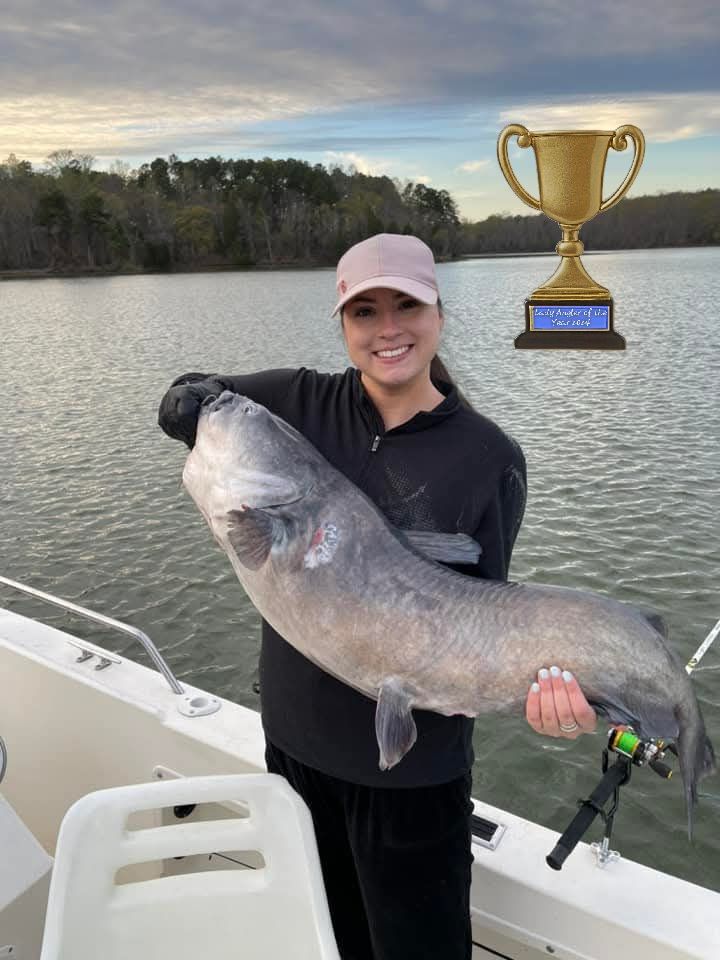
Fish Pic Friday - Parker Outdoor Adventures
Tuesday, June 30, 2026
MD Gets $2 Million for Blue Catfish
Maryland is receiving $2 million from the federal government to combat invasive blue catfish in the Chesapeake Bay.
It was one of five projects to receive federal funding highlighted by 3rd District Rep. Sarah Elfreth in Annapolis on Monday.
“We all know how detrimental invasive blue catfish is to the bay,” Elfreth said. “We know that they are eating absolutely everything we know and love, blue crabs, baby oysters, rockfish.
Josh Kurtz, the state secretary of natural resources, encouraged Marylanders to help with t
he effort.
“Yes, delicious, eat it, as much of it as you can. There’s a lot of restaurants in Annapolis that carry it,” Kurtz said. “Several new restaurants are popping up that have some fantastic dishes.”
If all you want is people to go out and kill Blue Catfish, there are a lot of people who would do it for free. Two million would pay for an awful lot of guided trips for Blue Catfish, but I rather expect most this money will end up being spent on working groups, studies, and overhead at academic institutions.
The Wombat has Rule 5 Sunday: Happy 250th, America! up in star-spangled glory at the Other McCain.
Monday, June 22, 2026
In addition to tournament incentives, Maryland is launching a new pilot program designed to support both invasive species management and the state’s charter fishing industry.Hey, that's two days. Maybe I'll put in.
The DNR is offering charter boat captains and fishing guides reimbursements of up to $1,500 per trip through a new initiative called the “Reel in the Blues Bonanza.” The program will provide free blue catfish charter trips to randomly selected members of the public during the summer and fall of 2026.
Captains interested in participating must submit an interest form by June 22. Beginning June 24, the state will open registration for members of the public who wish to be entered into a drawing for free blue catfish fishing trips.
Participating captains and guides will be reimbursed by the department for up to $1,500 per trip, including compensation that may exceed the normal cost of a charter and includes gratuities for mates. To qualify, operators must possess a Maryland Waterman ID number, hold a valid U.S. Coast Guard captain’s license when applicable, and report harvest data electronically through Maryland’s FACTS system.
According to Maryland officials, the program is part of a broader strategy to reduce invasive blue catfish populations while collecting harvest information and supporting the charter fleet. State officials indicated similar programs could continue in 2027 and 2028 depending on funding and participation levels.
It might help, but I have a feeling the market for Blue Catfish is pretty well saturated. The captains will go any day they can put a charter together, and most of the time it doesn't seem like they have too much trouble lining up anglers. But if they started offering free, or lower cost trips, from this program, they might grow their customer base.
The Wombat has Rule 5 Sunday: Redness a bit late, but within reason.
Wednesday, April 15, 2026
MD Has a New Plan for Blue Catfish
A Maryland law aimed at reducing invasive blue catfish in the Chesapeake Bay has been signed by Governor Wes Moore after passing both the state House and Senate.
The measure, Senate Bill 610, creates a gill net program allowing licensed watermen to use specialized nets designed to more efficiently target blue catfish. Supporters say the approach is intended to increase harvests of the invasive species, which has spread throughout the Bay and its tributaries.
The Chesapeake Bay Foundation says the method must be carefully managed. The group told WBOC in part, quote, “...gill nets can often unintentionally trap and kill other native species like striped bass and endangered Atlantic sturgeon. Any expanded use of gill nets must be closely monitored and controlled to limit impacts to other species.”
Waterman Grant Usilton says the change could provide a more effective tool on the water. “It can definitely help, I mean it can't hurt,” Usilton said. Jordan Graves, who is also a waterman, echoed this message. “To me it just seems like more of an efficient way to catch them,” Graves said.
Talbot Watermen Association President Jeff Harrison said the program could help support the industry during slower seasons. “I hope that it gets signed into law and I hope it helps, to expand that industry," Harrison told WBOC. "Like I say, in the winter time instead of, worrying about market for your oysters, you can always get some gillnets and go up and catch some blue catfish."
The law is now in effect as Maryland expands efforts to manage the invasive species while supporting commercial harvesting opportunities.
I don't care how many Blue Cats they catch, but I do worry about by the bycatch.
The Wombat has Rule Five Sunday: More Hot Girls & Hot Cars up and garnering clicks at The Other McCain.
Tuesday, March 31, 2026
Katfish for Kiddos?
A new lunch menu item in Cecil County Public Schools helps control an invasive species in the Chesapeake Bay.
Cecil County Public Schools staff began serving blue catfish sandwiches in mid-February. At Cherry Hill Middle School, the sandwiches are called catty patties, a play on Crabby Patties from SpongeBob.
"The catty patty is actually really good, said Grayson Jezyk, a sixth-grade student at the school. "I like it a lot."
"It tastes very similar to a crab cake," said Chrisanna Teahl, another sixth-grade student.
The school's kitchen manager said the catty patties have been a hit among many students.
"It was very popular," the kitchen manager said. "The kids that like it really like it."
The initiative is part of the Bay2Tray program, which started 12 years ago in California as an initiative through Real Good Fish.
Real Good Fish sources sustainable seafood directly from fishermen. The Maryland Department of Agriculture partnered with the program to get blue catfish on the menu at more schools along the East Coast. It's part of an effort to control the population in the Chesapeake Bay.
Blue Catfish are, indeed, a mild, white and flaky fine tasting fish. I'm still shocked that sixth graders would welcome fish for lunch.
The Wombat has Rule 5 Sunday: From Those Wonderful Folks Who Gave You Pearl Harbor up and garnering clicks at The Other McCain.
Monday, March 16, 2026
Blue Catfish Too Good for Dog Food
Two Maryland seafood processors said there’s a delicate balancing act in controlling invasive species like blue catfish, and that proposed legislation threatens that balance. They also described what’s been a brutal stretch as bad weather, poor market conditions and new regulations threaten the livelihood of one of the state’s oldest industries.
Amanda Williams of BSA Seafood in Grasonville and Patrick Welsh Jr. of Reliant Fish Company in Jessup were part of a coalition this week that opposed federal legislation linking invasive blue catfish — a species that environmental and agricultural officials say feasts on blue crabs, rockfish and oysters — to pet food processors.
U.S. Rep. Sarah Elfreth, who introduced the Mitigation Action and Watermen Support Act of 2026, or MAWS Act, said there’s “a mutual interest in getting invasive blue catfish out of the Bay.” “That is why for well over a year, my team and I have had meaningful and productive conversations with stakeholders, including over a dozen meetings and calls with seafood processors from across the watershed, to shape this bipartisan legislation into what it is today, with substantial changes over time responsive to the feedback from every corner of this industry,” Elfreth said in a statement to The Baltimore Sun.
Williams said the legislation is well-intentioned, but misses the mark. “We’ve spent years marketing blue catfish as a premium seafood product, and framing it as a pet food ingredient undercuts all of that work,” she said. “We’re also already sending our processing byproduct to a facility that handles rendering, so the idea of bringing in an outside recipient selected subsidized by the government to pay above-market prices for whole fish isn’t innovation, it’s market distortion that puts small processors like us at a real disadvantage.”
She said seafood processors feel like they were left out of key discussions. “We want invasive blue catfish out of the bay as much as anyone — but the path forward needs to work with this industry, not against it,” she said.
Welsh said the MAWS Act leapfrogs the market to pay the fishing industry, but leaves seafood processors behind. “The dogfood people are already getting product from us, so what sense does it make? All you’re gonna do is take that product away from us if the fishermen go directly to the dogfood processors,” he said.
Welsh described a delicate balancing act in fishing what’s essentially become an invasive species. “You want sustainability in that we want this thing to continue. We want to manage it. We want to control it as best we can, so you don’t eradicate it,” he said. He said getting rid of the species entirely would hurt the processing industry, the fishing industry and consumers.
So, now, the goal has shifted to managing Blue Cats as a resource. That's probably for the best; there is effectively zero chance that any control efforts will actually eliminate them from the system; at best we might control the population and mitigate the amount of gamefish and gamefish food they consume.
As for the charge that using them as pet food will somehow degrade the brand, and cause them to be less sought for human use, I ain't worried. Most of our pet food is made from meat that is also used for human consumption, beef, pork, turkey, lamb, tuna, and so on. I\m not turning down a nice piece of Ahi because tuna get used in catfood. There's still plenty Blue Cats to supply both supermarkets and pet food processors. We simply need high enough prices to support the fishery. We can worry about depleting the Chesapeake Bay system of them until we see evidence of a shortage.
FWIW, wild caught Chesapeake Blue Catfish are excellent table fare.
Monday, March 2, 2026
Stripers and Menhaden and Oysters, Oh My!
After several years of closing access to the spring rockfish run, the Maryland Department of Natural Resources is poised to reverse course, proposing to allow anglers to target stripers strictly on a catch-and-release basis through April 30.
If you’re of a certain age, you might recall the world-class Susquehanna Flats spring fishery in the late 1990s thru the mid-2000s which was a popular and profitable season for many guides and associated businesses (hotels, marinas, restaurants, gas stations) that catered to visiting anglers.
Another key change proposed for 2026 is closing August entirely for rockfishing, a move designed to reduce mortality because of the deadly impacts excessively hot Chesapeake Bay waters have on these prized gamefish. Most stakeholders are on board with this idea, with a few caveats.
While the new baseline regs are supported by many fishing related businesses (guides, tackle shops, marinas, boat dealers, boat builders, trade and conservation groups) because it means a net gain in days on the water, not everyone is a fan.I thought this was a done deal, but then I remembered MDDNR often doesn't make these decisions until the day before they go into effect. But wait, there's more:
Many traditional charter boat operators oppose targeting rockfish in April because of the proposed stress it has on breeders. Also, and more importantly, Maryland’s charter boat association wants MD DNR to allow them to keep two rockfish for its clients. They continue to lobby MD DNR for that exemption. Time will tell if that request gets approved.
It’s all doom-and-gloom on the menhaden front, however. This winter Congress approved $2.5 million for the National Oceanic and Atmospheric Administration to study menhaden, which has been appropriated to the Atlantic States Marine Fisheries Commission (ASMFC). A “working group” will be formed to determine how to spend the pot of money.
...
I sat in on their press conference to launch the campaign. To be frank, it was a regurgitation of challenges already known, and at this point I’m unclear how this campaign will differ from previous efforts. Time will tell.
Adequate funding is essential to determine whether the industrial-scale harvest of menhaden is sustainable and does not harm the Chesapeake’s already stressed ecosystem. Without money for a science-based study, gaps in our understanding of one of the East Coast’s most important forage fish — a public resource — will remain. And that’s unacceptable.Somehow I don't see Reedville being turned into a giant Blue Catfish processing facility. And more! At Maryland Matters, Maryland requests disaster declaration for Chesapeake oyster fishery.
To be clear, no one wants to put anyone out of a job. History offers plenty of examples of how to move on from outdated industrial operations by retooling its facilities and retraining its employees. A world-class blue catfish processing facility and scaling up harvest seems doable, if backed up by the political will.
So that raises the question: How many more cards do marine conservation advocates writ large have left to play? Not many. The cycle of hope-to-bust has left many of us deflated, yearning for a cohesive strategy that’ll move the chains even just a little.
Maryland requested a federal disaster declaration for the Chesapeake Bay oyster fishery Friday, after a perfect storm of bad weather and headline-grabbing environmental incidents depressed the market. It’s not that there aren’t enough oysters, state officials say, but that the falling prices are hammering the industry.
In December, the Centers for Disease Control linked a multistate salmonella outbreak to eating raw oysters. Then, January brought a massive snowstorm and a prolonged cold snap, freezing the Chesapeake and keeping watermen off their boats. That same month, a massive sewage pipe collapsed on the Potomac River, spilling millions of gallons of sewage — and damaging the perception of oysters further, even though testing has shown bacteria within safe levels at a state oyster harvesting area.
“In-person and online, the ‘unsafe’ bell has been rung and the impact to Maryland seafood and aquaculture and associated buying behavior may be long lasting,” read Gov. Wes Moore’s (D) letter to U.S. Commerce Secretary Howard Lutnick requesting the disaster declaration.
Between October and January, Maryland watermen landed 188,673 bushels — 44% down from the five-year average. The dockside value of the harvest for the same period was $6.69 million, compared to $19.92 million for the five-year average, the letter said.
...
Federal disaster dollars could be used for financial assistance to watermen or to support shellfish safety and marketing campaigns, Moore wrote. In the meantime, state officials are boosting marketing for the state’s oysters through the summertime and into the next oyster season, Kurtz said. The message, he said, is “Buy Maryland oysters. They’re high quality, they’re delicious and they support all of our local economies.”
Um, no, just no. Do not support this failing industry. Oyster populations are at a 30 year high, and watermen are complaining they can't make enough money off them.
The Wombat has Rule 5 Sunday: Because I Can up and at 'em at The Other McCain.
Wednesday, February 18, 2026
The Wednesday Wetness
WTOP News : Progress at Potomac sewer collapse but overflow risk remains, DC Water says
WUSA-CBS: Health concerns grow as Potomac River begins to thaw after massive sewage spill
WJLA-ABC: 'Remnants of sewage' including toilet paper, left behind after wastewater pipe collapse
WDCW-CW: Sewage spill in Potomac River impact fishing industries
Thursday, December 18, 2025
Probably Not
For decades, the Chesapeake Bay’s rivers and tributaries have been home to a troublesome guest whose presence continues to ripple through the ecosystem. The blue catfish — first introduced in the 1970s for recreational fishing — has since become an ecologically disruptive force in Virginia waters. In response, scientists at William & Mary's Batten School & VIMS are making critical discoveries about blue catfish biology, impact and commercial market potential, and playing a key role in advising how the commonwealth can address the challenge.The Blue Catfish problem in Chesapeake stems from the State of Virginia stocking them into the James and Rappahannock Rivers as a game fish.
Through the long-running juvenile finfish trawl survey, Batten School of Coastal & Marine Sciences & VIMS Professor Mary Fabrizio, along with her students and colleagues, has documented both the spread of blue catfish and the corresponding decline of native species. “As the blue catfish population started to increase in our tributaries, we saw a decline in the native white catfish and white perch, which is likely due to predation or competition for resources,” she said. “And some of our colleagues in Maryland have evidence suggesting the blue catfish may be impacting striped bass, likely predating on the eggs and the juveniles.”
According to Fabrizio, another icon of the Chesapeake Bay may also be threatened: “The other effect is that blue catfish, especially the medium sized fish, are preying on blue crabs. And because there are so many medium sized blue catfish, that translates into a lot of removals. They’re eating a lot of blue crabs.”
To investigate that interaction, Fabrizio recently led a two-year diet study, published in Marine and Coastal Fisheries, which quantified blue catfish predation on blue crabs. “We worked with a commercial waterman who was setting gillnets out in the James River. He would bring back the catch, and we would examine the stomach contents,” she said. “We looked at predation year-round, which hadn’t been done before.”
The results were sobering: “It turns out blue catfish are eating the same things in winter as in spring and fall, so there’s blue crab predation happening year-round,” said Fabrizio. Stomach content analysis also showed that blue catfish are specifically targeting juvenile crabs. “Older, larger crabs may be too feisty and fight back, or perhaps they’re faster and able to escape. Either way,” she said, “blue catfish are eating the juvenile crabs that Virginia counts on to sustain the future blue crab population.”
At his retirement party from SERC a couple of weeks ago, I asked Mr. Crab himself, Tuck Hines, former director, if he thought Blue Catfish were part of the current problem with Blue Crabs. He told me almost assuredly yes, and that he and collaborators have a paper coming out soon to that effect.
The Wombat has Rule 5 Sunday: In Honor Of Alice Cooper available for browsing at the usual place and time.
Thursday, November 6, 2025
If You Can't Beat 'Em, Eat 'Em
“This initiative will help feed our neighbors in need, support seafood processors and watermen, and help remove this non-native but tasty species from the Chesapeake and its tributaries,” said Maryland Secretary of Agriculture Kevin Atticks. “We are thrilled to once again partner with USDA on this initiative as an important tool in addressing hunger and supporting our rural maritime communities.”
“Blue catfish is a win-win for the Maryland Food Bank—we are supporting local businesses and helping to combat an invasive species in the Bay, while also providing a nutritious source of protein to neighbors facing food insecurity,” said Meg Kimmel, President and CEO of the Maryland Food Bank. “We are excited to continue our strong partnership with the Maryland Department of Agriculture.”
From December 2025 to December 2026, blue catfish fillets will be distributed through Maryland food banks. The program will allocate funds as follows: the Maryland Food Bank will receive $1,384,803, the Capital Area Food Bank will receive $499,693, and the Western Maryland Food Bank will receive $53,617.
“We’re grateful for our enduring partnership with the Maryland Department of Agriculture. This investment, especially now, helps us provide a locally-sourced, nourishing protein in high demand to our Maryland neighbors in need,” said Radha Muthiah, President and CEO of Capital Area Food Bank.
“The Western Maryland Food Bank is grateful to be included in this partnership,” said Amy Moyer, Executive Director of the Western Maryland Food Bank. “We appreciate the Maryland Department of Agriculture bringing a greatly needed protein to the food insecure in Allegany and Garrett Counties. It is great to work together for Marylanders.”
I hope it works out, but I suspect many of the people they hope to help won't pick catfish as their source of protein; I would guess many of the intended recipients have no clue what to do with.
The Wombat has Rule 5 Sunday: Young Girls & Old Trucks garnering clicks at The Other McCain.
Sunday, October 19, 2025
Virginia To Lift Blue Catfish Limits, Flatheads Feed on Pennsylvania Fish
The invasive species has spent the past five decades working its way into almost every local waterway and threatens to upend the ecosystem. Virginia officials are weighing a new way to cut down on the population by letting anglers go after them. The Virginia Board of Wildlife Resources will soon decide whether to remove the recreational catch limit on blue catfish. The change would apply to the Rappahannock and York rivers, as well as portions of the James below the freshwater-saltwater transition zone.
Blue catfish, which are native to the Gulf coast and central U.S., were originally brought to Virginia by the same agency now trying to reduce the population. The Department of Wildlife Resources introduced the species into the James and Rappahannock rivers in 1974, followed by additional stockings in the York. The goal at the time was to create a “recreational trophy fishery” to support anglers as the striped bass population was crashing coastwide, DWR states on its website.
Once established, blue catfish exploded in Virginia, preying on native critters such as blue crabs. “Things went a little haywire,” said Chris Moore, Virginia executive director with the nonprofit Chesapeake Bay Foundation. “We're in a situation now where they really don't have a lot of predators except for themselves, and they have just expanded exponentially.” Virginia Commonwealth University estimated that blue catfish now account for up to 75% of the total weight of fish in some local rivers. “Having a single species representing that much biomass is not a great thing,” Moore said.Pop Sci, Monster catfish and its creepy smile invade PA rivers
Flathead catfish (Pylodictis olivaris) may look like they are perpetually smiling, but these five foot-long fish are no laughing matter in regions where they do not belong. The opportunistic predators are now one of the top predators in Pennsylvania’s Susquehanna River, creating a major threat to the local food web. Without any natural predators to keep them in check, these enormous fish can alter a river system in only a matter of years.
Flathead catfish are native to several parts of the United States, including the Missouri, Mississippi, Ohio, and Rio Grande river basins. They are most recognizable by their broad flat head (as the name suggests) and lower jaw. It also sports a distinctive tail fin outline that is square or slightly notched. They are also really big. They can grow up to 60 inches long and weigh roughly 30 pounds on average. Some have even been known to tip the scales at over 100 pounds. According to Pennsylvania Sea Grant, their coloration can vary, but most adults have an olive-colored back and sides with dark brown to yellow-brown mottling.
One thing that separates them from other catfish species is their diet. They are considered obligate carnivores and primarily prey on live fish.
While flathead catfish are native to western Pennsylvania, the first report of the species in the Delaware River basin further east was from Blue Marsh Reservoir and in the Susquehanna during the 1990s. Since then, they have continued to spread throughout regions of the Delaware, Schuylkill, and Susquehanna rivers.
“Flatheads grow fast in this river system, attain large body sizes and can eat a variety of prey,” Olivia Hodgson, a master’s student at Penn State University, said in a statement. “Because adult flatheads have few natural predators, flathead catfish can exert strong control over the ecosystem.”
Hodgson is the co-author of a study recently published in the journal Ecology, which found that the flathead catfish are now considered apex predators. They are higher on the food web than resident top predators like the channel catfish and smallmouth bass. Since the channel catfish now have a lower position in areas where the flathead catfish are present, they have to eat lower on the food web. In areas with flathead catfish all species showed broader and overlapping diets, according to the study.
“This suggests that resident species are changing what they eat to avoid competing with or being eaten by the invader,” Hodgson said.
Put a bounty on both of them.
The Wombat has Rule 5 Sunday: Fall Colors up and garnering clicks at The Other McCain.
Sunday, September 7, 2025
USDA Joins Blue Catfish Fight
The U.S. Department of Agriculture on Wednesday announced an $8 million initiative to control the spread of invasive blue catfish in the Chesapeake Bay. The initiative includes $6 million in grant funding through the USDA's Meat and Poultry Processing Expansion Program. The grants are available to seafood processors to modernize facilities, expand operations and support the commercial processing of invasive catfish, turning them into products such as animal feed. An additional $2 million will go toward purchasing Chesapeake Bay blue catfish through a one-year pilot program.
Grant awards will range from $250,000 to $1 million. Applicants must contribute at least 50 percent of their project's total cost. Applications are due via Grants.gov by 11:59 p.m. EDT on Oct. 6.
In a written statement, Agriculture Secretary Brooke Rollins called the the project an all-around win. "A win for our rural communities who now have a new processing facility that will support good-paying jobs, a win for our fishermen who are ridding the Chesapeake of a destructive invasive species, and a win for our local communities who have another source of protein for the charitable feeding network,"
The MAWS Act of 2025, introduced by Rep. Sarah Elfreth (D-MD), proposes a three-year, $6 million federal pilot program that would incentivize the commercial purchase of invasive blue catfish. Congress would provide $2 million per year to the National Oceanic and Atmospheric Administration (NOAA) between 2027 and 2029 under the bill. Then, those funds would be given to pet food manufacturers, animal feed producers, and aquaculture feed companies to purchase blue catfish from fishermen and seafood processors.
It seems they finally realized there is not enough interest in eating catfish for people to eat all the Blue and Flathead Catfish in the Bay. That's too bad, because they are very good eating, and easy to catch.
The Wombat has posted Rule 5 Sunday: Karin Hart at the usual time and place.
Wednesday, July 9, 2025
A New Plan to Sell Blue Catfish
A new bill in Congress is uniting Maryland Democrats and Virginia Republicans in a common Chesapeake Bay goal: to fight invasive blue catfish by finding new reasons for watermen to target them.
The Mitigation Action and Watermen Support (MAWS) Act would start a pilot program in the NOAA Chesapeake Bay Office to establish a new market for the Bay’s overpopulated blue catfish. There is already an ongoing push across the Chesapeake region to encourage more restaurants to serve blue cat and more people to eat them. Now, the pilot program would also target the pet and animal food industry.
Under the MAWS Act, NOAA would offer grants to pet and animal food producers to incentivize watermen to catch them. The bill would also establish transportation, processing, and manufacturing structures to make it a long-term market. The two-year pilot program would allow NOAA to collect data on the program’s success in removing large amounts of blue cat from the water and generating an economic impact for watermen. NOAA would report back to Congress on lessons learned, the market response from animal food manufacturers, and possible other watersheds that could benefit from the same program.
The MAWS bill is sponsored by Rep. Sarah Elfreth and Steny Hoyer (both D-MD) and Rep. Rob Wittman and Jen Kiggans (both R-VA). It’s supported by some of the nation’s largest pet food and animal feed suppliers.
. . .
Pet food manufacturers call Chesapeake Bay blue catfish “a wholesome and nutritious ingredient” for pet food, and see the pilot program as being good for the planet. “The Pet Food Institute, whose members make the vast majority of dog and cat food and treats in the U.S., is proud to endorse the MAWS Act,” said Pet Food Institute president and CEO Dana Brooks.
You can read the bill here.
Dog and cat food? It's so crazy it might help. Certainly all our dogs were fond of fish.
The Wombat has Rule 5 Sunday: Add More Ginger As Required up and garnering clicks at The Other McCain.
Monday, May 19, 2025
MD VA Struggle With Blue Catfish
Maryland recently has taken a few tentative steps aimed at boosting commercial harvest of blue catfish(Ictalurus furcatus), the voracious nonnative predator devouring blue crabs and many native fish in the Chesapeake Bay and its tributaries. Efforts to do likewise in Virginia, though, have been at least partially thwarted by resistance from recreational anglers and fishing guides who want to maintain them as lucrative trophy fish.
In Maryland, the Department of Natural Resources announced a pair of pilot programs in February that officials hope will give extra momentum to the upward trend in blue catfish harvests in that state, which topped 1 million pounds last year for the first time.
One would let charter boat captains sell any “excess” blue catfish caught that their paying customers don’t want to keep. It would also let skippers bring more crew members along and sell their catch as well.
The other program would allow a handful of watermen to go after blue catfish in the Bay mainstem south of the Bay Bridge using baited finfish trotlines. That is an increasingly popular gear for targeting catfish that until now has been permitted for use only in the Chesapeake’s tributaries. “We’re relying on any and everybody to increase removals,” said Branson Williams, DNR’s invasive fishes program manager.
Blue catfish, introduced in Virginia in the 1970s, have spread throughout the Bay and have become the dominant fish in some tributaries. They prey on crabs, striped bass, menhaden, American eels and other economically and ecologically important species.
Maryland’s charter fishing businesses have been suffering because of restrictions imposed last year on catching striped bass, the mainstay of their industry, and some have shifted to targeting the invasive fish. The number of blue catfish charter trips has more than doubled in the last four years, according to DNR, but with anglers only allowed to keep fish within a narrow size range, the number thrown back has also increased. “If you’re a client and you’re on charter and really catching fish, there can be a limit on how many filets you want to take home,” Williams said.
Not so with everyone. Greg Bruckner, owner of Miss Susie Charters, said his three boats are each running two trips a day going after blue catfish on the Potomac River this spring. But his clients all want to keep whatever they hook, so there is no excess for him to sell. Even so, six charter captains have been permitted to participate in the pilot program allowing them to sell any excess catch, and there are another 11 applications in process, according to Williams.
With the other program, DNR has permitted 8 commercial fishers to deploy trotlines with baited hooks in the mid- and lower Bay. It’s the gear of choice these days for targeting blue catfish in the rivers and is responsible for a growing share of the overall harvest.Trotlines are a bit problematic with respect to Striped Bass, who will also take a nice soaked bait on occasion.
Blue catfish, though, reportedly have been scarce lately in the mainstem below the Bay Bridge. They favor freshwater but can survive in brackish water. That’s how they spread throughout the Bay. But the Chesapeake’s salinity has been above normal lately, the result of drought conditions in the watershed. “So far, it seems like most of the fish are upriver right now, so we’ve only had a handful of trips in that newly opened area,” Williams said. “Catches have been low.”
Maryland lawmakers endorsed the DNR pilot programs but also pushed to go further. They passed legislation this year calling for the department to allow much longer trotlines than are currently permitted. It also directs the department to consider permitting commercial electrofishing. That is a technique seeing limited use in Virginia, in which a low-frequency electric shock transmitted into the water momentarily stuns fish and brings them to the surface for a minute or two, where they can be scooped up with a dip net.
DNR’s Williams said the department is going to proceed slowly, letting a few commercial fishers help collect and sell blue catfish stunned by DNR biologists when they conduct their surveys this year. Fisheries managers are considering launching a pilot program for that practice, he said.
Electrofishing has gone on in Virginia for more than a decade and has proven successful, if not trouble free. It’s only allowed from April 30 to mid-October, and for only 4-1/2 days per week on portions of three rivers: the James, Rappahannock and Pamunkey. Yet the three holders of electrofishing permits account for 11% of the state’s overall blue catfish harvest, which surpassed 3 million pounds last year.
I don't see why electrofishing shouldn't be tried in Maryland tributaries, certainly the DNR is not shy about using it when then need to sample fish, and they insist it's not harmful to the non-target fish caught up in the current.
The Wombat has Rule 5 Sunday: Country Girl in Carhartts up on time and under budget.
Monday, March 24, 2025
Fed Bill to Aims to Get Blue Cats
While humans are their closest native predator, Sedlacek said the difficulty of getting the fish to market may hinder the commercial fishery market for the catfish. The difficulty stems in part from the fact that catfish are the only seafood that the United States Department of Agriculture has inspection authority over due to the fact that catfish were primarily farm-raised.
Sedlacek said that has since changed, "Now that we have this wild caught catfish industry developing, we need something more similar to all other seafood which is inspected by FDA."
Sedlacek said the USDA is a more time-consuming inspection process, which has slowed the growth of he commercial catfish industry in the region. If that process was quicker, it would allow fishermen to get their catfish to market faster.
The Chesapeake Bay Conservation Acceleration Act is a new bill designed to help improve this process. The bill has support from U.S. Senators Mark Warner and Time Kaine of Virginia, as well as bipartisan support from Representatives Bobby Scott, Rob Wittman, and Jen Kiggans.
This idea has been proposed before, and I wonder why it hasn't gained more traction. It seems like such an obvious step. Blue cats are good eating. One problem is that the market just doesn't have much demand, and prices are low. Finding new markets might be more help.
The Wombat has Rule 5 Sunday: Sunday Night Loungewear up and at 'em at The Other McCain.
Friday, February 21, 2025
VA to Lift Blue Catfish Limits
Lawmakers in the U.S. state of Virginia have introduced a bill to eliminate restrictions on harvesting of blue catfish, an invasive species that has devastated ecosystems in the Chesapeake Bay region.
Since their introduction to the Chesapeake Bay as a recreational fish in the late 1960s, predatory blue catfish have come to dominate waters in Virginia and neighboring Maryland.
“We are beginning to see disturbing trends in both our commercial fishery landings and our survey data,” Maryland Governor Wes Moore explained in a letter seeking federal assistance in 2023. “Since 2012, landings of seven of Maryland’s marquee commercial fishery species which share habitat with invasive fishes at some point in their life cycle have declined between 27 percent and 91 percent.”
The U.S. Department of Commerce ultimately denied Moore’s request for a fisher disaster determination, claiming the fish have not had a big enough impact on the state’s commercial fisheries.
I guess they instituted the limit when they deliberately imported the Blue Catfish into the James River system as a gamefish, an introduction which was wildly more successful than they ever imagined.
Fine Dining Lovers, The Chef, the Catfish, and the Cause "How The Dabney’s Jeremiah Langhorne Is Restoring the Chesapeake—One Blue Catfish at a Time"
Jeremiah Langhorne never imagined he would become a champion for blue catfish. But at his hearth-powered, one Michelin-starred restaurant, The Dabney, in Washington, D.C., where he puts a thoughtful spin on the storied cuisine of the Mid-Atlantic, the invasive species that’s terrorizing the Chesapeake Bay has become an unlikely breakout star.
Langhorne was born in the D.C. area but grew up in the Shenandoah Valley and Charlottesville, Virginia. After training under chef John Haywood at the now-closed OXO in Charlottesville, he went on to work for Sean Brock at the acclaimed Low Country restaurant McCrady’s in Charleston, South Carolina. His experiences there, along with a stage at Noma, shaped his dedication to locally grown and wild ingredients.
When he moved back to D.C. in 2013 to open The Dabney, he set out to build a network of farmers, foragers, and fisherfolk. To explore what he could source from the sea, he consulted Chesapeake Bay watermen, and one suggestion kept coming up again and again: blue catfish.
Curious to better understand the species, he took time away from the kitchen to go fishing for them himself. Blue catfish are often caught using long lines with lures placed every eight feet. "If you’re in the right spot, you’ll have a catfish on every single one," Langhorne says, recalling how he grew up fishing and even worked for a commercial seafood purveyor as a teen in Charlottesville. "It’s like shooting fish in a barrel."
The more he witnessed the ecological damage these invaders caused, the more he wanted to help curb their spread—one filet at a time. “I made a commitment to always have catfish on our menu no matter what,” he says.
Langhorne faced an initial hurdle: many diners associated catfish with a muddy, undesirable flavor. “When I first started putting catfish on the menu as an entrée at The Dabney, people had problems with it,” says Langhorne. “A lot of people would tell us, ‘Oh, this isn't a good fish. Why don't you give me black cod or halibut?’”
What many guests didn’t realize is that blue catfish isn’t your average catfish. “It has a clean flavor profile; it’s not fishy at all,” says Langhorne. “The flesh is flaky and has lots of moisture. It’s delicious.”
Determined to highlight the fish in a way that would win guests over, he created a dish that quickly became a hit: cornmeal-crusted catfish sliders on sweet potato Parker House rolls with ramp tartar sauce, bread and butter pickles, shaved red onion, and lettuce. Another popular addition was his smoked blue catfish dip—a refined yet comforting dish that wouldn’t feel out of place at a Super Bowl party. Now, The Dabney goes through up to 20 pounds of blue catfish a day.
The fish even found its way onto the menu at his French restaurant, Petite Cerise, where he serves cornmeal-crusted filets with an herb salad and sauce gribiche. “It’s a surprise hit, outselling the fried chicken entrée by a three-to-one margin,” says Langhorne.
Yep, they're surprisingly good.
The Wombat has Rule 5 Sunday: Demure, Relaxed, & In Her Lane ready and waiting at The Other McCain.
Monday, February 10, 2025
MDDNR Set Sights on Blue Catfish
The Maryland Department of Natural Resources (DNR) is launching two pilot programs in coordination with its Invasive Catfish Advisory Committee aimed at curbing the spread of blue catfish in the Chesapeake Bay and its tributaries.
Applications are now open for the Blue Catfish For-Hire/Commercial and Mid- and Lower-Bay Finfish Trotline Pilot Programs. Commercial watermen and charter boat captains can apply to participate through online forms on the DNR website.
“The silver lining to the challenges blue catfish pose in the Chesapeake Bay is they taste great,” said DNR Invasive Fishes Program Manager Branson Williams. “These pilot programs aim to reduce barriers for commercial fishermen to catch and sell more blue catfish. Our goal is to reduce biomass, and these programs will help with those efforts.”
Blue catfish – Ictalurus furcatus – are problematic due to their voracious and indiscriminate appetites, high reproductive rate, and potential to harm native species, some of which are commercially and recreationally important to Maryland, including blue crabs.
The pilot programs are part of a larger effort by the department to mitigate the negative impact blue catfish have on native species and ecosystems. Other initiatives include incentivizing charter captains to gather harvest data on their catfish and Chesapeake Channa (northern snakehead) trips, supporting invasive species tournaments, and working with stakeholders and other agencies to increase removals. There is no season or limit on recreational blue catfishing for anglers holding the appropriate Maryland fishing license. Details of the two new programs are below.
Blue Catfish For-Hire/Commercial Pilot Program
The Blue Catfish Charter Pilot Program allows participants to run for-hire and commercial fishing trips simultaneously and removes crew limits on commercial hook-and-line fishing trips that target blue catfish. This action will financially incentivize captains to sell excess blue catfish after a charter rather than releasing the fish alive.
There is no maximum number of pilot participants for this project. Applicants must hold an appropriate commercial fishing license, target blue catfish on the charter trip, and complete daily reporting for the charter trip and commercial activity.
Applications for the program are open now and will be reviewed on a rolling basis.
| Maryland DNR image of Trot Line |
Mid- and Lower-Bay Finfish Trotline Pilot Program
The department is considering relaxing regulations prohibiting finfish trotlines south of the William Preston Lane Jr. Memorial (Bay) Bridge to combat increased abundance and expanded distribution of invasive catfishes through additional commercial harvest.
The Mid- and Lower-Bay Finfish Trotline Pilot Program will allow a small number of harvesters to use finfish trotlines (see illustration) in the mainstem Chesapeake Bay south of the Bay Bridge. The department will examine bycatch, user conflicts, and other issues encountered during the pilot before proposing regulation changes to allow widespread use.
| Flathead Catfish |
Finfish trotlines are an effective gear commonly used to harvest invasive blue and flathead catfish (Pylodictis olivaris). Trotlines accounted for 26% of Maryland’s blue catfish harvest from 2019 through 2023.
Program participants must possess a Maryland Unlimited Tidal Fish License (TFL) or Unlimited Finfish Harvester License (FIN). All harvest must be reported after each trip via an electronic reporting form or logbook provided by the department.
Current license holders can still use finfish trotlines to harvest blue catfish and other fish in legal waters of the state without participating in this program.
Applications are open now through February 20, 2025. A limited number of permits will be issued based on weighted selection criteria.
I think the real problem with using commercial fishing to fish down the population of Blue and Flathead Catfish are the low prices they get at the market, rarely getting as high as $1/lb. Striped Bass, in contrast get $5 or more. But the price is driven by both low demand, coupled with more than adequate supply to meet that demand. The way to break that problem is to make catfish (particularly Blue Catfish) a more popular food item. Perhaps Gov. Moore should host some catfish fries for his supporters in Baltimore and elsewhere.
The Wombat has Rule 5 Sunday: Casual up and garnering clicks at The Other McCain.
Wednesday, September 18, 2024
Where Did All the Crabs Go?
The seafood industry around the waters and tributaries of the Chesapeake Bay has seen better days, but it’s also had worse days. While things have rebounded to some degree in recent years, there are increasing concerns about what the future might hold.
Those concerns exist within the Maryland Department of Natural Resources, as well as on the boats used by watermen who harvest crabs by the bushel. It’s not just juvenile crabs that are disappearing, it’s the people who harvest the adult crabs, too. So while things are fine now, the future of the popular crustacean might be as murky as some of the muddy bottoms they traverse.
Earlier this year, the state of Maryland estimated the crab population in the bay to be around 317 million. In 2023, it was estimated to be around 323 million.
Adult crabs, both male and female, also saw population declines, with the adult female count falling from 152 million to 132 million. While it’s a significant drop, it’s still well above the 72.5 million that’s considered the minimum threshold to sustain the population.
The future of the crab population, the number of juvenile crabs, has been considered below average for the last four years. That’s baffling scientists.
“Technically, the population is fine,” said Mandy Bromilow, who is the blue crab program manager for the Maryland Department of Natural Resources. “It’s just that the concern that we have is where we’re seeing this sort of mismatch in the amount of females and the amount of juveniles.”
Right now, she doesn’t believe it’s because watermen are overharvesting the crab population. But that just means there’s a mystery lurking in the water.
“What should be adequate female numbers aren’t translating into the low or into higher juvenile abundance,” she said. “The trends that we’re seeing with low recruitment (the term used to describe the reproductive patterns of crabs), in particular, are a little bit concerning because we don’t know what’s causing that.”
But there are some theories.
When female crabs go to spawn, they travel from Maryland all the way down to around the mouth of the Chesapeake Bay. Their eggs are released and juveniles go through larval stages in coastal waters, then winds and ocean currents carry them back into the Chesapeake Bay, where they become juvenile crabs. Eventually, assuming they don’t end up in a bigger fish’s belly, they become adult crabs. But they can’t get there on their own.
“If the weather patterns and storms push those juveniles or larval blue crabs out into the ocean, rather than into the bay, we’re sort of losing those blue crabs to our population (in the) Chesapeake Bay,” said Bromilow.
Similar concerns are held by Jason Ruth, who owns Harris Seafood Company, a processing facility in Grasonville. “A lot of going forward is based on environmental factors,” said Ruth. “If you have storms where the crabs are actually migrating to, if they’re migrating out in the ocean, do they come back into the Chesapeake Bay the following year?”Read Part 1 of “Claws and Effects”: The murky future of the Chesapeake blue crab
But he’s most worried about predators living in the waters with the crabs. “The biggest problem we have is invasive species that are eating up the crabs when they’re in their most vulnerable state,” said Ruth. “The blue catfish — it’s getting a lot of media attention right now, and it needs to, because it is a species that’s uncontrolled. Its population is rising rapidly and getting to a point that it’s going to cause some serious damage here in the near future.”
It’s one species of fish that scientists know likes to eat crab (as much as any group of friends with a picnic table and a cooler full of beer). But it still isn’t known how much of a problem the blue catfish presents.“We know that they’re eating juvenile blue crabs, or blue crabs in general,” said Bromilow. “We just don’t know how much. That’s kind of the issue where we don’t have enough data.”
There’s also concern that warming waters could make the Chesapeake Bay more inviting to other fish species like the red drum.
“We know puppy drum are in grass beds, eating juvenile blue crabs,” said Bromilow. “With the longer warm season, they might have more of an opportunity to be feeding on those juveniles.”
Are Chesapeake Bay crabs OK for now?
For now, those are all just theories shared by both scientists and at least some watermen — two sides that don’t always agree on everything. But currently, population levels are in a good place, and Ruth said what looked like a really dismal season at the start of the summer has really picked up.
So, it is weather, Blue Catfish or Redfish? Probably a bit of all of the above. We are certainly having a good year for Redfish, and the Blue Catfish problem pretty well established. But it doesn't sound like the problem for crabs is especially severe yet.
The Wombat has Rule 5 Sunday: Moving Indoors up on time and under budget.