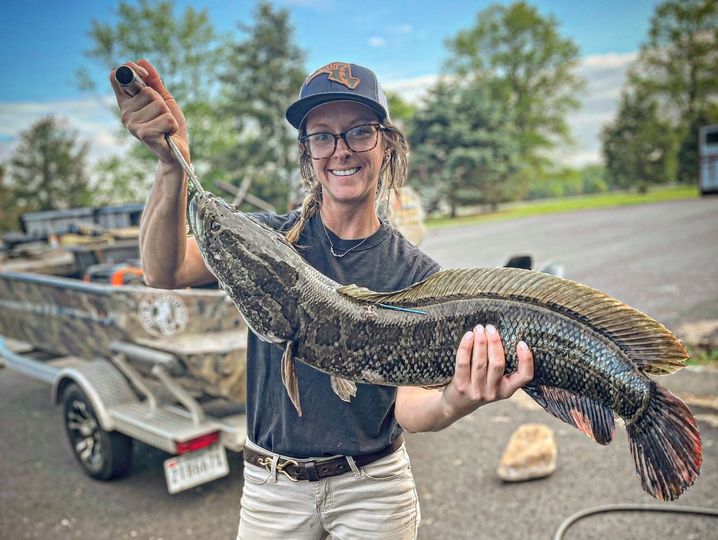
A single fish pulled from a Pennsylvania creek has prompted an unusually
strong warning for anglers. As
The Trentonian reported, locals are being advised that if they catch this predator again, do not
throw it back.
According to The Trentonian, anglers in the
Bensalem area are being warned once again a year after a northern snakehead
was caught there.
Officials in Bucks County are urging people to kill northern snakeheads, often
referred to as "Frankenfish," that they say are still lurking throughout the
area, the paper said.
The Trentonian noted they can breathe air for short periods, survive
out of water longer than many fish, and feed on a wide range of prey,
including smaller fish, frogs, and crustaceans.
Officials are
therefore urging anglers not to return these fish to the water alive, since
even one catch can suggest an invasive species is moving into a creek, pond,
or river system where it does not belong, the paper said.
Bensalem is up in the Delaware River drainage. Honestly, I don't see how
they expect to keep the Snakehead out of that system. Snakeheads are now endemic
in the freshwaters of Maryland's Eastern Shore. At the head of those waters,
it's just a hop, skip, and a determined wriggle across to streams of the
Delaware system.
If you like to fish for fun, here is a great excuse to cast a line. In a
bounty fishing program happening this month in Baltimore waters, you get paid
for every invasive-species fish you harvest.
What’s the catch?
There isn’t one.
Reel Rewards is a win-win for
the angler—who gets $30 richer with each fish they catch—B overall river
health, and Bay environmentalists, who will gain valuable research data from
the fish that are turned in. It’s the second year for this program of the
Environmental Justice Journalism Initiative (EJJI), aimed at protecting the
Patapsco River from nonnative species. The program is part of the
Reimagine Middle Branch Project
with the South Baltimore Gateway Partnership, who provide funding for the
bounty payments.
The bounty program started because the Middle Branch Harbor and the wider
Baltimore area are facing a gap in research on invasive fish species, EJJI
tells us. These areas are home to large immigrant, Black, and veteran
populations, some of whom fish for their food in these waterways. With a long
history of air, land, and water pollution in the area, consuming these fish
may pose health risks for various demographics. It’s important for researchers
to learn what is being caught and eaten.
All fish must be caught
within the Baltimore Harbor area of the Patapsco (newly expanded since last
year’s inaugural event), and the head or body must be turned in (fresh or
frozen) at one of the event’s designated drop-off times. When you turn in your
fish, you get $30. You can turn in up to 15 fish per week. There is currently
no cap on the number of fish overall that anglers can turn in. Last year, the
tournament paid out nearly $9,000 in bounties over three months.
The program is currently limited to the Baltimore Harbor area of the
Petapsco River, and anglers can turn in up to 15 fish per week. But there is
no cap on the overall number of fish, and some local fishermen are making
hay while they can. Last year, 26-year-old Brian Slacum made around $4,000
turning in 134 snakeheads. He had plenty of fish to eat, too.
“Snakeheads
are
excellent eating,” he tells Outdoor Life. “I like them better than striped bass, and
Baltimore Harbor is jammed with them. They are literally everywhere in
shallow water these days, spawning I think.”
Chesapeake Channa adults were first documented in Maryland, thousands of miles from their native habitat in East Asia in 2002. Subsequent illegal introductions and natural dispersal in the decades since their arrival in Maryland expanded the species range. A new study by the Maryland Department of Natural Resources confirms the negative impact this invasive species has on other fish and the ecosystem.
A comparison of fish communities in the Blackwater River drainage near Cambridge before and after the introduction of non-native Chesapeake Channa, also known as northern snakehead, found lower relative abundances for 19 of 22 resident species observed, resulting in differences in community structure and biodiversity after the introduction.
Since their arrival, Chesapeake Channa have colonized an average of three new Chesapeake Bay subwatersheds per year, according to a 2018 study by Love and Newhard.
“We know that this is an opportunistic, predatory species that could impact native fish populations, but before this study, whether their predation has changed the composition of aquatic communities was unknown,” said Love.
A factor that helps them efficiently establish populations is reproduction. A recent study conducted by Love found these fish can release tens of thousands of eggs and could spawn more than once a year.
The authors recognized an opportunity to compare the fish communities in the Blackwater River drainage before and after the predator’s introduction because an inventory of fishes was conducted in that area in the early 2000s. Chesapeake Channa were first reported in Blackwater in 2012 and today it is a popular recreational fishing area for them, with some limited commercial harvest.
In 2018 and 2019, biologists sampled six sites using the same methods as the fish community studies performed in Blackwater in 2007 and 2008 to learn if the number of species or the proportion of those species had changed. They conducted additional surveys between 2021 and 2023 to substantiate their findings.
Before the introduction of the Chesapeake Channa, the three most abundant species, in order, were white perch, brown bullhead, and black crappie. Six years afterward, the three most abundant species were common carp, gizzard shad, and then white perch. While most species studied experienced declines, the biologists noted the greatest decreases were in popular prey for Chesapeake Channa such as black crappie, white perch, bluegill, and pumpkinseed.
The authors found that changes in water quality conditions could not explain the changes observed in the fish community. Instead, predation or displacement likely explained the changes observed.
Managing invasive species costs the United States more than $100 billion per year. In Maryland, aquatic wildlife like blue crabs and striped bass play important roles in the economy and culture, and invasive species could impact these industries and local ecosystems. Other studies have shown that once invasive fishes are established they cause widespread reductions in biomass. This study examined changes in one waterway where Chesapeake Channa has flourished, but impacts may not be the same everywhere. Impacts from an invasive species depend upon its abundance and the ecosystem, both of which greatly differ across rivers and lakes of the Chesapeake Bay watershed.
Sportfishing and commercial harvesting for invasive fishes have become popular in Maryland and help the state manage the population. Chesapeake Channa and blue catfish both taste mild and have a firm texture, making them great fish to eat. Chesapkeae Channa is available on menus and at local seafood markets seasonally in spring and summer. There is no season or limit for harvesting Chesapeake Channa, and Maryland DNR has many resources available on its website for anglers interested in learning more.
To some extent, this study is merely a self licking ice cream cone. The mere fact that Snakeheads exist now at some population in a stream that they did not previously is proof that they have, to some extent, displaced other species. There is only so much food available to the entire system, so unless the new species brings its own, it will take some biomass from other species, either prey, or competing predators or both. However, they did at least note which species seemed to be most affected. Now, the time span covering the study is a little short to be sure of cause and effect. If these finding occurred in the absence of Snakeheads, I'm sure they would be blame on climate change or land use, or pollution.
A study conducted by Maryland Department of Natural Resources Biologist Dr. Joseph Love illuminates one of the biological factors that could be contributing to Chesapeake Channa’s efficient spread through Maryland’s waters.
The study, published in the July 2024 edition of Northeastern Naturalist, found that the majority of female Chesapeake Channa, also known as northern snakehead, collected from the upper Chesapeake Bay carried eggs in two distinct sizes, suggesting those fish could spawn twice a year.
In 2002, Chesapeake Channa adults were released to a pond in Crofton, Maryland, thousands of miles from their native habitat in East Asia. The fish were thought to be eliminated, but additional illegal introductions of the species in Maryland occurred. In the following decades, their range expanded to an average of three new Chesapeake Bay waterways per year, according to a study by Love and Newhard in 2018. Today, this invasive species is established in all tidal and many non-tidal subwatersheds in Maryland.
Chesapeake Channa are prolific invasive predators, well adapted to spread in new environments, yet their reproductive traits have not been well studied. What separates an invasive species from a non-native species is its ability to flourish in the ecosystem to which it has been introduced and its aptitude to cause damage to native inhabitants in the process.
“It is important to document life history traits of a species in different habitats because we know there is plasticity in the traits of fishes based on the environment,” said Love. “This study fills a gap in what we know about Chesapeake Channa reproduction in the upper Chesapeake Bay.”
Biologists collected fish at Conowingo Dam from April to June 2021 and 2022. A fish lift at the dam assists migrating fish species, such as American shad, during their spawning run. It transports them above the dam into the upper Susquehanna River and their traditional spawning areas. Chesapeake Channa are also known to travel upstream in search of nesting grounds at this time and when they enter the fish lift, technicians remove them to stall the expansion of their range further up the river.
Love weighed and measured 56 female Chesapeake Channa specimens before dissecting them to examine the quantity and size of the eggs stored in their ovaries. He used digital photos and computer software to measure the diameter of the eggs.
The photos confirmed that the average number of eggs, known as fecundity, increased with the size (mass) of the female. The fish held an average of 63,569 eggs. For every additional gram of mass of the female’s body, they averaged 27 more eggs in their ovaries. Most significantly, more than half of the ovaries held a group of eggs in a distinctly smaller size.
Dr. Love examined eggs from an additional July collection of fish to supplement the findings from the peak of the spawning season. The female fish in that collection had fewer eggs at larger sizes, which supports the theory that they can partially spawn in the spring and holdover eggs that continue to mature for spawning in late summer or fall.
Chesapeake Channa are such an effective invasive fish because they have biological and behavioral traits such as broader water temperature tolerance, aggressive predatory behavior, high egg production, and parental guardianship. Those traits and this new evidence of multiple spawns underscore why they have become an environmental nuisance in Maryland and other parts of the United States.
Fisheries managers consider a species’ biology when they create strategies to control nuisance fish. The author suggests that it is crucial to focus Chesapeake Channa harvesting efforts on the largest fish in the period before they spawn.
Fishing for Chesapeake Channa has become popular in Maryland and helps the state manage the population. They are also considered excellent table fare. There is no season or limit for harvesting, and Maryland DNR has many resources available on its website for anglers interested in targeting Chesapeake Channa.
I refuse the call the damn fish Chesapeake Channa. I don't think anyone is eating more of them because the "official" common name by governmental decree in Maryland is Chesapeake Channa, and not the long used, well established name Northern Snakehead. Besides not originating in the Chesapeake, the Northern Snake head is established in several other places in the US, including Delaware, Pennsylvania, New York, New Jersey, and Arkansas.
Silver Spring resident Rick Bowers has taken an innovative approach to conservation by blending his love for fishing and music into a new creative project. Bowers, a dedicated angler and musician, recently released two country songs that focus on Maryland’s most aggressive invasive fish species: the blue catfish and the Chesapeake channa, previously known as the snakehead.
The songs, titled “Blue Cat Blues” and “Chesapeake Channa,” are available for streaming on Spotify. Bowers, who performs with the Rick Bowers Band, aims to raise awareness about the environmental impact of these species on the Chesapeake Bay through his music. The links to the songs are as follows:
“These two songs combine my passions for fishing and songwriting,” said Bowers. “I hope people around the Bay can relate and feel inspired. Let’s get out there! Catching these invasive species is fun, flavorful, and good for the Bay.”
Bowers, who also serves as a Clean Water Captain with the Chesapeake Bay Foundation (CBF) and is a member of the Maryland Department of Natural Resources’ Blue Catfish Advisory Committee, uses his songs to highlight the significance of targeting invasive fish to maintain the health of the Bay.
According to Allison Colden, CBF Maryland Executive Director, targeting invasive species like blue catfish and snakeheads by fishing is a critical method for reducing their negative impact on the native ecosystem. “Rick’s songs perfectly reflect that, while also highlighting the fun that comes along with it,” she commented.
They're also on YouTube,
OK, they weren't that great, and I'll never use "Chesapeake Channa."
The
Northern Snakehead
fish was immediately labeled a dangerous, invasive predator when it surfaced
in Maryland more than 20 years ago, but now, at least one angler thinks it's
getting a bad rap. "I don't see them being as big a problem as they're
making them out to be," angler David Sturm told 11 News. Sturm questioned
just how dangerous the fish is to Maryland's ecosystem. It's a difficult fish
to catch, but Sturm reeled in a snakehead fish so big that it was labeled a
dragon. "The fight is ridiculous. They will definitely give you a run for
your money. From the (riverbank), it's fun, it's so much fun," Sturm told 11
News.
A native species to Asia, the snakehead was labeled an
invasive species by the federal and Maryland state governments when it first
made its way into the local waters in 2002. But based on what Sturm has
observed, he questions the invasive species label.
"These fish are
targeting little, smaller bait fish just like your large-mouth bass, your
small-mouth bass, your chain pickerel, your pike, your tiger muskee. All the
other predator fish that are out there in the waters, I'm not really seeing
too much of a difference in population." Sturm told 11 News. "I don't see them
being as big a problem as they're making them out to be."
Sturm's
concerns were raised to the Maryland Department of Natural Resources to clear
up some misconceptions about the northern snakehead.
The DNR stands by the invasive species label, saying this fish is a predator
and a hearty one at that. These fish are able to live outside of water and are
muscular with a full mouth of teeth. But they don't negatively affect every
body of water. Joseph Love, the DNR's statewide operations manager, told 11
News its true that the snakehead fish isn't yet causing problems in freshwater
lakes or rivers. "However, there are some areas in Maryland where we have
seen problems. One of them is in Blackwater River, where we've seen decrease
in the abundance of some of the species in that system," Love told 11 News.
The
larger concern is the snakehead spreading beyond Maryland's waters into places
like West Virginia and Pennsylvania, where there are more vulnerable
ecosystems. "There are many species in Maryland and elsewhere that are
rare and have very low abundances. We'd rather not have snakeheads cripple
those species," Love told 11 News.
The DNR is encouraging anglers
like Sturm to continue fishing for the snakehead fish and harvest them to take
home to eat. There's a growing commercial market for the fish, helped along by
legislation giving the fish an alternative, and arguably, more appealing name,
the Chesapeake Channa.
"Believe it or not, people love to eat these
fish. I love to eat these fish as well," Love told 11 News. "They are
fantastic, to be completely honest. In my personal opinion, I think they taste
better than the rockfish," Sturm told 11 News.
Experts and
anglers agree the Northern Snakehead is here to stay. The key is to keep the
population under control, and Sturm is happy to lend a hand -- and a hook.
The trouble with controlling snakeheads by hook and line, is that by and
large, the areas they live in, shallow, swampy areas, are difficult for a
majority of anglers to get to and fish. Snakeheads are also a little hard to
catch, sometime tough to get to bite, and often throwing the hook thanks to
their toothy mouth.
It's interesting to note that at least two of the "desirable" species noted
above, Largemouth Bass and Tiger Musky, are introduced species. The Largemouth
is so predominant in many tidal fresh areas, that if people weren't more than
happy to catch them, they would certainly be considered invasive. They
certainly alter the ecosystem from pre-introduction norms, whatever they
were.
Yep, we're stuck with them, and might as well learn to catch and eat them
(they are, in fact, delicious). And they must be pretty good actors:
Thousands of invasive fish have been removed from the Chesapeake Bay watershed at the Conowingo Dam earlier this year and donated to local food banks through a continuing partnership between Maryland Department of Natural Resources (DNR), Conowingo Dam owner Constellation Energy, environmental consulting firm Normandeau Associates Inc., and local seafood wholesaler J.J. McDonnell and Co. Inc.
The fish lift at Conowingo Dam is essentially a water-filled elevator that collects migrating anadromous fish species, such as American shad, during their spawning run and transports them above the dam into the upper Susquehanna River and their traditional spawning areas. When invasive fish enter the lift, technicians remove them by hand and send them out for beneficial use.
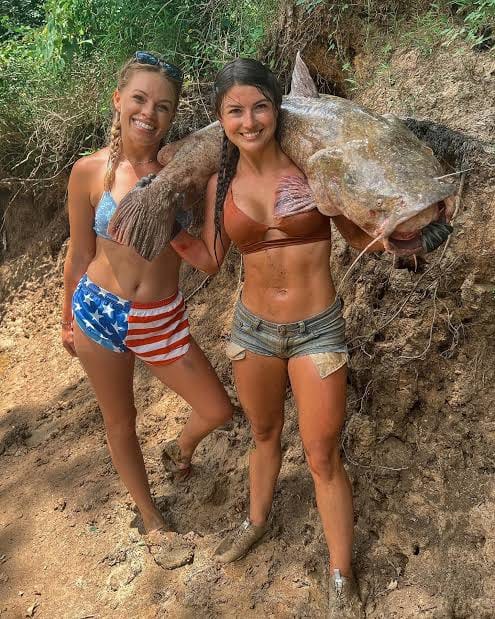
Flathead Catfish
I think I saw a Snakehead swimming in the surf today. It didn't look very happy. It's pretty salty out there, and full of Sea Nettles.
During the 2024 season, which ran from March to June, more than 18,000 pounds of invasive fish were removed from Maryland waters. Species prevented from passing upstream of the dam include 2,106 Chesapeake Channa, also known as northern snakehead; 746 flathead catfish; and 36 blue catfish. The number of Chesapeake Channa removed at the dam was more than double the amount removed in any year since the program began in 2021 (see chart below).
To put the harvested fish to good use, J.J. McDonnell processed most for consumption, including a portion they distributed to local food banks in Cecil County. DNR kept some fish for outreach events and scientific research to inform management toward minimizing the impact of these invasive species.
Blue Catfish
“Invasive fish pose a significant threat to ecologically and economically important native species in Maryland,” said Branson Williams, Maryland DNR’s Invasive Fishes Program Manager. “The removal effort at Conowingo Dam is a prime example of how partnership can amplify our ability to manage invasive fishes and limit their spread.”
Chesapeake Channa and blue and flathead catfish are the most notable and pervasive invasive fish in Maryland. They are all predatory species that consume large amounts of native aquatic species and have few natural predators. The department urges anglers to harvest these species when they catch them and report catches in new areas using the Invasive Species Tracker form on the DNR.
I wish them luck, but only a few need to get past to establish new populations upstream of the fish ladder.
I've often wondered what Maryland and Virginia have to offer Pennsylvania for all the expense of the "Bay Diet.' This could be part of it. "Do your part, or we'll let the invasive species up the river." Meanwhile, we're stuck with them. Oh well, at least they fight hard and taste good.
Maryland legislators hoping to control Northern snakehead numbers by encouraging more people to eat the invasive fish have succeeded in slapping a new menu-and-cookbook-friendly label on the toothy predator: Chesapeake Channa.
Maryland Senator Jack Bailey and co-sponsor J.B. Jennings introduced Senate Bill 207, “Natural Resources — Northern Snakehead — Common Name” in January. During a hearing calling for its passage, Bailey explained that “This bill seeks to encourage consumption of the snakehead and better manage its population by giving the snakehead a new name.” Todd Morgan, delegate for St. Mary’s Counties, pointed to successful rebranding campaigns that transformed the slimehead into the orange roughy, dolphinfish into mahi-mahi, and the Patagonian toothfish into Chilean sea bass as reasons to back the bill. “The crux of this is we have a public relations problem,” Morgan wrote. “Watermen want to catch these fish, restaurants want to sell them, and environmental experts want them gone. The big roadblock to all of this is the lack of consumer interest in eating the fish. It tastes great, makes delicious fillets, and is considered a delicacy in many parts of the world. However, most people can’t get past the name of the fish—nobody wants to eat a fish named the Snakehead!”
The first moniker Sen. Bailey proposed—Patuxent Fish—caused a backlash from devotees of the historic Patuxent River. Nearly 200 people signed a petition condemning the name for potentially stigmatizing the Patuxent by creating an impression that there is “something onerous or unsavory about the river” and its marine life. Riverkeeper Fred Tutman told WUSA TV that the Patuxent has great cultural significance to many Marylanders, and “to stigmatize it with an invasive outsider—a fish that doesn’t really belong here—that’s a little harsh.”
Bailey’s effort gained traction after he pivoted to the catchier “Chesapeake Channa,” and SB 207 passed both chambers in March and was approved by Gov. Wes Moore on May 9.
Channa refers to the snakehead’s scientific name, Channa argus. The species is considered an important food fish in its native range, which stretches throughout eastern Asia and includes parts of China, Korea, and Russia. It’s discovery in the United States in 2002—in a Crofton, Maryland, farm pond—led to widespread concern that the voracious predator would threaten the Chesapeake Bay ecosystem. Recreational fishermen and some chefs have embraced the hard-fighting fish, which is indeed excellent table fare. Now, Maryland lawmakers are hoping diners will join the battle—with a fork if not of a fishing rod.
I didn't know that legislatures could declare what the common name of a fish could be. Most common names are derived organically, people with experience with the fish finds some characteristic, in this case the snake like appearance and the mouth full of teeth, and use that to come up with a name, and it get's into general use by consensus of public. I know of no other case where a legislature has declare what the common name of an organism of any sort, let alone a fish. Imagine the legislature renaming Blue Jays "Blue Cyanocitta," because some guy named Jay was offended. And that ignores the problem of different states coming up with different names.
The Maryland Department of Natural Resources (DNR) is now accepting applications for invasive fish control grants of up to $5,000. This grant program seeks to support effective ways to remove invasive fish, particularly blue catfish and Northern snakeheads, from Maryland waters and identify sustained beneficial uses of caught fish. The application deadline is April 15, 2024, and awards will be announced in early May.
“It’s imperative to remove more blue catfish and Northern snakeheads from Maryland waters to protect our ecosystem,” said Branson Williams, Maryland DNR’s invasive fishes program manager. “These funds will support grantees with innovative ideas for successfully taking invasive species out of the water and finding constructive uses for them.”
Blue catfish and Northern snakehead pose significant threats to ecologically and economically important native species in Maryland. Proposals from community-based programs and individuals should address how their initiative will remove invasive fish for beneficial purposes and have a long-lasting impact on invasive fish control.
Interested parties can apply online through the proposal solicitation form. Projects may start July 1, 2024, and last a single or multiple days. Projects will take place with oversight by the department and should be completed by June 30, 2025. Information on invasive fishes is available on the DNR website, and applicants can direct questions about the program to Branson Williams of Maryland DNR at branson.williams@maryland.gov.
$5,000 isn't going to support a serious fishing effort, but it might help pay for a local fishing derby aimed at catching and removing the fish. Maybe start a girls catfish noodling league.
But a Maryland state senator recently amended a bill to rename the Northern Snakehead, an invasive species, in hopes of convincing more people to eat them. “Chesapeake Channa” is the latest name some legislators hope will replace the snakehead’s name.
"This bill seeks to encourage consumption of the snakehead and better manage its population by giving the snakehead a new name,” said Southern Maryland Senator Jack Bailey in a hearing supporting his bill.
Bailey’s original proposal called for calling snakeheads “Patuxent Fish."
Which is stupid because they are nowhere near confined to the Patuxent.
That sparked a petition drive in opposition that attracted signatures from people objecting to linking the name of one of Maryland’s most historic and environmentally sensitive rivers to an invasive species from China.
“There's lots of cultural significance and so forth,” said Patuxent Riverkeeper Fred Tutman. “To stigmatize it with an invasive outsider - a fish that doesn't really belong here - that's a little harsh.”
Tutman said “Chesapeake Channa” is a better choice because it relates to the species scientific name Channa Argus and might actually look interesting on a menu.
“I like that! Pass the Channa honey, please pass the Channa," Tutman mused, testing out the proposed name.
I'm familiar with several species of snakeheads from my teenage years working in a tropical fish store in L.A. At least one other species has become naturalized in Florida. Let's just keep the name. It's well accepted, and doesn't seem to inhibit anyone from catching and eating them. I can't think of another common sport fish referred to by it's Latin name.
According to the PFBC, both anglers and biologists from resource agencies have noted the increasing prevalence of the fish, indicating that they are reproducing within the reservoir. The commission is urging anglers to immediately kill and dispose of the invasive species upon capture.
The Northern Snakehead, native to China's Yangtze River, can grow over 33 inches, thrive in temperatures between 32-85°F, favors stagnant, muddy, vegetation-filled waters, and females can spawn multiple times annually, producing up to 100,000 eggs. Due to its wide temperature tolerance and rapid spawning, the predatory Snakehead outcompetes native species like largemouth bass and the American Eel, damaging the region's fragile ecosystem.
Once they're above the dam, there's really no stopping them from invading every suitable habitat in the Susquehanna River. They may not settle everywhere, but they certainly move through looking for new territory.
"Northern Snakeheads are voracious predators and may cause declines in important sport fisheries, such as bass and panfish, and may inhibit recovery efforts for species of conservation concern in the region, such as American Shad and Chesapeake Logperch," said Sean Hartzell, PFBC Aquatic Invasive Species Coordinator. "This is a critical time to protect the Susquehanna River from further expansion of invasive Northern Snakeheads by removing them to reduce adverse impacts."
The PFBC has been on alert for Northern Snakeheads in the Lower Susquehanna River since May 2020, when 21 of these invasive fish were observed crossing the Conowingo Dam during operations to facilitate the movement of native migratory fish.
The Maryland and Pennsylvania state governments are undertaking efforts to monitor the fish. Still, according to the U.S. Fish and Wildlife Service (USFWS), everyday anglers play a massive role in controlling the Northern Snakehead's spread.
"We have learned that harvest by anglers can remove over 25% of the local population, which goes a long way toward reducing snakehead numbers. For this reason, we encourage anglers to target and harvest Northern Snakehead when captured," the agency said in a news release.
It's so simple, even a child can do it. However, a 25% fishing mortality isn't going to eliminate Snakeheads. I say set commercial size and number limits, and let watermen fall all over themselves to break the rules and get every last one.
In both Pennsylvania and Maryland, keeping, transporting, and importing live snakeheads is illegal. Anglers catching a Northern Snakehead must kill the fish immediately because it can survive outside water for extended periods. The fish can be killed by removing its head, gill arches, or internal organs.
In an effort to monitor invasive northern snakeheads in the Chesapeake Bay and Blackwater River, the Maryland Department of Natural Resources (DNR) announces a new tagging program in conjunction with the U.S. Fish and Wildlife Service (USFWS).
Both agencies are placing yellow or blue tags on up to 500 northern snakeheads. Each tagged northern snakehead caught and harvested from now until 2024 could be rewarded with a gift card of $10 or $200 depending on the tag.
In order to qualify, the harvester must report the tag number to USFWS at 800-448-8322, and is asked to take a picture of their harvested and tagged northern snakehead. Only harvested northern snakeheads with reported tags will qualify for gift cards.
By measuring the amount of northern snakehead harvested, the agencies will learn if population benchmarks are being reached and help control the spread of the species.
The population of snakeheads has been increasing in the upper Chesapeake Bay and is likely the top fish species that eats other fish in the Blackwater River. Harvesting snakeheads helps reduce predation pressure on the state’s natural resources, and the fish is also considered a flavorful and nutritious food source.
It is illegal to transport a live northern snakehead in Maryland and surrounding states. More information on snakeheads is available on the DNR website.
Anyone fishing in Maryland waters who is 16 years of age or older must have a valid Maryland fishing license. More information on licenses and how to get them is also on the DNR website.
I've caught a couple of tagged Striped Bass, but all I got was a hat.
Governor Wes Moore is today calling on the federal government to declare the expanding population of invasive fish species— including blue catfish, flathead catfish, and snakehead—to be an ongoing commercial fishery disaster in the Maryland waters of the Chesapeake Bay. The governor sent a letter to U.S. Commerce Secretary Gina Raimondo requesting the declaration under provisions of the Magnuson-Stevens Fishery Conservation and Management Act and the Interjurisdictional Fisheries Act.
“In recent years, the state has become increasingly concerned about the explosion in the abundance of invasive fish species in the Chesapeake Bay, including blue catfish, flathead catfish, and snakehead,” said Governor Moore. “It is critical to act now to mitigate the effects of the invasive species and to provide assistance to the commercial fishing industry.”
The declaration would qualify Maryland for federal fishery disaster assistance.
Since 2012, the total catch of seven of Maryland’s marquee commercial fishery species that share their habitat with invasive fish at some point in their life cycle have declined between 27% and 91%. The dockside value of these species has likewise declined between 12% and 85%. Commercial fisheries—including hard blue crab, striped bass, yellow perch, and others—have brought in an average $64 million yearly in dockside value during that time, making declines a significant loss for Maryland’s commercial watermen and the state’s economy.
While a direct scientific link between invasive species and the declines is yet to be determined, the Maryland Department of Natural Resources has growing concerns about observed high densities of invasive species, particularly blue catfish. It is likely that negative impacts will occur as these species are known to multiply rapidly, adapt to new environments, and eat a wide variety of prey, while preying upon and competing with native species for space and for food.
Scientific indicators that have shown declines in key species include the department’s annual Striped Bass Juvenile Index and Blue Crab Winter Dredge Survey, both of which are conducted in coordination with Virginia. Striped bass recruitment has been well below average for four consecutive years, while total abundance of blue crab in the Chesapeake Bay in 2022 was 227 million crabs—the lowest abundance observed since the survey began in 1990. To help protect spawning stock, both states enacted measured but stricter limits on both recreational and commercial catch.
“Maryland, Virginia and other Atlantic Coast states have made wise and measured changes to many of our fishery regulations to protect our iconic species, but we have an emerging crisis on our hands that could undermine those measures,” said Maryland Department of Natural Resources Secretary Josh Kurtz. “The impact of invasive species cannot be underestimated, nor can we delay action to address the damage they are causing.”
Blue catfish were first introduced in Virginia in the 1970s to create a recreational fishery, but have since spread to tributaries throughout the watershed. Blue catfish are voracious eaters that consume other fish, including catfish, and crustaceans. They out-compete the native species for both habitats and food and pose a threat to key commercial fisheries including blue crab, striped bass, white perch, yellow perch, and American eel.
The Maryland Department of Natural Resources has increased monitoring programs of invasive fish and also urged recreational anglers to target them to help combat their population expansion. Reducing numbers of invasive species of fish is positive for ecosystems and, as an added bonus, both blue catfish and snakeheads are valued as a delicacy. There are no fishing limits on invasive fish, which means anglers can catch and keep any number of them, at any size, during any time of year.
Both snakeheads and Blue Catfish are sought commercially, and my sources suggest that the commercial nighttime bowfishing for snakeheads in the Potomac has significantly reduced their numbers. As witnessed by our recent catfish fishing trip, Blue Cats are not exactly difficult to catch on hook and line, and a concentrated effort on them, perhaps aided by Federal subsidies, might also make a difference there, too. Short of a species specific, highly fatal disease, neither of these species are going to be eliminated, but perhaps their numbers can be pared back to the point of having less significant impact on the ecosystem.
Fishing hobbyists and professionals alike are invited to the Nanticoke River Invasive Fishing Tournament, presented by SU on Saturday, July 30 (rain date: Sunday, July 31) at Cherry Beach Park in Sharptown, Md. Lines in at 6 a.m. and weigh-in at 2 p.m., followed by awards and data collection.
Thanks to a grant from the Maryland Department of Natural Resources, the free tournament features approximately $2,000 in prizes. All blue catfish and northern snakeheads caught will be provided to Bressman’s lab to continue research to learn more about their effects on the local ecosystem, with a focus on diet, growth speed, and reproduction rates.
“We really want to spread awareness in local waterway communities about what fish are invasive, and how they can minimize the population to relieve some pressure from striped bass and blue crabs, whose populations are on the decline,” said Bressman.
Tournament fishing is permitted at Cherry Beach Park for shore-based anglers. Those fishing from kayaks or boats may use any boat launch along the Nanticoke and tributaries such as Marshyhope Creek and Barren Creek. Maryland or Delaware tidal fishing licenses are required for all participants, respective to their fishing location.
The event is hook and line only and does not include a bow fishing category. Limited fishing gear will be available for those who may not have their own supplies.
It may help the research, but it won't make a significant dent in the Blue Catfish and Northern Snakehead populations.
“Fish for cash” is the slogan of a program Maryland wildlife experts are
launching as a way to encourage anglers to catch, record and eat northern
snakeheads, an invasive fish species whose numbers have swelled in the rivers
and Chesapeake Bay in the D.C. region over the last few years.
The
$18,800 program, which is being run by the Maryland Department of Natural
Resources (DNR) and the U.S. Fish and Wildlife Service (USFWS), is designed to
help experts get a more accurate count on the number of snakeheads being
caught and eaten and to figure out if policies to lower their population are
working, according to experts.
“This is the first time we’ve given
out cash for recording tags of snakeheads,” said Joseph W. Love, program
manager for the freshwater fisheries division at Maryland’s DNR. “We’re doing
this because we want to know how many snakeheads are getting harvested. This
type of project and incentivizing people will help us get that
information.”
Before the new program, Love said staffers would go
out to docks and ask anglers how many snakeheads they’d harvested, but that
didn’t prove to be as effective since many snakehead anglers go out at night
to catch the fish, and the state agency didn’t have enough staff to
consistently do the surveying at night.
The state is also trying to
identify and count snakeheads in the Potomac River, but there’s no incentive.
“We rely on people’s good graces to report,” Love said, adding that he hopes
the reward program for the Chesapeake Bay will increase reporting rates.
“We
rely on their own desire to report the tag usually, but money is the best way
to incentivize,” Love said.
The program, which is underway and will
run until 2024, is being offered to anglers who catch northern snakeheads
along the upper Chesapeake Bay, which runs roughly from the Gunpowder River in
the Baltimore County area to the Susquehanna River in the Havre de Grace area,
and to the Sassafras River in Cecil and Kent counties.
So how many of these tagged fish are there, and how much are the worth?
The Maryland DNR tagged about 250 snakeheads this spring and plans to do
another 250 this fall in the upper Chesapeake Bay. DNR officials said crews
apply electricity to the water that briefly stuns the fish, which are then
taken out of the water, tagged and released. The tags, which are blue or
yellow, include on them a reward amount: Each tagged snakehead caught and
harvested from now until 2024 could be rewarded with a gift card of $10 or
$200, depending on the tag.
An angler who catches a tagged
fish should write down the tag number, then harvest it and take a picture.
Then, they should call the USFWS at 800-448-8322 and give wildlife officials
the information. Once scientists review the information, they’ll mail out a
check to the angler.
Snakeheads do move around, so they could be found literally anywhere that's not too salty. If you catch one, look for the tag.
The peculiar-looking creature with the snake-like reference that Casey Shank reeled into his friend's boat on the Potomac River earlier this month was not something state wildlife officials wanted to see.
The 27-inch, 5-pound catch was representative of one of several invasive water species in Maryland which authorities say could spell trouble for the Chesapeake Bay and its tributaries.
This one is called the northern snakehead and the fact that Shank snagged it while fishing at Dam No. 4 south of Downsville was of particular concern to the Maryland Department of Natural Resources.
That's because the location is the farthest north on the Potomac River that the snakehead has been found since it was first discovered in the state — in Crofton in Anne Arundel County in 2002 — said Michael T. Kasiwagi, Western II Regional Fisheries Manager for the DNR.
The northern snakehead will eat fish, reptiles and amphibians and can "strike like torpedoes," according to the U.S. Fish and Wildlife Service.
Kasiwagi said there are established snakehead populations in watered sections of the C&O Canal along the Potomac River in Montgomery County. State wildlife experts believe that during high water flows on the river, snakeheads have been able to get from the canal into the river and go north. Other invasive fish species in the state include the flathead catfish, which was first found in the Potomac River in the Williamsport area and has steadily increased in population over the last six to eight years, he said.
Snakeheads can make long upstream movements, Kasiwagi said.
"It's not completely unexpected, but it's not great news," Kasiwagi said of their arrival here.
If there's a way they can swim there, they'll make it. If they can't get over or around the dam, it will take awhile until birds drop enough of them on the wrong side of the dam for a pair of them to together and start a new wave. Or fisherman may move them, deliberately or not.
As warm weather encourages Virginia residents to venture into woods and
waters, there’s a growing likelihood they will encounter invaders.
Two
non-native species that wildlife experts are keeping an eye on — northern
snakeheads and nutria — have established footholds in regional waters, and
those who come across these animals are asked to do their part to help
protect ecosystems from their potentially harmful effects.
The
northern snakehead is a large, predatory fish native to Africa and Asia that
was first discovered in Virginia in the Potomac River in 2004. Experts
believe the fish was intentionally released.
Since then, the
species has fully colonized the Potomac River and the Rappahannock River,
according to Virginia Department of Wildlife Resources regional fisheries
biologist John Odenkirk. The fish has also established populations farther
south in the York and James rivers and their tributaries, though in much
smaller numbers.
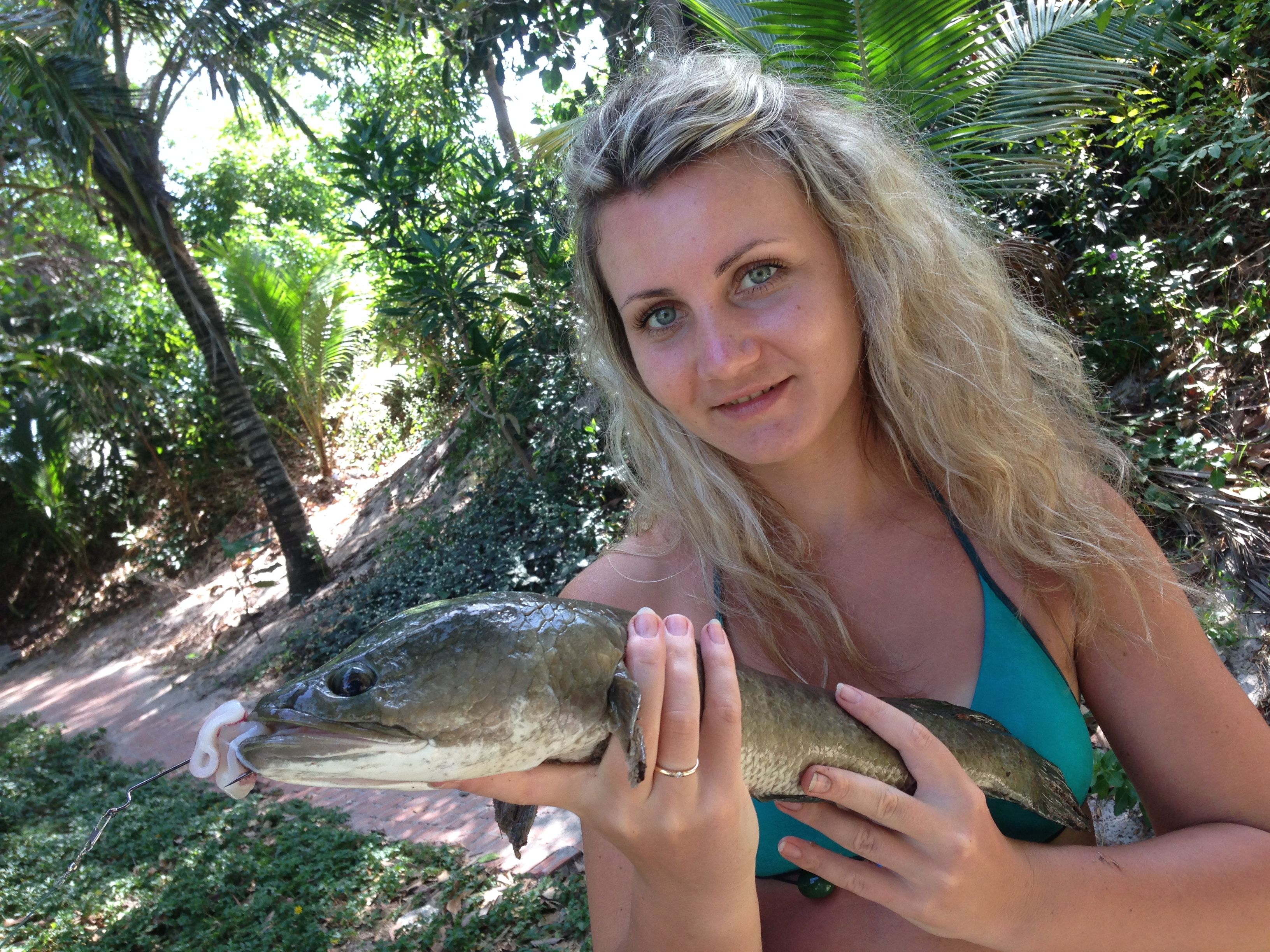
Desiree Nuckols with a Northern Snakehead
Desiree Nuckols has encountered snakeheads
firsthand in the Pamunkey River. Nuckols, a member of the Pamunkey Indian
Tribe, fishes frequently, often posting pictures of her best catches to
Instagram under her handle kissmy_bass_. She was the first known person to
catch a snakehead in the Pamunkey River in 2020.
Nuckols was
fishing the shallows this April when she hooked another healthy snakehead,
her third so far.
“They fight really hard, a lot like
bowfin,” she said. “They’re very feisty and fun to catch, but hard to deal
with because of their teeth.”
Nuckols said the snakeheads are
tasty and that she has fried the ones she’s gotten, but that she might go
with grilling the next one with onions and butter.
LM Bass are also an invasive species here
Nuckols said
she’s aware of the potential problems that snakeheads pose for local
ecosystems. She was part of a team of Pamunkey Indian Tribe members who
worked with scientists from the National Oceanic and Atmospheric
Administration to study and tag Atlantic sturgeon to better understand the
endangered fish.
The team was cognizant of the effects that
abnormal disruptions, such as the presence of snakeheads, were having on
native species, according to Nuckols.
Nuckols said she determined
that the snakehead she recently caught had just eaten three large
minnows.
But not Crappie
Snakeheads are very opportunistic feeders and will eat
almost anything that’s in front of them, according to Odenkirk. Thankfully,
snakeheads do not seem to be decimating local populations of native species
— a worst-case scenario some scientists feared when snakeheads first arrived
— but wildlife officials nonetheless hope to limit the impact that the
invasive fish is having.
Nutria, on the other hand, have proven
to be much more destructive. Semiaquatic rodents that are native to South
America, nutria can completely destroy marshes by devouring the all the
vegetation. The denuded ecosystem then becomes inhospitable for other
creatures that normally live there. The residual sediment erodes away and
becomes open water with no chance of recovery.
Nutria have long
been established in the waters of south Hampton Roads and along the southern
shoreline of the James River up to Interstate 95, according to Todd
Englemeyer, also a biologist with the Department of Wildlife Resources. But
a more recent development is detection of the species north of the river,
specifically in the Chickahominy River watershed.
Two years ago,
there was a positive identification of a male nutria that had been killed by
a vehicle in Providence Forge. Englemeyer said that the DWR has redoubled
its efforts in the Chickahominy, deploying traps, using K-9 detection and
installing nutria identification signage at boat ramps.
If nutria
become established in the Chickahominy, it’s possible that they’ll find
their way north to other rivers with habitat they prefer, such as the
Pamunkey River, Mattaponi River and Dragon Run.
The last I heard, Nutria were eliminated from Maryland's Eastern Shore, using dogs to hunt them, but if they're still loose in Virginia, it's going to be an ongoing battle. As for Snakeheads? We lost that fight.








.jpg)


