Showing posts with label tropical storms. Show all posts

Saturday, August 10, 2024

Beach Report 8/10/24 - Retro Saturday

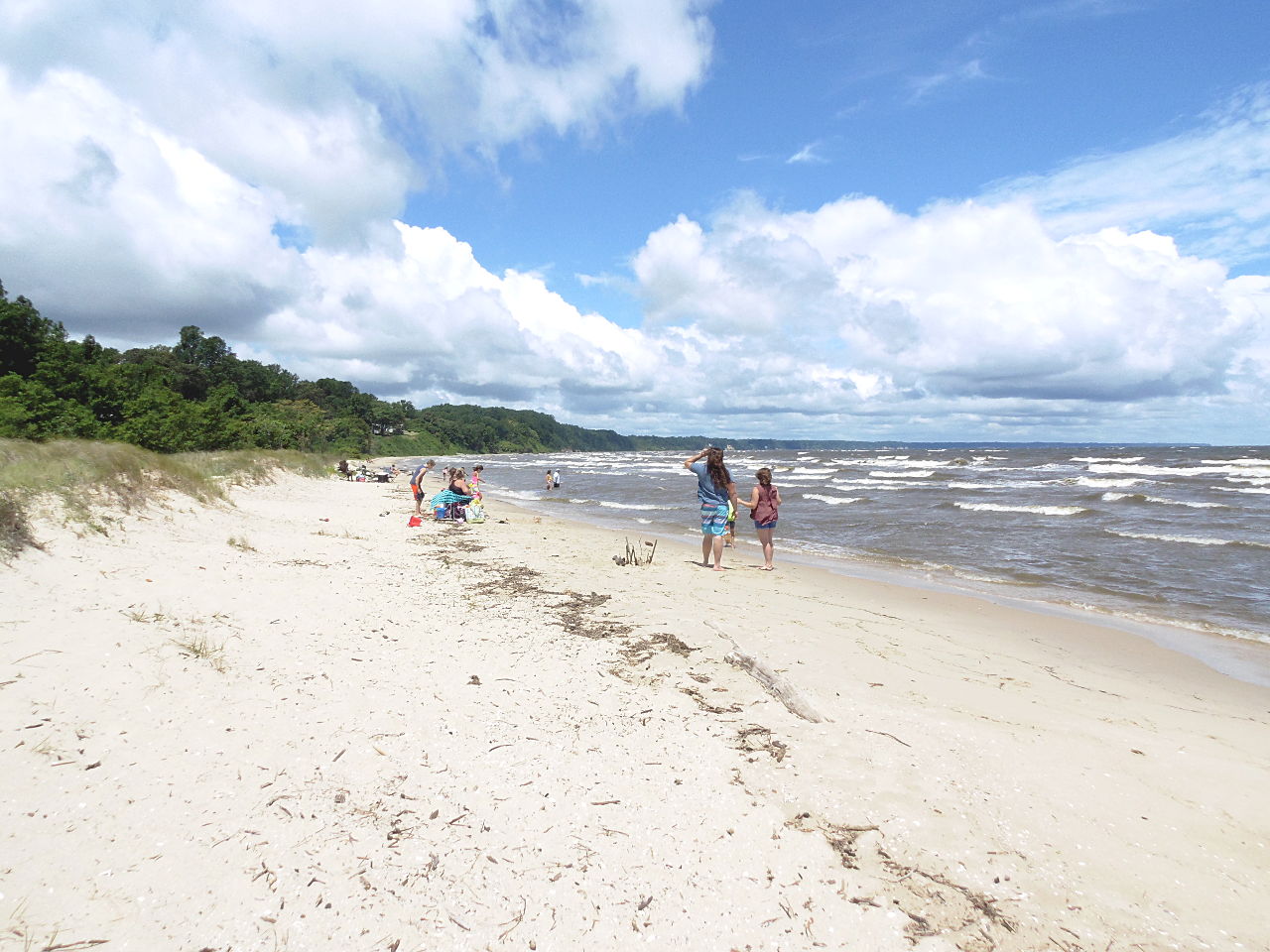
Tropical Depression Debby is well gone now, and the tides have even returned to baseline levels. We got out just around low tide.
There have been lots of changes to the beach, sand scoured out in some places, and piled deeper in others. We had lots of shell and gravel to look through, and we did well, 34 teeth, and some misc small fossils, drums teeth, ray chevrons, sting ray barbs, including this  . . .  
Isurus retroflexus tooth, the ancient equivalent of the Long Finned Mako Shark. It's not a common tooth at all, and was the highlight of the walk. Too bad about a little bit of missing tip, but for 10 or so million years old, it's not in too bad a shape.


Saturday, May 25, 2024

NOAA Predicts Hurricanes

 More than usual. WUWT,  NOAA predicts above-normal 2024 Atlantic hurricane season

NOAA National Weather Service forecasters at the Climate Prediction Center predict above-normal hurricane activity in the Atlantic basin this year. NOAA’s outlook for the 2024 Atlantic hurricane season, which spans from June 1 to November 30, predicts an 85% chance of an above-normal season, a 10% chance of a near-normal season and a 5% chance of a below-normal season.

NOAA is forecasting a range of 17 to 25 total named storms (winds of 39 mph or higher). Of those, 8 to 13 are forecast to become hurricanes (winds of 74 mph or higher), including 4 to 7 major hurricanes (category 3, 4 or 5; with winds of 111 mph or higher). Forecasters have a 70% confidence in these ranges.

The upcoming Atlantic hurricane season is expected to have above-normal activity due to a confluence of factors, including near-record warm ocean temperatures in the Atlantic Ocean, development of La Nina conditions in the Pacific, reduced Atlantic trade winds and less wind shear, all of which tend to favor tropical storm formation.

Not exactly good news. That means more chances for strikes in the US, and for us locally.  Just in case you're curious as to what they will be named:


Saturday, September 23, 2023

Ophelia

Tropical Storm Ophelia came ashore in North Carolina yesterday, and it's been dictating our weather since then. Yesterday the wind picked up, and rain started in the evening. We have a power failure last night for a couple of hours, and another shorter one this morning. So far, the storm appears to be following the predicted path, which sends the remains of the storm right over us tomorrow morning:

During this morning's power outage, I went out to check the boat. As I expected it was fine. But somebody forgot to secure their sail, and it looks like an expensive mistake:

I also stopped in at the beach to take a look, fortunately in a break in the rain showers. The bay is well roiled up by the 30 kt NE wind.


The highest high tide of the event is predicted for tonight, at about 1.5 ft over the highest astronomical tide. I expect a lot of temporary beach erosion, which will fill in slow in the weeks after, and possibly some major rearrangements around the cliffs with big logs shifted around, or even washed away, and possibly some cliff falls. 

Stay tuned.

Friday, September 22, 2023

Beach Report


Tropical Storm Ophelia got her act together off South Carolina overnight, and the current cone of probability has us squarely in her sights. While I expect it to be less than full tropical storm strength by the time it gets this far inland, current forecasts are calling for up to 3 inches of rain, winds to 25 mph from later today until Monday, and tides up to 1 foot above highest astronomical tides on Sunday night.
I went down to the harbor to make the sure boat was as ready as it can be. The motor starts, the bilge pump works, and the scuppers are clear. I loosened the lines a hair so it can rise a little higher than usual, but I don't expect it to be a problem.
Then I took a walk on the beach. Although it's not raining yet, it was still pretty stormy, with 20 kt NNE winds, and the beach was all sand. I found four teeth, including these two small Snaggletooths, and gave away one to a woman who drove 2 hrs to get here today.


Sunday, May 23, 2021

It Happens Every Year

WUWT, NOAA predicts another active Atlantic hurricane season
May 20, 2021 NOAA’s Climate Prediction Center is predicting another above-normal Atlantic hurricane season. Forecasters predict a 60% chance of an above-normal season, a 30% chance of a near-normal season, and a 10% chance of a below-normal season. However, experts do not anticipate the historic level of storm activity seen in 2020.

For 2021, a likely range of 13 to 20 named storms (winds of 39 mph or higher), of which 6 to 10 could become hurricanes (winds of 74 mph or higher), including 3 to 5 major hurricanes (category 3, 4 or 5; with winds of 111 mph or higher) is expected. NOAA provides these ranges with a 70% confidence. The Atlantic hurricane season extends from June 1 through November 30.

“Now is the time for communities along the coastline as well as inland to get prepared for the dangers that hurricanes can bring,” said Secretary of Commerce Gina Raimondo. “The experts at NOAA are poised to deliver life-saving early warnings and forecasts to communities, which will also help minimize the economic impacts of storms.”

I wouldn't call that the strongest warning possible. The nice thing is, regardless of what happens, they'll always be right. Have a big storm year? "Yeah, we told you so!". Have a weak year? "Well, we told you we had a 20% chance of a dud!"  And if it doesn't look like it's working out, they'll revise it at mid season


At least it doesn't look like they chose this moment to blame global warming for more and more intense hurricanes. Because that myth is thoroughly busted: CO2 Cyclone Doomsday Flat Out Refuted: 170 Years “Absolutely No Trend” In Hurricane Intensity/Frequency


Nevertheless, every time hurricanes and tropical storms are mentioned in the media, they always assert, without providing any evidence, that hurricanes and tropical storms are increasing in frequency and severity due to global warming.

It just ain't so.


Saturday, August 15, 2020

Still No Evidence that Climate Change is Making Hurricanes Stronger or More Frequent

WUWT: Hurricane trend detection
Published: 11 August 2020
Craig Loehle & Erica Staehling
Natural Hazards (2020) Cite this article

Abstract

Because a change in the frequency (number/year) of hurricanes could be a result of climate change, we analyzed the historical record of Atlantic basin and US landfalling hurricanes, as well as US continental accumulated cyclone energy to evaluate issues related to trend detection.

Hurricane and major hurricane landfall counts exhibited no significant overall trend over 167 years of available data, nor did accumulated cyclone energy over the continental USA over 119 years of available data, although shorter-term trends were evident in all three datasets. (my bold)

Given the χ2 distribution evinced by hurricane and major hurricane counts, we generated synthetic series to test the effect of segment length, demonstrating that shorter series were increasingly likely to exhibit spurious trends. Compared to synthetic data with the same mean, the historical all-storm data were more likely to exhibit short-term trends, providing some evidence for long-term persistence at timescales below 10 years.

Because this might be due to known climate modes, we examined the relationship between the Atlantic multidecadal oscillation (AMO) and hurricane frequency in light of these short-term excursions. We found that while ratios of hurricane counts with AMO phase matched expectations, statistical tests were less clear due to noise. Over a period of 167 years, we found that an upward trend of roughly 0.7/century is sufficient to be detectable with 80% confidence over the range from 1 to 21 storms/year. Storm energy data 1900–2018 over land were also analyzed.

The trend was again zero. The pattern of spurious trends for short segments was again found. Results for AMO periods were similar to count data. Atlantic basin all storms and major storms (1950–2018) did not exhibit any trend over the whole period or after 1990. Major storms 1950–1989 exhibited a significant downward trend.

All-storm basin scale storms exhibited short-term trends matching those expected from a Poisson process. A new test for Poisson series was developed based on the 95% distribution of slopes for simulated data across a range of series lengths. Because short data series are inherently likely to yield spurious trends, care is needed when interpreting hurricane trend data.
So, no long term trends. Some short lived trends due to random noise and known climate cycles. But every time I read a newspaper report on hurricanes and tropical storms, it tells me there are more and stronger storms due to "climate change."

Wednesday, August 5, 2020

Back To Normal at the Beach

The day after Isaias passed, the beach looks pretty much the same as it did before. Pretty nice weather, too, mid 80s and less humid
The storm tides for Isaias, which weren't all that high, didn't even move much around, although some of the logs in the tangle might have been pushed a little closer to the cliffs. Eighteen shark teeth, a crab claw and a Tilly bone.
The Spotted Beebalm in the dunes is starting to bloom, but if you look carefully at the photo, you'll find the true intended target of the photo.
It took about 4 tries to get this picture, a Common Buckeye.

Tuesday, August 4, 2020

Isaias

When I walked Skye at 11 PM last night it was just starting to rain (again), and the wind starting to rise. According to the news, the eye was just coming ashore near the Georgia/South Carolina line.

The rain woke me up around 6, and a quick look at the rain gauge showed we'd already received 2 inches of rain, and the wind was whipping the branches of the trees around. The eye of the storm was just getting crossing the North Carolina/Virginia line.


A little before 7 PM, all the phones in the house went off, with a warning of a tornado warning. Apparently a radar signature indicated a possible tornado, and one was spotted near Leonardtown. Also, water spouts spotted over Taylors Island, headed generally in our direction. We made the kids take the baby to the basement, and are waiting out the warnings glued to the TV.

Skye is luxuriating in the rain under the back deck.

More later.

UPDATE: Power went out around 10:20 AM.

UPDATE: With the rain over, (4.7 inches since midnight) at least for a while, I decided to drive down and check the boat around 11 ish. The tide was high, above astronomical highest tide, but nothing outrageous, and the water extremely muddy. The boat was fine (my boat is in the picture, but not exactly obvious):


I drove around to the beach to take a look


The storm headed north across the bay and waves breaking in front of the mouth of the harbor


Looking south, toward the gas dock, some kid out in the water trying to surf. The waves looked about 3 ft.


Looking north, lots of waves, and not much beach, with mostly clear skies everywhere but north,

After I got home, we had lunch and Georgia, Skye and I walked back down for exercise. It had calmed down quite a bit more. By the time we got home around 1 PM, the power was back on.

Not exactly the worst tropical storm we've been through here.

Friday, July 10, 2020

A Beach Walk Before Lunch.

A Green Heron looks a little peeved that it has to get off the dock so Skye and I could pass.
Today, Tropical Storm Fay, or some remnant thereof, was transiting quickly to our east. When we arrived at the beach, the sky was clear overhead, but stormy looking any direction but wet. The wind was coming from the NNW at upwards of 20 kts, which gives us a pretty good chop.

A few people out taking in the scenery.
Skye doesn't mind the wind or waves, or much else for that matter.
We met a guy who was flying a drone over Calvert Beach. He said he grew up here, and was taking some video for old times sake. It was way up there, far above us when we stopped to talk to him, but its battery was wearing down, and he brought it down while we watched. It was amazing how it hovered in that wind.

Do you see it?
Blown up a bit.
By the time we got back to the parking lot, clouds had moved over us, and even dropped a little rain.

Monday, June 1, 2020

2020 Just Keeps Getting Better

Hurricane forecasters at the National Oceanic and Atmospheric Administration’s Climate Prediction Center say there’s a high likelihood of getting 13 to 19 named Atlantic storms, with winds reaching at least 39 miles per hour. The Atlantic spawns 12 named storms a year on average, though last year there were 18.

Before the season ends Nov. 30, NOAA experts predict that six to 10 of those named storms could become hurricanes with winds of 74 miles per hour or more. Moreover, three to six of them are considered likely to grow into major hurricanes with winds of 111 mph or more.

Last year, by comparison, saw six Atlantic hurricanes, half of them major.

There’s a confluence of conditions making hurricanes more likely this year, NOAA forecasters say. For starters, it seems there’ll be no El Nino, that unusual warming of equatorial Pacific Ocean waters that tends to suppress Atlantic storm activity. Add to that warm surface waters in the tropical Atlantic and the Caribbean, reduced vertical wind shear, weaker trade winds and an enhanced west Africa monsoon.
Aftermath of Isabel at Flag Harbor

The Chesapeake Bay doesn’t get many direct hits from hurricanes. The worst one in the past two decades was Isabel in 2003, which in its rampage up the East Coast caused $5 billion in damage and 51 fatalities, 17 directly linked to the flooding and winds.

But even when hurricanes make landfall elsewhere or turn out to sea farther south, the Bay region can get hammered with torrential rains, flash flooding and tornadoes. In 2018, a trio of weakened but still powerful storms — Alberto, Michael and Florence — caused 13 storm-related deaths in Virginia.
To be fair, however, hurricane forecasts aren't terrible specific, consisting largely of weak, average or above average, and even then, not horribly accurate, only about 70%.

But nothing stops a riot in it's tracks as well as a hurricane.

Sunday, October 20, 2019

Russiagate in the Rain

Looks like we're getting some well needed rain, as the remains of Tropical Storm Nestor sweeps by.

Hillary's accusations that some woman running for president, presumably Tulsi Gabbard, is effectively a Russian puppet, continues to resonate. Jim Geraghty at NR tells her to Put Up or Shut Up on These Accusations, Hillary. I'm sure she has Sid "the shiv" Blumenthal working on the dossier as we speak. From Newsweek (it still exists?) Michigan Congressman Justin Amash Calls Hillary Clinton a 'Trump Asset" after Gabbard Comments. He's not completely wrong. From Tristan Justice at Da Fed, Hillary Clinton Engages In Insane Conspiracy Theory Attacking Tulsi Gabbard. He's not wrong either. From Power Line, John Hinderacker asks Is Hillary Drunk Blogging again? John Sexton at Hot Air has More Hillary: Trump’s Game Plan Is To Never Leave Office. Again, the best guide to what Democrats are doing is what they're accusing you of. Last word goes to the Babylon Bee with Hillary Clinton Asked To Leave Costco After Repeatedly Accusing Sample Lady Of Being A Russian Asset. Reminder to Snopes; it's a parody site.

In the "Spygate" matter, Hot Air cites the NYT in Review Of Russia Inquiry Grows As FBI Witnesses Are Questioned. Sundance at CTH dissects the news in Reminder: John Durham Questioning CIA Officials About Intelligence Community Assessment…,  New York Times Narrative Engineers Start Positioning DOJ/FBI “Small Group” Coup-Plotters as Victims of CIA and Intelligence Community Manipulation… and DOJ-FBI “Small Group” Promote Defense of Spygate Operations – Former FBI/DOJ Officials Nervous, Hiring Lawyers…
The activity of the “small group” of coup plotters consists of three generalized subsidiary agencies: (1) DOJ/FBI, (2) CIA/ODNI, and (3) The State Department.

Within each “small group faction” a years-long review of their narrative constructs shows the groups have specific and unique media outlets for their offensive (’16, ’17) and defensive (’18, ’19) propaganda efforts.

•The DOJ/FBI faction of the “small group” leaks to narrative engineers at the New York Times and NBC. •The CIA/ODNI faction utilize the Washington Post and ABC; and •the State Dept. faction use CNN and CBS. Each faction uses the same reporters & pundits for their distribution. This pattern, albeit generalized, has been consistent for several years.
. . .
It is important to remember this concerted process whenever we are reviewing media articles concerning the matters of interest to each of the “small group” factions.

In essence, the propagandists within the media are the same; and the sources for the positions reflected in the articles are the same. Wash, rinse and repeat depending on the identified risk.

So today we see NBC and the New York Times going “out front” on behalf of their interests. Referencing the faction each outlet represents we see the *reporting* is to defend the interests of the DOJ and FBI. . . . 
Reminds me a bit of the way a fish starts wriggling once it realizes it's hooked. He also comments on the recent finding that a Four Year State Dept. Investigation Concludes Noting State Dept. Violations From 38 Corrupt Administrators…
Perhaps the only institution more corrupt than the Obama intelligence apparatus, writ large, was/is the Clinton constructed U.S. State Department. Foggy Bottom is appropriately named as the septic tank for the Administrative State.

Former President Barack Obama carved out a segment of the financial indulgence, and thereafter purchased the acquiescence of Team Clinton, when he handed Dame Hillary the keys to the State Dept as an outcome of the 2008 election. Barry from Chicago and his fellow travelers would weaponize the domestic apparatus, and Hillary could graft the international effort; thus, the compact was sealed…

The institutional bile, filth and corruption embedded within the the U.S. State Dept. is an outcome of an organization whose sole purpose is to generate credentials for leftists on their curriculum vitae; curry income for pontificating academics who have done absolutely nothing of inherent value in life; and advance ruling class ideologies through control of foreign policy. The Birkenstock peaceniks, promote the global elitist ruse, demand accolades from the subservient proles, and use Hollywood as their PR division.

Therefore it comes as no surprise a four-year internal self-investigation of their own complicity results in little more than a carefully worded 9-page letter admitting, essentially, mistakes were made by allowing Secretary Clinton to construct a parallel communication network to avoid public scrutiny of her graft and scheme operations.
Mollie Hemingway at Da Fed on how Adam Schiff Flip-Flopped On Whistleblower Testimony After Reports Of Coordination
House Democrats’ top impeachment inquisitor abruptly changed from repeatedly insisting on the testimony of a whistleblower against President Donald Trump to working to prevent it. The change occurred as soon as it was revealed the complainant had secretly worked with Rep. Adam Schiff’s Democratic staff prior to filing his formal complaint on Aug. 12.

At first, Schiff insisted an anti-Trump bureaucrat sharing allegations against the president must share his story with the House Permanent Select Committee on Intelligence. But after news broke that Schiff’s staff had secretly worked with the whistleblower prior to the complaint being lodged, discussions that the whistleblower failed to mention when specifically asked about them as part of the official whistleblower process, Schiff moved to prevent the testimony. The move appears designed to prevent Republican lawmakers from asking the individual under oath about his discussions with House Democrats, media, and others involved in the impeachment effort.
From the S. Noble at the Independent Sentinel, Schiff staffer Tom Eager & Impeachment witness Bill Taylor colluded?. Of course they did.
Adam Schiff’s staffer Thomas Eager flew to Ukraine on a mission to gain information which may very well have been to dig up impeachment dirt. The trip was paid for by Burisma, Hunter Biden’s recently former company. During the trip, Eager met with a witness in the impeachment inquiry Ambassador Bill Taylor. It was Eager’s first meeting upon arrival.

That’s not suspicious at all. Move on.
Gary Gindler at AmThink, Dr. Strangesсhiff, or How I Learned to Stop Worrying and Love the Impeachment
Bravo, comrade Strangesсhiff! Please, continue the Orange Man trial behind closed doors. After all, the American people are ecstatic about closed hearings without access by journalists or lawyers. They are also especially fond of the removal of the president based on an anonymous gossip-monger, or two, or three. The number of blabbers is not important, since the transcripts of their testimonies will never be published (not because they are not there, but because that is exactly what the intent was).

How familiar...
A sweet gig, Hunter Biden Never Worked In Ukraine In Five Years On Burisma’s Board (Capt. Ed at Hot Air). Not bad for $50k a month, or whatever it was. Actually, it was $83 k per month at some point.
“He was a ceremonial figure,” one of their sources at Burisma tells their reporting team, one who never bothered to come to Ukraine at all in the five years he worked as a director for the Ukrainian energy company. . .
I'm sure Slow Joe was properly appreciative. A reminder from Da Blaze, Diplomat: I tried to warn the Obama administration about Hunter Biden and Ukraine in 2015, but no one would listenGiuliani pressed State Department, White House to grant visa to former Ukrainian official. WaPoo doesn't want to hear his side.

But somebody named Biden traveled to Ukraine. WaPoo tries to cover Joe in glory, Inside Joe Biden’s brawling efforts to reform Ukraine — which won him successes and enemies

At Doug Ross, MARK LEVIN: Surprise, the Media Are Lying About Mick Mulvaney


And sundance has Energy Secretary Rick Perry Discusses His Departure… and denies it has anything to do with the Ukraine matter.
Secretary Perry shoots down the talking points about Ukraine outlining how the administration was working throughout 2017, 2018 and 2019 to ensure corruption was addressed in order to advance the U.S. and Ukraine relationship.


Politico, Pompeo lashes out at impeachment inquiry. How dare you resist our harassment! The Atlantic worries about The Closed-Door Impeachment "The Democrats’ current strategy could undermine their bid to get public opinion firmly on their side" but if you believe to polls it's working. Andy McCarthy at NR decries The Trivialization of Impeachment
To build their political case, Democrats frame every dispute with President Trump in dire terms: proof of his unfitness and the imperative of removing him. No misstep is too trivial. The president’s supporters, to the contrary, are incentivized to defend the president, even when they should be trying to convince him to change course. They do not want to be seen as implicitly supporting the impeachment effort, so every misstep, even ones that are serious though not egregious enough to warrant impeachment, must be defended rather than corrected. And the president — especially one with Trump’s persona, which is always to attack and never to confess error — is encouraged to double down on his mistakes, lest his changing course be seen as an implied admission of misconduct that strengthens the impeachment case.

The Democratic base demands impeachment. Recently, Speaker Nancy Pelosi has come around to the conclusion that it can be done quickly and with minimal political damage to Democrats who hold seats in pro-Trump districts. It thus appears highly likely that the president will be impeached in the coming weeks.
The Democrats’ euphoria will be short-lived. There will be deep, bitter public protest because impeachment, on the facts before us, is objectively foolhardy. Trump’s missteps do not rise to the level of impeachable offenses. If they did, Democrats would not fear voting to conduct the impeachment inquiry, and they would proudly hold their hearings in public with due process, rather than behind closed doors with selective leaking.
Also from NR, Rich Lowry has The Impeachment Defense That Doesn’t Work
If this is all correct (and I’m admittedly speculating), a truthful and sound defense would give ground on the impropriety of the focus on the Bidens, but emphasize that nothing came from any pressure campaign, which was quickly abandoned. Since Trump only very rarely admits any error, he is loath to do this.

Sunday, September 22, 2019

Don't Mess With Texas!

Man catches bass in floodwaters while eating Whataburger, is officially Texas hero
In a very Texas moment broadcast on live television, a Houston man caught a 4-pound bass while waiting on the floodwaters to recede, and he did it all while eating Whataburger.

As ABC13 News cameras rolled on Thursday, the man caught the fish while he was stranded in the flood water created by tropical storm Imelda. Unfortunately, footage of the you-gotta-see-this moment has not been released (yet), but one viewer did manage to get a couple screenshots of the broadcast that'll we'll cherish forever.

"This dude caught a 4 pound bass on the feeder road near I-45 and Cross Timbers in front of Whataburger while he was stranded waiting for the flood waters to recede," Andrew Mattheis captioned the photos in a Facebook post. "If this isn't Texas, and especially Houston, I don't know what is."

In the photos, the man can be seen with a large bass in one hand and a Whataburger hamburger in the other. The post was liked 21,000 times and shared more than 46,000 times in 18 hours.


I guess it could be more Texas if he'd arrested a looter using his concealed carry piece at the same time.

Thursday, May 23, 2019

NOAA Goes Way Out on a Limb . . .

From NOAA press release:

NOAA’s Climate Prediction Center is predicting that a near-normal Atlantic hurricane season is most likely this year. This outlook forecasts a 40% chance of a near-normal season, a 30% chance of an above-normal season and a 30% chance of a below-normal season. The hurricane season officially extends from June 1 to November 30.
That's going to be tough to falsify. 
For 2019, NOAA predicts a likely range of 9 to 15 named storms (winds of 39 mph or higher), of which 4 to 8 could become hurricanes (winds of 74 mph or higher), including 2 to 4 major hurricanes (category 3, 4 or 5; with winds of 111 mph or higher). NOAA provides these ranges with a 70% confidence. An average hurricane season produces 12 named storms, of which 6 become hurricanes, including 3 major hurricanes.
It's safer to predict a little high; it's not like many people are disappointed that they didn't get the hurricanes they were hoping for.


And what will their names be?


Andrea done been and gone.

Tuesday, August 29, 2017

I Think It's Going to Rain Today

Actually, it has already dropped slightly over 1 inch, and it looks likely to continue through most of the day, as wanna be Tropical Storm Irma makes it's passage along the East Coast:
Potential Tropical Cyclone 10 may slowly evolve into Tropical Storm Irma near the southern Atlantic coast while surf, drenching showers and gusty coastal winds increase through midweek.

The main impacts will be locally dangerous surf and rain that slows travel for a while or ruins a day at the beach.

A period of rain is forecast from Myrtle Beach, South Carolina, to Wilmington, North Carolina; Norfolk, Virginia; Ocean City, Maryland; Philadelphia; Atlantic City, New Jersey; New York City and Martha's Vineyard, Massachusetts.

Small craft operators should exercise caution outside of protective intercoastal waterways as the potential tropical cyclone kicks up winds and waves.

It's windy, blowing 18-22 kts, but nothing serious, yet. But it does inject a little local color into the problems Texas and Louisiana are experiencing.


Wombat-socho has "Rule 5 Sunday: Butts! Boobs! The Final OUTRAGE!!!" up on time and within budget.

Thursday, April 6, 2017

NOAA Admits No Link Between Hurricanes and Warming

But they're still holding out hope: Global Warming and Hurricanes – NOAA says no measurable effect yet
Two frequently asked questions on global warming and hurricanes are the following:

  • Have humans already caused a detectable increase in Atlantic hurricane activity or global tropical cyclone activity?
  • What changes in hurricane activity are expected for the late 21st century, given the pronounced global warming scenarios from current IPCC models?

In this review, we address these questions in the context of published research findings. We will first present the main conclusions and then follow with some background discussion of the research that leads to these conclusions. The main conclusions are:

  • It is premature to conclude that human activities–and particularly greenhouse gas emissions that cause global warming–have already had a detectable impact on Atlantic hurricane or global tropical cyclone activity. That said, human activities may have already caused changes that are not yet detectable due to the small magnitude of the changes or observational limitations, or are not yet confidently modeled (e.g., aerosol effects on regional climate).
  • Anthropogenic warming by the end of the 21st century will likely cause tropical cyclones globally to be more intense on average (by 2 to 11% according to model projections for an IPCC A1B scenario). This change would imply an even larger percentage increase in the destructive potential per storm, assuming no reduction in storm size.
  • There are better than even odds that anthropogenic warming over the next century will lead to an increase in the occurrence of very intense tropical cyclone in some basins–an increase that would be substantially larger in percentage terms than the 2-11% increase in the average storm intensity. This increase in intense storm occurrence is projected despite a likely decrease (or little change) in the global numbers of all tropical cyclones.
  • Anthropogenic warming by the end of the 21st century will likely cause tropical cyclones to have substantially higher rainfall rates than present-day ones, with a model-projected increase of about 10-15% for rainfall rates averaged within about 100 km of the storm center.

So let's look at these models:

Figure 1: Two different statistical models of Atlantic hurricane activity vs sea surface temperature (SST). The upper panel statistically models hurricane activity based on “local” tropical Atlantic SST, while the bottom panel statistically models hurricane activity based on tropical Atlantic SST relative to SST averaged over the remainder of the tropics.Both comparisons with historical data and future projections using this approach are shown. See Vecchi et al. 2008 for details

The first thing to note is that the model are very noisy, the collection of models have an extremely wide spread and even at the beginning, don't match the actual data (in black) very well. I presume the rise in the power dissipation in the top figure is based on model temperature rises, the very same models that have rather consistently over the predicted rate of rises in temperature by a factor of 3 or so. Second, if you base the models on relative sea surface temperature, a reasonable assumption, as it is the difference in temperatures that mostly drives the weather, a much more conservative result is scene, one in which the change over upcoming century is well within the model disagreements, and there is very little effect of warming on tropical storms. So, even if it does warm, hurricane activity is not likely to increase much, if at all.

Monday, July 18, 2016

Bay Oxygen Levels Looking Up

Samples taken in late June revealed than the area of water at the bottom of the bay that contains little or no oxygen has shrunk to about 40 percent of its long-term average, at less than half a cubic mile of volume, according to the state Department of Natural Resources. That was the second-smallest volume for late June since scientists started closely monitoring the data in 1985.

"We're kind of dialing things back about 30 years," said William Dennison, vice president for science applications at the University of Maryland Center for Environmental Science.

While the abundance of seafood or underwater grasses are visible signs of the bay's rebounding health, oxygen levels are an unseen yet imperative part of its ecosystem. "Dead zones" devoid of oxygen kill fish, crustaceans, bivalves and even phytoplankton.

Oxygen levels are "a truly integrative kind of measure," Dennison said. "When that's getting better, that's really the ultimate good news story."
I'm starting to get cautiously optimistic about the Bay's recovery. We've had two or three pretty good years (from an anoxia standpoint). However, those have also been fairly favorable weather years, with no major spring flood (which bring in the extra nutrients that fuel the algae that die and rot and use up the oxygen), and no major tropical storms or hurricanes, which stir up the bay and bring the nutrients in the bottom water back up. The true acid test of the recovery will be when the Bay starts to survive events like that and still has good years.

Sunday, May 29, 2016

Hurricane, Tropical Storm Activity Expect to Increase

The 2016 Atlantic hurricane season likely will be "near normal" with up to four major storms, the National Oceanic and Atmospheric Administration said Friday.

The season starts Wednesday and runs through Nov. 30.

The center predicts a 70 percent likelihood of 16 named storms of winds 39 mph or higher. Four to eight could become hurricanes with winds of 74 mph or higher. That includes one to four major hurricanes of Category 3, 4 or 5 with winds of 111 mph or higher.

The center says a near-normal season is most likely, with a 45 percent chance. There is also a 30 percent chance of an above-normal season and a 25 percent chance of a below-normal season. The forcasts include a storm that already formed over the far eastern Atlantic in January: Alex. Bonnie, which was upgraded to a tropical storm Saturday from a tropical depression, is the season's second named storm.

It is forecast to make landfall in South Carolina on Saturday.

"This is a more challenging hurricane season outlook than most because it's difficult to determine whether there will be reinforcing or competing climate influences on tropical storm development," said Gerry Bell, lead seasonal hurricane forecaster with NOAA's Climate Prediction Center. "However, a near-normal prediction for this season suggests we could see more hurricane activity than we've seen in the last three years, which were below normal."
Others, however, have a different take: Former NOAA Meteorologist Warns:

2016 And 2017 Hurricane Seasons To Be “Most Dangerous And Costly In Over 10 Years”

Former NOAA meteorologist David Dilley of Global Weather Oscillations (GWO) says the 2016 and 2017 Atlantic hurricane seasons will be the strongest in over 4 years, and have the most United States hurricane landfalls since 11 were experienced during the destructive seasons of 2004 and 2005.

GWO has issued the most accurate predictions of any organization over the past 7 years, and says that unlike the past three hurricane seasons, which were dominated by hostile atmospheric conditions that subdued hurricane activity, the next few years will be in a “Climate Pulse Hurricane Enhancement Cycle” that will provide very favorable conditions for development of tropical storms and hurricanes.

Mr. Dilley predicts the upcoming 2016 and 2017 seasons will be much stronger than the past three seasons, and it will likely be the most dangerous and costly period in over 10 years. The 2016 season will have 17 named storms, 9 hurricanes, and 4 major hurricanes. Three of the GWO United States prediction zones are at high risk for hurricane conditions in 2016. One of the zones has a high risk for a major impact hurricane. The 2017 season will be more dangerous and costly than 2016, with 17 named storms, 9 hurricanes, 5 major hurricanes, and several of the GWO prediction zones will be at high risk for major impact hurricanes. Over the two year period, GWO expects 5 to 8 United States Hurricane Hot Spots.
I guess we'll see who gets it right.

When I tried to update previous reports of the relative accuracy of such predictions, I found no new data, leaving me to believe NOAA is not especially proud of their outcomes in past years.

Wednesday, May 27, 2015

NOAA's 2015 Hurricane Predictions

NOAA Forecast: A below-normal Atlantic Hurricane Season is likely this year


Good news if true, but bear in mind:
“A below-normal season doesn’t mean we’re off the hook. As we’ve seen before, below-normal seasons can still produce catastrophic impacts to communities,” said NOAA Administrator Kathryn Sullivan, Ph.D., referring to the 1992 season in which only seven named storms formed, yet the first was Andrew – a Category 5 Major Hurricane that devastated South Florida.
The prediction for a weak tropical storm system is based on the development of an El Nino in the Pacific, which traditionally suppresses tropical cyclones:
“The main factor expected to suppress the hurricane season this year is El Niño, which is already affecting wind and pressure patterns, and is forecast to last through the hurricane season,” said Gerry Bell, Ph.D., lead seasonal hurricane forecaster with NOAA’s Climate Prediction Center. “El Niño may also intensify as the season progresses, and is expected to have its greatest influence during the peak months of the season. We also expect sea surface temperatures in the tropical Atlantic to be close to normal, whereas warmer waters would have supported storm development.”
But just how precise and accurate are these predictions? Well the data is a little old but: NOAA’s seasonal hurricane forecasts: Do they have any predictive value?

The cells highlighted in green are those for which NOAA was in the money. The blue cells are those where NOAA over-predicted, and the red cells are those where NOAA under-predicted. All told, NOAA has made 39 testable predictions in their seasonal Atlantic Basin Hurricane Forecast over the past ten years (they did not predict ACE in 2001). For each of the years, NOAA’s prediction range is about equal to one standard deviation, which implies a 1/3 chance of being right provided it is near the mean. Thus, if they were going by chance, then they should have had 13 (39/3) correct; instead, they were right 16 times. Unfortunately, because of the small data set, we can only say that they are better than chance at about the 80% level. In addition, they under-predicted 10 times and over-predicted 13 times, so there is a very slight tendency to over-predict. With more data, that trend would probably disappear.
So I would say the predictions have decent accuracy,(the central tendency of many predictions is about on target), but poor precision (the actual likelihood of a given annual prediction being on target is not too much better than chance).

So take that prediction with a few grains of salt, and do whatever preparations you need to for hurricane season.

Monday, May 11, 2015

Batten Down the Hatches!

The remains of Subtropical Storm Ana (now Topical Depression Ana) are trudging north as predicted, and bringing us a bit of welcome rain (it's been 5 days, take that California!) and some light but gusty winds:

Our friends at Weather Underground have a full explanation of subtropical cyclones. Basically, a subtropical depression or storm exhibits features of both tropical and non-tropical systems, with a broad wind field, no cold or warm fronts, and generally low-topped thunderstorms spaced some distance from the center.

Subtropical cyclones typically are associated with upper-level lows and have colder temperatures aloft, whereas tropical cyclones are fully warm-core, and upper-level high-pressure systems overhead help facilitate their intensification.

Because of this hybrid nature, the National Hurricane Center still issues advisories and forecasts (i.e. projected path) for subtropical depressions and storms and assigns a number or name much like a regular tropical depression or tropical storm.
However, Ana jumped ship and made the transition to a tropical system before landfall.

In the course of figuring out what a subtropical cyclone actually was, I stumbled onto this bit of meteorological history:
In 1972, the National Hurricane Center (NHC) finally designated these storms as subtropical cyclones in real-time, and updated the hurricane database to include subtropical cyclones from 1968 through 1971. The term "neutercane" began to be used for small subtropical cyclones which formed from mesoscale features, and the NHC began issuing public statements during the 1972 Atlantic hurricane season employing that classification. This name was not noted as controversial in contemporary news reports, but it was dropped less than a year later. Recent articles, published after the year 2000, have suggested that the name "neutercane" was considered sexist in the 1970s, but there do not appear to be any published reports from that period making this claim.
I think we should apply the standard rules of taxonomy here, and go back to first scientific name, and continue to call the neutercanes.

Friday, May 8, 2015

And It Begins Again

Technically, "hurricane" and tropical storm season doesn't start until June 1, but we have our first named "subtropical" storm, Ana, off the Carolinas:
A tropical storm warning has been issued for a portion of North Carolina and South Carolina, the U.S. National Hurricane Center (NHC) said on Friday.

Subtropical storm Ana formed off the southeast coast of the United States with maximum sustained winds of 45 miles per hour (75 km/h), the Miami-based weather forecaster announced late Thursday.
A warning is now in effect for areas from South Santee River, South Carolina to Surf City, North Carolina, it added.

The first named storm of the Atlantic hurricane season had stalled about 180 miles (285 km) south-southeast of Myrtle Beach, South Carolina, but was expected to strengthen slightly as it approached the coast.

Ana, which began drenching the South Carolina coast with heavy rain on Thursday, could reach winds of 50 miles per hour (81 km/h) on Friday the NHC said. It should remain near or over the warm waters of the Gulf Stream, the NHC said, before weakening as it approached the coast.

Ana's formation is the earliest appearance of a named storm in the Atlantic since a previous incarnation of Subtropical Storm Ana on April 20, 2003, said Jeff Masters, chief meteorologist for Weather Underground, a commercial weather service.
This doesn't sound like it will effect us much, even though we are in the extended zone of its track. The weathermen suggest it will add a bit more rain to a weekend that already had rain in the forecast.

Incidentally, the annual hurricane season forecast is out, and it's not looking good, for hurricanes that is:
Forecasters with Colorado State University predicted in April that the Atlantic Ocean will see a "well below average" number of hurricanes this season due to cooler Caribbean waters and the El Niño effect.
I can't say that upsets me, but it does put a damper on claims that global warming climate change stability is causing more hurricanes and tropical storms.