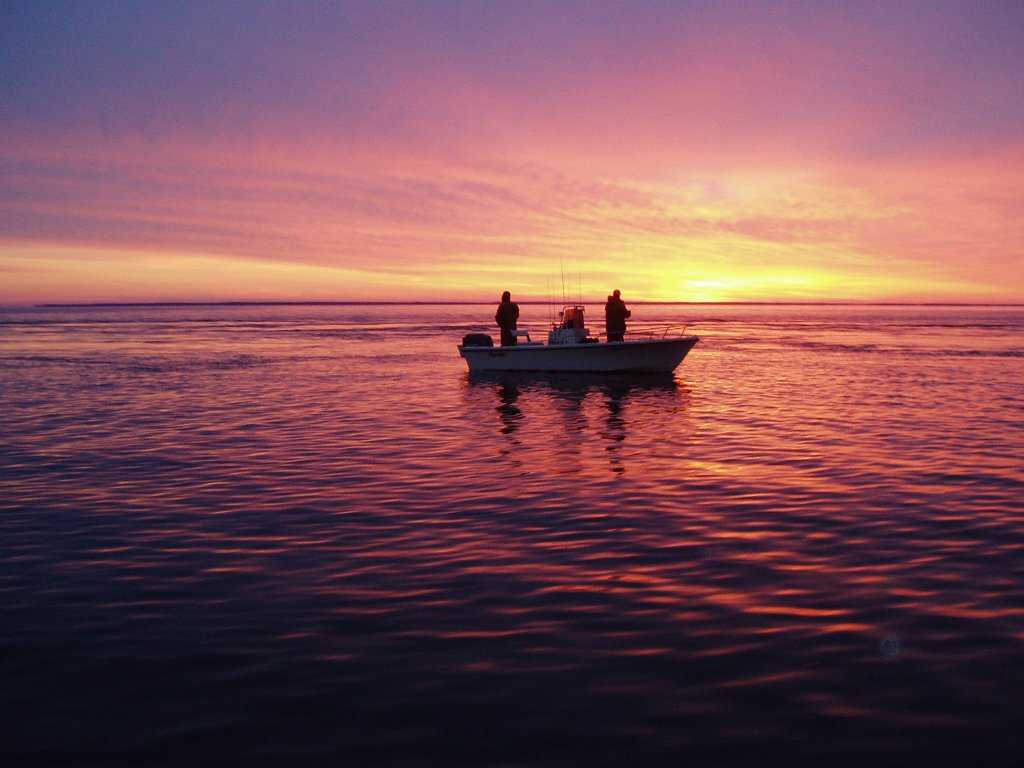
Wednesday, May 1, 2013

Even Germans find German Beer Boring


“It’s easy to get decent beer in Germany. We call it boredom on a high level," says one German beer drinker.

The problem standards is that sometimes they become standard.
Interesting article from the WaPo, and maybe yet another reason for American chest-pounding. We beat the French at wine and now we're going to beat the Germans at beer.* [U]nlike the United States, where in recent years many supermarkets have expanded their beer selection to include dozens of styles from the far reaches of the globe, most German stores have remained resolutely unvaried, almost always offering just a handful of manufacturers and only rarely throwing a non-German beer into the mix.

Now Rauschmann and others are proselytizing, traveling Germany to spread the gospel of unusual tastes. His company, Braufactum, is owned by German beer giant Radeberger, which Rauschmann said was trying to help spark a new beer culture in the country where it has been a major producer since 1872.
But at least Germans still have good beer girls...


 Oh wait, she's one of ours too!  Never mind.

Shockingly, Government Official Approves of Higher Taxes

I somehow had the belief that it was not the role of government to use government funds to lobby for public policy.  I guess I was wrong because the executive director of EPA Chesapeake Bay Program is absolutely lobbying for increased stormwater fees in this post in EPA Bay Program's Chesapeake Bay News:

Letter from Leadership: Stormwater fees a useful funding source
I bristle when I hear people refer to stormwater utility fees as a “rain tax.” In fact, these fees generate critical funding for green practices that mitigate the effects that roads, parking lots and rooftops have on our environment.
...
Stormwater utility fees provide an equitable means for generating revenue based on the amount of impervious surface. The revenue can then be used to make these improvements. Most utilities also provide exemptions from these fees for homeowners or businesses that adopt these green practices. By promoting these practices, the costs of property damage associated with flooding are reduced, which can reduce the overall tax burden as well. Mother Nature teaches best and, in the end, it costs less.
As I've said before, recently, I don't believe that these costs will be enforced equitably.  We've already seen how nonprofits are trying for blanket exemptions, and I strongly feel that in at least on jurisdiction, rural landowners will be hit in far greater proportion to their impact compared to urban landowners.

But I'm still gratified that it looks like they will at least go into effect in the more urban counties first, the people who voted for the people who will impose these costs on them.

Man Bites Dog

The U.S. Environmental Protection Agency is still exerting a permit power that chicken growers contend it doesn’t have, so a federal judge said he won’t dismiss a lawsuit by a West Virginia farmer the agency had accused of polluting the Chesapeake Bay watershed.

The EPA argued Lois Alt’s lawsuit was rendered moot in December, when it withdrew violation notices and proposed fines against her Eight is Enough farm in Hardy County. But Alt, the West Virginia Farm Bureau and the American Farm Bureau want their day in court, claiming the EPA’s actions in her case have implications for farmers throughout the region.
...
U.S. District Judge John Preston Bailey agreed last week, denying EPA’s motion to dismiss. The agency had not filed a response as of Tuesday.
..“EPA’s adherence to its underlying position … demonstrates that the agency’s challenged assertion of authority not only can be ‘reasonably expected to recur,’ but in fact is ongoing even now,” Bailey wrote.

“EPA plainly has not withdrawn, rescinded, repudiated or otherwise altered its legal position that — despite the statutory exemption for agricultural storm water — farmyard storm water must be regulated through a federally mandated permit,” he wrote.Although EPA did send a letter withdrawing Alt’s violations, Bailey noted, it did not explain the basis for its change of heart. Nor is Alt’s mere compliance with the agency’s demands enough to make the case moot.
EPA "leaned forward" with the suit against the Alts, hoping it could establish a new regulatory authority by fiat, and the inability of the Alts to fight effectively.  When the judge let the Farm Bureaus join the fight, and it looked like EPA would lose, and establish that as a precedent, they retreated, hoping to fight another day.  Now it looks like they might have to fight a suit on ground they don't think they can win on, and lose that fight for good.

The Cat Daddy Winner!


Now linked at Wombat-Socho's ginourmous three week make-up "Rule 5 Sunday: Cinco de Mayo Massive Catching-Up Edition" at The Other McCain.

Fracking: Better than Ever

EPA methane report further divides fracking camps
The Environmental Protection Agency has dramatically lowered its estimate of how much of a potent heat-trapping gas leaks during natural gas production, in a shift with major implications for a debate that has divided environmentalists: Does the recent boom in fracking help or hurt the fight against climate change?

Oil and gas drilling companies had pushed for the change, but there have been differing scientific estimates of the amount of methane that leaks from wells, pipelines and other facilities during production and delivery. Methane is the main component of natural gas.

The new EPA data is "kind of an earthquake" in the debate over drilling, said Michael Shellenberger, the president of the Breakthrough Institute, an environmental group based in Oakland, Calif. "This is great news for anybody concerned about the climate and strong proof that existing technologies can be deployed to reduce methane leaks."

The scope of the EPA's revision was vast. In a mid-April report on greenhouse emissions, the agency now says that tighter pollution controls instituted by the industry resulted in an average annual decrease of 41.6 million metric tons of methane emissions from 1990 through 2010, or more than 850 million metric tons overall. That's about a 20 percent reduction from previous estimates. The agency converts the methane emissions into their equivalent in carbon dioxide, following standard scientific practice.

The EPA revisions came even though natural gas production has grown by nearly 40 percent since 1990. The industry has boomed in recent years, thanks to a stunning expansion of drilling in previously untapped areas because of the use of hydraulic fracturing, or fracking, which injects sand, water and chemicals to break apart rock and free the gas inside.
One of the big objections that ultra-greens have attempted to wield against fracking is that the methane emissions are even a greater threat to environment via global warming than the CO2 emissions that result when the natural gas is burned.  I see no particular problem there, as I see very little evidence for increased methane in the atmosphere as fracking has increased (see right), and in fact, is seriously under-performing compared to IPCC fears projections.

With the globe cooling, and methane emissions from fracking likely to continue to decline, what will be the next road block to be raised. 

Tuesday, April 30, 2013

Hooray for New Math...

The more things change, the more they stay the same. First, a video showing the consequences of a new educational fad, the TERC Investigations math curriculum, which supposedly teaches the children why they do their math, not simply how to do the math:


Can you blame the child for being frustrated? That's just ridiculous. I do agree with the idea of teaching kids why rather than how (it's worked for me), but it's really quite easy to explain why "stacked" math works. A teacher who can't explain it to the average third grader shouldn't be teaching.

Next a video from the old "New Math" era (1960s) back when I was in elementary and junior high school. For those who don't know, Tom Lehrer was a professor of math at Hahvahd. While a true liberal of the era (which is to say, only wrong half the time), this skewering of the educational fad of the era remains priceless.


"The New Math" actually made a lot more sense than the TERC system, which basically a reversion to Roman numerals, as pointed out in a comment on the video. Change the cube to M, the square to C, etc. Where's the zero, that makes arabic numerals and standard math work? It's missing.

Found at Wizbang.

The Agenda


I think I need a new category for Uglies.

Should the Susky River be Declared Impaired?

It's not that clear to me; it hasn't worked out all the well for the Anacostia, Patapsco and Elizabeth, the three most highly impaired rivers entering Chesapeake Bay.

Impairment status will enable fix for ailing Susquehanna
...Doing so would trigger actions mandated by the federal Clean Water Act to identify and fix problems with the river's water quality over a period of many years. But the state Department of Environmental Protection isn't having it.

The smallmouth bass is an introduced species that's especially sensitive to changes in water conditions, and one that contributes to a $600 million fishing and tourism industry that employs thousands in the region.

They're kind of messed up, it seems. Some display both male and female sex characteristics. Some show lesions and other damage. That's when you can catch one; they're also reportedly more scarce overall.

After about two years of inaction, bay foundation and fish commission officials finally went over DEP's head, formally asking the federal Environmental Protection Agency to add the Susquehanna from Sunbury to the Maryland state line to its list of impaired waterways.

This would give officials a set amount of time - from eight to 13 years - to identify and establish limits on the pollutants or other conditions that created the impartment.

We understand the reluctance to do so. It would disrupt a major recreational industry for many years. But the question must be asked: Is it better to suppress an industry temporarily so that it can return on a sustainable basis, or just let whatever's wrong persist until the industry collapses forever?
I don't see why it would necessarily affect the industry at all; fishing could go on while the research is carried out to find out what factors are causing the problems; catch and release fishing would not hurt the fishery as much as catch and take.

However, it's optimistic to imagine that the problem could be identified and cured in a finite time.  It's likely a mixture of several different causes.  We've seen similar problems elsewhere in the Bay.  We have similar intersex problems with Large-mouth Bass in the Potomac, and lesions in catfish and Striped Bass in a wide variety of places.  These problems have been remarkably difficult to diagnose and correct.

I think a better policy would be to start at the top, and cure the major pollution problems with the river, nutrients from sewer and agriculture first, and watch for improvement before moving on to the second line, toxic substances from sewage and industries.

But just out of curiosity, what will happen when it turns out to be the hormones in birth control pills which are causing the intersex problem?  Will the EPA ban birth control and Plan B?

An American Journolist is Paris


Swiped from the Jawa Report.

Global Warming Make Good Women Go Bad

According to Democrats in the House of Representatives:
A typical global warming victim

Dem resolution warns climate change could push women to ‘transactional sex’
Several House Democrats are calling on Congress to recognize that climate change is hurting women more than men, and could even drive poor women to "transactional sex" for survival.

The resolution, from Rep. Barbara Lee (D-Calif.) and a dozen other Democrats, says the results of climate change include drought and reduced agricultural output. It says these changes can be particularly harmful for women.
It's so tough, they're even downsizing the tractors
What really hurts women is being poor; an energy rich economy is a rich economy, and that wealth and energy would go into making women's lives better.  The policies that the climate Nazi's propose will keep both men and women poor and struggling.
"[F]ood insecure women with limited socioeconomic resources may be vulnerable to situations such as sex work, transactional sex, and early marriage that put them at risk for HIV, STIs, unplanned pregnancy, and poor reproductive health," it says.

Climate change could also add "workload and stresses" on female farmers, which the resolution says produce 60 to 80 percent of the food in developing countries.
Some are even too poor for buy coveralls
I see those numbers bandied about, but I'd like to see them justified. But yes, it's possible that in many places, the men go to work to earn money to buy consumer goods, while women tend the garden at home, but I'll bet there's some creative accounting going on here.

The chances for regional conflict also increase with climate change, the resolution says, because changing weather patterns could lead to migration and refugee crises. It said these sorts of potential conflicts over land will have a disproportionate impact on "the most vulnerable populations including women."

More broadly, the resolution says climate change will hurt "marginalized" women, such as refugees, sexual minorities, adolescent girls, and women and girls with HIV. It also cites Hurricane Katrina as evidence of how climate change can affect women, noting that the storm displaced "over 83 percent of low-income, single mothers" in the region.
Global warming even makes women stupid, too
Of course, the notion that Hurricane Katrina was the result of any climate change is total nonsense; hurricanes of equal and greater strength have been striking the region for millennia, and there is not a shred of evidence that hurricane and tropical storm intensity have increased in recent years in response to warmer weather.

In a statement to The Hill, Lee said women are critically underrepresented in the development of climate change policy.

"My resolution will affirm the commitment to include and empower women in economic development planning and international climate change policies and practices," she said. "This will help communities adapt to climate impacts, and embark on a path towards clean and sustainable development."

The resolution calls on Congress to recognize the effects on women, and to use "gender-specific frameworks in developing policies to address climate change."
It's so hot out...
In other words, cast into stone women's role as victims and create an enormous bureaucracy to feed and perpetuate that state.  Julia on world wide scale, paid for with US tax dollars.

It says Congress recognizes the need for "balanced participation of men and women" in climate change adaption efforts, and that Congress will support women who are vulnerable to climate change.

Finally, it encourages the president to "integrate a gender approach in all policies and programs" related to climate change, and to ensure these policies "support women globally to prepare for, build resilience for, and adapt to climate change."
 Global warming also apparently makes Congresspeople stupid. Not that they need much help.

Someone needs to update "The Warm List".

Found via Watts Up With That. Also, now linked at Wombat-Socho's ginourmous three week make-up "Rule 5 Sunday: Cinco de Mayo Massive Catching-Up Edition" at The Other McCain.

Midnite Music - Cold Rain and Snow

Since we've have a cold rain all day and it's expected to continue:


Monday, April 29, 2013

A Sad Note From a Friend

I received this in an e-mail newsletter from one of my fishing friends, "Walleye" Pete Dahlberg, a neighbor and friend, who happens to be a fishing guide on the Bay
"The Sun May be Setting On Our Striper Fishery"

Folks, anything I write here is strictly my opinion and facts of what I have witnessed over the last several years regarding our Striped Bass Fishery in Maryland and VA

I'm very sad to even think this stuff!!!!

Quick history of my time in this Striper fishery: Stationed at Andrews AFB, Aug 1995, fished for the first time on Chesapeake Bay in September 1995......chummed with some military guys at the Gas Docks....tons of fish in the chum, I pulled out a walleye bucktail and caught Stripers and Blues in the slick. I was hooked on light tackle for Stripers and Blues. I bought a Key West 19' Duel Console boat to fish the bay. 1996 I was all over the bay looking for opportunities. Didn't have to look far or hard. Breaking fish easy to find, Blues and Stripers all over the place. Fished the gas docks and power plant often and started looking in other areas like the eastern shore islands. For a few years I was fising with friends and having a ball catching on Chesapeake Bay.
Walleye Pete and Nick at "Location X" in 2003
Around Jun 1999 I fell into a position to obtain a MD Guide License. I had some extra cash so attempted to give it a shot. Obtained a MD Guide License and in April 2000 started guiding at the Susquehanna Flats and then down the bay after that season ended. I loved guiding and was hooked. Although still full-time military my passion was on the water. I met many great fisherman and learned lots from all of them.

I fished Dec. 2000 at the CBBT (Chesapeake Bay Bridge and Tunnel). I didn't know much about the "lay of the land" at the CBBT but managed to catch many, many fish on light tackle. Impressive numbers of fish over 34" on light tackle was had by all in the early 2000's. I maintain a detailed journal and had huge numbers of nice fish at the Susqy Flats and CBBT through 2004. I noticed numbers of large fish slipping a bit in 2005 and then things started
Walleye Pete with a "Flats" striper

The Susquehanna Flats is at the northern end of the spawning area and migratory fish traveling up the bay have many rivers to run up before arriving at the flats. With a large number of migratory fish in the system my thought is plenty still make it all the way to the flats. As the numbers decrease less mass of migratory fish make it all the way to the flats. For the last several years very few numbers of truely large fish have been caught at the flats. Again, all this my opinion based on what I've witnessed and what other guides/charters have witnessed and related to me.

Along with the depletion of migratory fish it seems like what naturally will follow is less off-spring of migratory fish. The "bay" fish in the summer are the Stripers which don't migrate yet.....the younger fish. For several years now....(about 5 years), I've seen a big change in the numbers of "bay"fish in the summer months. When times were good with numbers of fish, Stripers would be caught from the Point Lookout region to north of the Bay Bridge all summer long. I have witnessed this range shrink hugely in the last couple of years and especially last year. The shrinkage in range can only equal less fish in a big way.
Pete with a "Middle Grounds" Trout

I'm no scientist or biologist or anything "ist". What I am is a guy who has spent 1900 days guiding fisherman on Chesapeake Bay from the Susquehanna Flats to the Chesapeake Bay Bridge and Tunnel over the last 10 years. I've been fortunate enough to have many great trips and actually make a living doing what I love.

I'm not blaming any one user group for the decline I've seen. All user groups are guilty of catching and the law is guilty of not changing to save our resource. History shows we (our state and other states) let the fishery get to such a bad point we had to have a moratorium. I wasn't here for that and don't want to be here for the second one. I truly hope the policy makers can see the writing on the wall and adjust quotas accordingly to save what we have and build on what we've got.

I know politics are huge in Maryland/VA ect........I know some folks depend completely on harvesting Striped Bass for a living.......when you have folks on both sides of the fence tugging back and forth over decisions it isn't easy! I hope and pray we can make decisions based on facts and the obvious, Striper fisheries sliding horribly downhill all up and down the coast. The writing is all over the wall.........we have to make tough decisions soon or the sun will set......it'll be over!
Incidentally, the 19 ft Key West he refers to in the third paragraph is my current boat; I bought it from Pete when he first set out to become a guide back in 1999.

Sadly, I have to agree with Pete on the state of the Chesapeake Bay striper fishery.  It is in decline, and  if something isn't done soon only drastic action, likely another moratorium, will be sufficient to bring it back.


New Hormone Offers Possible Diabetes Cure

Newly Discovered Hormone Could Become Wonder Drug Against Diabetes
A major research breakthrough was achieved in the field of diabetes by scientists at the Harvard Stem Cell Institute (HSCI) who discovered a hormone that could soon enable a dramatically more effective treatment of type 2 diabetes.

A hormone called betatrophin was surprisingly found to cause mice producing insulin-secreting pancreatic beta cells at up to 30 times the normal rate. The new beta cells only produce insulin when called for by the body, offering the potential for the natural regulation of insulin and a great reduction in the complications associated with diabetes.
...

Our idea here is relatively simple," Melton said. "We would provide this hormone, the type 2 diabetic will make more of their own insulin-producing cells, and this will slow down, if not stop, the progression of their diabetes. I've never seen any treatment that causes such an enormous leap in beta cell replication."
That's great, type 2 diabetes is a chronic problem, especially among the older population, and is very lifestyle limiting, but what about type 1, where the body's immune response has wiped out the Islets of Langerhans cells that produce insulin, so called "childhood diabetes" because it often strike the young?
The scientist hopes that the hormone could also play a role in treating juvenile diabetes type 1, the disease that afflicted two of his children and that he originally focused on for that reason -- for 15 years now.
It doesn't say why it's not as promising as with type 2, but my guess is that some means of stopping the autoimmune destruction of the pancreas cells would be necessary to protect the new cells grown by the hormone.  Maybe a combination therapy with the betatrophin and immune suppressants could used to treat type 1?

The Brawl in Nepal

Police near Mount Everest are investigating reports of a fight on the upper reaches of the world's highest mountain between two foreign climbers and their Nepalese guides, officials said Sunday.

"We were told our clients and the guides fought on their way to camp three. We don't have all the details yet, but our clients have come down off the peak," said Anish Gupta of Cho-Oyu Trekking, the Kathmandu-based company that organised the expedition.
Everest's northeast ridge, the place George Mallory and Andrew Irvine were last seen alive.

You'd think sheer lack of oxygen would be enough to keep people from fighting much.  I remember climbing walking to the top of Mt Whitney, a mere 14,500 ft high compared to Mt. Everest's 29,000, and the sensation of breathless was, well, breathless.

I also think it's probably a bad idea to get into a fight with the guys who carry your gear, and who you you are counting on to carry you out if things go wrong, which they still do with shocking frequency.

The Pool Prank

Slightly NSFW


It's been years since I went scuba diving. I think I might need a checkout dive. Also, now linked at Wombat-Socho's ginourmous three week make-up "Rule 5 Sunday: Cinco de Mayo Massive Catching-Up Edition" at The Other McCain.

Sunday, April 28, 2013

An Autism Vaccine Based on a Stomach Bug?

Researchers have created what they say is a first-ever vaccine for gut bacteria common in autistic children, which may also help control some autism symptoms. They developed a carbohydrate-based vaccine against the gut bug, Clostridium bolteae.

C. bolteae is known to play a role in gastrointestinal disorders, and it often shows up in higher numbers in the GI tracts of autistic children than in those of healthy kids. More than 90% of children with autism spectrum disorders suffer from chronic, severe gastrointestinal symptoms. Of those, about 75% suffer from diarrhea, according to current literature.

“Little is known about the factors that predispose autistic children to C. bolteae,” says University of Guelph chemistry professor Mario Monteiro, Ph.D. Although most infections are handled by some antibiotics, he says, a vaccine would improve current treatment.

“This is the first vaccine designed to control constipation and diarrhea caused by C. bolteae and perhaps control autism-related symptoms associated with this microbe,” he says.
This is wonderful, and remarkable if true.  It's the first I've heard of a relationship between this GI bug.  The Clostridium bacteria are powerful bugs that produce an array of weird and deadly toxins.  C. botulinum is, of course, a deadly food poisoning bacterium, whose refined toxin, botulinum toxin, is among the most toxic compounds known, is also used as Botox.  C. tetani causes tetanus, in which the tetanus toxin from wound infections causes awful, and ultimately fatal, muscle spasms. C. perfringens causes the disease gas gangrene, the scourge of battlefield historically.  C. difficile causes some very difficult to treat intestinal infections.

Nurotoxin production is a common theme in Clostridium infections, although many species are considered nonpathogenic.  Could a neurotoxin produced by C. bolteae be a significant cause of autism symptoms, and could treatment of the C. bolteae result in reduction or elimination of the autistic symptoms, especially if caught early?  Could the vaccine prevent autism?

We used to think that ulcers were caused by hot and spicy food (despite the fact that people who ate a hot and spicy diet were no more predisposed to ulcers than anyone else).  A brave scientist, Barry Marshall,  proposed that they were caused by an infection of the stomach by Helicobacter pylori, and induced a case in himself by infecting himself with the bacteria, and then curing himself with antibiotics.  It revolutionized the treatment of ulcers, and won Marshall and his collaborator, Robin Warren, the Nobel Prize in medicine.

It's No Coelacanth, But..

PYRAMID LAKE, Nev. — For most fishermen a 20-pound trout is a trophy, but for Paiute tribe members and fish biologists here the one Matt Ceccarelli caught was a victory.

That Lahontan cutthroat trout he caught last year, a remnant of a strain that is possibly the largest native trout in North America, is the first confirmed catch of a fish that was once believed to have gone extinct. The fish has been the focus of an intense and improbable federal and tribal effort to restore it to its home waters.

“I was in awe,” said Mr. Ceccarelli, 32, an engineer from Sparks, Nev., of the speckled trout with hues of olive and rose...
As Insty says, not too bad for an extinct fish...
Photo Credit: Matt Ceccarelli

In the late 19th and early 20th centuries, fishermen netted scores of Lahontan cutthroats to feed miners and loggers gnawing at the Sierra Nevada Mountains. But the Truckee River, where the fish spawned, was dammed, and its level dropped as water was taken for irrigation. It was also polluted with chemicals and sawdust. And Lake Tahoe was stocked with a nonnative char called lake trout, which gobble baby cutthroat. By the mid-1940s, all the native trout in Pyramid Lake and Lake Tahoe were dead and the strain was declared extinct.
...

In the late 1970s, a fish biologist identified what he thought were surviving specimens of the vanished Pyramid Lake strain of Lahontan cutthroat in a small creek near a 10,000-foot mountain on the border of Nevada and Utah called Pilot Peak. A Utah man used buckets to stock the rugged stream with trout in the early 1900s, but made no record, federal biologists say. Geneticists recently compared cutthroats from the Pilot Peak stream with mounts of giant Pyramid Lake trout and discovered an exact DNA match.
Curiously, that would certainly be an illegal act under today's regulations, an eco-crime, and it resulted in saving a species for posterity.

“They are the originals,” said Corene Jones, 39, the broodstock coordinator for the Lahontan National Fish Hatchery in Gardnerville, Nev.

In 1995, United States Fish and Wildlife Service biologists harvested cutthroat eggs from Pilot Peak and brought them to the Gardnerville hatchery, just a few years before a devastating wildfire scorched the mountain and killed off the creek. In 2006 federal officials, in cooperation with the tribe, began stocking Pyramid Lake with what many now call Pilot Peak cutthroats. They waited to see how the fish might readapt to its ancestral home.
The Paiute tribe that owns Pyramid Lake has an exemption from the Endangered Species Act, which permits them to allow restricted fishing and keeping of the Lahontan Cutthroat.
Along with the help received from the Paiute Tribe, a special exception under the Endangered Species Act (ESA) allows the public to fish for these threatened trout. Fishing for threatened species is allowed under the 4(d) rule of the ESA; this section allows the U.S. Fish and Wildlife Service (Service) to authorize activities that would otherwise be prohibited under the Endangered Species Act. The 4(d) rule serves to relax the normal ESA restrictions and reduce conflicts between people and the protections provided to the threatened species.

Pyramid Lake has a slot limit on the size of fish that an angler can keep. Any Lahontan cutthroat caught that is between 17”-20” and those over 24” can be kept, but all other Lahontan cutthroats must be released back into the lake. In order to protect the integrity of fishable populations, special fishing restrictions are in place in some waters but these restrictions have not stopped the trout from becoming an important fish among anglers.

The Sunday Beach Report

It was yet another gorgeous spring morning at the beach, about 60 F, and only slightly breezy from the South, though it has come up since.  Georgia, Skye and I met Joel more or less on schedule.
There was an Eagle and an Osprey having some kind of dispute out over the Bay.  Since eagles routinely steal the catch from Osprey, they may well have been what was happening.
Skye seemed fully recovered from overdoing it yesterday, even running at times, and taking a little wade.
An American Goldfinch (Spinus tristis) in the vines on the cliffs.

Ukraine Has Talent

The Ukrainian Cat Lady


and the Solid Gold Belly Dancer


Linked at Pirate's Cove in the weekly "Sorta Blogless Sunday and Pinup."

Saturday, April 27, 2013

Two Days Worth of Beach Reports

I have two days worth of beach walks to get over here, not that all of them need reporting.  Friday was still breezy and cool when we arrived. 
Joel and Red were already in the midst of their rounds when we caught them.
Not a great day for fossils, but I did find a piece of a crocodile tooth.  Not the best specimen ever, but still rare enough to comment on.
Today was much nicer, with temps near 60, no wind to speak of, and still the clear blue sky.  Skye and I left Georgia at home to oversee the installation of a new roof on la Casa,
I confess, we walked a little far for Skye today, and at one point she just sat down and refused to budge, so we had to sit a while to let her get her strength back.  I guess that's the end of her Iditarod ambitions.  Red did lab things, like go in the water.