Showing posts with label Cove Point. Show all posts

Friday, December 2, 2022

Maryland, My Maryland

 Lincoln Brown at PJ Media, Maryland's Biggest County Moves to Ban Natural Gas

In the Age of the Virtue Signal, it is only natural that other left-leaning entities would want to mimic the practices of the most destructively progressive government since the creation of the world. Following the Golden State’s example, Montgomery County, Md., is planning to pull the plug, or more appropriately, cap the pipe on natural gas in the coming years.

According to a report in Energy Wire, this past Tuesday, the Montgomery County Council voted 9-0 to ban the use of natural gas as a source of heat in new construction. The decision still needed the signature of the county executive, who has already voiced support for the move. The new law will take effect at the end of 2026.

The alternative? Electricity, of course. Other “non-combustible” forms of energy will be permitted, but electricity will probably be preferred, despite the warnings to the council from critics that it will be expensive. Electricity will be used for heating rooms, water heaters, and cooking. Restaurants, life science labs, manufacturing facilities, and crematories will be exempt. I’m not sure how much electricity one needs to cremate remains, but that is probably something best not explored. Residences with more than four stories, public housing, and schools will enjoy an extension until 2027.

Hans Reimer, who is the chair of the all-Democrat council, called the move a giant step forward and predicted that the rest of the state would follow in the county’s footsteps. He stated, “Montgomery County will now be a national leader in the push for electrification as a solution for climate change.”

Natural gas can be easily and safely extracted. It is clean-burning and environmentally friendly. Moreover, it’s cost-effective for the average consumer. But Montgomery County can now crow about how progressive it is. And its citizens can pay the price.

Meanwhile, a huge natural gas pipeline runs down our county to natural gas export facility located a few miles down the Bay, right past the nuclear power plant that supplies much of Maryland energy supply. If I could wave a magic wand I would forbid the exports of energy from our county to Montgomery or any county with a policy of banning certain forms of power.

Saturday, July 10, 2021

Beach Report 7/10/21

So I got a new camera (Nikon B500) for my birthday a couple of days ago. The old one Lumix was getting squirrely trying to connect to a computer to download and charge, after a couple of time of hitting the floor. This one has a big zoom too. It seems to have a few advantages (you would hope so after a few years), but generally has the same properties as the old one.
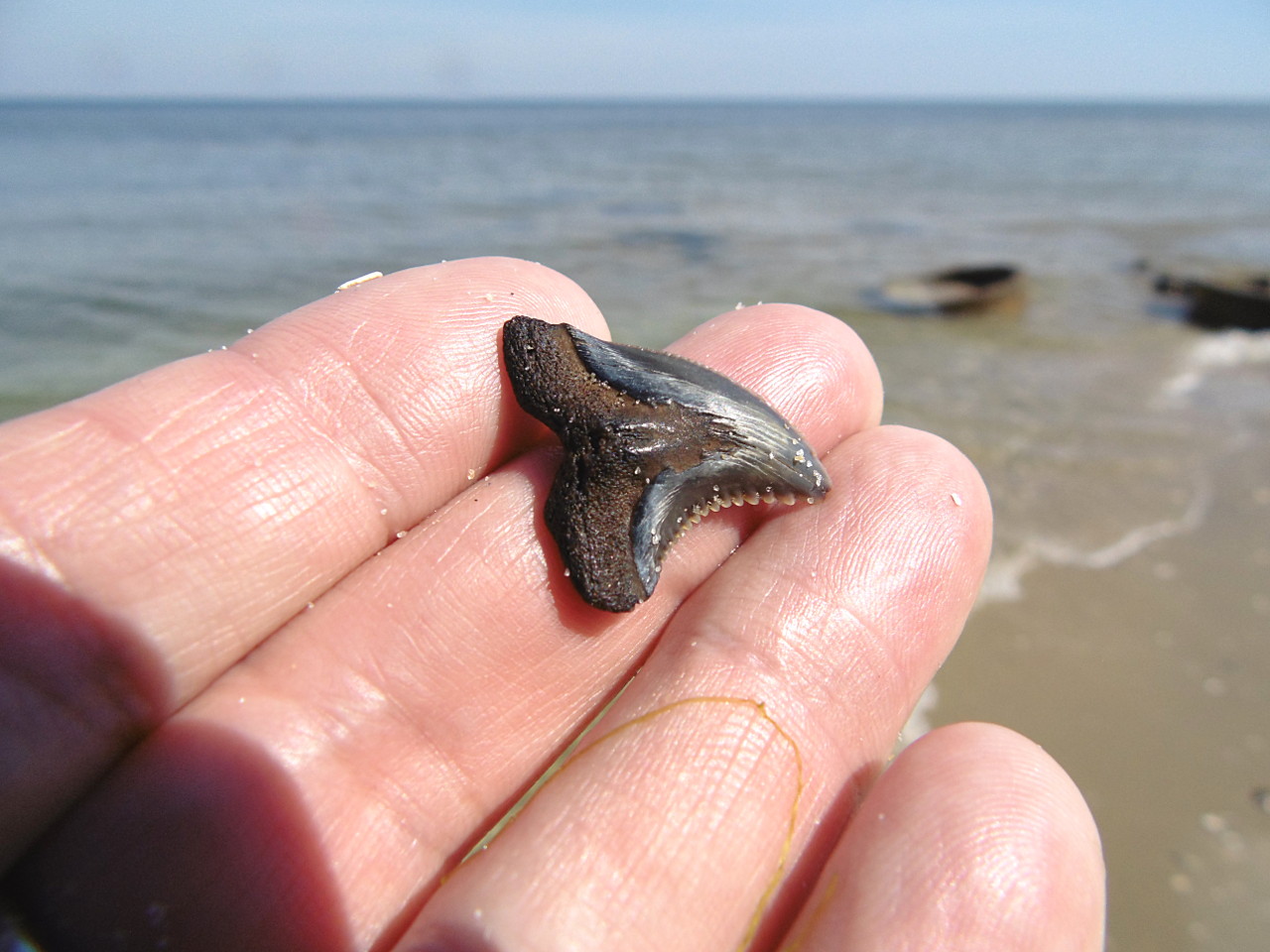
It's cool by July standards, only 82 or so, but pretty humid. A lot of traffic on the beach today. A lot of fossils too, 49 sharks teeth, and some other stuff, but nothing of great note.
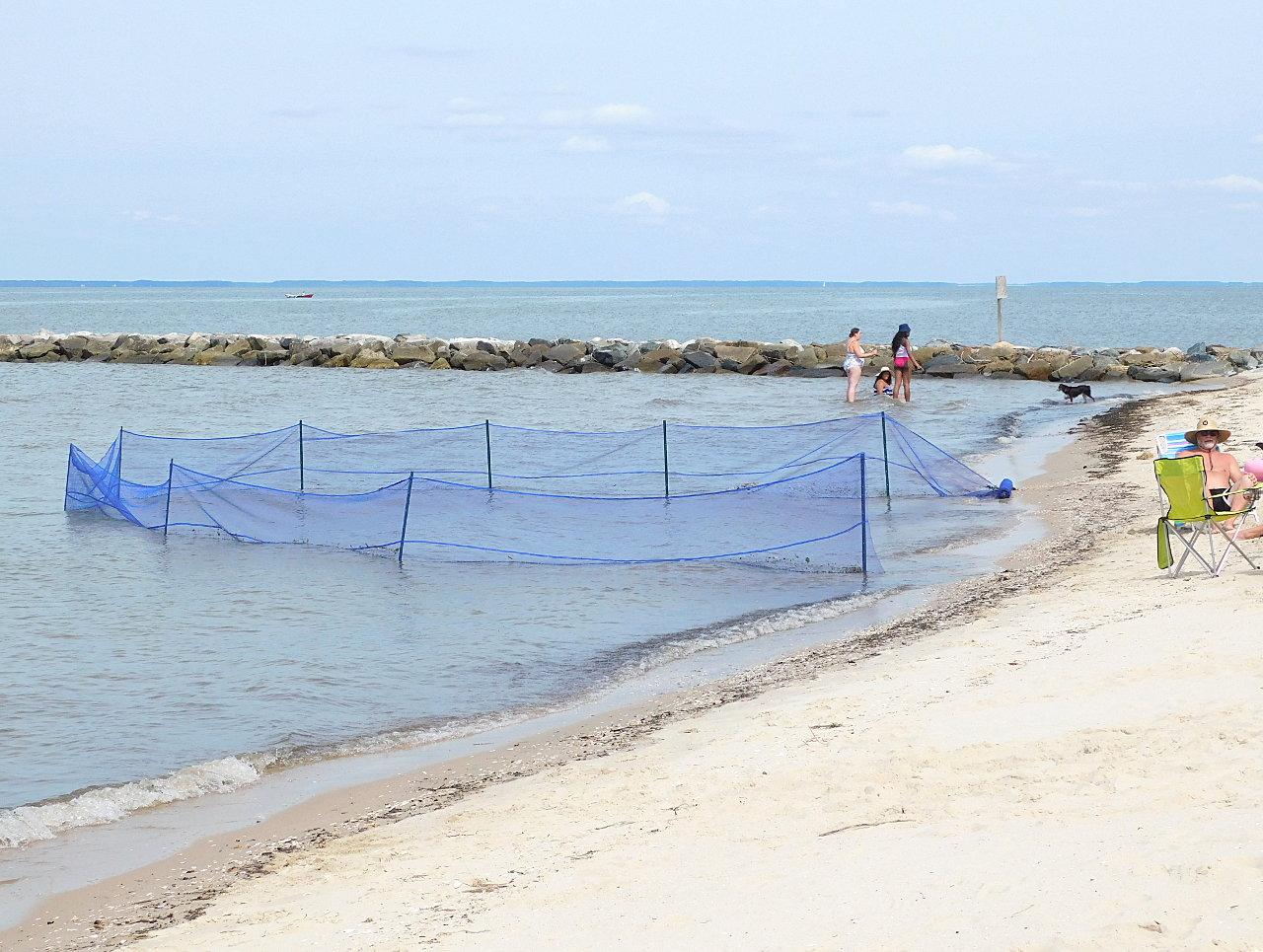
One enterprising family has a small jellyfish exclosure. I wonder how well it works?

A few more pics from yesterday (with the new camera) after the jump.

Tuesday, May 18, 2021

Beach Report 5/18/21

Some Mock or False Strawberries on our way down to the beach:

Potentilla indica known commonly as mock strawberry, Indian-strawberry, or false strawberry, is a flowering plant in the family Rosaceae. It has foliage and an aggregate accessory fruit similar to that of a true strawberry. It has yellow flowers, unlike the white or slightly pink flowers of true strawberries. It is native to eastern and southern Asia, but has been introduced to many other areas as a medicinal and an ornamental plant, subsequently naturalizing in many regions worldwide
Very bland, but:
"According to the FDA, "Mock, or Indian strawberries, while possibly less delicious than wild strawberries, do not produce toxicity when ingested".
A gorgeous day with blue skies, a slight, but rising SE wind, tide near the mid point and falling, and temperatures in the mid 60s. 

Do you see it? (click to zoom).
How about now?
A load of natural gas being taken on at the LNG plant at Cove Point.

Sunday, April 11, 2021

Walk and Beach Report 4/11/21

Spring is truly sprung here. After a light rain last night, today is warm and bright; 75 when Skye and I started down the back trail to the beach, past this Eastern Redbud, a native plant, but one which Georgia planted in the back. Redbuds are one of the few host plants for Henry's Elfins, which can be found in our Hemlock tree in the yard, chasing off the Spring Azures. The deciduous trees in our forests are starting to blush green.

Speaking of butterflies, on the way down to the beach I spotted this Eastern-Tailed Blue, the smallest butterfly we have around here, for the first time this year. They're often seen near the ground on clover and other small flowers. I've seen 8 species of butterflies this year so far.
Down the the harbor, we spotted this Northern Water Snake, who must be fresh out of where ever they go to wait out the cold months. Widely confused with Water Moccasins, (which do not occur here), they are non-toxic, but pretty aggressive if pestered. So don't, unless you have to.
I'm sure it was after a meal of Mummichogs, the common minnow of the shallows, also fresh out of where ever they go to wait out the winter.
As I said, a gorgeous day, warm, just enough clouds to be pretty (although they threaten T-storms this afternoon).
We found 18 shark's teeth, a drum's tooth and a Tilly bone today, nothing worthy of bragging on the internet about. In the distance, an LNG tanker with four spherical storage tanks up at the Dominion Gas Docks. Frack on!

Thursday, March 11, 2021

Beach Report 3/11/21

Natural gas getting ready to be shipped away.
I grossly underestimated the temperature today. The Cove Point site showed 49 F as I got ready, but when we got to the beach, it was at least mid 60s, maybe 70s, and my long sleeve shirt made me sweat. I could easily have been in shorts and T-shirt.
I rounded the corner of one of the groins to find this washing about in the surf. I like it when it's this easy.
A little worn, but pretty Snaggletooth (Hemipristis serra) upper tooth . We managed 31 shark's teeth, the obligatory crab claw, a ray chevron.

Tuesday, October 20, 2020

The 10/20/20 Beach Report

We drove down to the beach today, since Skye seemed to have some residual soreness after yesterday's Great Dane attack. The first thing I saw looking out was a huge dark thing beyond the Gas Docks. Using the telephoto to it's greatest power, I'm pretty sure it's another LNG tanker, getting ready to dock (there was already one at the dock).
After a week of not being seen, Whitey was back on one of his favorite groins. I had almost given up hope and assumed he had followed the Ospreys back to Florida. I did see three adult eagles in the sky today. Two of them were not happy about the third.
And speaking of returning to the same fishing grounds . . . 
A gorgeous fall day, temperatures around 70, not much breeze, although it was coming up from the south as we were getting ready to go home. We found 24 shark's teeth, 4 crab claws and 2 drum's teeth, a pretty decent haul.

Sunday, February 16, 2020

More Bad News for the Atlantic Pipeline

From Bacon's Rebellion, a Virginia centric blog: Huge Dominion Pipeline Project Loses Partner
The delayed Atlantic Coast Pipeline is undergoing a major change due to rising costs and legal delays – The Southern Company, based in Atlanta, is backing out of the project as an equity partner.

According to an announcement late Tuesday, Dominion Energy will acquire The Southern Company’s 5% stake in the natural gas project whose cost has risen from $5.1 billion to $8 billion thanks largely to legal challenges by environmentalists and regulatory agencies. The new ownership structure will be 53% Dominion and 47% Duke Energy, based in Charlotte.

The Southern Company will be still related to the project as an “anchor shipper,” the announcement said.

Another surprise in the announcement is that the pipeline project will buy a small Liquefied Natural Gas plant in Jacksonville, Fla. Dominion will assume ownership of it from Southern. That raises questions because for years Dominion has vigorously denied that the 600-mile-long pipeline has any link to plans to export LNG. Dominion does own an LNG export facility at Lugsby, Md. on the Chesapeake Bay that exports LNG mostly to Asian utilities.
Well, that's Lusby, MD, not Lugsby. We refer to the inhabitants as Lusbians. I never thought to inquire as to where the gas that Dominion exports goes, it's interesting that it's being dragged all the way around the globe to Asia. I rather thought it might be going some place in Europe.
Dominion Chief Tom Farrell told analysts at a conference call yesterday that Dominion has explored using LNG to power merchant ships. More ships are being equipped with LNG because it is cleaner than using traditional bunker oil. The International Maritime Organization of the United Nations has instituted new rules calling for emitting less sulfur and other polluting chemicals beginning in January.
I wouldn't think that liquid natural gas would be a particularly good ships fuel. It's substantially less energy dense than diesel at 23ish Mj/L compared to 27 ish Mj/L. Also, LNG has to be kept cold, which means substantially more structure for the fuel tanks, and a switch over would likely take a substantial modification or replacement of  existing engines. But there is a lot of it available at good prices, thanks to fracking.
According to S&P Global, The Southern Company bailed on the pipeline because of its concerns of delays and soaring costs.
The enviroweenies are winning using lawfare.


Monday, July 15, 2019

The Dog Days of Summer at the Beach

A relatively cool day, only the lower 80s or so (it hit 94 here yesterday). It was kind of late when we got down to the beach. Skye headed right in to cool off.
Fishing off  the end of the jetty.


A big LNG tanker getting filled at the Dominion Gas Dock.
The dog days for sure.

Thursday, February 28, 2019

Reason #6993 That Trump Was Elected

From CTM at Watts Up With That: Trump’s ‘Energy Dominance’ Agenda Is Breaking Russia’s Grip On Poland
From The Daily Caller

Natural gas from the U.S. is flooding Polish markets as the European country seeks to loosen Russia’s grip on its energy security, The New York Times reports.

Russia supplies roughly half of Poland’s fuel, but long-term contracts with American companies signed by Poland’s state-owned gas giant PGNiG could displace all of Russia’s supply. U.S.-based companies Cheniere Energy, Venture Global LNG and Sempra Energy have all signed agreements with Poland in the last six months.

“The strategy of the company is just to forget about Eastern suppliers and especially about Gazprom,” PGNiG President Piotr Wozniak told The NYT. (RELATED: US Will Ship Gas To Poland For Next 24 Years)

Gazprom is Russia’s state-controlled gas company. Gazprom and Europe have a decades-long history of disputes over fuel supply and prices that have caused fuel shortages in many countries across the continent.

A major pipeline connecting Russia with much of Europe passes through Ukraine. Feuds between Gazprom and Ukraine have caused gas shortages across Europe. The disputesusually involve Gazprom negotiating with Ukraine to raise prices.

As the two countries work towards a deal, potentially millions across Europe, including Poland, may be left struggling to stay warm in the dead of winter. Such an event happened in January 2009, after which Poland began trying to diversify its fuel supply away from Russia.
I don't know if natural gas from the Dominion Cove Point gas export facility is getting to Poland, but if it's going anywhere across the pond, it's helping to weaken Putin's grip on Europe's testicles. The facility is constantly busy, with 2-3 ships per week, loading gas and taking it somewhere.

Related: Trump Admin Ecstatic with Late-Night Deal That Broke Deadlock Over Natural Gas Exports
The Federal Energy Regulatory Commission (FERC) broke a two-year partisan deadlock Thursday night to approve a liquefied natural gas (LNG) export terminal in Louisiana.

Top Department of Energy (DOE) officials said this was a major breakthrough that will alleviate a growing problem for U.S. energy producers — a lack of export infrastructure.

“We have been promoting US energy around the world and today’s decision by the FERC is a very important one,” DOE Deputy Secretary Dan Brouillette told The Daily Caller News Foundation in an interview.

The Calcasieu Pass LNG export terminal is the first such project to get FERC approval in two years. Republican FERC commissioners Neil Chatterjee, the chairman and Bernard McNamee worked with Democrat Cheryl LaFleur to hash out an agreement to get her support.

Chatterjee and McNamee needed LaFleur’s vote to approve Calcasieu Pass, which they secured after working out a new approach to account for greenhouse gas emissions from the export facility.

“This is a tremendous breakthrough,” DOE Under Secretary of Energy Mark Menezes told TheDCNF. “We hope it will serve as an analytical template going forward.”

Once complete, Calcasieu Pass terminal will export up 12 million metric tons of LNG a year. Brouillette said the project already has buyers, including in Europe, waiting for American natural gas.
Linked at Pirate's Cove in the weekly Sorta Blogless Sunday Pinup and links.

Wednesday, January 16, 2019

Farmers Question Location of New Bay Bridge

Some might not think of it this way, but farmland is critical infrastructure akin to roads and bridges.

It is the source of the food that sustains us. In addition, farmland provides open space, areas for recreation and habitat for wildlife. It also controls floods, suppresses fires, filters water and represents a vast carbon sink to mitigate and even help reverse climate change. Think Maryland’s Eastern Shore.

As Americans — blessed with a remarkably productive agricultural landscape — we need to take a holistic vision of the future: one that acknowledges farmland as irreplaceable infrastructure we cannot afford to lose, supports environmentally sound farming practices and views farmers as the stewards of that land, worthy of our fervent support — because, at heart, what farmers do is for all of us.

That’s why we are asking the Maryland Department of Transportation to consider farmland among the impacts in the Chesapeake Bay Crossing Study, which is exploring the feasibility of a third span across the Chesapeake Bay.

Farmland is essential infrastructure for Maryland’s economy and efforts to combat climate change.

Farmland contributes a trillion dollars a year to the U.S. economy — more than $8.25 billion from Maryland’s agricultural land, and $3 billion of value add. Farming is a critical economic engine for The Shore. Queen Anne’s County alone boasts the most farmland acres and the largest farming economy in Maryland. Kent is the county with the largest percentage of land — 76 percent — devoted to agriculture. Talbot and Caroline counties are similarly reliant on farming and farmland.

Importantly, well-managed farmland is a one-of-a-kind-tool in the fight against climate change and can help Maryland meet its 2020 goal to reduce greenhouse gases by 34.66 million tons. According to the 2017 annual report of the Maryland Commission on Climate Change, “Land conservation and sustainable management offers an important mechanism for mitigating and adapting to climate change…[helping] to avoid or diminish additional greenhouse gas emissions which would be associated with development.”

Farmland loss is serious and accelerating. In May 2018, the American Farmland Trust released the most comprehensive assessment undertaken on the loss of U.S. farmland, Farms Under Threat: The State of America’s Farmland.

Key findings include:
  • Between 1992 and 2012, almost 31 million acres of farmland were lost, 3 acres a minute, 175 acres per hour no longer available to produce food, fuel and fiber.
  • Nearly twice the area of farmland was lost than was previously shown.
  • Development disproportionately occurred on agricultural lands, with 62 percent of all development occurring on farmland.
  • Expanding urban areas accounted for 59 percent of the loss. Low-density residential development, or the building of houses on 1– to 20-acre parcels, accounted for 41 percent.
A subsequent report will analyze state-level data on past farmland conversion and the effectiveness of state-level farmland protection policies, including a state policy score card.

We must protect our most productive, versatile and resilient farmland.

Farms Under Threat identified that only about 17 percent of all the land in the continental United States is suited for intensive food and crop production. Maryland’s Eastern Shore is blessed with a high percentage of prime farmland and must be protected — as much as 77 percent for counties like Kent and 55 percent for Queen Anne’s counties.

Highway expansion is a significant driver of farmland conversion.

While establishing a new bridge corridor or expanding a current one followed by the expansion of necessary highways may be the most obvious approach to addressing traffic congestion, there is growing consensus that this approach is ineffective.

Alternative solutions to traffic congestion have been proposed and should be considered — a regional transportation authority and system, managed demand strategies, and land use policies that promote compact growth and walkable communities to name just a few. These alternatives are in line with the Maryland Commission on Climate Change’s recommendations, which emphasize the need to avoid or reduce future growth in vulnerable coastal areas (like the Chesapeake Bay region).

In the trust’s analyses, development has been shown to follow highways and thus is a significant driver of farmland conversion. Development has unintended and often unobserved consequences on farming. It uproots farmers, pushes food production to more marginal lands and hampers the ability of remaining farmers to do what they do productively.

We need to save the land that sustains us. No farms, no food, no future.
It's going to be very difficult to build a new bridge anywhere in the Maryland portion of the Bay (and the Cove Point region is the most logical place because it has the shortest span) without impacting significant amount of either wetlands or agricultural land, because those two take up the vast majority of the Eastern Shore.

On the other hand, I could live without a new bridge. People who visit Ocean City in summer might disagree, though.

Wednesday, June 6, 2018

It was a Beautiful Day in the Neighborhood

But a little noisy. Yesterday, the Red-Shouldered Hawks that nest in the tree in the lot behind our house fledged their two babies, kicked 'em right out of the nest, and spent all day shepherding them around, accompanied by a great deal of squawking. In the photo on the left, one of the parents perches on a branch above one of the two fledgelings.
 Some close ups that actually came into focus.
Note, Georgia took all the hawk pictures.

In the afternoon, Trevor and I tried our luck fishing down at "Location X."

A small shower passed well to our south, where an LNG tanker is getting it's fill at the Cove Point gas dock.
Fish were abundant but small. At times we were completely surrounded by schools of breaking Stripers. Nothing made the trip home.
Today seems destined to be a repeat of yesterday. Temperatures are in the mid 60's, the humidity is tolerable, the sun is out.

The hawks are still squawking up a storm.

Wednesday, April 4, 2018

It Couldn't Happen to a Nicer Town

Baltimore’s Population Is Shrinking For Some Entirely Obvious Reasons
The official census won’t take place until 2020, but all of the states and major municipalities have yearly population data which gives them a good idea which direction they are heading. Baltimore, Maryland is no exception and both Charm City and the Old Line State are preparing for another dip in their headcount as compared to other parts of the country. That’s bad news, both in terms of congressional representation and federal resource allocation. But why is it happening?

David Placher, writing at the Baltimore Sun, offers some of the obvious reasons for the decline and then goes one step further by suggesting some solutions. First we tackle the puzzle as to why people are leaving and others are less willing to move to Baltimore. The easiest answer is that one that’s in the news regularly. Baltimore is in the running for being the murder capital of the United States. This isn’t just draining their population via so many people being the guests of honor at funerals. It also makes others think more seriously about heading where there are fewer bullets flying around.
. . .
The city’s scary record of 343 homicides in 2017 affirms the city’s well-known reputation as a dangerous place to live. Even if 2018 has fewer homicides, it doesn’t take a fortune teller to predict that this year’s homicide rate will be high. Until the city substantially reduces its homicide and other crimes rates, people will continue to view the city as dangerous and be reluctant to stay or move here.
The city’s outrageous property tax of $2.248 per $100 of a property’s assessed value is more than double of its surrounding jurisdictions: Baltimore County, $1.10, and Anne Arundel 90.7 cents. The city’s burdensome property tax on homeowners explains why the city has more renters than homeowners. The city’s high income tax is 3.2 percent, the maximum allowed by law. Baltimore County’s is 2.83 and Anna Arundel’s is 2.56. The city’s tax message is clear: Move here and pay higher taxes.
Calvert County's property tax rate is 97.2 cents, and the income tax is 3.0%. I'm hoping to see these drop once the Dominion gas export facility at Cove Point comes on line, as it is expected to pay some $40 million per year in taxes.
Beyond the taxes, David notes that the city’s public school system is “a disaster.” Some schools produced zero students who met the state minimum proficiency levels in math last year. Zero students. Further, the infrastructure is rotten, with regular water main breaks, potholes and sinkholes which make roads a nightmare and buildings untrustworthy. At the same time, residents watched the mayor and city council vote themselves pay raises last year.
But these may not be the most important reason. Baltimore stinks. I mean, literally, you can smell it before you can see it.

Friday, March 2, 2018

The Big Blow

As predicted a couple of days ago, a nor'easter off the shore has undergone "bombogenisis" (rapid intensification), and severe winds have arrived. At 11 PM last night, when I walked Skye, the winds were minimal, but by 5 PM this morning they were howling outside, almost literally, and debris was dropping on the roof. We were out to breakfast and the gym early this morning, and drove around the neighborhood, and saw lots of limbs down, but no trees. One house had been speared by a falling limb.  The local weather site at Cove Point shows sustained winds to 40 with gusts above 50 kts. The radio reports gusts to 70 mph and maybe as high as 80 later in the day. Using the mph to knot converter, that seems about right.


So far the power has been holding out, but given the conditions, it wouldn't be a surprise to have a power failure at any time. The good news is that, at least for us, this appears to be a dry event, which will make it less likely for trees to topple.


Airlines cancel 2,100+ flights as nor'easter snarls travel...

High winds shut DC...

Tuesday, September 5, 2017

Pennsylvania Approves Pipeline, Virginia Wavers

Source
PA approves one natural gas pipeline; VA agency questions another
A controversial natural gas pipeline through a portion of Pennsylvania’s Bay watershed cleared a major hurdle last week, not long after another contentious pipeline proposed through Virginia drew expressions of concern from that state’s conservation agency.

The Pennsylvania Department of Environmental Protection (DEP) issued two permits on Wednesday to the builder of the Atlantic Sunrise Pipeline, bringing the controversial 180-mile pipeline project closer to breaking ground. The Virginia Department of Conservation and Recreation, meanwhile, expressed reservations about the potential impact of the 550-mile Atlantic Coast Pipeline proposed to traverse that state.
Source


The Pennsylvania project required permits to cross 388 streams, rivers and other water bodies and earth-moving permits for 3,700 acres of land, according to the Federal Energy Regulatory Commission (FERC), which has already approved the project. The $3 billion pipeline would pass through 10 Pennsylvania counties from north of Scranton to south of Lancaster. It’s planned to bring gas from the Marcellus shale region in northeastern Pennsylvania to states to the south as well as to the liquefied natural gas export terminal in the Chesapeake Bay at Cove Point, MD.

“DEP undertook a thorough review of these permit applications, and factored in thousands of comments from Pennsylvania residents,” DEP Secretary Patrick McDonnell said in a statement. “DEP’s technical staff reviewed the comments in evaluating the revised plans and final permit conditions that must be met throughout the construction process of this pipeline.”

Tuesday, November 3, 2015

Cove Point Fracktivists Tee Off Monday Night Football

Monday Night Football Crashed by Fracktivists Performing Sky-High Rappel in Bank of America Stadium
As many as 74,000 NFL fans at last night's Colts v. Panthers game in Charlotte, North Carolina, witnessed two people rappel from the upper deck of Bank of America Stadium in the pouring rain.

The "fracktivists" — who were later arrested — suspended themselves in front of the press box and unfurled a banner from the railing above which read, “BoA: Dump Dominion, WeAreCovePoint.org.”

The stunt was broadcast live on ESPN's Monday Night Football, which had an audience of more than 12 million last week.

Carried out during one of the biggest match-ups of the season between the Carolina Panthers and the Indianapolis Colts, the banner drop was designed to shame stadium sponsor Bank of America for its financial backing of a gas liquefaction project on the Chesapeake Bay.
 And why this particular game?
 A press release by organization We Are Cove Point identifies the rapellers as Rica Madrid and John Nicolson.

“Bank of America is financing the Cove Point LNG plant, and the surrounding community in Southern Maryland is forced to bear the human cost,” Nicolson is quoted in the press release. “This is unacceptable.”
I have bad news for the "fracktivists". The plant is a done deal. There are millions of dollars already in the ground here.

But it would have been kind of amusing if one of the rappellers had fallen for a lost cause.

Monday, December 22, 2014

Chesapeake Activist Claims Climate Illness

Environmental activist has Lyme disease
An environmentalist who has been prominent in the opposition to the plan to convert a Calvert County gas plant into an export facility has Lyme disease. Mike Tidwell, the founder and president of the Chesapeake Climate Action Network (CCAN), made the announcement Dec. 11 in a letter to supporters.

Tidwell, a Takoma Park resident, stated he began to experience symptoms of the disease last spring. He was diagnosed with Lyme disease in October.

“I’m now part of a major epidemic—one likely linked to global warming,” Tidwell stated. “Lyme disease cases have skyrocketed in recent years and federal data show a parallel with rising temperatures. Globally, scientists say cases of tick- and mosquito-borne diseases will increase with climate change.”

Tidwell and his organization have participated in protests against Dominion’s plan to build a $3.8 billion liquefaction facility at Cove Point Liquefied Natural Gas (LNG) Plant in Lusby. The project has begun after a lengthy permitting process, which included public hearings held by the Maryland Public Service Commission and the Federal Energy Regulatory Commission (FERC). It was the latter agency that granted final approval for the plan this past September.
Which is amusing because the actual climate in the region, the southern mid-Atlantic has actually been cooling at a rate of circa 2-3 F per decade for the last 10 years or so (see right).  So if he wants to blame his Lyme disease on the cooling climate, he's welcome to make that argument, if he would like. You see, global warming isn't necessarily the same as regional warming.

Of course, what has really led to the apparent rise of the Lyme disease is the numbers of one of its important host species, the White-tailed Deer, host of the Deer or Black Legged Tick which often carries Lyme disease. In the absence of controlling predators, and with plenty of suburban plantings to eat, these deer have become ubiquitous residents in close proximity to humans. We have them tramp through our yard frequently at night, and often see them.  At the turn of the 20th century, White-tailed deer had almost been eliminated from the eastern United States, only a determined plan to protect them has brought their populations back to the point that they have become a bit of problem species.

While I wouldn't wish Lyme disease on anyone, I also wish Tidwell wouldn't attempt to use it in such a bogus attempt to bolster his climate victim credentials.

Wednesday, October 1, 2014

FERC OKs Gas Dock Expansion for Export

Natural gas exports from Chesapeake Bay OK'd

Calvert Cliff, Gas Docks on far left
Dominion Energy received federal approval late Monday to export liquefied natural gas from its Cove Point terminal on the Chesapeake Bay in Maryland.

In its decision, the Federal Energy Regulatory Commission concluded that the project, as approved with conditions, would minimize potential adverse impacts on landowners and the environment. FERC has approved three other LNG export projects, but this is the first one on the East Coast. The others are in the Gulf of Mexico.

"We are pleased to receive this final approval that allows us to start constructing this important project that offers significant economic, environmental and geopolitical benefits," said Diane Leopold, president of Richmond, Virginia-based Dominion Energy. She added that the company was committed to constructing a safe, secure, environmentally compatible and reliable export facility.

FERC's ruling adopted staff recommendations made in an environmental assessment, requiring Dominion to meet 79 conditions aimed at mitigating negative environmental impacts. That assessment, issued this spring, concluded the project would have "no significant impact" on the environment.
Interesting that although they could find no significant impact on the environment, they found 79 rules to impose as a result. When all you have is a hammer. . .

When I first arrived in the Bay region in 1985, the Gas Docks (and the shore facility) were relatively new, but unused, due to a glut of natural gas which made importing natural gas unnecessary and expensive.  It stayed that way for years, a collection of fishable pilings off of Cove Point.  After 9/11/2001 the facility was made off limits to boats, and then for a few years, it was actually used to import natural gas, with as many as 3 ships a week docking there to unload.

The shale gas boom killed its utility as an import facility, and now the US is in the position of being able to export natural gas, and this decision will provide jobs for hundreds of people (and more while the conversion of the facility is under way), and help restore the US balance of trade.

Thursday, July 24, 2014

Dominion Gas Docks Gets Wetlands Permit

Board OKs Wetlands License For Cove Point
The Maryland Board of Public Works approved a wetlands license on Wednesday for Dominion Resources to build a pier that is needed to construct a liquefied natural gas export facility in Calvert County. The board, which includes Gov. Martin O’Malley, Comptroller Peter Franchot and Treasurer Nancy Kopp, voted 3-0 for the license to enable Dominion Resources to build a pier on the Patuxent River to bring in equipment to build the facility. Richmond, Virginia-based Dominion wants to construct the $3.8 billion project at its existing Cove Point terminal on the Chesapeake Bay.
I'm sure the Phragmites appreciate the effort.
“We need the work. There’s a lot of guys that could use the work. It’s gonna be good for the locals and for our nation as a whole,” said Tom Stewart.

Franchot said the project already has received favorable reports from state and federal agencies on environmental and safety matters. He said that “the cumulative economic benefits for the state and for the nation, I believe, are enormous,” adding that the project marks a step to reducing carbon emissions.

The company says the project will generate an additional $40 million in annual property taxes for Calvert County.
In an annual budget of approximately $240 million (2015 estimated), that's a pretty substantial chunk. I'm pretty sure the liberals will find something to spend it on if it ever arrives.
O’Malley said he believes natural gas can be a bridge to a better energy future.

However, he said it’s important to protect the environment through all the stages of production, from gas extraction to pipeline and export.
Yes, and so far, gas is a far superior fuel compared to coal from every possible point of view, worker safety, cost, cleanliness and environmental consequences.
Residents of Lusby expressed concerns about the proximity of the planned facility to their homes. They called on O’Malley to demand a risk assessment be conducted for the proposal.

“If there’s some sort of gas leak, if there’s some sort of explosion. We know very little about this and we’re scared,” said Rachel Heinhorst. “Accidents could easily escalate and affect residents.”

Tracy Eno, who represents a group of concerned residents in Calvert County, said they are worried about an accident.

“This is relatively experimental,” Eno said. “It hasn’t been done before. We are the guinea pigs.”
Of course it has; natural gas has been shipped all over the world for years. When was the last time you heard of a natural gas disaster?

Notice, that almost none of this discussion is about the wetlands permit.  The wetlands permits (and requirement for) is entirely a weapon in an ongoing battle over energy.

BTW, from the appearance of facts on the ground, the expansion is going forward. Dominion is spending big dollars improving the road down to Cove Point in anticipation of the improvements to convert this facility from import to export.

Thursday, July 17, 2014

A New Camera at the Beach

A wider field of view unzoomed
A few weeks ago my Panasonic Lumix DMC ZS15 camera suddenly refused to focus. After many 10s of thousands of photos, being dropped in the sand, rained on, getting bay spray and having been dinged several times (particularly the mechanical lens cover, to the point that it sometimes needed help to open) it was no shock, and I didn't feel that it had failed me particularly.
The Dominion Gas Docks from Long Beach


I went back to my old Kodak Z915, which I had relegated to the boat bag because it had started to get balky in humid weather, and I have been using it for several weeks while I procrastinated on finding a new one. I eventually settled on another Panasonic Lumix, this time a DMC-LZ40, which sports a massive zoom lens, 42X optical with another 2X digital (essentially the same as cropping the 42 X version).
It arrived Monday, but today was the first day I took it down to the beach, and tried to stretch and find it's strengths and weaknesses. One thing about a really large zoom in a hand held camera is that your ability to hold it steady really matters. Even using the sports mode, as I usually do to freeze action, and with digital image stabilization, it's difficult to hold the camera steady enough to get really clear pictures over a long range.
Over the water, the haze, heat shimmer and mirage also limit the clarity.  You can see the reflection from the mirage in the picture of the Dominion Gas Docks, the sail boat, and the freighter passing in the channel at least a couple of miles away
 A peanut Menhaden.  A casualty of a bluefish binge?
 I took this picture of a puddling Eastern Tiger Swallowtail from at least 15 feet away using the 42 X zoom.  Not bad, but not as clear as if I'd snuck it right up next to him.
Much closer, and from above you can see his hairy back.
 An Eagle took out after an Osprey. Georgia said "Good luck getting that".  Well it isn't exactly focused, but here's the Eagle pouring on the steam to catch up.
A really long shot with the 42 X zoom looking south at the Cove Point Lighthouse, the beach at Flag Ponds, and even the crane at CCNPP.
 A slightly less zoomed shot of the Gas Docks. . .
 "Are you coming?"
 Once at home, I spotted this Eastern Tailed Blue basking in the garden, and managed to thread the focus through the junk and get a half decent shot at 42 X.
The camera has a tough time finding the focus plane with a lot of background noise, but does OK when it's silhouetted against the sky. But then exposure is kind of hard to get right.  A Zebra Swallowtail on our recently blooming Butterfly Bush
And a Silver-Spotted Skipper.

I'm still getting used to it.