What reports seem not to be emphasizing is that the "cure" was the outcome of an adult stem cell transplant, not an embryonic stem cell transplant. The cure is the result of a bone marrow transplant, a relatively common and noncontroversial transplant of marrow stem cells from one person to another. The cure apparently resulted when marrow containing a rare mutation called CCR5 delta32, occurring in about 1-3 people in 100, was transplanted in an HIV patient suffering from leukemia. This rare mutation appears to prevent the HIV virus from infecting the newly transplanted immune system cells.
It has long been my belief that by the time we understand cell development well enough to be able to use embryonic stem cells for therapy, we will understand it well enough to use more common adults stem cells and even differentiated tissue. I have no moral objections to investigating either embryonic or adult cells for therapy, and I think the angst expressed by both sides of the debate is misplaced.
Wednesday, December 15, 2010


Tuesday, December 14, 2010
Yawn...
"Everyone yawns, but no one knows why. We start when we are in the womb, and we do it through old age. Most vertebrate species, even birds and fishes, yawn too, or at least do something that looks very much like it. But its physiological mechanisms, its purpose and what survival value it might have remain a mystery"
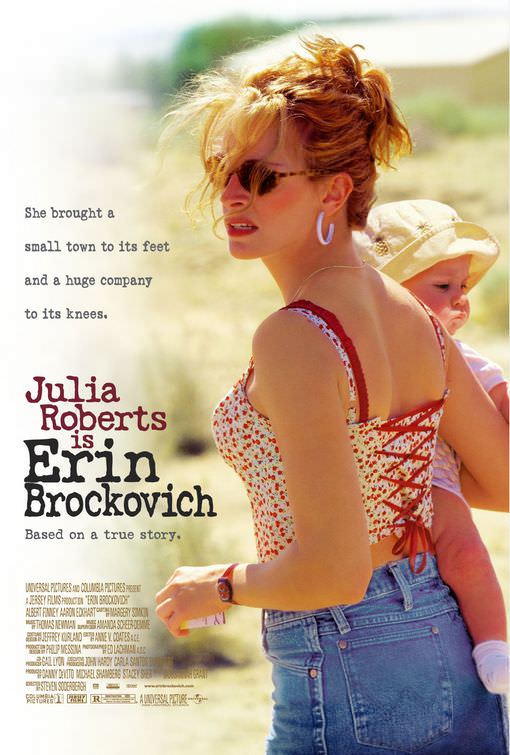
Erin Brockovich: Never Mind!
No Cancer Cluster in Erin's Town
But Julia Roberts sure was cute wasn't she?

HINKLEY, Calif. -- A California state study has not revealed elevated cancer levels in the town of Hinkley, a small desert community that inspired the award-winning Hollywood movie "Erin Brockovich" through its struggles with contaminated groundwater.
The California Cancer Registry has completed three studies on Hinkley, where a toxic plume of cancer-causing chromium 6 is once again growing. The studies found that cancer rates remained unremarkable from 1988 to 2008.
But Julia Roberts sure was cute wasn't she?

Cold Enough for You?
NASA says global warming may have averted a new ice age...
Earth's orbit around and orientation toward the Sun change over spans of many thousands of years. In turn, these changing "orbital mechanics" force climate to change because they change where and how much sunlight reaches Earth. (Please see for more details.) Thus, changing Earth's exposure to sunlight forces climate to change. According to scientists' models of Earth's orbit and orientation toward the Sun indicate that our world should be just beginning to enter a new period of cooling -- perhaps the next ice age.
However, a new force for change has arisen: humans. After the industrial revolution, humans introduced increasing amounts of greenhouse gases into the atmosphere, and changed the surface of the landscape to an extent great enough to influence climate on local and global scales. By driving up carbon dioxide levels in the atmosphere (by about 30 percent), humans have increased its capacity to trap warmth near the surface...
It was 18 F this morning and it's likely to be colder tonight. We had a trace of snow yesterday, and it's still lying around in a few places along the commute.
Monday, December 13, 2010

RIP Hard Drive!
The hard drive in my 6 month old Windows7 desk top computer started doing odd things late last week, clicking, and responding very slowly. I blogged etc on an old lap top over the weekend, somewhat painfully, because my accustomed applications weren't available. I managed to back up all the data and took the computer back to the shop I bought it from on Saturday afternoon, and they replaced the hard drive under warranty (1 TB Seagate). I got it back basically stripped, just the operating systems. I've spent the last hour and a half getting it 75% up (Firefox, Anti-virus, E-mail) but the good news is it mostly over. I'll have a few installs left over the next couple days, but I should be back in business. Now, if I could just think of something interesting to blog about... Or maybe I have a pretty picture among all those back ups.
Update: Thanks to Ted:
Update: Thanks to Ted:
Incest is Best!
Or is it? Recently a Columbia professor, and HuffPo blogger was charged with incest; having sex with his ADULT daughter. Eeewww! But should it be illegal? The biological reason to avoid incest is that it often reinforces bad genes, and children of incestuous relations are often "wrong" (hemophilia in the great royal houses of Europe is believed to have been spread by the practice of inter-marriage among a limited group of people). But now, with abundant birth control, is there a reason to outlaw consensual incest between adults? Professor Volokh considers the arguments...
Of course, Professor Lehrer covered this course years ago:
Of course, Professor Lehrer covered this course years ago:
Sunday, December 12, 2010
Global, uh, Climate Change Killing Manatees in Florida
Cold weather in Florida killing manatees
I have fond memories of manatees from my time in Florida in the mid-80's. Manatees frequented the ship channel at Harbor Branch in winter, dining on Brazilian Pepper trees that hung over the water. My oldest son and I swam with the manatees in the shallow waters around Fort Pierce. Truly gentle giants. Any sailors that confused them with mermaids had been at sea way too long however...
See what I mean?
A merm, uh, manatee had been visiting the Chesapeake for a few years, but in spring this year, one turned up dead in the Patuxent River, and I wonder whether we'll see any this year.
I have fond memories of manatees from my time in Florida in the mid-80's. Manatees frequented the ship channel at Harbor Branch in winter, dining on Brazilian Pepper trees that hung over the water. My oldest son and I swam with the manatees in the shallow waters around Fort Pierce. Truly gentle giants. Any sailors that confused them with mermaids had been at sea way too long however...
 |
| Manatee |
 |
| Mermaid |
See what I mean?
A merm, uh, manatee had been visiting the Chesapeake for a few years, but in spring this year, one turned up dead in the Patuxent River, and I wonder whether we'll see any this year.
A Day Fit for Ducks

Buffies migrate into the Chesapeake in winter, preferring to summer and nest further north. They are reputed to taste fishy, but a friend of mine who hunts them claims they make excellent jerky.
More pics after the jump:
They told me if I voted for McCain...
Government agents would take money from people without evidence - and they were right!
http://beaconnews.suntimes.com/news/2769122-418/aurora-money-police-drug-brothers.html
Headline in honor of Insty, article found at Big Lizards
http://beaconnews.suntimes.com/news/2769122-418/aurora-money-police-drug-brothers.html
....It is a case that one person described as “curious and getting curiouser.”Even information revealed at a Thursday morning court hearing to determine whether Aurora police unlawfully seized $190,040 from two Aurora brothers seemed to create more questions.The case started Oct. 18, when an Aurora officer stopped Aurora brothers Jesus and Jose Martinez. Police searched the car and the Martinezes. Police used drug-sniffing dogs, but found no drugs, according to court records. But police did find a bag with $190,040 in cash in the trunk of the car.Although the brothers were issued no tickets, the cash was seized by police. As of Thursday, neither brother was charged with a crime.
Court records show that after seizing the money, Aurora police inventoried it and turned it over to State Police.“We had the money for a blink of the eye,” said John Murphey, a Chicago attorney representing Aurora.Murphey said Jose and Jesus Martinez were being watched by State Police, who suspected drug trafficking.According to papers released by the city, Aurora had court permission to tap the brothers’ phones. Investigators heard information about an Oct. 18 meeting between Jesus and another person.The meeting took place, but the city documents make no specific mention of any transaction taking place during that meeting. In the wiretapped conversation, there is mention of a “package,” but it does not specify drugs.Aurora police stopped Jesus Martinez’s truck after the meeting at the Home Depot at Orchard Road and Indian Trail and seized the $190,040.Both sides agree the city turned the money over to the state. But neither side knows why the state immediately turned the money over to the federal Department of Homeland Security.When Kinnally and Murphey appeared in Kane County Circuit Court Nov. 19 on a petition filed by Kinnally, Judge Michael Colwell ordered the money returned to the brothers. The city refused because, Murphey said, it no longer had the money.
Headline in honor of Insty, article found at Big Lizards
Saturday, December 11, 2010
Let's see your damn cute cat do that!
Yes, I like cats too, but they are different animals...
Seen at Theo's
A pleasant but unremarkable beach walk
The air was cool but still, and misty, making photography a bit tough. Sometimes the point and shoot camera couldn't find enough contrast to focus:

More pics and commentary below the break

More pics and commentary below the break
Friday, December 10, 2010
Backhoe and Osprey

Peer Review and Scientific Publishing - Time to kill the sacred cow
If the arsenic bug controversy has taught us anything it is that peer-review is an imperfect means of screening out bad science from good science. The peer reviewers of the recent Science Express article missed, or deliberately overlooked several major flaws in the paper.
Here's one that I have not seen publicized among all the critiques (caught by an insightful post-doc in our lab) - Figure 2 shows the growth of the mystery bacterium under 3 conditions, with phosphate added, but not added arsenate (+P/-As), with arsenate added but no phosphate (-P/+As) and the "control" (-P/-As). The +P/-As grew best, while the -P/+As grew a little (to about 1/10th the density of the +P/-As), and the "control" did not grow at all. The authors suggest (and one would normally agree) that this shows that the bacterium could use As in place of P for growth (they grew above the -P/-As control), but not as well. However when you read the supplemental material, the control is not a good control; both the +P/-As and the -P/+As media had glucose (a simple sugar and a very good food source for most bacteria), while the -P/-As had no glucose added! Now, if the control had glucose added and had not grown, it would be a reasonable deduction that they had not grown due to lack of P, or in it's absence As. However, if they had grown and matched the -P/+As, you would concluded rather that the ambient or contaminant P in the medium (there was some and it was not inconsequential) was sufficient to allow growth, and that the As had no effect. So that particular graph is terribly misleading.
The process of scientific publishing and peer review has grown into at least a minor industry. A number of large publishing houses have divisions devoted to taking articles from authors, getting them peer-reviewed, and publishing them, and selling the journals (or more recently their digital equivalents) to libraries and scientists, at very high costs (a typical journal might cost a scientist $500 a year for a personal subscription, and research libraries get a real deal, 4-5 times that cost. The process of peer review does, in fact, screen out many truly bad articles, as any one who has reviewed papers can attest. However, it take months, sometime even years for a paper to get past peer review and into press. And the process is expensive, with page charges for authors publishing the papers often costing over a $1000. There is also a possibility that peer review can be used by scientific partisans to prevent the publication of opposing views. This was long asserted in the Global Climate Change vs. "The Climate Deniers", and the e-mails leaked from CRU clearly indicate that pro-anthropogenic global warming folk actively sought to suppress articles that did not agree with their work, and then chided the opposition for not having sufficient peer review articles.
My radical solution. Do away with the entire apparatus of scientific publishing as it exists. Allow scientists to digitally publish, on the web, whatever they wish. If it's crap, you'll find that either no one cares (in which case the publication probably would generate no interest any way, there's a lot of that out there now anyway, the "least publishable unit" or LPU, used to pad the CV for tenure decisions), or that somebody who cares will read the article critically, and comment on their own on its strengths and flaws. Let the institution where the scientist works provide the web space, or his own "Slog" or the sponsor, or even if necessary, the government (but I'm pretty sure Google will suck it all up into their archives and make it unnecessary). Voila, instant publication! Is is bad? Maybe, but we see bad stuff getting through now. Make scientists responsible for the evaluation of the work they rely on instead of some anonymous reviewers who may or may not be looking critically at the paper, and who may or may not have an axe to grind.
Some more interesting articles on the arsenic bug...
Discover blogs
Rosie Redfield
Thursday, December 9, 2010

Subscribe to:
Posts (Atom)