Showing posts with label menhaden. Show all posts

Tuesday, July 21, 2026

Beach Report 7/21/26

When I got to the beach this afternoon, there were a bunch of pelicans sitting on the jetty, and a few were diving in the water:


And this is what they were eating, Menhaden schools in the shallow water.


Way up the beach I encountered this White-tailed Deer and her fawn:


At first they didn't see me, but when she finally did, she snorted, and they ran off back up the creek bed.

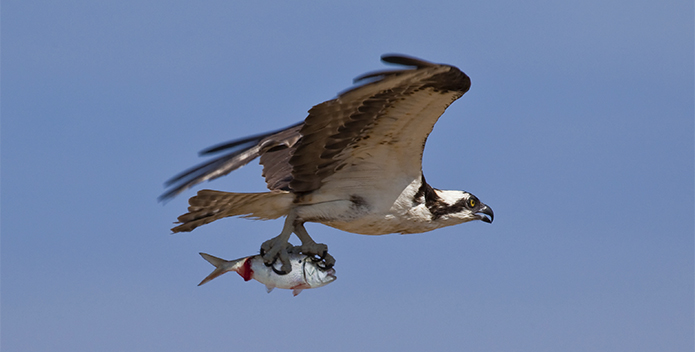
The Ospreys and eagles were out, too, and, oh yeah, I found 17 unremarkable shark's teeth.

Saturday, June 27, 2026

Menhaden and Ospreys

 From the National Fisherman, Study fuels Atlantic menhaden debate

As the Atlantic States Marine Fisheries Commission prepares to revisit Atlantic menhaden management later this year, an economic study is adding momentum to shift more of the coastwide quota toward bait fisheries, while recent debate in Virginia continues to highlight disagreements over research and management of the species.

The Theodore Roosevelt Conservation Partnership (TRCP) issued a release on June 24 about a study by Southwick Associates that estimated that recreational fishing trips using Atlantic menhaden as bait generated approximately $1.5 billion in total economic output and supported more than 7,200 jobs nationwide in 2025.

According to the study, anglers spent roughly $804 million on fishing trips involving menhaden bait while using the species during an estimated 13.9 million fishing days along the Atlantic Coast. Of those trips, approximately 2.5 million occurred in New England, with another 6.3 million in the Mid-Atlantic and 5.1 million in the South Atlantic.

"Atlantic fishing trips involving menhaden generate more than $1.5 billion in annual economic output," said Ben Scuderi, lead economist at Southwick Associates. "That figure represents the full spectrum of spending that occurs for fishing trips where menhaden are used as bait, from direct purchases of equipment, food, fuel, and the many other items needed for a day of fishing, to the downstream effects that spending has on retailers, manufacturers, and countless other businesses."

The report arrives ahead of several major Atlantic States Marine Fisheries Commission decisions expected this fall. In November, the commission’s Atlantic Menhaden Management Board is scheduled to establish a new coastwide total allowable catch for the 2027-28 fishing season and may also decide whether to begin formally reconsidering how state menhaden quotas are allocated.

Tom Horton at the Bay Journal,  The mysterious case of disappearing Chesapeake ospreys

This bird of prey, called a fish hawk by some, is known along shorelines from Japan to Australia, from India and the Strait of Hormuz to much of Europe and North America. “Ospreys and people have been overlapping since there were people,” said Alan Poole, author of two books about Pandion haliaetus.

In 2023, when Joanie began the Virginia Osprey Foundation out of their cottage at Colonial Beach, she observed robust production of 55 osprey chicks from 36 active nests around the community. Baywide, ospreys were continuing their heartening comeback from the dark days of DDT — from a historic 1972 low of about 1,500 nesting pairs to an estimated 10,000-12,000 pairs now throughout the Chesapeake Bay region.

Then, a sudden and mysterious population crash: Only five chicks reached adulthood in 2024, eight in 2025. Young ospreys were seen walking aimlessly, dazed and apparently starving. There were fish crows stealing osprey eggs as females left them in search of food the males could no longer provide. Adults were eating their dead babies. “That is difficult to watch, and the whole town takes it to heart,” Barry said as they prepared for the town’s seventh annual osprey festival this spring.

Baywide, a similar picture was emerging, with poor nesting success throughout 80% of the estuary and its tidal rivers and an estimated 5,500 young ospreys starving to death, according to Bryan Watts, a Virginia scientist known for his decades of Chesapeake osprey research. Ecologically, cannibalism of dead young “makes energetic sense when calories are scarce,” says Watts, who is the director of William & Mary University’s Center for Conservation Biology. But, Joanie said, it breaks your heart to watch.

The reversal of ospreys’ fortunes has been dramatic and well documented. While scientists mostly think there is no single cause, the decline has reinvigorated a dispute over the commercial harvest of menhaden by Omega Protein. a Canadian company with a fishing fleet based in Virginia.

Omega’s fleet of six ships, guided by spotter aircraft, takes about 125,000 metric tons of menhaden annually, fishing from the lower Chesapeake and along the Atlantic Coast. Menhaden are small, oily fish that are packets of superbly calorie-dense energy, beloved by larger fish like striped bass, and by ospreys. Along with tinier but abundant Bay anchovies and silverside minnows, menhaden form the forage base underpinning the Chesapeake’s productivity.

Watts and others have documented that ospreys are doing worst in the saltier parts of the Chesapeake and Atlantic coastal bays where menhaden make up a critical part of their diets. Only in areas with less salty water, the upper Chesapeake and its tidal rivers, are ospreys producing enough young to sustain their populations — though not enough to offset the plummeting reproduction in the rest of the estuary. 

Prey options in fresher water are more varied, with gizzard shad and catfish providing ample calories. Nesting ospreys with young need to catch five or six fish a day to sustain the family.
...
One of Watts’s graduate students has shown that osprey reproduction can be revived if humans give them extra menhaden. He has heard from “quite a few people” around the Bay who are feeding hungry ospreys. “I’m fine with that,” Watts said, “but it’s not a solution to the current deficits.”

In recent days, schools of "peanut bunker", 3-4 inch Menhaden have been circling close to shore at the beach. Osprey, on the other hand, seem pretty scarce; I have only seen one most days. 

The Wombat has Rule 5 Sunday: Happy 250th, America! up in star-spangled glory at the Other McCain.

Thursday, June 11, 2026

New Study Finds Chesapeake Ospreys Starving

 CBF, New Study Links Starving Chesapeake Bay Osprey to Menhaden Woes

A new peer-reviewed study links unprecedented levels of starving osprey chicks in the Chesapeake Bay to concerns around menhaden, a nutrient-packed fish that is a key food source for osprey and many other species.

While several factors influence osprey productivity, reduced availability of Atlantic menhaden is likely the primary driver of poor osprey reproduction in saltier parts of the Chesapeake Bay, according to the study. The new report is based on data from the 2024 nesting season and published this week in Frontiers in Marine Science by researchers at the College of William & Mary’s Center for Conservation Biology, the U.S. Geological Survey, the Maryland National-Capital Park and Planning Commission, and the Virginia Aquarium & Marine Science Center.

Research in recent years has documented osprey chicks starving in nests across portions of the Chesapeake Bay where osprey primarily rely on menhaden for food. Osprey in many parts of the region are reproducing at rates well below what’s needed to sustain the population.

Virginia is the only state along the Atlantic coast that still allows industrial menhaden fishing in state waters. That lone remaining industrial operation—Omega Protein and their fishing partner Ocean Harvesters—extracts over 100 million pounds of menhaden from Chesapeake Bay waters each year, with no scientific understanding of the impacts to the Bay’s ecology or coastal communities.

Widespread osprey nesting failures are among several warning signs that the menhaden population is struggling in the Bay, including plummeting catches by small-scale watermen who catch menhaden for bait for local crab fisheries.

In a 2025 letter to state fishery regulators, the Virginia Institute of Marine Science suggested the Virginia Marine Resources Commission give “serious consideration to reducing purse seine fishing in Chesapeake Bay,” given that data to understand impacts of concentrating the industrial menhaden fishery in Virginia waters remains “woefully inadequate.”

The new study notes that “a large degree of uncertainty remains about the status of adult menhaden within the Chesapeake Bay.” It adds, “To more fully resolve this uncertainty, assessments of menhaden abundance could enhance understanding of their role within the ecosystem and support management of consumers that depend on them.”

As part of the budget process that will wrap up later this month, Virginia legislators are considering investing in Chesapeake Bay menhaden research. These data are crucial to understanding the impacts of highly concentrated industrial harvests and how many menhaden a healthy Chesapeake Bay requires.

Recent polling shows that 80 percent of Virginia voters support state funding for a menhaden study.

Well, "Science" has spoken. I suspect the study was designed to find this. Unfortunately that's the way this thing tends to work, at least as long a I was in science. 

On the other hand, I see less Ospreys around our neck of the woods these days. Oh, they're here, but not in the numbers that they were several years ago. 

Tuesday, March 10, 2026

Cold Kills Menhaden Near Virginia Beach

The Virginian-Pilot: Dead menhaden wash ashore in Virginia Beach

Environmental officials are investigating after receiving multiple reports of dead fish washing ashore this week.The reports included the areas of Chesapeake Beach and Croatan Beach, along with the Oceanfront in the areas of 16th Street, from along the streets in the 50s to the 80s, according to the Virginia Department of Environmental Quality’s website.

The total amount of fish isn’t clear, but one report from Wednesday afternoon refers to “dozens or hundreds” of dead fish seen “all down the beach” from about 85th Street to 89th Street. Posts on social media also showed hundreds of the fish washed up on the beach in Corolla on the Outer Banks.

The affected fish are apparently all Atlantic menhaden, based on a review of the public reports. DEQ, along with the Virginia Marine Resources Commission and the Virginia Institute of Marine Science, have reached a consensus that the deaths are due to “natural causes mostly likely due to cold water temperatures,” according to a DEQ spokesperson. Investigators have not found any outward signs of injury or stress in the fish, nor abnormal water readings or pollution.


The reports online refer repeatedly to an “ongoing Menhaden cold stun fish kill along the Atlantic Coast.” A cold stun is when the environment becomes so cold that aquatic wildlife become lethargic or appear “stunned,” and is often fatal, according to the North Carolina Department of Environmental Quality’s website. The DEQ spokesperson noted that investigators recorded a temperature of 6 degrees Celsius at Sandbridge fishing pier on Friday, which is below the lower temperature threshold for menhaden.

The Chesapeake Bay Foundation released a statement saying this underscores the need for state lawmakers to approve funding for related research that could help understand why these deaths occur. “This incident, which is still unfolding, illustrates how important it is to get a better understanding of our Chesapeake Bay menhaden population,” said CBF Forage Campaign Manager Will Poston in a statement. “This is happening just as the General Assembly is considering funding research that would help us understand menhaden in the Bay, how natural kills happen, and whether the Bay can support a major industrial fishery.”
Very well, but cold stunning couldn't explain the dead stripers at Calvert Cliffs, right

The Wombat has Rule Five Sunday: Ersatz Gingermageddon up on time and under budget at The Other McCain.


Wednesday, November 19, 2025

A New Bay Diet Plan for Fisheries?

Seafood Source, Stakeholders nearing update on Chesapeake Bay Agreement with multiple goals for fisheries

Federal and state stakeholders are getting close on an update to the Chesapeake Bay Agreement – a voluntary accord that sets goals for conservation and clean water – laying out desired outcomes for some of the region’s fisheries. First established in 1983, signatories to the agreement include the governments of Maryland, Virginia, Pennsylvania, West Virginia, Delaware, New York, and the District of Columbia, along with the Chesapeake Bay Commission and federal agencies. The last update to the agreement was signed more than a decade ago in 2014, but officials are reportedly close to signing onto a revised agreement with final approval expected at a 2 December Chesapeake Executive Council meeting.


“Improvements in habitat and water quality lead to healthier wildlife and fisheries. Environmentally – including agriculturally – literate people are more engaged stewards of the Chesapeake Bay’s healthy watersheds. Better water quality means swimmable, fishable waters for watershed residents and visitors,” a recent draft of the agreement noted. “Healthy fish and shellfish populations support a vibrant economy for a spectrum of related industries.”

Among the agreement’s stated goals is to “protect, restore and sustain fisheries and wildlife, as well as the network of land and water habitats they depend on, to promote a balanced and resilient ecosystem and support local economies and recreational opportunities.”

That includes establishing a sustainable blue crab fishery in Chesapeake Bay, with cross-jurisdictional coordination via the Blue Crab Advisory Report. The most recent winter dredge survey found that the Bay’s blue crab numbers were the second-smallest in recent history with an estimated population of 238 million. CBF called the finding a “red flag,” pointing to environmental factors as one reason for the decline. In response, the watershed agreement sets an outcome of maintaining blue crab abundance and target harvest rates.


The draft also lists several goals for fish habitat and passage improvements, including:
  • Improving the quality and quantity of tidal shallow water fish habitat;
  • Increase consideration of forage species in fishery management decision-making for predator fish;
  • Improve the quality of non-tidal fish habitat;
  • Improve 270 stream miles of waters impaired by acid mine drainage by 2040;
  • Develop freshwater mussel conservation plans for 10 tributaries; and
  • Restore passage and connectivity to at least 150 miles of aquatic habitat every two years. The agreement would also continue collaborative work on oyster restoration in the bay, setting a goal of restoring 2,000 acres of oyster reef habitat by 2040.


After criticizing an earlier draft of the agreement as “lacking,” the Chesapeake Bay Foundation said the revised version is a noted improvement. “This agreement isn’t perfect, but it is essential. For decades, we’ve seen time and again that progress only comes when we work together toward shared goals,” CBF Senior Policy Director Keisha Sedlacek said in a statement. “This December, the Bay states and federal partners must come together and formally renew their promise to restore the Bay, guided by the revised agreement. We will keep advocating for the policies, investments, and science to exceed goals for a healthy Bay – and hold leaders accountable if they fall short.”

The primary fisheries of interest in the Bay are oysters, crabs, Stripped Bass and Menhaden (by far the largest by dollars). Of these, only oysters can be said to have been improved during the previous iterations of the Bay diet. I don't see what they're doing that is going to make a big difference. But the money will get spent. 

The Wombat has Rule 5 Sunday: Roll Tide up on time and under budget at The Other McCain.

Monday, November 10, 2025

Coastal Menhaden Harvest Gets a Haircut

 Really, just a trim. Bay Journal, Coastal menhaden harvest reduction ordered to help striped bass

Torn between protecting fish or fishing jobs, East Coast fishery managers have ordered a 20% cut in the commercial harvest of menhaden in the Atlantic to help struggling striped bass. They also moved to curb the menhaden catch in the Chesapeake Bay — though in that case to help beleaguered bait fishermen in Maryland.

The Atlantic States Marine Fisheries Commission, which regulates near-shore harvests of migratory fish, voted Oct. 28 to lower the allowable menhaden catch along the East Coast to 185,840 metric tons for 2026. The action came after a new study found the crucial forage fish were much less abundant than previously believed.

The commission’s decision to curtail the coastal menhaden harvest effectively reverses a 20% increase approved just three years ago. At that time, a study concluded that menhaden were not being overfished and would not be harmed by a boost in harvest. A recent reassessment, though, concluded that that earlier study was flawed and that menhaden are actually about a third less plentiful than thought.

Though the new assessment found menhaden still not overfished, the commission is also committed to leaving enough menhaden unharvested to sustain other fish and wildlife. On that basis, the new study indicated that commercial menhaden harvests would need to be reduced to ensure sufficient food for the striped bass population, which the commission is trying to rebuild from having been overfished in recent years.

The commission considered but rejected proposals to cut the coastwide commercial menhaden harvest in half, either all at once or in phases over the next three years.

Conservationists and recreational fishing groups had lobbied for cuts of that magnitude, arguing they were based on the latest science and needed to ensure the recovery of striped bass.

But cuts that large drew pushback from the New England lobster industry, which relies on menhaden for bait, as well as the owners and crews of Ocean Harvesters, the Virginia-based fishing fleet that harvests menhaden for processing into animal feed and health supplements. They warned that their livelihoods would be jeopardized by such drastic reductions.

The commission considered but rejected proposals to cut the coastwide commercial menhaden harvest in half, either all at once or in phases over the next three years.

Conservationists and recreational fishing groups had lobbied for cuts of that magnitude, arguing they were based on the latest science and needed to ensure the recovery of striped bass.

But cuts that large drew pushback from the New England lobster industry, which relies on menhaden for bait, as well as the owners and crews of Ocean Harvesters, the Virginia-based fishing fleet that harvests menhaden for processing into animal feed and health supplements. They warned that their livelihoods would be jeopardized by such drastic reductions.

Representatives of the menhaden reduction fishery, meanwhile, said a 20% cut was unnecessary to avoid impacting other species. They argued that a “modest, precautionary trim” of 10% would eliminate any risk of overfishing.

After the vote, Ocean Harvesters issued a statement saying the 20% harvest cut will likely require some “operational adjustments” at the Reedville facility and warned that any additional reductions “would impose needless harm on working families and a 150-year-old fishery, without ecological justification.”

After finding 37% less Menhaden than they previously thought, a mere 20% cut is an admission that they really don't intend to solve the problem. Ultimately it will be just another fishing stock ruined by overfishing.

The Wombat has Rule 5 Sunday: It’s Always Warm & Sunny Somewhere up and garnering clicks at The Other McCain.

Monday, November 3, 2025

Did They Break a Mirror?

At the Bay Journal, Seven years of bad luck for striped bass, survey shows

Striped bass reproduction has remained below average in parts of the Chesapeake Bay since 2018, and this year is no different. The annual juvenile striped bass surveys from Maryland and Virginia give insight as to how the next generation of striped bass will sustain the population. With continuing poor results, the Atlantic States Marine Fisheries Commission is considering stronger catch limits.

Striped bass are top predators in the Bay and support commercial and recreational fishing. They are found along the East Coast from Canada to Florida, but they spawn and spend the first few years of their lives in the Bay.

The Virginia Institute of Marine Science has conducted its annual survey on striped bass since 1967. This year, scientists caught more than 1,000 juvenile striped bass at 18 sites in the Rappahannock, York and James rivers with a 100-foot seine net. Fish are captured, counted, measured and thrown back.


This year’s survey from Virginia recorded an average of 5.12 juvenile fish per seine net catch, which is below the historic average of 7.77. It’s slightly better than the last two years, but the survey hasn’t found the average level of reproduction since 2022.

The Maryland Department of Natural Resources sampled fish from 22 sites in the Choptank, Nanticoke and Potomac rivers and in the upper Bay. Maryland’s results were even more stark. This year, the young-of-year catch averaged four per seine haul, far below the historical average of 11. This marks the seventh year the striped bass juvenile population hasn’t met that threshold.

Carrie Kennedy, director of the Tidal and Coastal Monitoring and Assessment Division at the Maryland Department of Natural Resources, said she doesn’t think anyone knows for sure why the juvenile population is remaining low. Some scientists hypothesize that changes in water temperature can throw off the time when the fish spawn and when their food, zooplankton, is available. Others blame predation by invasive blue catfish. 

“It’s usually at least one or two factors that are compounding upon themselves,” Kennedy said. “But, at the end of the day, we’re not exactly sure what is the cause, but we do know there’s more work to do.”

Fisheries isn't rocket science, it's way more complicated.

And perhaps related CBF says it's Time to Pause Menhaden Fishing in the Chesapeake Bay

Atlantic menhaden are a critical forage species in Chesapeake Bay, and one of the most controversial. Because these small, nutrient-packed fish are such a critical food source for many other species, there have been longstanding concerns that the large-scale industrial fishery that harvests more than 100 million pounds of menhaden from Virginia's Bay waters each year could disrupt the Bay's food chain.

Now, as warning signs escalate and industry efforts continue to block necessary scientific research, there is a growing consensus that the fishery should be put on pause. An overwhelming 92 percent of Virginia voters believe the state should leave more menhaden in the Bay, according to a new public opinion poll commissioned by CBF and conducted by New Bridge Strategy and FM3 Research. Five key points explain how we got here:
. . .
"With so many unanswered questions, we are risking the health of our cherished wildlife, the Chesapeake Bay, and the menhaden fishery itself," said CBF Virginia Executive Director Chris Moore. "The best option is to pause industrial menhaden fishing in the Bay and move this capable fishery offshore while Virginia undertakes sorely-needed research."

I agree. 

The Wombat has Rule 5 Sunday: Young Girls & Old Trucks garnering clicks at The Other McCain.

Wednesday, October 29, 2025

ASMFC Nixes Steep Menhaden Catch Cuts

Theodore Roosevelt Conservation Project, Marine Fisheries Board Declines to Make Science-Based Reduction to Atlantic Menhaden Catch Limit  

Despite a 2025 stock assessment indicating that Atlantic menhaden biomass is one-third lower than previously estimated – and an immediate need to cut the coastwide menhaden quota by more than 50 percent to support striped bass rebuilding – the Menhaden Management Board of the Atlantic States Marine Fisheries Commission voted today to reduce 2026 commercial catch by only 20 percent. The decision, which will likely prevent striped bass and other predators largely reliant on menhaden like bluefish, weakfish, spiny dogfish, and ospreys from having sufficient forage, was a disappointment for conservation and recreational angling organizations.


“Rebuilding the Atlantic striped bass population has always involved more than just regulating striped bass harvest. It’s also about ensuring that enough of their key food source, Atlantic menhaden, remains available in the water,” said Chris Macaluso, director of the Center for Fisheries for the Theodore Roosevelt Conservation Partnership. “The Menhaden Management Board’s decision to adopt only a 20 percent reduction in menhaden harvest, despite the science and input from ASMFC’s own scientists who highlighted the risks, makes it more challenging to achieve striped bass recovery by 2029. This step falls short of fully advancing more than a decade of progress toward ecosystem-based management and undermines public trust in the process.”


The Board’s decision, made at the agency’s annual meeting in Delaware, ignores its own
management framework based on “ecological reference points” (ERPs) — clear, science-based limits that tie menhaden harvest directly to predator health – and new estimates that show there are 37 percent fewer menhaden off the Atlantic coast than previously estimated. The Board also declined to vote for additional coastwide menhaden quota reductions beyond the 2026 fishing season, dodging additional quota cuts for 2027 and 2028 that could have collectively reached an ERP-based reduction that the recreational angling community called for after three years. The Board instead favored revisiting the issue in 2026 to determine if additional reductions are needed.


Notably, three years ago the Menhaden Management Board voted to increase the Atlantic menhaden total allowable catch for the 2023-2025 fishing seasons when the best available science indicated it was warranted. However, now that the best science indicates a reduction in catch is needed, the board has declined to reduce the catch to align with the ecosystem-based management model.

In early October, the ASMFC released its 2025 Atlantic menhaden stock assessment update, which indicated that the coastwide menhaden biomass is lower than previously estimated and suggested that slashing the coastwide catch limit by more than half would be necessary to ensure sufficient forage for rebuilding populations of striped bass. The Board’s decision today is not expected to achieve the standard 50/50 probability of not exceeding the ERP fishing mortality target – the precautionary approach that would dictate risk-tolerant, science-based management – and instead results in a 100 percent chance of exceeding the target in 2026.

The source is clearly biased in favor of cutting the Menhaden harvest, but then, so am I. But the point, that the new data show Menhaden population is 37% lower than previously thought, but the ASMFC responded by attempting to cut the harvest by only 20% suggests that they are not acting in the best interest of the Menhaden, let alone the Striped Bass and other predators that eat them. 

The Wombat has Rule 5 Sunday: Barbara Eden up and garnering clicks at The Other McCain.

Wednesday, September 24, 2025

Forget It Jake, It's Baltimore

Baltimore Banner, Thousands of dead fish flood the Baltimore harbor, again

Inner Harbor tourists gawked at the aftermath Tuesday: thousands of dead Atlantic menhaden floating on the surface.

The aquatic annihilation — and its lingering stench — is a reminder of the challenges facing the harbor and the broader Chesapeake Bay.

State regulators say no single pollution event caused this fish kill, but point instead to decomposing algae and other organic material — the result of widespread nutrient pollution from runoff and wastewater overflows that has depleted oxygen in the Chesapeake Bay and its tributaries for decades.

Close to 25,000 fish have died in the event, according to the Maryland Department of the Environment, whose inspectors evaluated the area Monday. The fish kill stretched all the way around the harbor, from Canton through the Inner Harbor to Locust Point, agency spokesman Jay Apperson said.

This week’s carnage comes about a month after a sudden dip in temperatures seems to have triggered two even bigger menhaden die-offs in the harbor. Unseasonably cool late August temperatures helped to deplete oxygen that bay denizens need to survive.

25,000 isn't a lot of Menhaden when it comes to supporting all the Ospreys, Striped Bass and Bluefish that want to eat them, but when they're dead and rotting on your beach, they sure do stink. 

Monday, September 22, 2025

Back From Fishin'

Another walk on trip with Walleye Pete, with an old acquaintance, Craig, and a first timer on Pete's boat, but a long time fisherman, Pat. 

We started at daybreak at Mike's Rocks (an informal name) on Hoopers Island. I missed two fish here, and only one was caught. The shallow waters seem pretty quiet.
The outflow of a tidal creek at on Hoopers Island, traditionally a good spot was also barren.


We headed south to the water off Smith Island, where small pods of large Bluefish were corralling schools of peanut Menhaden, and drawing birds to show the way. These fish pull really hard...

Monday, September 1, 2025

Are New Menhaden Regulations Coming?

From Thecooldown,  Officials advance potential new restrictions on controversial fishing practice: 'We understand that things are changing' "Fisheries and predators can't wait."

After increasing pressure from a number of groups, a key fishing board may soon implement new commercial fishing restrictions along the Atlantic coast. 

As Maryland Matters reported, the Atlantic States Marine Commission's menhaden management board has voted to explore options for increasing maximum limits for menhaden hauls. The move would aim to protect and better manage fish populations in the Chesapeake Bay, specifically the menhaden.


The Atlantic menhaden have long been sought after for their value as fish meal and bait. For companies like Omega Protein, which contracts Ocean Harvesters, the small fish are a vital source of omega-3 fatty acids used in health supplements. However, the company is currently capped at 51 metric tons of menhaden, a figure that some argue is still too high.

Lynn Fegley of the Maryland Department of Natural Resources introduced the motion to tighten restrictions after claiming that menhaden are not reaching Maryland's waters. Instead, Fegley explained that Omega Protein's Virginia-based fishery is greatly diminishing the menhaden population. "We understand that this is a coastwide issue," Fegley said, per Maryland Matters. "We understand that things are changing … there is significant effort by a large-scale fishery in the Chesapeake Bay. The fish were there, but they were not where we are."

It's pretty clear that big Menhaden are no longer in any great abundance in the Bay north of the Omega fleet, at least in summer. Is it causing problems with Striped Bass and Ospreys? It's pretty hard to prove, but it would make sense. 

The Wombat has Rule Five Sunday: The End of Summer up and garnering clicks at The Other McCain.

Friday, August 8, 2025

Regulator Looking at Menhaden Restrictions

WHRO, Atlantic menhaden board raises ‘red flags’ on Chesapeake Bay fishery, directs study of new regulation

An effort to place moderate new regulation on the controversial menhaden harvest in the Chesapeake Bay is inching forward. The Menhaden Board of the Atlantic States Marine Fisheries Commission voted Thursday to study options for spreading the industry’s harvest in the bay more evenly throughout the season. The goal would be to divide the fishing quota into set periods and prevent bottlenecks “that may be impacting other Bay small-scale fisheries as well as the Bay ecosystem,” according to the approved motion.

The commission helps manage fisheries along the East Coast, including 15 states from Florida to Maine. Virginia’s representatives voted against the measure. 

The latest action builds off of a workgroup established by the board that spent the past year evaluating options for “precautionary management” of menhaden in the Chesapeake Bay.

Ocean Harvesters, which operates a fishing fleet to supply Omega Protein, harvests up to 51,000 metric tons of menhaden in the bay each year using large walls of netting called purse seines. Omega processes, or “reduces,” them into fishmeal and fish oil at a plant in Reedville.

Virginia is the last East Coast state that allows this type of menhaden fishing in state waters. Others, such as Maryland, allow fishermen to use stationary traps called pound nets to catch menhaden for use as bait.

Environmentalists and sportfishers believe purse seines are removing too many menhaden, affecting species that rely on them, such as striped bass and osprey. They want the reduction industry to be banned from the bay or more heavily restricted.

Omega Protein maintains there’s no scientific evidence backing up the claims.

Board member Lynn Fegley, fishing services director with Maryland’s Department of Natural Resources, initiated this week’s proposal.

She said commercial fishermen in her state are reporting dramatic drops in menhaden during the peak summer season.

“For us, this becomes a tremendous red flag. We understand very well that there was a time period where there was a lot greater menhaden harvest in the bay, and everybody was catching menhaden, and osprey were covered,” she said. “But things have significantly changed in the bay. What I hear from my commercial fishermen is something is seriously wrong.”

Russell Dize, a board member from Maryland and a longtime Chesapeake Bay waterman, said the group needs to determine the cause of the changes as soon as possible.

“Houston, we have a problem. There’s a reason why the menhaden aren’t coming in the bay, and we need to find out,” Size said. “It’s our problem. We need to fix it.”

It's a start, but I wouldn't get too excited. The decline of Striped Bass was obvious to fisherman about 10 years before the regulators started to agree.

The Wombat has Rule 5 Sunday: Doughnut Dolly up on time and under budget.


Monday, August 4, 2025

Can Trump Fix the Menhaden Problem?

From the Center Square, Group wants Trump to intervene in fight over U.S. fish

A group of anglers got President Donald Trump's attention in a long-running campaign to protect a lesser-known forage fish in the Chesapeake Bay.

The Virginia Saltwater Sportfishing Association posted a 4-minute video on YouTube that blames a reduction in menhaden in the bay on the Canadian company Cooke Seafood. A letter posted along with the video calls on Trump and Commerce Secretary Howard Lutnick to stop Cooke Seafood from removing menhaden from the Chesapeake Bay and other Virginia waters.

"Foreign companies profit off of industrial fishing for U.S. forage fish (aka bait fish) undermining American businesses and workers," the group wrote in a Change.org petition. "By taking bold action to end industrial scale fishing for vulnerable bait fish, America can harness the full economic potential of our fisheries, create jobs, and secure a sustainable future for America's fishing industry and coastal communities."

The company involved in the menhaden operation, Ocean Harvesters, disputed the allegations in the video.

"Ocean Harvesters continues a long and proud tradition of menhaden fishing in Virginia's Northern Neck region, where menhaden fishermen have operated continuously for over 145 years," the company said in a statement. "Ocean Harvesters vessels are crewed primarily by American fishermen, many of whom are multi-generational, holding the same jobs as their fathers and grandfathers. The fishery employs hundreds of local workers directly, and hundreds more indirectly, and has long been one of the best sources of good-paying jobs in the region."

The video casts the conflict as a battle between local anglers and a giant Canadian-owned conglomerate illegally fishing in U.S. waters. A federal judge dismissed a lawsuit against Cooke, Ocean Fleet Services and others in January.

I'd like to see the Menhaden reduction fishery moved out of the Bay, and reduced in volume. I just can't get over my own observation the huge schools of large Menhaden used to swim off our shore, and that has been not true for many years now. I think evidence is growing that it is affecting Ospreys, and if it affects Ospreys it's likely affecting Striped Bass too. 

I doubt Trump will step in. It's a big deal in the Bay community, but on the national scale it's miniscule. 

The Wombat has Rule 5 Sunday: Doughnut Dolly up on time and under budget.

Thursday, June 26, 2025

Virginia Ospreys in Trouble?

Nesting pairs of Osprey in 1987 and 2025
Chesapeake Bay Mag, Osprey Pairs Down to Single Digits on Ocean Side of ESVA

Dr. Bryan Watts, Director of the Center for Conservation Biology (CCB) at William & Mary, has released an inventory of active osprey nests along Virginia’s Eastern Shore Seaside. His report’s title tells the ugly story: “Osprey Population along the Seaside of the Delmarva Peninsula has Collapsed.” Where a CCB survey in 1987 recorded 83 pairs, this year’s survey recorded only nine pairs between Fisherman Island and the Chincoteague Causeway.


“We’ve been watching them since the 1990s,” Dr. Watts tells us, “ and the loss rate has really ratcheted up in the last few years.” This population collapse is a concern not only for the loss of an iconic, well-loved bird but also for what it says about the condition of this coastal environment that appears otherwise pristine.

Why the failure? Dr. Watts’s careful summary says: “The underlying causes of this population decline are unclear. Although there have been changes in nesting substrates (like duck blinds, dead trees, navigational aids, or nesting platforms) over time, the availability of nesting substrate does not appear to be a primary factor. Suitable structures remain widely available and many substrates that were used for extended periods are now vacant.

“It is possible that bald eagles may have impacted osprey along the seaside. The bald eagle population within the area has more than tripled since the 1980s. However, the density of eagles continues to be a small fraction of that found within the upper tributaries of the Chesapeake Bay where ospreys continue to thrive.”

That's interesting, I was just speculating about that a few days ago. Bald Eagle commonly rob Ospreys of their prey. Ospreys are great fisherman, but at some point, that has to impact the amount of food they can bring home to feed their chicks. And Bald Eagles seem even more efficient at stealing food from Ospreys than Ospreys are at fishing. I don't think I've ever seen an eagle fail to force an Osprey to drop it's fish.

He goes on to report, “The most likely cause of the decline is prey availability. However, no osprey diet studies have ever been conducted within this site, and we know very little about trends in fish availability. During the 1970s and 1980s, the highest density of nesting pairs was skewed to the southern portion of the area around Fisherman and Mockhorn Islands. These birds could be observed flying out to the mouth of the Chesapeake to forage. Pairs have declined by more than 90% within this portion of the study area.”

When looking for causes, questions arise about the availability of menhaden for ospreys to eat in the “southern portion of the area around Fisherman and Mockhorn Islands.” Some believe menhaden industry giant Omega Protein is competing with the ospreys for their food.

I'm beginning to believe the Osprey population in our Mid Bay region is following the same trajectory, just a few years later.  Our local Osprey population seems to have thinned. I only saw a single Osprey plying the waters off our beach today. There were plenty of peanut sized (2-3 inch) Menhaden dead on the beach, it doesn't seem like lack of them is the problem. 

So, Stripped Bass are in trouble, crabs are in trouble, and the Ospreys are in trouble. I'm sure satisfied the with $25 billion or so we've dumped into the Bay's bureaucracy in the last 30 years. 

Wednesday, May 28, 2025

Are the Ospreys Starving?

Another article on the possible connection between Menhaden fishing, and the struggling Osprey populations in the Bay. At What's Up Media, The Osprey-Menhaden Bay Connection

Each spring, birders eagerly await the return of ospreys to the Chesapeake Bay—a welcome sight that signals the end of winter. An estimated 8,000 to 12,000 breeding pairs of ospreys live in the Chesapeake Bay, which is home to the largest breeding osprey population in the world. Since ospreys are sensitive to changes in their environment, they serve as a monitor of the health of the Bay.

So, when 2024 breeding performance results released by the College of William & Mary’s Center for Conservation Biology (CCB) showed that osprey chicks continue to starve in their nests in portions of the Bay where they typically depend on menhaden—a small, silvery, nutrient-packed fish—for food, the findings intensified ongoing, decades-long concerns.


According to a press release issued on September 13, 2024, by the CCB, osprey chicks aren’t surviving at rates that sustain the population. A survey monitored 571 osprey pairs in 12 sites in Virginia and Maryland during the nesting season (March through August). Ten study areas were located within the main stem of the Bay, where salinity exceeded 10 parts per thousand (ppt), and ospreys are highly dependent on menhaden. Two additional study areas (used for comparison) were located on upper tributaries within tidal fresh waters, where salinity was less than 1 ppt, and ospreys feed primarily on catfish and gizzard shad.

The generally accepted reproductive rate for population maintenance is 1.15 young/pair. Breeding performance varied between the higher-salinity sites—ranging from minor, moderate, and major deficit. However, the reproductive rate within the tidal freshwater sites was 1.36 young/pair, which is above the maintenance target (surplus).

“It’s clear to researchers that ospreys are struggling due to food stress, but the starvation issue is mostly confined to the main stem of the Bay, where waters are greater than 10 ppt salinity,” says Bryan Watts, Ph.D., director of the CCB. “We do not know why menhaden have become less available to ospreys. The osprey-menhaden issue is a moving target. Some have suggested that ongoing harvest, warming waters, water quality, or other factors are impacting menhaden in the Bay. However, we do know that osprey broods [groups of chicks] are starving in their nests and that there is not enough menhaden in their diet to support sustainable reproductive rates.”

Snakehead! It's what's for dinner!
 

In addition to starvation, scientists and researchers are also observing uncharacteristic behaviors among ospreys. According to Watts, a large number of osprey pairs didn’t lay clutches during the 2024 nesting season. This is the first time that this behavior has been documented on a large scale within the Chesapeake Bay. Researchers believe that the most likely explanation is that the females didn’t reach the nutritional condition required to produce eggs.

Single-chick broods and asymmetric broods were also widespread throughout the Bay in 2024. Asymmetry develops when food coming into the nest is inadequate to feed all of the chicks—resulting in a dominance hierarchy, which allows the dominant chick to monopolize access to food. Depending on the available food supply, one or all of the chicks may starve.

For what it's worth, I'm beginning to give this hypothesis a little more credence. Ospreys have been noticeably in short supply in our neighborhood this year. I've seen them a couple of times, but usually, by this time of year, Ospreys would be hunting out in front of the beach almost constantly.  Ospreys return to the same nest every year, which suggests that one or more pairs failed to return from their winter vacations. I do wonder about the role of Bald Eagles in this matter too. Ospreys bringing food back to the nest have to run the gauntlet of hungry eagles to get to the nest. From what I've observed, about one in ten catches results in a steal from an eagle. If fish are a limiting resource, that could definitely affect the Osprey nesting success. 

Thursday, February 13, 2025

Don't Turn On the Lights 'Cause We Don't Want to See

 From News on the Neck, Bill calling for a $3 million menhaden study is a no-go

The proposal for Virginia to spend $3 million on a menhaden study sank before it hit the House floor.

Delegate Paul Milde (Stafford) introduced HB 2713 calling for the Marine Resources Commission (MRC) and Virginia Institute of Marine Science to conduct a three-year study of the ecology, fishery impacts, and economic importance of the menhaden population in Virginia waters.

Milde’s bill called for the study to include a number of details related specifically to the Chesapeake Bay, an area where critics want to ban the commercial fishing done by Reedville-based Ocean Harvesters. Some of the details the delegate wanted include:
  • Seasonal abundance in the Chesapeake Bay,
  • The spatial and temporal patterns of commercial fishing in the Bay,
  • The possibility of localized depletion in the Bay
  • Changes in recreational fisheries in the Bay
According to Milde, current menhaden management relies on incomplete information. This research would have provided “scientific foundation needed to make sound decisions that balance the needs of the fishery with the ecological importance of this keystone species.”

“There are no modern-day studies of menhaden populations in the bay,” he told ABC 8 News. “It makes sense that we need to find out where we really are with the menhaden, and if there are any connections between rockfish populations, osprey populations, and the menhaden catch.”

A number of the issues raised by Milde and his bill were addressed by Ocean Harvesters CEO Monty Deihl in a recent column in The Virginian-Pilot titled “Let’s set the record straight about menhaden fishing.”

On menhaden population, Diehl wrote, “The menhaden population is not “dwindling.” The Atlantic States Marine Fisheries Commission (ASMFC) reports menhaden populations are abundant and sustainably managed. Menhaden are not overfished and are not experiencing overfishing. The biomass exceeded 4.5 million metric tons in 2022, while total commercial landings amounted to just 195,387 metric tons. The ASMFC says menhaden biomass has been stable since the 1960s.”

And on localized depletion in the Bay, Diehl stated, “Although some critics in the recreational fishing community claim a distinction between the coast-wide and Chesapeake Bay menhaden populations, no evidence supports this. Menhaden are migratory, naturally moving in and out of the Bay. At a Dec. 6, 2022, meeting, Virginia Institute of Marine Science (VIMS) scientists called “localized depletion” claims speculative and unsupported by evidence.”

So, why would he be arguing against collecting additional evidence? Because he's afraid of the outcome.

Wednesday, January 29, 2025

Virginia Proposes Menhaden Population Study

 ABC 8 News, Fish Fight: Battle in Richmond Over Tiny Fish Could Have Huge Impact on Virginia and U.S. Economy!

The debate over whether to fund a study on the status of Atlantic menhaden in the Chesapeake Bay will be taken up again in the Virginia General Assembly. Measures to study the forage species vital to nearly every fish on the Atlantic Coast have been derailed in past sessions, the most recent was last year when a study proposal was tabled.

Two proposals have been introduced by Del. Paul Milde (R-Stafford) in this session. Virginia House Bill 2713 (HB2713) would require the Virginia Institute of Marine Science to conduct a three-year study of menhaden numbers in Virginia’s portion of the Chesapeake Bay, as well as the impact of various fisheries on menhaden populations. Milde has also introduced a budget amendment to fund the study.

“There are no modern-day studies of menhaden populations in the bay,” said Del. Milde. “It makes sense that we need to find out where we really are with the menhaden, and if there are any connections between rockfish populations, osprey populations, and the menhaden catch.”

Angling and conservation groups have suggested that industrial reduction fishing for menhaden has affected their numbers, and have led to an adverse impact on gamefish, aquatic mammals, and birds that depend on menhaden for forage.

Virginia is the only state on the Atlantic Coast to allow industrial reduction fishing in estuaries like the Chesapeake. Only one company, Reedville-based Omega Protein/Ocean Harvesters practices industrial reduction fishing for menhaden on the bay.

Omega says menhaden numbers are strong and sustainable. The company points to coast-wide studies to back that claim.

Just speaking from personal observation, there are fewer large schools of big Menhaden working around the waters in the mid-Bay in summer than there were when I first arrived. Is it a function of the reduction fishery taking them all before they can migrate up this far? I don't know, but I know it's not helping.

Thursday, January 16, 2025

Judge Cans Menhaden Lawsuit

Southside Sentinel, Menhaden lawsuit dismissed
A $2 billion “False Claims Act” lawsuit alleging “figurehead fraud” against the Canadian seafood giant Cooke Inc. of St. John, New Brunswick, and Omega Protein and Ocean Harvesters of Reedville was “dismissed in full” on Jan. 6 in the United States District Court for the Southern District of New York in Manhattan.

The “relators” (plaintiffs), Chris Manthey and W. Benson Chiles, sued “on behalf” of the United States government, including Maritime Administration (MARAD) of the United States Department of Transportation and the United States Coast Guard (USCG). MARAD is the agency that determines whether applicants satisfy American Fisheries Act (AFA) vessel citizenship requirements. The U.S. Government, MARAD and USCG were not plaintiffs in the lawsuit.

The suit alleged Cooke Inc., Omega Protein, Alpha VesselCo. Holdings Inc. and others, violated the AFA (1998) and Jones Act (1920) that allows only U.S. citizens to fish in U.S. waters.

Judge Jesse M. Furman, who has been on the court since 2012, dismissed all of the alleged complaints and allegations. “For years, federal regulators have repeatedly found Ocean Harvesters to meet the relevant requirements to lawfully engage in commercial fishing activities,” stated a press release from Ocean Harvesters. “Through the lawsuit, the ‘relators’ attempted to supplant this regulatory regime by substituting their judgment for the considered views of federal officials.

“In dismissing the lawsuit, the court concluded that the False Claims Act does not permit the relators to do that, as they failed to meet the foundational requirements of even alleging that the companies deprived the U.S. Government of money or property.”

I wasn't aware that random people could file suit "on behalf of the US government." What a ness it would be if we all decided to do that!

I also googled Chris Manthey and W. Chiles Benson. Chris Manthey appears to be a typical environmental activist, who sometime writes at Huffpo, while W. Benson Chiles appears to be the founder of an environmental consulting company. 

It's not that I don't want to see Menhaden fishing curtailed, but I don't think this is the way to do it. 

Tuesday, December 17, 2024

Menhaden? No Problem Says MDDNR

Menhaden

Shore Daily News, Maryland state study concludes young menhaden stock is strong - Shore Daily News

The Maryland Department of Natural Resources (DNR) has released its 2024 juvenile striped bass survey results, highlighting a positive trend for two key forage species in the Chesapeake Bay: menhaden and spot. While striped bass reproduction continues to face challenges, menhaden abundance was nearly equal to last year, which was the highest recorded since 1990. Spot abundance reached its highest level since 1988. These species are crucial to the Bay’s ecosystem, serving as a primary food source for many fish and wildlife.

The annual survey, conducted at 22 sites across the Bay, monitored the reproductive success of striped bass and the abundance of other fish species. In 2024, over 56,000 fish from 56 species were captured. DNR emphasized the importance of these findings, noting that the survey provides strong evidence of a healthy menhaden population, despite some industry claims to the contrary.

Ben Landry, Vice President of Public Affairs at Ocean Fleet Services, praised the survey as further evidence of the fishery’s sustainability, which he attributes to collaborative efforts between industry, fishery managers, and scientists. The Atlantic menhaden fishery is certified sustainable by the Marine Stewardship Council, with the Atlantic States Marine Fisheries Commission repeatedly confirming that it is not overfished.

This would be more reassuring if MDDNR hadn't insisted for years that Chesapeake Bay Striped Bass were just doing fine, thank you very much, as we, the people on the water could see a continual decline, only to come around to it in the last few years. 

Thursday, November 28, 2024

VIM Scientists Question Osprey/Menhaden Narrative

WHRO, VIMS scientists critique research linking osprey declines to menhaden industry

Research that touches on menhaden in the Chesapeake Bay has long been contentious, because it helps inform how officials choose to regulate the controversial fishery.

The latest disagreement is playing out in scientific literature. Three scientists at William & Mary’s Virginia Institute of Marine Science, which conducts research for state regulators, recently published a formal critique of a study linking declines in the local osprey population to the menhaden industry.

The study they critiqued came from another arm of William & Mary: the Center for Conservation Biology, which studies birds.


The center has monitored ospreys for years. Director Bryan Watts said they’ve now seen the birds struggling to reproduce for more than a decade.

His team published a study earlier this year recording the lowest number of osprey chicks since the 1970s. They said the baby birds are dying of starvation, and posit that’s because there aren’t enough menhaden for them to eat.

In their new critique of that study, the VIMS scientists say there’s simply not enough data to make that claim.

“It may turn out that the linkage is real, and I'm certainly willing to admit that, but right now I just don't feel like we can say that,” said Rob Latour, a professor who has long studied menhaden.


Latour said he respects his William & Mary colleagues’ research on osprey, and VIMS is also concerned about the struggling population.

But he felt compelled to write the commentary after seeing members of the public use the study to ask for changes in policy.

“There was so much pressure being put on industry and policymakers to make decisions, and the scientific basis for doing that was not very solid at all,” he said. “So the point of the commentary was to give an alternative perspective.”

This is an example of how science is supposed to work. Some scientists, those with expertise in Ospreys advance the hypothesis that lower Menhaden numbers in the Bay caused by the reduction fishery is causing Osprey chicks to suffer malnutrition. Other scientist, more familiar with the Menhaden data doubt that conclusion. Now, we need the two groups to get together to construct reasonable tests of the hypothesis, not easy given the large scale of the system.