The total number of laid-off workers receiving unemployment benefits fell to 1.89 million at the end of September, the Department of Labor reported Thursday, the lowest such mark in nearly 44 years.Linked at Pirate's Cove in the weekly "Sorta Blogless Sunday Pinup" and links.
And new claims for unemployment benefits dropped 15,000 to 243,000 in the first full week of October, according to the agency, as the job market bounces back from hurricane damage even faster than forecasters expected.
Low new jobless claims are a good sign. They indicate that layoffs are rare, and accordingly that job creation is strong.
. . .
Prior to the landfall of Hurricanes Harvey, Irma, and Maria, claims had been running at ultra-low rates. With Texas and Florida now recovering, new claims again appear to be sinking to levels that indicate robust job creation. First-time claims in the states most affected by the storms are still high, but have fallen in recent weeks.
"The data suggest that payrolls will bounce back quickly after last month's hurricane-related weakness and that the underlying trend in employment growth remains strong -- more than strong enough to keep the unemployment rate declining," noted Jim O'Sullivan, chief U.S. economist for High-Frequency Economics.
Showing posts with label Hurricane Irma. Show all posts
Showing posts with label Hurricane Irma. Show all posts
Saturday, October 14, 2017
Reason #5744 That Trump Was Elected
Unemployment claims fall to lowest level in 43 years, despite hurricanes


Tuesday, October 3, 2017
Reason #5729 That Trump Was Elected
The U.S. economy grew a bit faster than previously estimated in the second quarter, recording its quickest pace in more than two years, but the momentum probably slowed in the third quarter as Hurricanes Harvey and Irma temporarily curbed activity.U.S. factory activity index to 13-year high
Gross domestic product increased at a 3.1 percent annual rate in the April-June period, the Commerce Department said in its third estimate on Thursday. The upward revision from the 3.0 percent rate of growth reported last month reflected a slightly faster pace of inventory investment.
Growth last quarter was the quickest since the first quarter of 2015 and followed a 1.2 percent pace in the January-March period. Economists had expected that the second-quarter GDP growth rate would be unrevised at 3.0 percent.
Harvey, which struck Texas, has been blamed for much of the decline in retail sales, industrial production, homebuilding and home sales in August. Further weakness is anticipated in September after Irma slammed into Florida early this month.
Rebuilding is, however, expected to boost GDP growth in the fourth quarter and in early 2018. Estimates for the growth rate in the July-September period are just above 2.2 percent.
However, they could be raised after another report from the Commerce Department on Thursday showed a decline in the goods trade deficit in August as well as large increases in both retail and wholesale inventories.
A measure of U.S. manufacturing activity surged to a near 13-1/2-year high in September as disruptions to the supply chains caused by Hurricanes Harvey and Irma resulted in factories taking longer to deliver goods and boosted raw material prices.If it's all hurricanes, why didn't Sandy et al, do it?
Still, details of the Institute for Supply Management’s (ISM) survey on Monday underscored the economy’s underlying momentum, with factories reporting stronger order growth last month. A measure of factory employment hit its highest level since 2011.
“Much of the gain is presumably linked to the aftereffects of the hurricanes. Nonetheless, manufacturing growth is strong,” said John Ryding, chief economist at RDQ Economics in New York.
ISM said its index of national factory activity surged to a reading of 60.8 last month, the highest reading since May 2004, from 58.8 in August. A reading above 50 in the ISM index indicates an expansion in manufacturing, which accounts for about 12 percent of the U.S. economy.
Rebuilding going to be a big business. If I were a young man with building experience, I think I'd head to Texas.
Friday, September 29, 2017
Reason #5719 - #5723 That Trump Was Elected
Desperately seeking Trump's Katrina, WaPo admits Trump administration earns cautious praise for early response to hurricanes
Then there was yet another hurricane, and liberals rushed to find fault again.
Trump Waves Jones Act, Critics Say Too Late
FEMA: Hurricane Maria Federal Response Updates
Hurricane Harvey was just beginning to unleash its full fury on Houston when President Trump took to Twitter to praise his new emergency management chief, Brock Long: “You are doing a great job — the world is watching!”Instapundit: YOU CAN TELL HE’S DONE A GOOD JOB BY HOW LITTLE THE PRESS IS TALKING ABOUT IT: Faced with Harvey and Irma devastation, Trump finds his footing.
To Mark Merritt, a Federal Emergency Management Agency official in the Clinton administration, the tweet seemed premature. “I was having a ‘Brownie’ flashback,” said Merritt, referring to Michael Brown, the FEMA administrator lauded by President George W. Bush for doing a “heck of a job” during Hurricane Katrina in 2005.
In Trump’s case, however, the social media “attaboy” proved more prescient. Facing off against a pair of historic storms — first Harvey in Texas and Louisiana, then Hurricane Irma through the U.S. Virgin Islands and Florida — Trump’s administration has earned bipartisan praise for coordinating the federal response with state and local officials, avoiding the type of catastrophe that marked the Bush administration’s response to Katrina, a storm that killed more than 1,800 people. . .
Then there was yet another hurricane, and liberals rushed to find fault again.
Trump Waves Jones Act, Critics Say Too Late
President Donald Trump’s top disaster adviser defended the administration’s eight-day wait to waive restrictions under the Jones Act that limited which ships could be used to deliver relief supplies to hurricane-ravaged Puerto Rico, despite complaints from lawmakers.Amid NFL Obsession, Media Blinds Itself to Trump’s Puerto Rico Relief Efforts
Tom Bossert, Trump’s homeland security adviser, said the criticism is “unfounded.” Shortages of water, food, fuel and other relief supplies have been caused by distribution bottlenecks on the island rather than constraints in shipping capacity, he told reporters at a White House briefing.
Trump on Thursday ordered a waiver of the Jones Act, a 1920 maritime law requiring shipments of goods between two U.S. ports to be made with American-flagged vessels and manned by American crews. The waiver will last 10 days for shipments to Puerto Rico, though some Democrats criticized the time period as too short for the scale of the disaster.
“In this particular case we had enough capacity of U.S. flag vessels,” Bossert said. But the president took the action as a “proactive” measure after he received a request from Puerto Rican Governor Ricardo Rossello.
In the past week, Puerto Rico was devastated by Hurricane Maria and a bunch of millionaire NFL players took a knee during the national anthem.It's gotten so bad that if it's not tweeted, it didn't happen.
Guess which one President Donald Trump tweeted about the most? If you don’t know, the mainstream media has been more than happy to let everyone know. Trump tweeted nearly 20 times about the NFL protest but devoted only one tweet to Puerto Rico.
Monday evening, Trump began tweeting about Puerto Rico, talking about its poor infrastructure and financial problems from before the hurricane hit. Naturally, Leftists weren’t happy, and the media was again able to attack Trump for his tweets being “not well received.”
Because, apparently, the only thing Trump does is tweet.
. . .
As it turns out, it was the media ignoring Puerto Rico—not Trump.
PBS’s John Yang spoke to Puerto Rico Gov. Ricardo Rossello about the help he has received from the states. Rosselo immediately said he was “very grateful for the administration” and that “they have responded quickly.”
“The president has been very attentive to the situation, personally calling me several times,” Rossello said. “FEMA and the FEMA director have been here in Puerto Rico twice. As a matter of fact, they were here with us today, making sure that all the resources in FEMA were working in conjunction with the central government.”
He asked Congress to quickly provide an aid package to the island.
Politico reported, “Rossello and other officials praised the federal government for planning its response in detail before the storm hit, a contrast with what Puerto Rico has long seen as the neglect of 3.4 million Americans living in a territory without a vote in Congress or the electoral college.”
FEMA: Hurricane Maria Federal Response Updates
There are thousands of federal staff, including more than 600 FEMA personnel, on the ground in Puerto Rico and the U.S. Virgin Islands engaged in response and recovery operations from Hurricanes Maria and Irma.
U.S. Air Force Airmen load a C17 with food and water to support relief efforts in Puerto Rico and St. Croix
Commodities and Communications
Life Safety and Life Sustaining
- Officials in the U.S. Virgin Islands and Puerto Rico opened points of distribution (POD) in Puerto Rico and the U.S. Virgin Islands for survivors to get meals, water, and other commodities. The Governor of the U.S. Virgin Islands announced that locations in St. Thomas, St. Croix, and St. John will be open Friday.
- FEMA, working in coordination with federal partners, provided millions of meals and millions of liters of water to Puerto Rico and U.S. Virgin Islands. Additional meals and water continue to arrive to the islands daily.
- FEMA’s National Business Emergency Operations Center (NBEOC) is facilitating private sector requests for humanitarian relief. The NBEOC continues coordination between government and private sector organizations as the community responds to Hurricanes Maria.
- Mobile Emergency Response Support (MERS) communications assets and personnel continue to support the FEMA Incident Management Assistance Teams (IMAT), Urban Search and Rescue (US&R), National Disaster Medical System (NDMS), and other federal teams in Puerto Rico and the U.S. Virgin Islands. As of September 27, 2017, there are more than 30 MERS personnel in Puerto Rico and more than 20 MERS personnel in the USVI.
- A U.S. Coast Guard (USCG) mobile communications team is in Puerto Rico to help improve communications across the storm-impacted area.
Fuel, Transportation, and Debris
- FEMA search and rescue teams have accessed 90 percent of Puerto Rico, conducting search and rescue operations and helping to assess hospitals. FEMA US&R task forces saved or assisted 843 individuals and five pets, while searching over 2,600 structures as of September 27.
- The U.S. Virgin Islands Water and Power Authority drinking water system is back online, and other drinking water systems on the islands are top priority for receiving generators. Additionally, the Concordia potable water pump station is online in St. Croix.
- The U.S. Virgin Islands Water and Power Authority Waste Management, and USACE are addressing potential public health risks of garbage build up; coordinating route clearance of wires and poles to enable garbage haulers to access the St. Thomas landfill.
- The National Guard Bureau (NGB) has thousands of Guard members on the ground in Puerto Rico and the U.S. Virgin Islands taking part in security and support operations. The Air National Guard is focused on transporting food, water, and communications capabilities as well as rapidly increasing airlift into affected areas.
- More than 180 Federal Law Enforcement Officers (FLEO) are in San Juan and the U.S. Virgin Islands supporting search and rescue, medical teams, and other federal responders, additional FLEOs are en route expected to arrive this week. Additional law enforcement support from New York State Police is on the ground in St. John.
- The Federal Aviation Administration (FAA) has supported the restoration of services to seven of eight commercial airports in Puerto Rico. The FAA has restored full Air Traffic Control (ATC) services to Luis Munoz Marin International Airport in San Juan and limited ATC services to Rafael Hernandez Airport in Aguadilla. Recovery efforts are now supporting more than a dozen commercial passenger flights per day at Luis Munoz Marin International Airport in San Juan, Puerto Rico.
- 17 chainsaw teams (34 individuals) and one Incident Management Team (IMT) (23 individuals) from the Department of Agriculture United States Forest Service arrived in Puerto Rico Wednesday to conduct emergency road clearance and manage logistics. Nine additional teams are en route.
- The U.S. Army Corps of Engineers (USACE) deployed debris experts to assist FEMA with debris management strategies in Puerto Rico and U.S. Virgin Islands. One of the first priorities is emergency route clearance in multiple locations to enable access to remote locations.
- USACE also completed a Blue Roof install on Cyril E. King Airport on St. Thomas, and completed its first residential Blue Roof install on September 23. Assessments for St. Croix are ongoing. A customer service center for Blue Roof installations opened over the weekend for Puerto Rico and the U.S. Virgin Islands.
- To bolster the delivery of fuel throughout Puerto Rico, 100 delivery trucks were dispatched by the Defense Logistics Agency (DLA) carrying an estimated 275,000 gallons of diesel fuel.
- Power is restored to Centro Médico Hospital in San Juan and San Pablo Hospital in Bayamón, Puerto Rico. The Governor Juan F. Luis Hospital in St. Croix and the Schneider Regional Medical Center in St. Thomas are established as mobile hospitals. More than half of dialysis centers in Puerto Rico and the U.S. Virgin Islands are open and accessible for patients. More critical care facilities will re-open in the coming days as power and access are restored.
- The U.S. Coast Guard reports the following port statuses with additional ports opening as assessments continue:
- Puerto Rico
- Open: Port of San Juan, Guayanilla, Salinas, and Talboa
- Open with restrictions: Arecibo, Fajardo, Culebra, Guayama, Mayaguez, and Vieques
- U.S. Virgin Islands
- Open:
- St. Thomas: Charlotte Amalie, East Gregerie Channel, Crown Bay, West Gregerie Channel
- St. Croix: Krause Lagoon, Frederiksted, Limetree Bay
- Open with Restrictions:
- St. Thomas: Redhook Bay
- St. John: Cruz Bay
- USACE coordinated transportation of more than 300 FEMA or Defense Logistics Agency (DLA) generators from across the U.S. to meet anticipated requirements in the islands. Additional generators are arriving in the coming days.
Wednesday, September 13, 2017
Now Imagine All the Cars in South Florida Were Electric
Why do I think owning an electric car is a risk?So, let's say most of South Florida owns non-Tesla electric cars (contrary to popular belief not all Florons are millionaires) and time comes to evacuate. Assuming most of them have the presence of mind to have their electric cars fully charged, all 10 million of them need to recharge their cars somewhere around Orlando, and maybe somewhere else before reaching safety, taking multiple hours to recharge. Assuming the grid can handle the sudden demand, and assuming the grid stays up.
The distance between Miami and Valdosta, just over the border in Georgia, is 439 miles.
According to Wikipedia, the maximum range of a Tesla Model S car is just over 300 miles, though many electric cars have a much lower range, 100 – 150 miles being common.
This 300 miles maximum represents the range of a top electric car in perfect driving conditions. I suspect in the stop / start traffic jam conditions of the Florida Hurricane Irma evacuation, the range of even the best electric cars would be substantially reduced.
I don’t know how many car drivers heeded the call to evacuate. But at the height of the Hurricane Irma crisis, according to CNBC twelve million Florida residents were ordered to leave.
A gasoline car typically has 300 – 400 miles range. Unlike an electric car, a gasoline car can be fully refuelled in minutes. Refuelling lots of gasoline cars does not place a massive strain on the electric grid. If fuel stations are too busy, a well prepared gasoline car driver can carry their own refill in the trunk – a few cans of gasoline would almost double that 400 mile range, for the price of a quick 5 minute stop by the side of the road.
Imagine if the government banned gasoline cars, so all privately owned cars were electric. Imagine if every one of those evacuees had an electric car. Imagine the chaos if millions of electric cars pulled up at the same roadside charging stations at the same time, each expecting their half hour “fast” recharge, each driver utterly desperate to bring their families to safety before the hurricane struck.
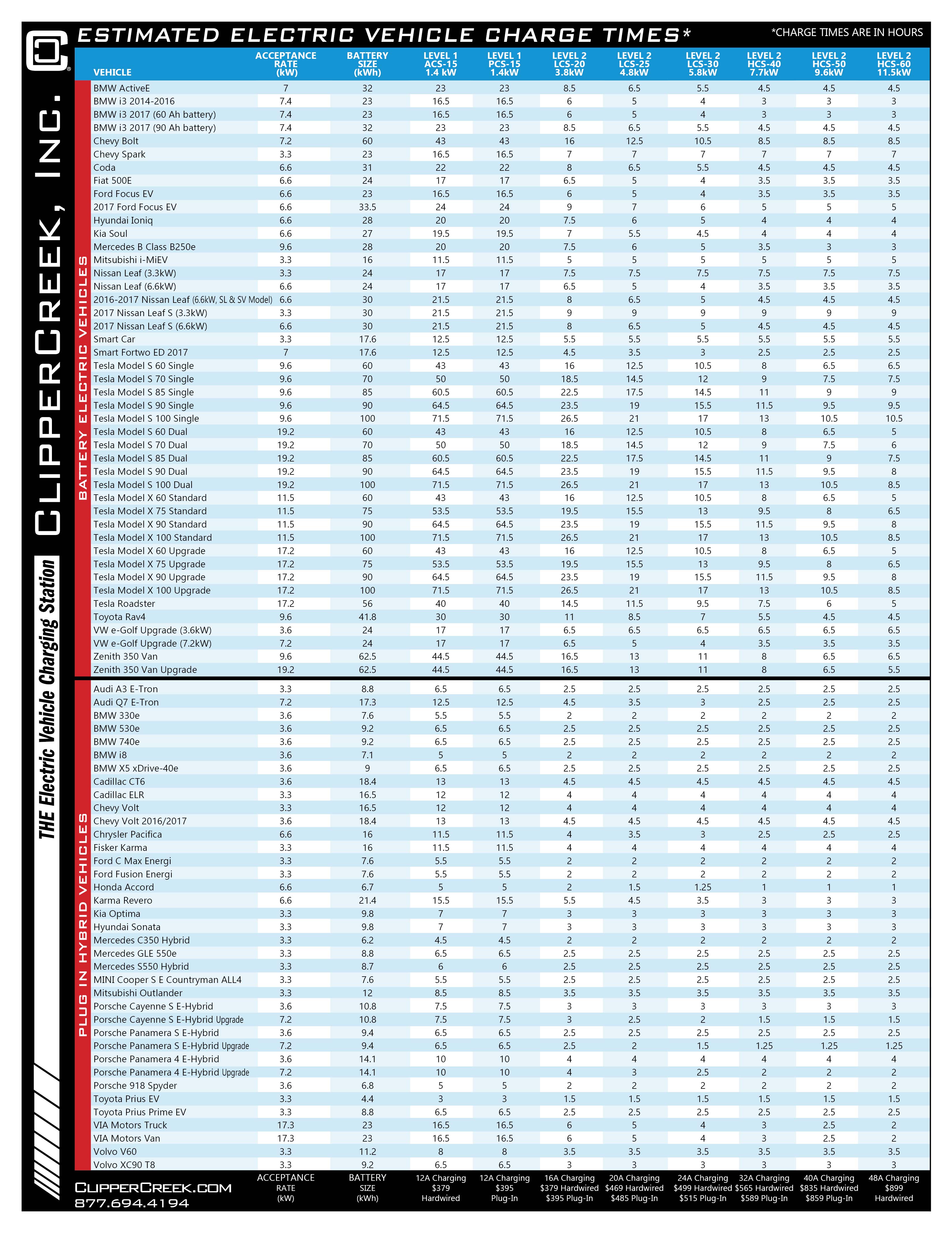
Note that all the demand for electricity from a battery powered car must be supplied when charging it since we do not currently have any good means of storing large amounts of electrical power. If everyone has electric cars and tries to charge them all at the same time (say the end of the work day), and the wind ain't blowing, and the sun ain't shining, where do you suppose that electricity comes from? Gasoline is literally stored energy, easily transportable in tankers.
The article also has an interesting fact about the Tesla:
The electric-car giant gave customers a lifeline by remotely boosting their vehicles’ battery capacity. But this act of kindness also highlighted that it had been selling identical cars at different prices.So for a lower (but still high) price, you get the same car, but one with software that cripples it's mileage? Nice!
Tesla drivers who fled Hurricane Irma last weekend received an unexpected lesson in modern consumer economics along the way. As they sat on choked highways, some of the electric-car giant’s more keenly priced models suddenly gained an extra 30 or so miles in range thanks to a silent free upgrade.
The move, confirmed by Tesla, followed the request of one Florida driver for a limit on his car’s battery to be lifted. Tesla’s cheaper models, introduced last year, have the same 75KwH battery as its more costly cars, but software limits it to 80% of range.
Owners can otherwise buy an upgrade for several thousands of dollars. And because Teslas software updates are online, the company can make the changes with the flick of a virtual switch.
I can see a market for hacking Teslas.
Tuesday, September 12, 2017
Some Good News from Florida
The general consensus seems to be that, despite all the damage, Florida fared better than expected in Hurricane Irma. Althouse leads with "Why Hurricane Irma wasn’t far worse, and how close it came to catastrophe."
That headline at The Washington Post makes me think about all the headlines, as the hurricane was approaching, about how the hurricane is worse because of climate change. If it wasn't worse, was that because the earlier talk about the effect of climate change was exaggerated?Why yes, in the media, bad weather news is portrayed as proof of
The only mention of climate change in the article is in the blurb about the author: "Jason [Samenow] is the Washington Post’s weather editor and Capital Weather Gang's chief meteorologist. He earned a master's degree in atmospheric science, and spent 10 years as a climate change science analyst for the U.S. government."
The article is about luck and happenstance — "shifts and wobbles." And I can't help feeling suspicious that if the hurricane had bounced into more damaging locations, it would be framed in terms of climate change.
I think that Hurricanes Andrew and Katrina were a wake up call to the inhabitants of Florida, and they were better prepared.
And on a personal note, good news from Capt. (and author) Ed Robinson, whose blog is linked in the right hand column. Capt. Ed left the working life a few years ago to become itinerant "trawler trash" living on a boat, the "Leap of Faith", and travelling from port to port in Florida with his lovely Ms. Kim. Capt. Ed is the author of the "Breeze" series of books about someone who leaves the working life to, well, you know the rest.
Anyway, Hurricane Irma came up too suddenly for them to evacuate their boat, and they were forced to secure it as well as possible (with heavy anchors), abandon it, and evacuate to South Carolina (where they faced Irma induced flooding). However, word, and pictorial evidence has come to them that "Leap of Faith" survived the storm, and was seen floating at anchor:

Subscribe to:
Posts (Atom)