Showing posts with label oceanography. Show all posts

Thursday, July 16, 2026

Deep Sea Mining off the Bay?

Bay Journal, Environmentalists worry Virginia seabed mining could affect migratory fish

The U.S. Bureau of Ocean and Energy Management (BOEM) began soliciting public comments and industry feedback on potentially leasing more than 2,500 square miles near the mouth of the Chesapeake Bay to seabed mining. The public comment period ends July 23.

Minerals targeted for extraction from the ocean floor include manganese, nickel, cobalt and so-called rare earth minerals needed for smartphones, defense systems, medical devices, batteries and other technologies.


Environment Virginia, the Natural Resources Defense Council, the Southern Environmental Law Center, Citizens for a Better Eastern Shore and other groups are concerned this could disrupt marine life, commercial fishing and military operations. Dylan Mason, public policy manager with Lynnhaven River NOW, said he’s worried that large sediment plumes from the mining could disrupt migratory species entering the Chesapeake Bay.

In early 2025, President Trump also pointed to environmental, military and fishery concerns in his executive order to pause or cancel offshore wind projects like Coastal Virginia Offshore Wind project near Virginia Beach.

BOEM started gauging interest in seabed mining after a company requested to mine the area last November. The lease area is between three and 63.5 miles off Virginia’s Eastern Shore and larger than the state of Delaware. BOEM says the request for comments and feedback should not be interpreted as an indication that seabed mining will be allowed or that the whole lease area will be mined.

I took a brief look at the Federal Register for this request. The area being looked at is surprisingly shallow, 30-410 ft, on the continental shelf. I, a Ph.D. oceanographer was unaware that there were areas with manganese nodules so shallow. I thought they mostly occurred in the abyssal basins, with very low sedimentation rates to interfere with their extremely slow growth rates. At this depth, it should be comparable in terms of environmental impact to oyster dredging or even shell harvesting for oyster aquaculture, and if areas are growing nodules, they probably have relatively little fauna anyway. We need the metals, especially to become independent from the Chinese. I say give it a try, and at least see if it's feasible. I fully expect a Chinese funded environmental campaign against it.

Saturday, February 17, 2024

This Seems Like a Stupid Project

WUWT, Scientists Look to Fight Climate Change by Dumping 6,000 Gallons of Chemicals into Ocean Near Martha’s Vineyard

A team of scientists is looking to dump chemicals into waters off the coast of Massachusetts this summer to research whether doing so could be an effective counter to ocean acidification and climate change, according to The Wall Street Journal.

The project would see researchers from the Woods Hole Oceanographic Institution (WHOI) pour approximately 6,000 gallons of sodium hydroxide — a component of lye — into waters ten miles away from Martha’s Vineyard, Massachusetts, in August 2024, according to the WSJ. The research project, estimated to cost about $10 million in total, will receive taxpayer funds from the National Oceanic and Atmospheric Administration (NOAA) provided the Environmental Protection Agency (EPA) signs off on releasing the chemicals.

The underlying concept is to see if the basic sodium hydroxide can reduce the acidity of ocean waters and make those waters more efficient repositories of carbon dioxide, according to the WSJ. Sodium hydroxide is a common ingredient in soaps and cleaning solutions, and it can be harmful to humans in high concentrations, according to the Tennessee Department of Health.

Of course you can make seawater more basic by adding sodium hydroxide to it. Water chemistry at that level is very well established. How much depended on how much seawater it's mixed with. I have have one warning. It's a damn big ocean. You may be able to raise the pH of the water by adding lye, but seawater is constantly moving around and mixing, and the effect will soon be diluted away.

Pure sodium hydroxide solutions are great at scavenging CO2 from the atmosphere without mixing it with seawater first. Why dilute it with seawater first, if grabbing CO2 is your goal?

And do you know how sodium hydroxide is manufactured commercially? By electrolyzing water (with salt in it to make it conductive, and provide the sodium ions). Just where do you think the electricity comes from? In most cases, of course, fossil fuels. So, you're burning fossil fuels to make a substance to extract the by product of fossil fuels from the atmosphere? Makes sense. 

Monday, January 15, 2024

Science is Dead, Long Live Science

 From The College Fix, Ocean sciences must incorporate DEI, scholars argue

Ocean science researchers must work “towards equity and justice” in their field, according to a group of scholars. Their academic paper includes a call for scholars to “[a]dvocate for and actively create opportunities for your BIPOC, LGBTQIA+, disabled, and female colleagues, even when this means personally stepping aside/turning down opportunities.” Nature’s open-access publication, npj ocean sustainability, published the paper.

Proposals focused on a variety of policies, including specifically promoting minority groups. These applied to funding, such as in the call for “More grants awarded to underrepresented researchers,” and to citations, such as in the calls to “Check whether your reference lists are gender-balanced.” They also suggest “diversity, equity, and inclusion” policies and “anti-racist” training for research staff.

Ocean scientists should also educate themselves “on the work of minority scientists relevant to [their] study and consider proactively citing more work by minority scientists as an act of reparative justice and affirmative action in citational practices.”

Paper co-author Paris Stefanoudis at the University of Oxford provided The College Fix with a sampling of resources to incorporate the suggestions. “That is really hard to track since there are so many issues covered here,” Stefanoudis said, when asked about examples of the paper’s ideas being implemented. He pointed to the University of Wisconsin-Madison’s Gender Citation Index Balance Tool as an example of “gender-balanced referencing.”

Stefanoudis also mentioned the publication Conservation Letters’ policy as an example of the paper’s proposal to “[m]andate that publications on the Global South by those in the Global North include authors from those geographies.”  The publication requires “manuscripts focused on conservation in Low and Middle Income Countries include authors from the relevant country/countries.” 

The researchers also suggested the special recognition of “individuals from underrepresented groups through awards, invited talks, keynote lectures at conferences etc.”

Asha de Vos
 

One of the researchers, Asha de Vos of the Oceans Institute of University of Western Australia, spoke regarding the contents of the paper and a related op-ed she wrote in the New York Times at a British Ecological Society conference.

There she received an award in recognition of her research on blue whales, use of “storytelling as a tool to share the magic of our world’s oceans,” and desire to “empower the next generation of diverse ocean heroes to become custodians of their patch of ocean.” de Vos also stated that the award recognized her work of “ensuring that these spaces are more inclusive, diverse and equitable.”

The article also promotes the use and increased funding of open access journals rather than traditional publications that place most of their research behind a paywall, suggesting a “tiered structure of Open Access fees based on geography” as well as calling for funding agencies to “Mandate dissemination of results particularly to communities in study areas.”

How about everybody in marine sciences try to do the best they can? 

VodkaPundit at PJM, I Can't Believe This Is a Real Science Class at a Real University


Snacks provided? I'm in!
. . . I did a double-take on Professor Johnson's position at Rice. It took a minute to sink in, but despite Johnson's doctorate in chemistry, she doesn't work in Rice's renowned chemistry department. Johnson works in the university's DEI department.

In Chem 125, Johnson will instruct her undergrads — who are expected to pony up around $78,278 for the privilege of attending during the 2022-23 academic year — on how to "apply chemical tools and analysis to understand black life in the US," along with her "personal reflections and proposals for addressing inequities in chemistry and chemical education."

In other words, Tom Lehrer can teach you more about chemistry for free in 85 seconds than Professor Johnson can for thousands of dollars over an entire semester.

Wednesday, March 17, 2021

A Chesapeake Bay St. Patrick's Day Miracle in Ireland

Chesapeake Bay Magazine: 1st Chesapeake Blue Crab Found on Ireland Coast

The Chesapeake Bay blue crab, icon of our region, has turned up in Irish waters for the first time ever. And wildlife experts there say its presence could pose a serious threat to native marine life.

Blue crabs are an invasive species in Europe, like snakeheads or blue catfish here on the Bay. Marine scientists consider them a large and aggressive crab species, highly effective at reproducing.

Ruth McManus spotted a dead blue crab washed up among seaweed on Dollymount Strand in Dublin on Feb. 15. She’d never seen anything like it before, and so she sent a photo to Dave Wall at the National Biodiversity Data Centre in Waterford, Ireland.

Wall confirmed the species and tells Bay Bulletin a blue crab claw was also found on Dollymount Strand around the same time. He says it may be from the same crab. Certainly, Irish biologists hope there aren’t more than one.

 They should be so lucky.

A breeding population of blue crabs began to establish in the Mediterranean Sea around 2012. How did they get there? Wall says it’s likely they arrived via ballast waters from ships traveling from America. There are now blue crab fisheries established on the Mediterranean, some of which import the crab into Europe.

As for the crab that wound up on the Dublin shore, Wall theorizes it may have been an import from a local fishmonger that someone bought and released into the water—not realizing the consequences of introducing an invasive species to local waters. The National Biodiversity Data Centre notes an investigation by the Irish Sea Fisheries Protection Authoriy found an Irish wholesale fishmonger was regularly importing blue crab to sell to Asian customers.

Wall says the invasive blue crab has had a major impact on marine ecosystems in the Mediterranean, “wiping out native shellfish species and fouling and damaging fishing nets.” He notes they have no natural predators in Europe, so the population is difficult to control.

“It’s definitely not a species we want to see becoming established in Ireland,” Wall says.

Will it become necessary for St. Patrick to return to drive the Blue Crabs out of Irish waters? Stay tuned. 

I'm not all that worried about Blue Crabs establishing themselves in Ireland. The waters off Ireland are pretty cool year round compared to the Blue Crab habitat on the East Coast of North America. With planktonic larvae, and a large oceanic gyre moving from North America, across the North Atlantic, and down Europe, if Blue crabs could survive there in, they probably would already be there.

The Wombat has Rule 5 Sunday: Lilly Bakamoto waiting at The Other McCain.

Tuesday, July 10, 2018

Puget Sound Orcas Suffer Demographic Decline

Orca pods addicted to Chinook Salmon suffering: Starvation and Habitat Threats Stalk Killer Whales
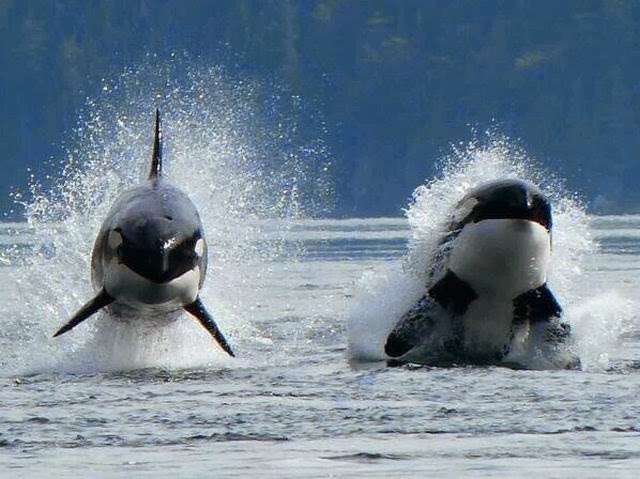
SEATTLE — For the last three years, not one calf has been born to the dwindling pods of black-and-white killer whales spouting geysers of mist off the coast in the Pacific Northwest.

Normally four or five calves would be born each year among this fairly unique urban population of whales — pods named J, K and L. But most recently, the number of orcas here has dwindled to just 75, a 30-year-low in what seems to be an inexorable, perplexing decline.

Listed as endangered since 2005, the orcas are essentially starving, as their primary prey, the Chinook, or king salmon, are dying off. Just last month, another one of the Southern Resident killer whales — one nicknamed “Crewser” that had not been seen since last November — was presumed dead by the Center for Whale Research.

In March, Gov. Jay Inslee issued an executive order directing state agencies to do more to protect the whales, and in May he convened the Southern Resident Orca Task Force, a group of state, tribal, provincial and federal officials, to devise ways to stem the loss of the beloved regional creature. “I believe we have orcas in our soul in this state,” he said. At another point, he wrote of the whales and Chinook salmon that “the impacts of letting these two species disappear would be felt for generations.”

In the late 1990s, there were nearly 100 of these giant whales in the population. Following the salmon, they migrate in the Salish Sea to the northern coast of British Columbia and often surface in the south at Puget Sound within sight of downtown Seattle, especially during the spring and summer months. The males, which can weigh up to 22,000 pounds, typically live about 30 years, and females, up to 16,000 pounds, survive longer — up to 50 or 60 years, although one J-pod member, Granny, lived to be 105 years old.

Not only are there fewer calves in recent years, but signs of inbreeding also point to a weakening population. In the 1970s and 80s, theme parks like Sea World captured nearly 4 dozen orcas from the region, possibly shrinking the pods’ gene pool. In the last three decades, just two males fathered half the calves in the last three decades, and only a third of the females are breeding, just once every decade instead of every five years. Researchers worry that reproducing females are aging out of the population, and will not be replaced.

Some conservationists are concerned that the orcas’ decline is another sign of a marine ecosystem in collapse. Beginning in 2013, something known as “The Blob” — a gigantic mass of nutrient poor, extremely warm water — warmed the Pacific from Mexico to Alaska, as much as six degrees above normal. Several years ago, starfish succumbed to a wasting disease and vanished from tide pools.

Much is still unknown about the plight of these orcas, but biologists and conservation managers have zeroed in on several main factors — and they are all connected.

The biggest contributing factor may be the disappearance of big king salmon — fish more than 40 inches long. “They are Chinook salmon specialists,” said Brad Hanson, team leader for recovery efforts for the Northwest Fisheries Science Center here, part of NOAA. “If they could, they would eat Chinook salmon 24/7.” Orcas gobble 30 a day. Hunting enough smaller prey requires a lot more energy.


Of most concern are the lingering effects of chemicals and pesticides, including the now banned DDT, as well as PCBs and PPDE, widely used in flame retardants and found through the world. The pollutants accumulate in salmon as they feed, and when the whales eat salmon they also ingest PCBs at even higher levels. “It’s very lipophilic, which means it stays in the fat, and the females transfer a huge proportion of the contaminant burden to their offspring,” Hanson said. “About 85 percent gets transferred to calves through lactation.”

And while much of the pollution is from the region’s industrial past, Boeing disclosed this spring that over the past five years it had discharged highly toxic PCBs into the Duwamish River, which flows into Puget Sound, thousands of times over the legal limit.

These toxins suppress the whales’ immune systems, making them more susceptible to disease. They can also impede reproduction. That may be why tests show a high number of females who have become pregnant have failed to calve.

However, the decline of the whales cannot be pegged, experts say, to contaminants alone. A separate population of transient whales near here eat mammals that eat fish, and so consume concentrate contaminants at even higher levels — many times as high as the resident pods. Yet they are thriving, which has left scientists scratching their heads. Global populations are robust as well.
They throw out a lot of other potential problems, mostly man made as possible causes of the declines, but without much evidence. My best guess is that a dearth of Chinook Salmon is largely responsible for the decline. The Chinook Salmon decline, in turn is likely the result of over-fishing, land use  and climatic cycles which are driving their growth and reproduction. In particular, the Pacific Decadal Oscillation seems to be highly correlated to Chinook Salmon success:


It's also interesting to note that Orcas are smart enough that pods have different "cultures", or learned food preferences. These pods prefer Chinook Salmon, but others specialize in seals and and sea lions, and at least two are known to kill and eat large sharks, including Great Whites.

Somehow, gene flow is maintained across the various pods, since they have not (yet) evolved into separate species, so some whales must switch between pods somehow. Maybe these whales should reconsider their life style.

Thursday, April 21, 2016

Taiwanese Scientists Cast Doubt on "Iron Hypothesis"

John H. Martin
“Give me a half tanker of iron,
and I will give you an ice age.”
Said John H. Martin, one of the great oceanographers of my age. His hypothesis was that in areas of the ocean with "high" nutrient concentrations and low chlorophyll (HNLC areas), like much of the Pacific, iron was the limiting nutrient, and that adding iron could stimulate oceanic primary. In another link, stimulating primary production would increase the rate of sedimentation of the fixed carbon produced by the phytoplankton, and remove some carbon dioxide from the atmosphere, offsetting or even reducing atmospheric CO2 and offset or even reverse global warming. He didn't really propose to set off a new ice age.

A lot of experiments were carried out to test "the iron hypothesis." It worked sometimes, and it didn't work sometimes. Biology is like that. It's not as straightforward as rocket science. New studies by Taiwanese researchers also find that iron fertilization was not always effective:

Taiwanese researchers have poured cold water on the possibility of capturing carbon with artificial algae blooms, created by fertilising the oceans with iron. The problem appears to be that the artificial algae bloom depletes other essential ocean nutrients, causing a reduction in algae growth elsewhere in the ocean.

To alleviate the impact of global warming, scientists have proposed a hypothesis of “iron fertilization,” assuming that adding iron into the ocean can boost the growth of algae to absorb the carbon dioxide in the air.

However, researchers in Taiwan have found flaws in this hypothesis.
Working with Columbia University, a NTU research group led by Haojia Abby Ren, associate professor of Geosciences at National Taiwan University (NTU), has poured iron into 12 waters around the globe to perform experiments on the “iron fertilization” hypothesis. It turned out algae only thrives in one-third of the areas tested.
The growth of algae requires nutrients other than iron, such as nitrate and phosphate. With the growing amount of algae, consumption of these nutrients also increases in the area. But when currents carry the algae to other waters, the nutrients become relatively scare elements, making algae hard to grow.
Read more: http://international.thenewslens.com/post/312664/

This claim is backed by an earlier study, which suggests that increased iron outflows into the ocean during the last ice age, caused by glaciers scraping iron rich minerals into the sea, did not increase algae growth in equatorial regions, because increased algae growth in subantarctic zones depleted other ocean nutrients.
One third of the ocean is a lot of ocean . . .