Showing posts with label coyotes. Show all posts

Friday, April 7, 2023

Like We Have a Choice

Gerald Wingrad at the Annapolis Capital Gazette thinks We should welcome coyotes in Maryland.

Coyotes (Canis latrans) have inhabited the West for more than 1 million years. Lewis and Clark were reportedly the first non-native people to spot them while on their expedition in 1804 in present-day South Dakota.

They thought they were a new fox species until they shot one and called it a prairie wolf. At that time, the coyote was not found east of the Great Plains.

The coyote coexisted with Indigenous people for millennia and appears often in their mythology and traditions — usually as a savvy animal with extraordinary powers described as a creator or trickster. Depicted as a deity, coyote instructs people about proper behavior in life.

After colonization and the conversion of forests to farms, coyotes have been subject to systemic human persecution in a pitiless war of extermination waged for centuries by ranchers and hunters assisted by government agencies. This is because these native predators, closely related to our beloved dogs, kill lambs, cow calves and other livestock and wild game, especially deer.

Despite these control efforts, coyotes engineered a dramatic range expansion across North and Central America beginning in the early 20th century. They now occur from the Atlantic to the Pacific and from Alaska to Panama. They are found in every U.S. state except Hawaii and in every Canadian province, overcoming eradication efforts to thrive where other large predators have been extirpated or greatly reduced.

Maryland and Delaware were the last two states to be colonized by coyotes. First spotted in Maryland in 1972, these intelligent canines are now found in all 23 counties and in Baltimore City. They have been found in Annapolis and in Washington, D.C. The highest Maryland densities occur in the western counties decreasing to the east with the lowest densities on the Eastern Shore.
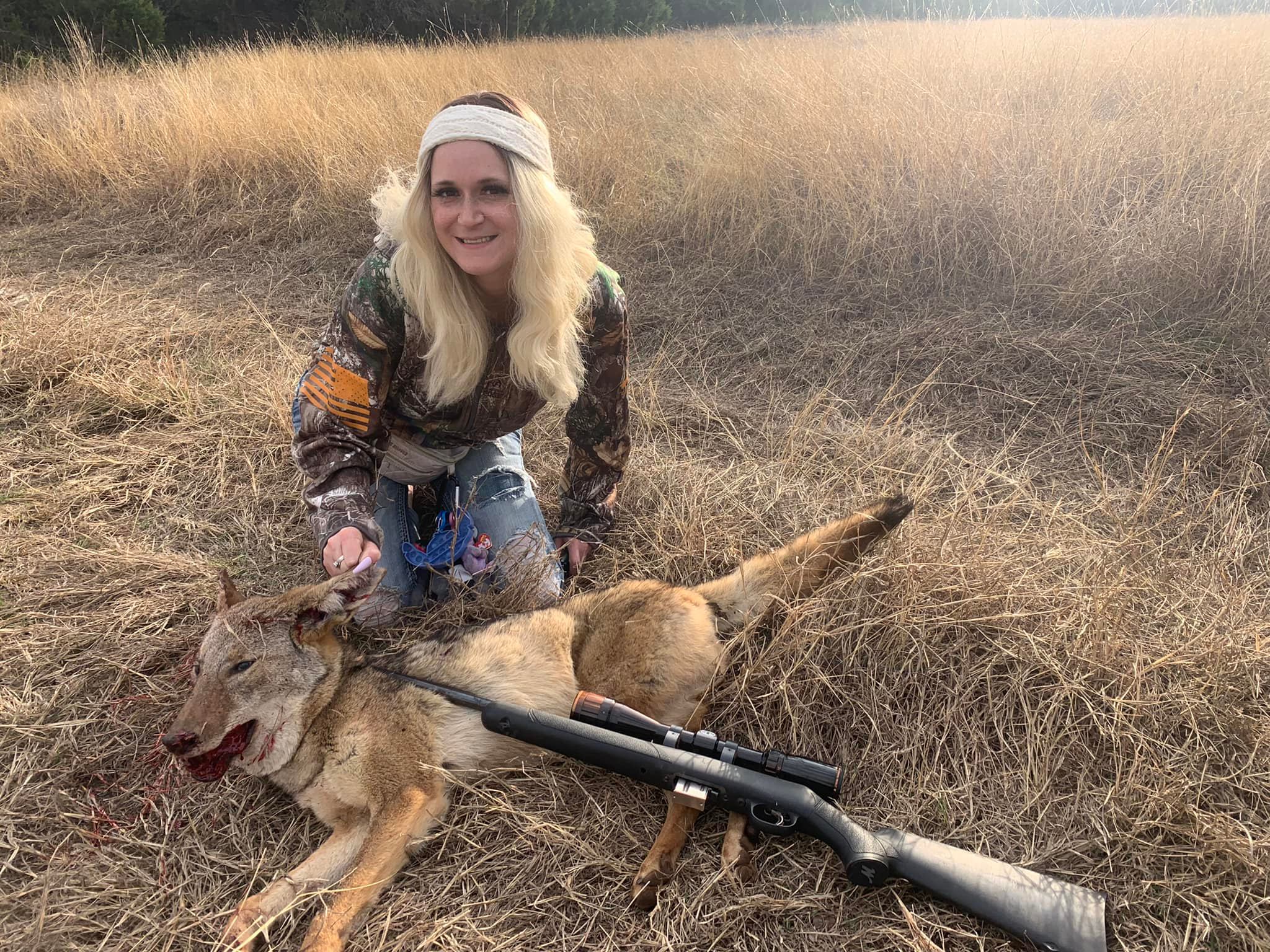
The elimination of other large predators — wolves and mountain lions — and the conversion of Eastern deciduous forest to agriculture, contributed to this range expansion. Hybridization with wolves and domestic dogs appears to have occurred in our Eastern population aiding in their spread and acculturation.

The human-induced landscape changes leaving fragmented forest and adjacent open areas provide excellent habitat for these adaptable canines offering a cornucopia of their major prey items: rodents (rats, mice, voles), moles, squirrels and rabbits, and carrion, including road-killed deer.

Overabundant white-tailed deer, mostly fawns, are also preyed upon. Coyotes are opportunistic omnivores and will eat almost anything available, including birds, snakes, insects, fruits, nuts, grass and berries. They also may take free-roaming cats and small dogs.

Many wildlife managers and wildlife lovers see coyotes as a natural replacement for exterminated predators, including wolves and mountain lions. These wily critters can tamp down abundant red fox populations as they out-compete foxes.

Coyotes also help prevent the loss of millions of birds and small mammals by killing free roaming cats, especially in feral cat colonies supported by misguided humans who leave food for them, which attracts coyotes. The Maryland Department of Natural Resources (DNR) recommends pet cats or dogs not be allowed to roam free and not to leave food outdoors to feed feral cats. This will eliminate predation on pets.

Since coyotes will take fawns and much more rarely adult deer, such culling could be beneficial in areas in central Maryland where deer are grossly overabundant and causing human health problems from Lyme disease and car collisions. But there is no evidence that coyotes have any real influence on deer populations.

Unfortunately, many ranchers, farmers and hunters still regard coyotes as destructive pests. Because coyotes are predators, other citizens have an irrational fear of these native animals.

According to DNR: “Public opinion concerning coyotes evolves in a very predictable fashion. As coyotes first appear in an area, they are novel and receive a great deal of interest. As population densities and associated nuisance complaints increase, public opinion quickly changes from novel fascination, to ‘I do not want this animal in my neighborhood.’ Few, if any other, wildlife species evoke as widespread and passionate disdain by the general public as coyotes.”

DNR is under increasing pressure by hunters and agriculturalists to decrease coyote numbers. In 2021, the legislature’s budget committees ordered DNR to conduct an impact assessment because: “the coyote population is threatening both domestic and wild animals as well as public health, safety, and welfare.”

DNR biologists issued an excellent report wisely rebutting these faulty conclusions finding that: “In Maryland, at this time, coyote impacts to native wildlife are considered to be minimal…. Yearly losses of livestock due to coyote specific predation do not represent a statistically significant portion of yearly production costs The cost of coyote-domestic animal conflicts is not expected to significantly increase for the foreseeable future.”

The report noted that coyote attacks on humans are extremely rare and any danger to human safety is often greatly exaggerated by the public. Coyotes are naturally wary of humans and are too small to pose a threat. The report noted some benefits from coyotes, including improving songbird and other ground nesting bird populations.

There certainly coyotes in our area. Sometimes at night, on Skye's occasional late walks, I have heard suspicious calls, and one time, I'm pretty sure what was a coyote walked boldly down the street. However, I've never heard of any problem with coyotes and livestock or pets, although I suspect such incidents have occurred. I imagine many farms live by the rule "shoot, shovel and shut up."

The Wombat has Rule 5 Sunday: Elena Santarelli up on time and under budget at The Other McCain

Thursday, January 28, 2016

Beware the 'Shrooming Coyotes of Bolinas

Coyotes, Possibly High On Magic Mushrooms, Attacking Cars Near Stinson Beach
The sleepy beach town of Bolinas has something lively to talk about this week, as reports emerge that a coyote (or coyotes) has been attacking cars along Highway 1 in a manner so bizarre it has residents scratching their heads. The attacks are weird enough that one seemingly outlandish explanation, that the coyotes are eating hallucinogenic mushrooms and vision questing their way into interactions with drivers, is being considered.

A report in the Pacific Sun details the late-night encounters had by numerous motorists.
"A coyote has taken to staring down automobile drivers as they drive through this twisting, turning section of highway," notes the paper, "before attacking the car and then skulking off back into the wilderness. The coyote runs up to the cars, usually at night, forcing drivers to stop as the beast stares and sniffs around the vehicle."
. . .
“We are trying to figure this out,” Bloch helpfully informs us.

The Sun notes that the fly agaric mushroom (amanita muscaria) grows in the area and has hallucinogenic properties, and that Bloch recently warned residents about the possible side effects of their pets eating the wild fungus.
. . .
“It’s possible that someone was feeding him and thinking that it’s cool, and magical and mystical to have a coyote eating out of his hand,” she explained.

Which, when we consider that this is Bolinas we're talking about, seems in the end the likeliest of explanations.
Which reminds me of an "interesting trip" up Highway 1 at the end of winter break back in college, which I will not explain.

By way of Ann Althouse, this helpful video on how to discourage coyotes from being seen in populated areas:


I encountered coyotes a few times out in the West, and never had any problem with them not leaving at first sight. The coyotes of Wisconsin may have some "coydog" or "coywolf". The coywolves, in particular are larger, and have been implicated in human attacks.

Sunday, November 1, 2015

The Mighty Coywolfdog

Greater than the sum of its parts: It is rare for a new animal species to emerge in front of scientists’ eyes. But this seems to be happening in eastern North America
The mixing of genes that has created the coywolf has been more rapid, pervasive and transformational than many once thought. Javier Monzón, who worked until recently at Stony Brook University in New York state (he is now at Pepperdine University, in California) studied the genetic make-up of 437 of the animals, in ten north-eastern states plus Ontario. He worked out that, though coyote DNA dominates, a tenth of the average coywolf’s genetic material is dog and a quarter is wolf.

The DNA from both wolves and dogs (the latter mostly large breeds, like Doberman Pinschers and German Shepherds), brings big advantages, says Dr Kays. At 25kg or more, many coywolves have twice the heft of purebred coyotes. With larger jaws, more muscle and faster legs, individual coywolves can take down small deer. A pack of them can even kill a moose.
Hell, a big pack of chipmunks could take down an elephant. But it would take a lot of chipmunks.
Coyotes dislike hunting in forests. Wolves prefer it. Interbreeding has produced an animal skilled at catching prey in both open terrain and densely wooded areas, says Dr Kays. And even their cries blend those of their ancestors. The first part of a howl resembles a wolf’s (with a deep pitch), but this then turns into a higher-pitched, coyote-like yipping.

The animal’s range has encompassed America’s entire north-east, urban areas included, for at least a decade, and is continuing to expand in the south-east following coywolves’ arrival there half a century ago. This is astonishing. Purebred coyotes never managed to establish themselves east of the prairies. Wolves were killed off in eastern forests long ago. But by combining their DNA, the two have given rise to an animal that is able to spread into a vast and otherwise uninhabitable territory. Indeed, coywolves are now living even in large cities, like Boston, Washington and New York. According to Chris Nagy of the Gotham Coyote Project, which studies them in New York, the Big Apple already has about 20, and numbers are rising.
I expect they're here as well. "Coyotes" have certainly been spotted and trapped in Calvert County, but I haven't seen or heard them yet.
Some speculate that this adaptability to city life is because coywolves’ dog DNA has made them more tolerant of people and noise, perhaps counteracting the genetic material from wolves—an animal that dislikes humans. And interbreeding may have helped coywolves urbanise in another way, too, by broadening the animals’ diet. Having versatile tastes is handy for city living. Coywolves eat pumpkins, watermelons and other garden produce, as well as discarded food. They also eat rodents and other smallish mammals. Many lawns and parks are kept clear of thick underbrush, so catching squirrels and pets is easy. Cats are typically eaten skull and all, with clues left only in the droppings.

Which can only make bird lovers happy, since undomesticated cats are major bird killers in the east.
Thanks to this bounty, an urban coywolf need occupy only half the territory it would require in the countryside. And getting into town is easy. Railways provide corridors that make the trip simple for animals as well as people.

Surviving once there, though, requires a low profile. As well as having small territories, coywolves have adjusted to city life by becoming nocturnal. They have also learned the Highway Code, looking both ways before they cross a road. Dr Kays marvels at this “amazing contemporary evolution story that’s happening right underneath our nose”.

Whether the coywolf actually has evolved into a distinct species is debated. Jonathan Way, who works in Massachusetts for the National Park Service, claims in a forthcoming paper that it has. He thinks its morphological and genetic divergence from its ancestors is sufficient to qualify. But many disagree. One common definition of a species is a population that will not interbreed with outsiders. Since coywolves continue to mate with dogs and wolves, the argument goes, they are therefore not a species. But, given the way coywolves came into existence, that definition would mean wolves and coyotes should not be considered different species either—and that does not even begin to address whether domestic dogs are a species, or just an aberrant form of wolf.
The biological definition of a species is not quite that didactic. It presumes that hybridization is rare, often infertile, and usually results in less fit offspring than the separate species, but in cases where the offspring are fertile, and more fit for a particular environment than either parent species, it is possible for hybridization to found a new species.

Is it truly a new species? Ultimately the distinction is arbitrary, and best left to the bug shufflers who do taxonomy. The coywolves don't give a damn what they think; they're too busy getting by.